Many games are about responding to what happens – seeing an enemy and shooting, or taking cover when you’re shot at. But the best players don’t just react; they lead the game. They quickly turn defense into attack and create chances out of nowhere. This comes from truly understanding how the game works. Learning these skills lets you stop simply reacting and start taking control. Instead of waiting for things to happen to you, you’ll be able to dictate the action from the very beginning. This guide will teach you how to use the game’s basic functions to control the speed and space, and become a player who’s always ahead of the game.
Key Takeaways
- Master Your Awareness First: Before focusing on speed, make tracking your opponent your top priority. Knowing their position and anticipating their next move is the foundation that makes every build, edit, and shot more effective.
- Focus on Precision Over Speed: Clean, deliberate actions consistently win more fights than uncontrolled, frantic movements. Concentrate on smart crosshair placement and purposeful building to make every action count, creating more opportunities to deal damage while minimizing mistakes.
- Practice with a Purposeful Plan: To see real improvement, trade mindless grinding for focused training sessions. Use creative maps and specific drills to isolate your weaknesses and build reliable muscle memory, ensuring your skills hold up when the pressure is on.
What Exactly Are In-Game Mechanics?
What’s the difference between a good gamer and an amazing one? It usually comes down to how well they understand the game’s mechanics. Mechanics are basically the rules and systems that control everything you do in a game – how your character moves, how combat works, even something as simple as throwing a grenade. These mechanics are the core of gameplay, shaping every moment and challenge.
It’s one thing to understand the basics of a game, but another to truly master its techniques – like quickly moving around corners to surprise an opponent. That’s what we mean by ‘mechanics.’ Understanding these game systems is key to carrying out your plans smoothly. Whether you’re aiming for a precise shot, managing your items, or creating the ideal setup for a specific challenge, you’re always using the game’s mechanics. Getting good at them separates struggling with the controls from making impressive, skillful plays.
Core vs. Secondary: What’s the Difference?
All game mechanics aren’t the same. They generally fall into two groups: essential and supplementary. Essential mechanics are the fundamental actions you need to master to play the game well – things like moving, aiming, shooting, and using your main abilities. When you’re in a battle, your main focus should be knowing where your opponent is and performing these core actions accurately. A mistake with something simple, like reloading or dodging, can quickly lead to defeat.
Secondary mechanics are skills that help you play better than others. They aren’t essential for playing the game, but mastering them can significantly improve your performance. This includes things like difficult-to-execute combinations of moves, clever ways to move around, or using the game’s surroundings to your advantage. These skills add complexity and let skilled players really showcase their abilities.
How Mechanics Shape Your Experience
Game mechanics fundamentally revolve around finding the right balance between risk and reward. They give players the tools to inflict damage while protecting themselves. Ideally, a well-designed game makes it easy to do a lot of damage with little risk of taking damage. As you become skilled at a game’s mechanics, you learn to control this balance to your advantage. The game shifts from feeling like a series of unpredictable events to a problem you can strategically solve.
Gaming is so satisfying because mastering a challenging skill or cleverly beating an opponent feels incredibly rewarding. It’s proof that your practice and understanding of the game are paying off. When you improve your skills, you don’t just become a better player—you also make the game more fun and enjoyable for yourself.
Master Your Enemy Awareness
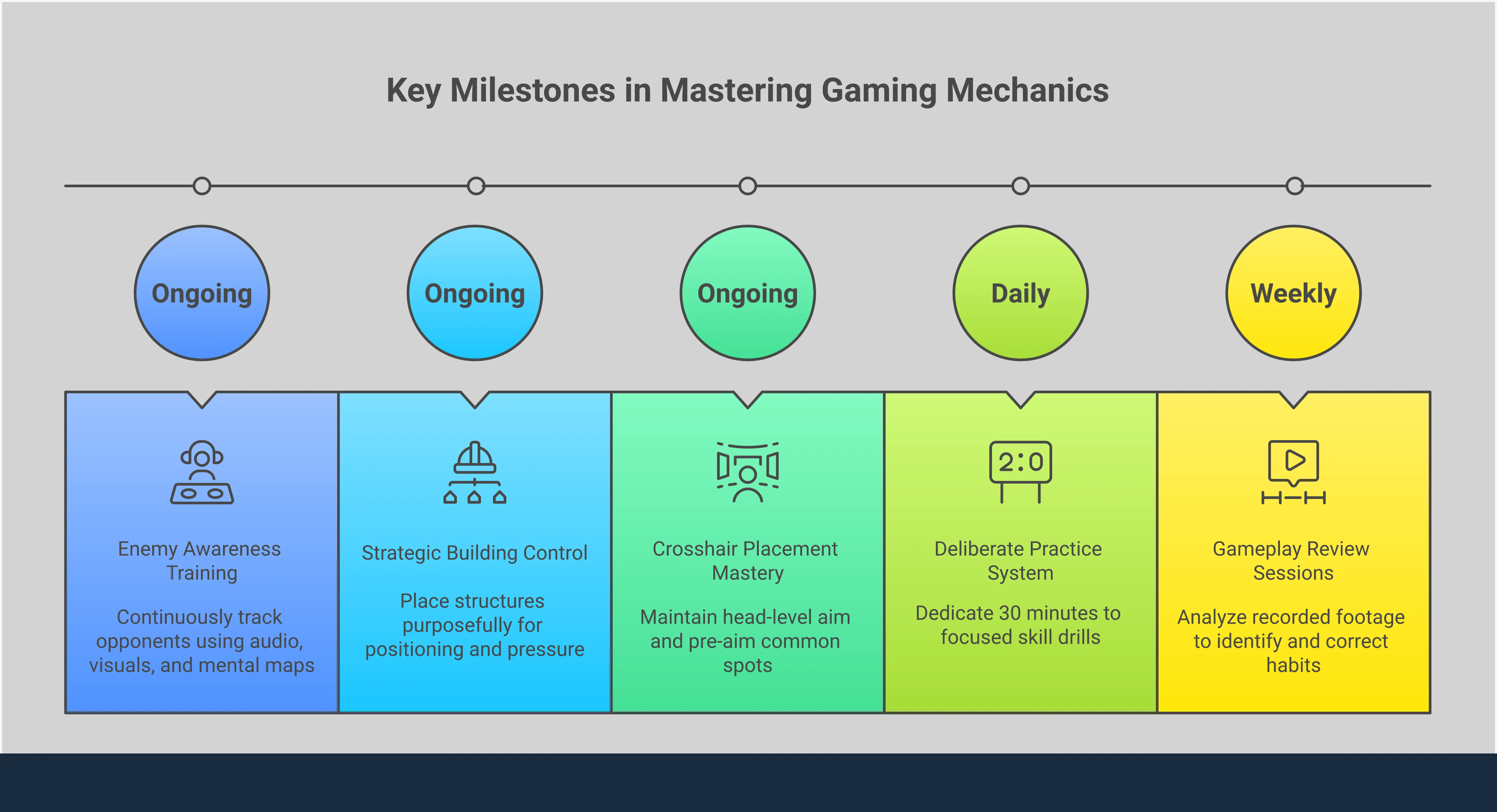
Before diving into complex strategies, let’s focus on the most crucial skill in any fight: knowing your enemy’s location and actions. Even with quick reflexes and great gear, you’ll be at a disadvantage if you’re surprised. Improving your awareness isn’t about reaction speed—it’s about building and maintaining a constant mental picture of everything happening around you on the battlefield.
This isn’t something that happens automatically; it requires effort. You need to practice consistently asking yourself: “Where is your opponent? What are they planning? What will they do next?” A top coach explains that knowing where your enemy is should be your main focus in any fight – always. When you prioritize awareness, everything else you learn becomes much more powerful. It’s the difference between simply responding to what happens and taking control of the situation right away.
Read Your Opponent’s Movements
Imagine each battle as a discussion. Your opponent’s actions are like a story they’re telling – you just need to learn to understand it. If they’re attacking strongly, they’re probably feeling confident and trying to win quickly. If they’re defending or moving around, they might be hurt or looking for a better position. Every move they make gives you a hint about what they’re planning.
Instead of just responding to what’s happening, try to predict what your opponent will do next. Knowing their habits lets you create advantageous situations, block their options, and choose the best time to act. This foresight is key to staying ahead and controlling how the situation unfolds.
Use Audio and Visual Cues
Paying attention to what you see and hear is key to getting information in the game. Every sound can give you a hint about what’s happening – like an enemy landing nearby, a weapon being reloaded, or a shield being activated. While visual sound effects can be useful, learning to listen carefully and determine where sounds are coming from and how far away they are will significantly improve your chances of winning battles.
Don’t just watch the player themselves – pay attention to what they’re doing in the game. Changes to the environment, like editing a wall, show you where they’re concentrating. Actions like building a ramp over themselves often mean they’re trying to regain health. The best players notice these things immediately and use them to their advantage. For instance, if someone builds a protective box but forgets a key piece, a skilled player will recognize that weakness and capitalize on it.
Track Opponents Through the Fight
It’s simple to deal with an opponent you can see, but much harder when they’re hidden behind cover. Top players excel at this – they always have a good idea where their enemy is, even if they can’t see them. Losing track of an opponent, even briefly, lets them recover health, move to a better position, and potentially catch you off guard.
To improve your skills, consistently try to guess where your opponent will move next. For example, if they hide behind a building, think about which side they’re likely to look out from. As one expert puts it, becoming a truly skilled player comes down to always knowing where your enemy is and keeping them in your sight.
Use Building to Gain an Edge
When playing games where you build things, how and where you place structures is just as crucial as your shooting skills. It’s not about building quickly, but building strategically. Think of building as a way to dominate the playing field. Every structure you create can offer protection, hinder your opponents, or give you an advantage in combat. It’s like a constantly evolving game of chess where you’re not just moving pieces, but also changing the board itself.
Being skilled at building lets you quickly switch from defending to attacking. When you’re being attacked, building walls can create space to recover. When attacking, ramps can give you a better position and an edge over your opponent. Top players don’t just respond to what’s happening; they control the fight with their builds, making their opponents react to them. This kind of strategic building is what makes the difference between good and great players.
Place Structures for Maximum Impact
Okay, so when I’m building in a match, I always try to have a reason for everything I place. I’m not just throwing stuff up randomly. I’m thinking about how each wall or ramp will help me get shots in while keeping me safe. Before I even click, I ask myself what I want to achieve – am I cutting off the enemy’s view? Making a safe spot to peek and shoot from? Or building a quick route to get to better ground? Honestly, building without a plan just feels like a waste of materials, and it’s even worse when you end up trapping yourself! It’s when I build with a clear purpose that I really feel like I have the upper hand in a fight.
Control the High Ground
Controlling the high ground is a fundamental strategy for a good reason. Being higher than your opponent gives you a significant edge. You get a better view of the battlefield, allowing you to follow their actions and predict what they’ll do next. As professional player Marrentm explains, aiming for headshots becomes much easier when you’re looking down on someone. This puts your opponent in a difficult spot, forcing them to reveal themselves just to see you. Therefore, in any encounter, your first move should be to gain higher ground.
Create Damage Opportunities Safely
Just because you’ve cornered your opponent doesn’t mean you’ve won. Now’s the time to keep the pressure on, but without taking unnecessary risks. Skilled players constantly move, switch positions, and use quick edits to catch their opponent off guard. The goal is to be unpredictable and difficult to target while you search for a weakness. Instead of repeatedly hitting their wall, try peeking from different angles or quickly editing a window to get a shot off before rebuilding your defenses. Paired with the right weapons and items, you can finish the fight before they have time to react.
How Do You Master Strategic Editing?
Editing in games isn’t just about being quick; it’s about making smart decisions. It’s the finishing touch that brings together your shooting and movement skills. While anyone can learn to edit rapidly, skilled players understand when and how to edit to gain control of a fight. The main idea is to set up easy shots for yourself while simultaneously making it hard for opponents to hit you. This advanced skill lets you move beyond simply reacting to what’s happening and allows you to take charge, controlling how every fight unfolds.
Becoming a skilled strategic editor means moving beyond simply defending yourself with your building – you’ll be using it to actively attack. By carefully planning and executing your edits, you can catch opponents off guard, trick them into errors, and deal surprise damage. It’s about balancing speed, safety, and aggression. We’ll cover the three main aspects of this: when to edit, how to create clear openings, and how to stay protected while doing it.
Time Your Edits Perfectly
The key to a great attack is to time it perfectly, based on where your opponent is and what they’re doing. You want to break through a wall when they least expect it, like when they’re switching to their pickaxe or reloading their weapon. This gives you a chance to land a powerful shot with very little danger to yourself. Mastering this timing takes practice and developing a feel for the right moment. Don’t be afraid to try these attacks, even if you don’t succeed right away – every attempt will help you improve. It’s a skill that makes you a better player and separates the good from the best.
Create Openings with Clean Edits
A fast wall reset is a surprisingly effective way to start an attack. Here’s how it works: if you start to build a wall but quickly realize your opponent is ready to shoot, immediately reset it. They’ll likely fire at what was your wall, destroying the new build as it appears. That’s your chance! Use that moment to shoot through the broken space, catching them by surprise. This turns a defensive move into an aggressive one, letting you punish your opponent for attacking and take control of the situation.
Minimize Your Vulnerability
When you make changes to the environment, you briefly reveal your position to your opponent, so it’s important to limit how much you expose yourself. Instead of making large, obvious changes, opt for smaller, faster edits like creating a window or just altering a corner. This lets you get a shooting angle while staying mostly safe. Good mouse control is essential for making these edits quickly and smoothly without leaving yourself vulnerable. While impressive, big, showy movements aren’t as effective as precise, efficient ones. Focusing on clean and controlled edits will help you shoot accurately and return to cover before your opponent can react.
Master Box and Piece Control
After you get good at building and editing, you can start using those skills to win fights consistently. “Boxing and piece control” means strategically building structures around your opponent to corner them and set up easy shots. This skill is what really distinguishes good players from excellent ones, as it requires planning ahead. Instead of simply reacting to your opponent, you control the fight by limiting their movement and choices. When you master this technique, you’ll become a more confident and assertive player, able to turn defensive moments into chances to attack. It’s not about making spectacular plays, but about making smart, quick decisions to eliminate your opponent before they can react.
Enter Boxes on Your First Try
Being able to consistently enter your opponent’s base is a key sign of skill and a great way to put them under pressure. The best way to improve this is through dedicated practice. Use creative mode and practice maps to master these techniques until they become automatic. One important skill to learn is how to break through a wall while placing a block above your head. To make practice more realistic, always place your own block before breaking the wall, instead of using pre-placed blocks on the map. This helps you build the correct muscle memory for use in actual games.
Break Walls and Place Pieces Strategically
If your opponent is defensively building a small box, your aim is to make them come out when you want them to. If their box lacks internal defenses like cones or stairs, you have a great advantage. A good tactic is to break through their wall and immediately place a stair inside, pointing towards them. This often surprises them, causing them to quickly build outwards to create a new box. You can expect this reaction! Most players will try to escape sideways, so be prepared to instantly build walls and cones to block their new path. By predicting where they’ll move, you can completely box them in before they have time to react.
Keep the Pressure on Inside Their Box
Highly skilled players quickly capitalize on even tiny errors. A small gap in your setup – like missing a cone or stair – gives an assertive player an immediate advantage. If you successfully force a stair into their space, maintain that pressure and don’t let them recover. Then, focus on controlling the areas around them, particularly diagonally. By securing the surrounding walls and strategically placing cones above and below, you can trap them completely, leaving them with no escape and setting up an easy win.
Why Does Crosshair Placement Matter?
I’ve always been amazed watching pro gamers and how quickly they react, but it turns out it’s not just about fast reflexes. A huge part of it is actually something called crosshair placement. Basically, it’s about consistently aiming where you expect enemies to show up. It sounds simple, but honestly, it’s one of the most important skills to learn if you want to really improve your game – it’s what separates the good players from the truly great ones!
Effective crosshair placement is like aiming ahead of time. Instead of scrambling to adjust your aim when you see an enemy, you’re already lined up and ready to fire. This helps you win more fights, play with more confidence, and generally have a smoother, more controlled experience. It’s not about being an incredibly skilled aimer; it’s about making your aim easier and more efficient. By reducing the effort needed to aim, you can focus more on your overall strategy and where you are on the map.
Pre-Aim for Faster Reactions
Honestly, the biggest thing about good crosshair placement for me is how much faster it makes my reactions. If I expect an enemy to peek a corner or come through a doorway, I try to have my crosshair right where they’ll be before they even show up. That way, I don’t have to do these big, frantic flicks with my mouse. I’m aiming for smooth, horizontal adjustments only – no big up or down movements. So when they do appear, it’s just a tiny tweak and a click. It seriously feels like I’m reacting instantly, because I’ve already done most of the work ahead of time.
Reduce Unnecessary Movement
Good aim isn’t just about shooting accurately; it also makes everything you do in the game faster and smoother. If you consistently keep your crosshair at the right level and in the right spot, you’ll build and edit more efficiently, without unnecessary movements. For example, a skilled player can quickly edit a window, then immediately place walls and cones to protect themselves, all because their crosshair is already positioned correctly. This creates a natural flow to your gameplay, making you harder to hit and tougher to defeat.
Aim at Head-Level for Critical Hits
As a shooter fan, I’ve learned there’s one simple thing that really boosts my gameplay. I always keep my crosshair at head level. It sounds small, but it makes a huge difference! Instead of constantly adjusting upwards when an enemy appears, I’m already lined up for a headshot. Honestly, once I got the hang of just moving my mouse left and right to track targets at that height, aiming felt so much easier and I started doing way more damage. When you pair this with a solid loadout, like one of the best Warzone setups, you’ll find yourself winning more fights and getting way more kills – seriously, it’s a game changer!
Putting It All Together: Finding Your Combat Flow
Becoming skilled at individual things like editing, building, and aiming is important, but true mastery comes from combining those skills smoothly. This is what we call combat flow – being able to move and react instantly, switching between defending and attacking without thinking. It’s less about raw speed or perfect aim, and more about being a smart, adaptable player.
For me, getting ‘in the zone’ in a shooter isn’t about focusing on each little thing I do. It’s about seeing the whole fight unfold and reacting as one. Like, I don’t just build a wall – I build it to get a better angle for my next shot. Or I don’t just quickly edit a window, I’m using that opening to scout what the enemy is doing before I build again. This is where everything we’ve learned about building and shooting really comes together. We’re going to work on how to switch between building and fighting without slowing down, keep the pressure on the opponent, and make quick, smart plays when things get intense.
Transition Smoothly Between Building and Shooting
Honestly, watching the pros play is amazing – they just seamlessly switch between building and shooting! What I’ve learned is that building isn’t just about protecting yourself; it’s about making opportunities to attack safely. You should think of your structures as a way to control the fight, not just as a shield. I’ve been trying to get better by really focusing on taking the high ground. Seriously, building up gives you such a huge advantage – you can see so much more of what’s happening and get better angles on your opponents. It’s a game changer!
Focus on staying in a smooth cycle: build to shield yourself, quickly edit to create an opening, take your shot, and then either rebuild for defense or reset to prepare for the next move. Don’t just build a static fort and wait—instead, try building a quick ramp to look over, firing a shot, and immediately putting up a wall for cover. This faster, more active style keeps you safer while giving you more opportunities to hit your target.
Maintain Momentum During Fights
Staying stationary in a fight usually means a quick defeat. Keeping up your movement is key to surviving and putting pressure on your opponent. Skilled players are always moving, dodging side-to-side, and changing positions, making it hard for enemies to target them. This is particularly effective when you’ve cornered someone. Continuously moving around their structure while attacking forces them to react, often leading to mistakes you can exploit.
Moving with purpose, rather than just randomly, lets you dictate the pace of the fight. This “aggressive evasion” involves constantly seeking better positions, tricking your opponent into attacking, and finding opportunities to strike. Staying mobile makes it harder for them to aim accurately, while giving you more chances to get a clear shot.
Make Smart Decisions Under Pressure
No matter how skilled you are, you’ll struggle if you don’t pay attention to what’s going on around you. Good decision-making is key to fighting well, and it all starts with awareness. Your most important goal in any fight should be to always know where your opponent is. Knowing their location lets you predict what they’ll do next and respond effectively. Are they trying to recover health, reload their weapon, or move to the side? That information is incredibly valuable.
Being truly aware during a challenge lets you react calmly and confidently, instead of panicking. You’ll naturally know when to attack, defend, or back off and try a different approach. This awareness allows you to anticipate what your opponent will do, giving you an edge. When you combine skillful execution with strong awareness, you’ll win more often and feel more in control, even when things get hectic.
What Mechanical Mistakes Are Holding You Back?
It’s discouraging to hit a wall in your progress. You might practice a lot and study top players, but still lose matches you feel you should win. Usually, it’s not about lacking talent; it’s often a few bad habits that are secretly hurting your performance. While it’s tempting to try complicated moves, becoming truly skilled relies on accuracy, understanding the game, and making smart choices about where you are positioned.
Consider this a fast way to review your gaming habits. We’ll focus on three common mechanical errors that often prevent players from improving. Recognizing and fixing these mistakes can help you overcome challenges and start winning more consistently. The goal isn’t to change how you play entirely, but to make small, focused improvements that significantly boost your performance in every game.
Stop Prioritizing Speed Over Precision
It’s common to see players who are incredibly fast at building and editing in creative mode, but struggle when the pressure is on in a real match. This usually happens when they focus too much on speed and not enough on accuracy. Being quick is good, but speed without control just means making mistakes faster. In any fight, your main goal should be to stay aware of your opponent and perform your actions precisely.
Rushing your actions and making mistakes gives your opponent an advantage. It’s better to slow down and focus on accuracy. Practice until your movements are precise and consistent, then work on increasing your speed. Being accurate, even if it takes a little longer, is much more effective than being fast and sloppy.
Fix Poor Awareness and Flashy Habits
Impressive, risky moves look good in videos, but successful players prioritize understanding what’s happening around them. They consistently win because they know their opponent’s location, anticipate their actions, and react accordingly. This ability comes from practicing basic skills well, not from trying flashy, unlikely maneuvers.
Success in this game relies on staying in control. Instead of quick, erratic movements with your mouse or controller, concentrate on making small, accurate adjustments when building and editing. This will keep your aim steady and your view uncluttered, letting you keep track of your opponents even in intense situations. Always be aware of where your enemy is before editing, and consider how your builds will impact the fight. Trading quick, showy actions for thoughtful, controlled gameplay is the key to consistently winning.
Correct Your Pressure and Positioning
Applying pressure effectively is just as crucial as good aiming or building. Many players make the mistake of standing still or moving in a predictable way when trying to push into enemy territory. When you’re applying pressure, it’s important to keep moving constantly, making it hard for your opponent to hit you while you look for a weakness in their defense. Skilled players are always adjusting their position to get a better angle of attack.
A common mistake players make is rushing a building by approaching from a downward angle with two ramps, which leaves them vulnerable. A better strategy is to stick to the side as much as possible, using quick glances to scout ahead. This small change reduces your risk while giving you better sightlines and control. Good positioning can be the difference between winning and losing, and it’s a crucial skill for any competitive player.
How to Practice and Actually Improve
It’s frustrating when you play a game for hours but don’t seem to get any better. A common mistake is thinking that simply playing a lot will make you improve. Real progress comes from focused practice – training with a specific goal and a plan. Just repeatedly playing matches will only strengthen your current skills, both the good and the bad. If you want to noticeably improve your skills, you need to rethink how you practice.
Think of practice like a workout. Just as you wouldn’t randomly exercise at the gym, you need a plan to improve. Focus on practicing consistently, using specific drills to work on individual skills, and setting goals to measure your improvement. This turns frustrating practice into a clear path to getting better. This method builds strong muscle memory and helps you perform well under pressure – the difference between good and great players. It’s about practicing efficiently, not just for longer, and breaking down complex skills into smaller, perfectable steps. This focused approach is the key to reaching a high level of performance.
Practice Consistently with Focused Sessions
The key to becoming a truly great player isn’t about how much you practice, but how often. You’ll improve far more by practicing with focus for just 30 minutes each day than by having one long, five-hour practice session once a week. These shorter, regular practices are what help you build and keep essential muscle memory.
As a player, I always think of improving my aim like building a little pathway in my brain. The more you practice a movement, the stronger that pathway gets, and the faster and smoother your actions become. Seriously, even just 15 minutes a day in an aim trainer or practicing on a map can really boost your mouse control and accuracy over time. What I’m aiming for is to get these skills so ingrained that they just happen automatically when things get crazy in a match – I don’t want to have to think about how to move my mouse!
Use Creative Maps and Scenario Drills
While playing the game is enjoyable, it’s not always the best way to improve a particular skill. That’s where tools like custom maps, aim trainers, and practice scenarios come in handy. They let you focus on and repeat specific movements or techniques without the stress of a real game. For example, if you want to improve your editing skills, you can use a map designed to let you practice hundreds of edits quickly.
During practice, prioritize making each movement small and precise. When using a mouse, aim for smooth, accurate motions. When editing, choose the most direct path. Focusing on quality like this, rather than rushing, is how you develop excellent skills. Speed will improve automatically once your movements become clean and controlled.
Set Specific Goals to Measure Progress
Simply practicing isn’t enough to get better. You need to set goals and track your progress. Don’t just repeat exercises without thinking. Instead, give yourself a specific target to aim for. For instance, if you’re working on a challenging skill, don’t stop after getting it right once. Push yourself to do it perfectly several times in a row, like five, to really improve.
Okay, so here’s the deal: if I screw up after three tries, I have to start all over. It’s brutal, but honestly, it’s awesome. It really feels like a real match where you only get one shot. Getting my muscle memory down like this means I won’t choke when I’m actually in a Warzone game. It lets me stop worrying about how to do something and focus on the bigger picture – like what strategy to use and what weapons I’m carrying.
Related Articles
- Deus Ex LFG: Connect with Other Augs in LFG Feature on Z League App
Frequently Asked Questions
Feeling overwhelmed with what to improve? Begin with simply being aware of your opponent’s location. Before practicing complicated techniques, prioritize knowing where the enemy is at all times – this is the most important skill to develop. Once you can consistently track your opponent, focus on aiming accurately. Mastering awareness and crosshair placement will dramatically improve all other skills, as you’ll be better prepared for every encounter.
A helpful guideline is to spend 20% of your time practicing specific skills in practice maps and 80% playing full matches. Use practice time to focus on improving one or two things, then apply those skills in real game situations. This helps you build consistency and learn to perform under pressure.
It’s common to feel stuck, even when you’re practicing, so don’t be discouraged! This often means you’re challenging yourself. A big reason people plateau is trying to fix too much at once. Instead, focus on improving just one specific skill for a week. Recording yourself playing and then watching the footage can also be really helpful – you’ll notice patterns and errors you don’t see when you’re actively playing.
Should you focus on playing quickly or strategically? Ideally, you want both, but being smart is more important. A player who thinks carefully, even if they aren’t the fastest, will usually win against a fast player who makes mistakes. Focus on accuracy, paying attention to what’s happening, and choosing the best move for each situation. As you practice and improve your technique, your speed will naturally get better without losing the control that truly leads to victory.
Yes, these skills will definitely be useful in other games too! Although the examples focus on specific titles, the basic ideas apply to almost any competitive game. Good aim, knowing where your opponents are, and understanding when to take risks are important in pretty much everything you play. Even more importantly, learning how to practice effectively and improve step-by-step will make you a better and more flexible gamer, no matter what game you try next.
Read More
- United Airlines can now kick passengers off flights and ban them for not using headphones
- Crimson Desert: Disconnected Truth Puzzle Guide
- How to Get to the Undercoast in Esoteric Ebb
- All Golden Ball Locations in Yakuza Kiwami 3 & Dark Ties
- Katanire’s Yae Miko Cosplay: Genshin Impact Masterpiece
- All 9 Coalition Heroes In Invincible Season 4 & Their Powers
- Warframe Voruna Prime access begins on April 8 for all platforms, new deluxe cosmetic Warframe skins revealed
- All Itzaland Animal Locations in Infinity Nikki
- Zendaya’s 4 Big 2026 Movies Could Beat Brie Larson’s Box 2019 Office Record
- Dakota County’s plan to end hunger involves locking mayors in escape rooms
2026-01-09 17:07