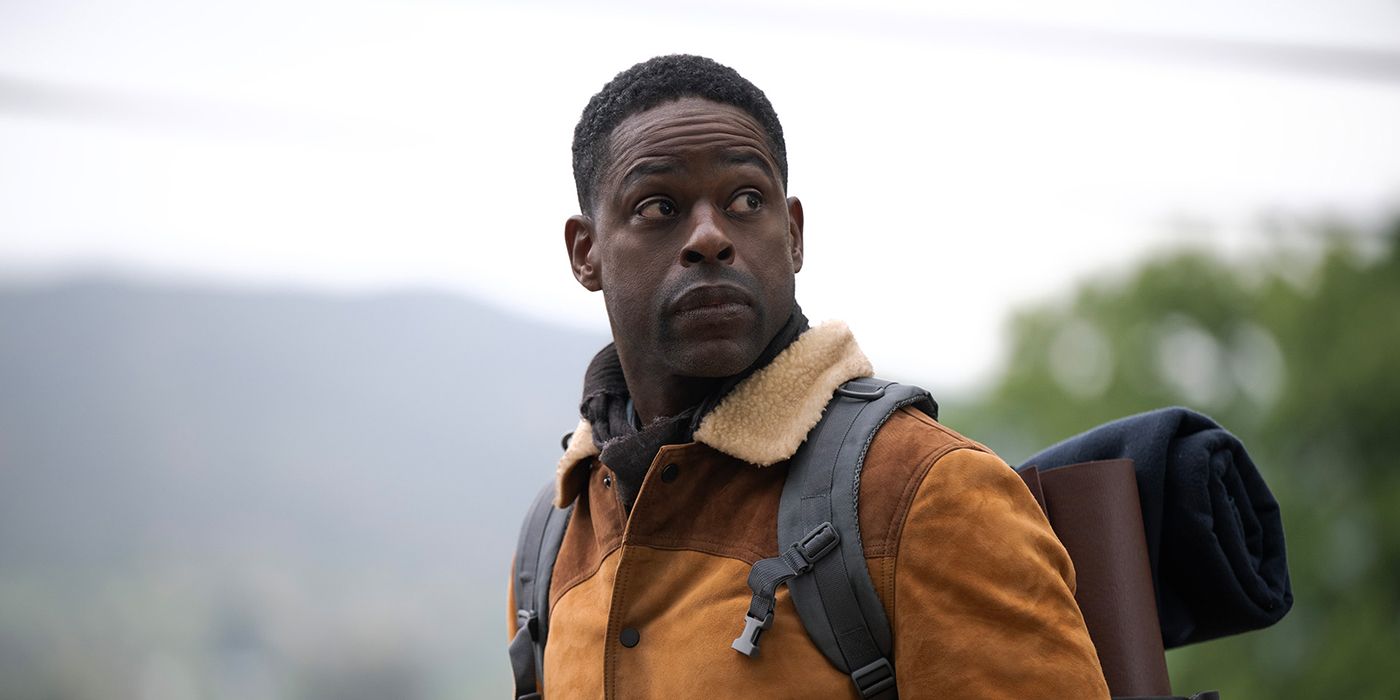
The second season of the show is here, and it offers a fresh take on the dystopian thriller. While most post-apocalyptic shows focus on bleak survival, this one previously stood out by portraying a surprisingly comfortable aftermath – the story unfolded within a luxurious underground bunker created by a wealthy individual. This season promises a shift in that perspective.
Season 2 takes place in a destroyed world, similar to shows like The Walking Dead, The Last of Us, and Fallout. The way the show handled its first season and then changed direction for Season 2 is what makes it unique. While Season 2 now feels more like those other shows, the world it portrays remains distinct.
Paradise Season 1 Depicts a Truly Perfect World
Most post-apocalyptic shows portray a destroyed world after a disaster, like a virus or tragic event. However, Paradise is different. Viewers don’t even know the world has ended until a surprise reveal at the very end of the first episode, because the show initially presents a seemingly normal, suburban setting.
This underground town is a near-exact replica of one above ground, created by tech billionaire Samantha Redmond, nicknamed “Sinatra.” She was the only person who listened to warnings about a massive tsunami and, crucially, the only one with the money, determination, and unwavering focus – driven by the personal loss of her son – to actually build it.
Viewers might recognize this type of enclosed community from other shows about the end of the world, like Alexandria in The Walking Dead. However, Paradise is unique because it’s completely safe from external dangers. Unlike other settings with zombies, monsters, or armed guards, this underground bunker has no easy access – you can’t get in or out without a complex process and Samantha’s permission. This adds an extra layer of mystery to the story.
I’ve seen a lot of shows with people living underground – like Silo, for example – but Paradise is different. What really struck me about it is how incredibly realistic everything is. They’ve digitally created everything – the sun, the sky, even the grass and ponds – to such a degree that it’s totally convincing. It’s seriously immersive!
This creative choice sets the show apart. Season 2 of Paradise takes a new direction, portraying a devastated Earth much like other post-apocalyptic series. However, this shift also broadens the show’s scope, allowing it to explore both the ruined world and what remains, offering a perspective unlike any other.
Earth is Ravaged in Paradise, But Humanity Exists
The second season of Paradise quickly shows us that even amidst the struggle to find food and supplies, many people still retain their goodness. This is particularly evident when Link and his group reach Graceland, and Annie is initially frightened, fearing they’ll take her, their resources, and control everything.
The reality, however, is quite different. This group isn’t trying to hurt her; they have a clear goal and are determined to achieve it. Although she’s initially frightened, it’s refreshing to see her and the crew actually become friends, a welcome change from the typical stories filled with distrust, backstabbing, and violence.
It’s common in many apocalyptic stories for characters to initially trust others before becoming wary, as seen in The Walking Dead where Rick Grimes’ group only became suspicious after being betrayed. However, Paradise takes a different approach, aiming to demonstrate that the people Samantha abandoned were actually good and maintained their values, even in a desperate situation.
Seeing Xavier injured on the ground and riding to find him confirms Annie’s internal conflict. She’s unsure whether to trust him, or if she’s simply ensuring he isn’t a danger to her by approaching him while he’s vulnerable. His unconscious and injured state suggests he poses no immediate threat, but Annie’s instincts tell her there’s more to her actions than just self-preservation. Despite her reservations, she can’t bring herself to leave a stranger to suffer or potentially die.
Look, the film doesn’t shy away from the fact that some truly awful people are still out there, driven to desperate measures just to get by – we see it in the villain pursuing Daniel and his friends, a guy Xavier ultimately has to take down to protect the kids. But thankfully, that kind of character feels more like an outlier than the norm. It’s hard to be certain, given Annie’s long isolation, but the overall vibe is hopeful: these survivors are battling against incredible odds, and they’re determined to keep going.
What makes the show Paradise stand out when depicting the apocalypse is that the community it centers on—despite appearing idyllic—is actually deeply flawed. Its creation involved significant sacrifices that immediately cast a shadow over everything.
This is evident in Samantha’s disturbing wish that President Cal Bradford would use nuclear weapons to eliminate everyone remaining—a plan he thankfully didn’t carry out. It’s also clear from the Season 1 finale, which revealed the identity of Bradford’s killer and their motives, and from a Season 2 flashback showing Samantha’s initial encounter with Billy and the unsettling task she assigned him.
Unlike the others, Link has inspired a large group of people to travel peacefully across state lines, all searching for a bunker he believes is real. Most seem to be getting along, with only a few causing trouble. It’s a diverse group of people simply trying to survive, and they’re surprisingly working together – something they likely wouldn’t have done before the world changed.
Paradise Teases More to Come
Besides the stark contrast between the two visions of the apocalypse – one driven by luxury and selfishness, the other by basic survival – Paradise stands out because the events causing the disaster may not be over. A flashback shows Samantha had further conversations with Dr. Louge, the scientist whose seminar initially inspired her to construct the bunker, and he predicted a grim future.
He accurately predicted everything that’s come to pass – the massive tsunami, the severe weather, and the volcanic ash – and even the subsequent period of calm when it seemed like life was returning to normal. However, he warns that increasing greenhouse gases will ultimately cause deadly heat waves for anyone remaining. According to his predictions, this final threat is close at hand.
He’s usually right, so those still above ground probably don’t realize how dangerous things are about to become. But Samantha does, which adds a thrilling and unsettling layer to the story. The biggest challenges haven’t arrived yet. It’s no longer simply about surviving in the bunker or rebuilding a life for those remaining outside. Now, they need to prepare for something even more catastrophic – something unstoppable and potentially unsurvivable – that’s quickly approaching.
This makes us wonder if Samantha invited Dr. Louge to the shelter because she needed his expertise to navigate the current crisis. She briefly mentioned someone named Alex to her housekeeper, and Alex might be Dr. Louge’s first name. It’s possible he’s hidden away, perhaps even held against his will. He appeared to have accepted that the world – and his life – were ending. Therefore, if he is in the bunker, he likely didn’t come voluntarily, which could explain why we haven’t seen him yet.
Paradise sets a new standard for dystopian television by expertly blending the discoveries made from venturing between an underground bunker and the ravaged world above, with the looming threat of another disaster. Simply showing a barren landscape, frightening creatures, and struggling people isn’t enough anymore – Paradise has raised the stakes and challenged future shows to be more compelling.
Found an error? Send it so it can be corrected.
Read More
- United Airlines can now kick passengers off flights and ban them for not using headphones
- Crimson Desert: Disconnected Truth Puzzle Guide
- All 9 Coalition Heroes In Invincible Season 4 & Their Powers
- Mewgenics vinyl limited editions now available to pre-order
- Grey’s Anatomy Season 23 Confirmed for 2026-2027 Broadcast Season
- Viral Letterboxd keychain lets cinephiles show off their favorite movies on the go
- The Boys Season 5 Spoilers: Every Major Character Death If the Show Follows the Comics
- Assassin’s Creed Shadows will get upgraded PSSR support on PS5 Pro with Title Update 1.1.9 launching April 7
- All Golden Ball Locations in Yakuza Kiwami 3 & Dark Ties
- Does Mark survive Invincible vs Conquest 2? Comics reveal fate after S4E5
2026-02-23 20:50