
It’s understandable to struggle with summarizing a complex story into just one sentence – it can feel like it doesn’t do your work justice. You’ve likely spent a lot of time developing rich characters and a detailed world, so condensing it all seems daunting. But a one-sentence summary isn’t meant to minimize your story; it’s about identifying its core essence – the central idea that will draw readers in. Think of it as creating an enticing preview. We’ll use the fictional loss of Cyberstan as an example to show you how to do this effectively.
Key Takeaways
- Focus on the core components of your story: A great summary introduces the heroes and villains, defines the high-stakes conflict, and stays under 25 words to deliver a clear, powerful message.
- Set the right tone with powerful language: Swap out weak, passive verbs for strong, action-packed words that create a sense of urgency and connect with your reader on an emotional level.
- Test and refine your summary before you share it: Read your sentence aloud to check its flow, ask friends for honest feedback, and tweak your word choice until the summary hits its mark perfectly.
What’s a One-Sentence Summary?
A one-sentence summary is like a quick, captivating pitch for your game’s story – what you’d tell a friend to immediately grab their attention. It’s the core of your narrative, distilled into its most exciting elements. This single sentence should hint at the adventure, conflict, and hero at the heart of your game. Crafting this sentence well is the crucial first step in turning a great idea into a truly memorable experience players will love.
Why Your Gaming Story Needs One
With so many games available, you need to quickly capture players’ interest. A one-sentence summary is the perfect way to do this – it’s a concise explanation of your game’s main idea. This isn’t just for attracting players; it also helps you stay focused. Being able to describe your game in a single sentence demonstrates a clear vision, which will guide you in creating a strong and consistent narrative throughout the entire game, from quests to characters and plot twists.
Cut Through the Noise with Clarity
A strong one-sentence summary is crucial for attracting players in a crowded gaming market. It immediately conveys what makes your game special, increasing the chances someone will try it. This clarity is your biggest strength – it prevents your unique story from getting lost in a confusing description. Beyond attracting players, this summary also guides your entire development team, keeping everyone focused and ensuring your story stays on track and doesn’t become overly complicated. It’s the core idea that both hooks players and keeps your creative vision consistent.
How to Write a Hooking One-Sentence Summary
Want to quickly explain the entire heartbreaking story of Cyberstan in just one sentence? A strong summary immediately captures a reader’s interest and shows them why the story matters. It’s the key to grabbing their attention and making them want to learn more. Here’s how to write a summary that honors those we’ve lost and highlights the challenges that remain.
Stick to the 25-Word Rule
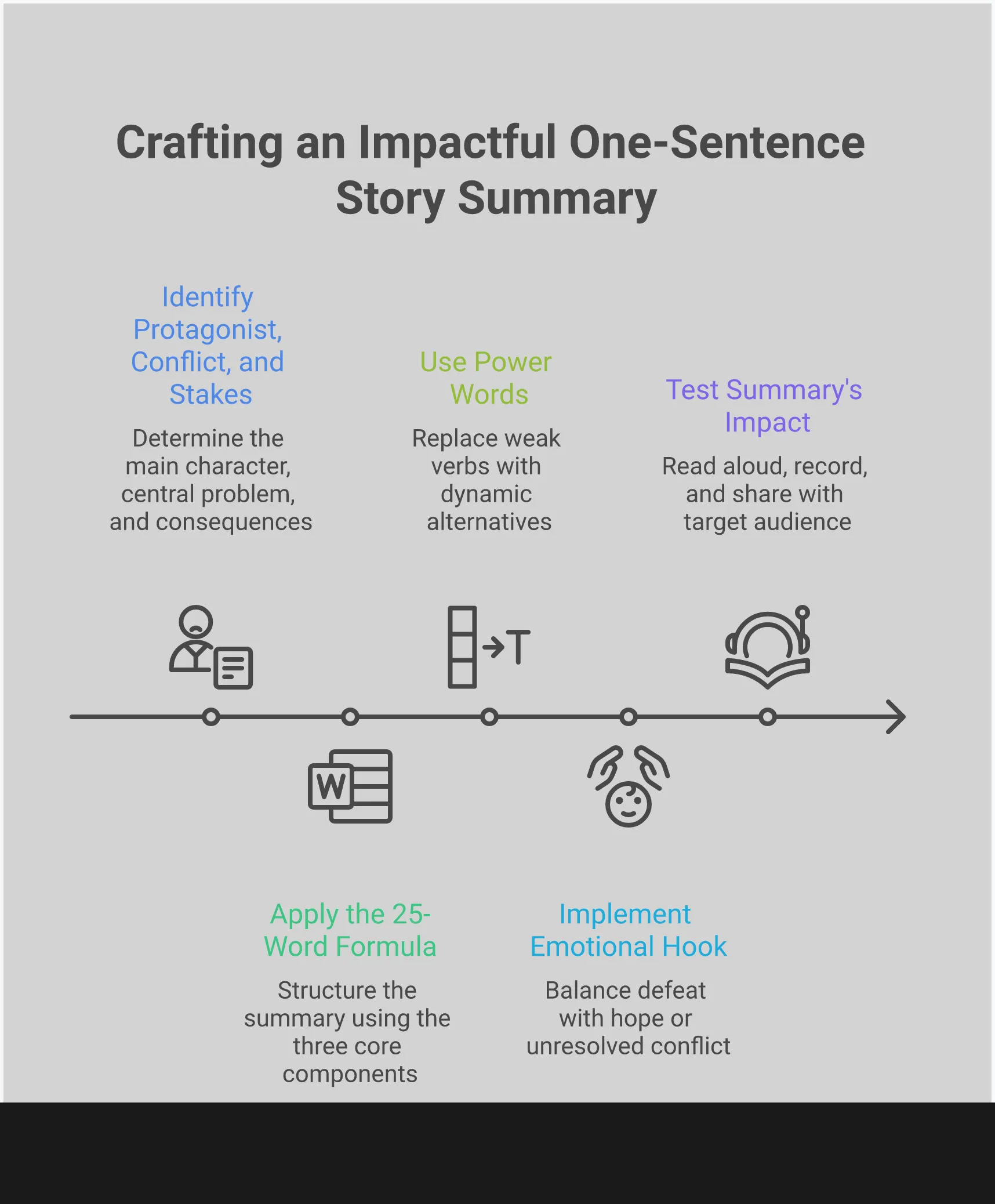
Effective summaries are short and to the point. Aim for under 25 words to ensure clarity and impact. Cut out unnecessary details and focus on the core message. For instance, instead of a lengthy explanation, you could simply state: “Helldivers failed to liberate Cyberstan, leaving the Cyborg homeworld unconquered and democracy in peril.” This concise sentence immediately conveys the key information – the mission’s failure and its consequences – without any wasted words. Keeping it brief dramatically improves how your message is received.
Nail the Essential Elements
A strong summary needs three core ingredients: the conflict, the stakes, and the outcome. Who was fighting? What was on the line? And who won? Answering these questions gives your sentence substance. Consider this: “After a long and brutal campaign, our forces were repelled by the Cyborgs, who still hold Cyberstan.” This clearly identifies the conflict (our forces vs. Cyborgs), the stakes (control of Cyberstan), and the outcome (we lost). By including these essential elements, you give your reader a complete picture of the situation in just a few seconds.
Balance Epic Fails with High Stakes
Cyberstan’s defeat was a significant setback, and your report should emphasize that. However, simply stating the loss isn’t enough to grab attention; you need to build suspense. Do this by acknowledging the defeat while also highlighting what’s at stake moving forward. Recognize the failure, but suggest the war isn’t finished. The official message is essentially: “We were defeated, but we inflicted serious damage.” This approach conveys the seriousness of the situation and implies ongoing conflict. It lets your audience know that while one battle is over, the larger story continues, and that balance between loss and a glimmer of hope will keep them engaged.
What Makes a One-Sentence Summary Work?
A powerful one-sentence summary is more than just a short description; it’s a carefully crafted hook that grabs your reader and refuses to let go. Think of it like the perfect weapon loadout: every component has a specific purpose, and when they all work together, the result is unstoppable. To write a summary that hits the mark, you need to focus on three core elements. These pieces transform a simple sentence into a compelling call to action, making other gamers feel the urgency and drama of your story. When you nail these fundamentals, your summary won’t just describe the events; it will make your audience feel like they were right there in the trenches with you, fighting for every inch of ground.
Introduce Your Heroes and Villains
Great stories always have a clear distinction between ‘us’ and ‘them’. Your introduction should quickly show readers who to support and who the opposition is. You don’t need to explain everything right away – just a simple way to define the two sides. For instance, when the Cyberstan operation failed, it wasn’t just a defeat; it was ‘Super Earth High Command’ against the unstoppable ‘Automaton threat’. This instantly gives the reader context, letting them know who the heroes (the Helldivers) are and who they’re fighting. This builds an immediate emotional connection and makes the conflict feel more important. The trailer for Diablo 4’s Vessel of Hatred does this well by focusing on a single, frightening villain.
Define the High-Stakes Conflict
A great summary hinges on conflict. What is the central problem, and what happens if our heroes fail? The fall of Cyberstan wasn’t just a loss; it was a catastrophic failure that triggered an immediate and “unjust counter-offensive” from the Cyborgs. The stakes are crystal clear: we didn’t just lose territory, we angered the enemy, and now they’re coming for us. Your summary needs to communicate this tension. What’s at risk? Is it the fate of a planet, the survival of your squad, or the last bastion of democracy? By defining the conflict and its consequences, you create a sense of urgency that makes people want to know what happens next. It’s the core of the drama that keeps us all logging back in.
Use Action-Packed Language
The words you choose are crucial, especially when space is limited to around 25 words. Avoid weak or passive language and opt for strong, active verbs instead. For example, instead of saying the battle was difficult, describe it with impactful words like “repelled” or “hardfought” – this creates a much more engaging and vivid image. Words with weight and emotion help readers truly feel the intensity of the conflict. Selecting powerful verbs is like choosing the perfect equipment – it’s the key to making your writing truly memorable and effective.
How to Set the Right Tone
The difference between a simple news report and a truly compelling story lies in how you set the mood. You want your readers to feel what’s happening – the sadness of loss, the intensity of the struggle, and any glimmer of optimism. Choose words that create emotion and a sense of immediacy, drawing your audience directly into the experience. Imagine you’re reporting live from the scene, turning confusion into a meaningful story. By skillfully blending strategy, heartfelt emotion, and a sense of shared experience, you can craft a narrative that stays with people long after the events are over.
Sound Urgent and Strategic
When I’m telling a story in a game, I really try to make it hit right away. I don’t beat around the bush – I just state what’s happening. Like, instead of saying things are bad, I’d say something like, “The Cyberstan Operation has officially failed.” It just sounds so much more serious and gets right to the point. I also try to talk about the conflict like it’s a real strategy game. Saying something like, “The Automaton threat reaches a breaking point,” makes it feel way more critical than just another loss. It’s like building the perfect Warzone loadout – every word has to be precise and impactful to really show how serious things are.
Connect with the Agony of Defeat
A truly compelling story evokes emotion, and a powerful war story captures the complicated feelings that come with a difficult defeat. Instead of simply stating a loss, show the unwavering determination that persists even in failure. For example, saying something like, “Yes, we lost… but we really hurt them,” perfectly conveys that spirit. It admits the setback while highlighting the impact made on the opposing side, creating a sense of strength and giving the defeat purpose. This resonates with the way players cope with loss in games like Palworld, finding humor and resilience even in the face of setbacks, and continuing to fight on.
Blend Camaraderie with Seriousness
Stories about large-scale conflicts become more engaging when we see them through the eyes of the individuals fighting them. By showing the characters’ personal fears and doubts, we make the story feel more real and relatable. Even a simple question – like wondering if a risky plan will actually work, or what happens if they keep losing – can instantly connect the epic battle to universal human anxieties. It reminds us that these warriors are people with something to lose. These shared moments of vulnerability create a strong sense of connection, similar to how fans come together to discuss and enjoy games.
What Should Your Reader Feel?
As a huge fan of the Cyberstan saga, what really grabbed me was how it made me feel. It wasn’t just about what happened, but about being there – feeling the gut punch of their loss, the rush of hoping for a comeback, and the bond between those fighting together. Honestly, the best stories don’t just tell you events, they take you on an emotional ride. When the author focused on how I should feel, it transformed what could have been a simple rundown into something truly captivating. That’s the difference between something you quickly forget and a legendary tale everyone’s still talking about weeks later.
The secret to a compelling story is carefully controlling the reader’s emotions. Start by building a sense of unease and mystery around a setback, then quickly shift to a feeling of urgent desperation when the threat escalates. Ultimately, inspire a strong sense of unity, making the reader feel invested in the Helldivers’ mission. It’s not enough to simply state what happens; you need to make your audience feel something. When they experience both the pain of defeat and the possibility of victory, they become more than just observers—they become part of the narrative. Let’s explore how to achieve these emotional connections and create a story people won’t forget.
Build Tension and Spark Curiosity
To really grab your reader’s attention, start by immediately highlighting what’s at risk. Don’t delay the important information. Announce a setback right away to build tension. For example, consider this: “The Cyberstan Operation has officially failed. As the Automaton threat reaches a breaking point in Helldivers 2, Super Earth High Command…” This is effective because it delivers shocking news and then leaves the reader wondering what will happen next. Describing the Automaton threat as being at a “breaking point” emphasizes the severity of the situation and makes your audience eager to find out what happens next.
Create Urgency for the Counter-Attack
After showing that something has gone wrong, it’s important to create a sense of immediate danger for the reader. The opposing force won’t wait while things get organized. Emphasizing how quickly and unexpectedly they react builds tension. For instance, you could write something like: “They’re already launching a counterattack? Even though we lost… we seriously damaged them. This fast of a response doesn’t add up.” This increases the stakes and also introduces a puzzling element – why are they attacking so quickly? This feeling of urgency and unpredictability will draw your reader further into the story.
Inspire Empathy and Solidarity
To make your story truly resonate, help your readers feel personally connected to it. One way to do this is to present events as something everyone experienced together. Instead of focusing on individual losses, show it as a shared setback – for example, “Helldivers 2 players didn’t succeed in protecting democracy and maintaining peace.” This highlights collective responsibility and emphasizes the emotional impact of what happened. When readers feel the weight of the mission, the loss feels like their loss, and the struggle becomes their fight. This creates a strong sense of empathy and unity, making the story far more meaningful.
Write the Summary First or Last?
When’s the best time to write that one-sentence summary of your story – at the very beginning, or after you’ve finished writing it? The truth is, it’s up to you! There’s no single correct approach, as different methods work for different people. The key is to discover what helps you be most creative.
Writers approach storytelling in different ways. Some like to plan everything out in advance, using a single sentence to define the core of their story – this helps them stay focused as they build the plot and characters. Others prefer to write without a detailed plan, discovering the story as they go. For these writers, writing a summary after they’ve finished can help them condense their work into a compelling overview. There’s no right or wrong method – it simply depends on how each writer prefers to work.
Find a Writing Approach That Fits
All writers work differently, and figuring out what works best for you will make your writing flow more easily. If you like to plan things out in advance, like using a strategy guide in a game, start by writing a summary of your story. This will help keep you focused and clear about the main conflict and characters. But if you prefer to explore and discover as you go, write the story first! Then, you can write a summary that accurately reflects what you’ve created.
Discover Your Creative Process
Everyone finds their creative groove differently, so don’t be afraid to try different approaches. When working on your Cyberstan story, experiment with starting with the summary versus starting with the story itself. Does writing the summary first help you focus, or does it feel limiting? Maybe you’ll prefer writing the full story and then summarizing it. You might discover one method works instantly, or a combination of both feels best. Some writers like a quick summary to get their ideas organized before they begin, but ultimately, the most important thing is to figure out what helps you feel most creative and get the most work done.
Avoid These Common Summary Mistakes
A great story can be ruined by a weak summary. When trying to describe something complex and emotional, like the downfall of Cyberstan, it’s easy to get lost in minor details or fail to capture the story’s impact. Your summary should act like a movie trailer – it needs to be concise, engaging, and focused on the most important parts. Let’s look at some common mistakes to help you write a summary that grabs readers’ attention just as powerfully as the story itself. Clear messaging and strong language are key to hooking readers from the start.
Don’t Overcomplicate the Message
The main purpose of your one-sentence summary is to be immediately clear. If readers have to work to understand it, you’ve lost their attention. It should grab their interest, not demonstrate how intricate your story is. For example, the fall of Cyberstan is about a devastating loss and the fight to survive – that’s the key message. A simple, direct theme is crucial for sparking curiosity and getting readers invested. Don’t obscure the central idea with complicated language or plot details. Focus on the core conflict and use that emotional impact to draw people in.
Avoid Stuffing in Too Many Details
It’s easy to want to include every interesting detail in your summary – like a character’s name or the type of weapon used. But try not to! Readers connect with stories through feelings, and your summary is just the beginning. Instead of listing facts, focus on the most important, impactful moments. Use evocative phrases like ‘shattered legions’ or ‘the last transport,’ but save the specifics for the full story. Too much detail can overwhelm readers and weaken your main message. Think of your summary as a preview, hinting at the richness of your story, not as a complete record of everything that happens.
Ditch Weak Verbs
Using strong verbs can transform a dull sentence into something memorable and impactful. Weak or passive verbs can quickly make your writing feel flat, so avoid constructions like “Cyberstan was lost by the soldiers.” Instead, write directly: “The soldiers lost Cyberstan.” Even better, use a more powerful, active verb: “Automatons shattered Cyberstan’s defenses.” Notice how much more engaging that is? Vivid writing depends on strong verbs to truly immerse the reader. When reviewing your work, look for forms of “to be” verbs like “is,” “was,” “were,” and “are,” and replace them with verbs that show action and create a sense of excitement. This simple adjustment will make your story feel more immediate and compelling.
How to Get Unstuck
It’s incredibly frustrating when you have a brilliant story in your mind but can’t seem to get it down on paper – that’s writer’s block. It often happens because we put too much pressure on ourselves, striving for perfection in every sentence. The key to overcoming it is to relax and not worry so much about making everything perfect right away.
Break Through Writer’s Block
To get started, try to convince yourself this first draft doesn’t need to be perfect. Think of it as simply getting your ideas down on paper – a rough draft that’s just for you. When you stop worrying about writing something amazing right away, it becomes much easier to actually write. You can polish and refine it later. Don’t stress over the perfect beginning; just focus on moving the story forward, even if it feels awkward at first.
Try These Mini-Writing Exercises
If you’re feeling blocked, try some quick exercises to get your fingers moving. A great one is “free writing”: set a timer for ten minutes and write continuously about Cyberstan, without pausing to edit or worry about mistakes. Just keep writing until the timer rings – this helps you overcome self-doubt. You can also use short writing prompts to explore different ideas. For example, try writing about a soldier’s last meal or describing the capital city from a child’s perspective. These focused exercises can often inspire new directions for your story.
Get a Fresh Perspective
If you’re stuck writing, the issue might not be the story itself, but your surroundings. Spending too much time staring at a screen can be draining. Try changing your environment – take a walk, or listen to music that fits the mood of what you’re writing, like dramatic scores for action scenes or calming music for quieter moments. You can also try switching how you write – if you usually type, try writing by hand. This can help you reconnect with your story and see it in a new light.
How to Test and Refine Your Summary
You’ve written a summary, but before you share it, take a moment to review it. Just like preparing for a challenging game, you need to make sure it’s ready. A quick check can really improve your summary, making it more engaging and ensuring it accurately captures the dramatic story of Cyberstan’s downfall.
Read It Aloud
Okay, this might sound weird, but seriously, try reading your writing out loud. It’s a total game-changer. Hearing the words as they come out of your mouth makes you realize instantly if something sounds clunky or if a sentence just goes on forever. You start asking yourself, ‘Does this actually sound good? Does it have a nice flow?’ It’s like being a voice actor reading important dialogue – if it doesn’t sound right when you say it, your audience won’t feel it either. I’ve heard pro writers say to do this a bunch of times, just to catch everything. It really helps you find the rhythm and life of your story, you know?
Ask Your Gaming Crew for Feedback
Get feedback on your writing from friends who play the game with you. Share your summary and ask for honest opinions, but don’t just ask if they like it. Instead, ask questions like, “What do you think this story is about?” or “Does this make you want to know more?” This kind of specific feedback is much more helpful than just a simple “yes” or “no.” Since your friends are similar to your target audience, if they’re engaged by your writing, you’ll know you’re heading in the right direction. They can also tell you if the story’s central conflict is clear.
Tweak It for Maximum Impact
Now that you have feedback, it’s time to use it to improve your work. Revising isn’t just about correcting errors; it’s about rethinking your summary to make it as strong as possible. Examine each word and consider if it’s necessary and impactful. Can you replace weak verbs with stronger ones? Could rearranging a sentence make it more effective? To revise well, focus on changes that will make the biggest difference. Ultimately, you want to craft a single, clear sentence that perfectly captures the essence of your story.
Write a Summary That Gets Clicks
Your summary is the hook that pulls readers into your epic tale. It’s not just about listing events; it’s about making your audience feel the weight of the moment before they’ve even read the first paragraph. To write a summary that gets clicks, you need to blend high stakes with raw emotion, creating an irresistible urge to learn more. Think of it as the trailer for your story. It needs to be punchy, intriguing, and leave the reader wanting the full picture.
Begin by clearly stating the gravity of the situation. A direct announcement, such as “The Cyberstan Operation has failed,” instantly signals a major problem. This isn’t a small issue – it’s a devastating blow to Super Earth. Then, emphasize the immediate danger. Describing how “cyborgs have driven back our troops” creates a sense of a fierce battle against a powerful enemy. This combination of a significant loss and an urgent threat will immediately grab the reader’s attention and make them want to know what happens next.
To really grab your audience, focus on the emotional impact of the story. A simple, powerful statement like, “We were deeply hurt,” can create a personal connection and suggest a fierce struggle. Emphasize that this isn’t just about victory or defeat, but about the sacrifices made along the way. This is how you tap into what your community is feeling. Many players experienced this loss strongly, and capturing that shared emotion is crucial. Think about how fans react to big events in gaming – your summary should convey that same collective feeling. Lastly, add a touch of mystery. A line like, “This counterattack is too early to make sense,” will pique readers’ curiosity and make them want to click to find out what happens next.
Related Articles
- Deus Ex LFG: Connect with Other Augs in LFG Feature on Z League App
Frequently Asked Questions
If your game has a complicated story, don’t try to cram every detail into a single sentence. Instead, think of your summary as the main emotional core of the game – what it feels like. Don’t list all the characters and side plots. Focus on what your main character wants and what’s stopping them. That core desire and the biggest challenge they face is what makes your story compelling, and it’s the best thing to highlight in a short summary.
The 25-word limit isn’t set in stone—it’s a helpful guideline. It’s meant to encourage you to write concisely and remove unnecessary words. If your summary goes slightly over—say, to 28 words—that’s okay as long as each word is important. Ultimately, the goal is to be clear and effective, and the word count is just a way to help you achieve that.
I was wondering if this whole ‘one-sentence summary’ thing only worked for big, action-packed stories, but it turns out it doesn’t matter at all! The advice is solid no matter what you’re writing. Whether it’s a massive war in space or something smaller, like a character trying to protect their family’s farm, every story still has a main character, a problem they’re facing, and something important at risk. The basic pieces are always the same – you just change the scale of the conflict. Instead of ‘saving the galaxy,’ it’s ‘saving the farm,’ but the heart of the story is still there.
If you’re having trouble starting your story, the most important thing is to clearly define the central conflict. A strong problem drives the entire narrative. Think about what your main character desperately wants, and then identify the biggest obstacle in their way. Once you understand that core tension, the rest of your story will become much easier to develop.
You’ve written a summary – now how do you know if it’s good? The best test is to see if it grabs someone’s attention. Try reading it to a friend without any background information and pay attention to their reaction. A strong summary should make them want to learn more, prompting questions like ‘What happens next?’ or ‘Why are they doing that?’ If it sparks their curiosity and leads to a conversation, you’ve done a great job!
Read More
- United Airlines can now kick passengers off flights and ban them for not using headphones
- How to Complete Bloom of Tranquility Challenge in Infinity Nikki
- Gold Rate Forecast
- How to Solve the Glenbright Manor Puzzle in Crimson Desert
- All Itzaland Animal Locations in Infinity Nikki
- Katanire’s Yae Miko Cosplay: Genshin Impact Masterpiece
- All Golden Ball Locations in Yakuza Kiwami 3 & Dark Ties
- All 10 Potential New Avengers Leaders in Doomsday, Ranked by Their Power
- A Dark Scream Theory Rewrites the Only Movie to Break the 2-Killer Rule
- 8 Actors Who Could Play Blackbeard In One Piece Live-Action Season 3
2026-03-06 18:28