
Found an amazing Warzone strategy or a hilarious Honkai: Star Rail meme? Getting people to notice it online can be tough. That’s where a one-sentence summary comes in – it’s a quick way to grab attention and convince someone your content is worth checking out. In today’s crowded online world, a good idea alone isn’t enough, so this guide will teach you how to write that perfect opening line to get your content the audience it deserves.
Key Takeaways
- Lead with Emotion, Not Just Information: Your summary’s main job is to make someone feel something—curiosity, excitement, or humor. Go beyond simply stating the topic and instead highlight the core emotional conflict, the most surprising strategy, or a relatable community inside joke to create an immediate connection.
- Write for Clarity and Impact: Use a direct, active voice and strong verbs to make your summary feel energetic and compelling. Cut out any fluff or confusing jargon; every word should serve the purpose of getting your point across quickly and convincingly.
- Adapt Your Approach for Different Content: A summary for a lore deep dive shouldn’t sound like one for a build guide. Tailor your tone and focus to match the specific content type, ensuring you set the right expectations and deliver a promise that resonates with what the reader is looking for.
What’s a One-Sentence Summary?
A one-sentence summary is like a quick, compelling ad for your gaming content. It’s the short line under your title that appears in search results, on social media, or at the beginning of your article, and its job is to grab people’s attention and make them want to click. It’s more than just a description – it’s what convinces someone to spend their time on your content.
The very first sentence of your writing is crucial – it immediately tells readers what your piece is about. Will it be a detailed exploration of the story behind Diablo 4, or a funny collection of memes from the Honkai: Star Rail community? Your opening sets expectations and promises a specific kind of content, like a powerful Warzone setup, an insightful character study, or a clear explanation of a tricky game feature. A strong, engaging opening ensures that the right audience – the gamers who will appreciate your work – will choose to read it.
Why a Single Sentence Matters for Gaming Content
The world of gaming is full of intricate stories, complicated rules, and tons of content, making it hard to stand out. A concise, one-sentence summary helps cut through the noise and quickly explains what a game like Palworld or a Warzone match is all about. In a crowded online space, that summary acts like a signal, letting players know, “This is the guide I need.” It’s not just about being brief—it’s about being compelling enough to grab someone’s attention and make them want to learn more.
The Psychology Behind a Powerful Summary
Effective summaries grab our attention by playing on our natural curiosity. They offer a glimpse of something interesting – a clever approach, a surprising twist, or a strong opinion – without giving everything away. This creates a desire to learn more, encouraging clicks. Great summaries also connect with readers on an emotional level. Mentioning feelings like the “frustration” of a difficult challenge or the “joy” of a rewarding find makes the content relatable and helps readers feel understood, drawing them in even before they start reading.
What Makes a Great One-Sentence Summary?
A one-sentence summary is like the opening move in a game – it needs to be both concise and impactful. A good summary doesn’t just tell you what something is about; it grabs your attention and makes you want to learn more. Think of it as the difference between a boring description and an exciting invitation.
As a gamer myself, I’ve learned that first sentence is everything. It’s how you grab someone’s attention, whether you’re explaining a tricky raid, posting a funny meme, or talking about a new season pass. It needs to instantly make them think, “Okay, this is worth reading!” Basically, it’s your chance to show you understand what gamers want and that you’ve got something valuable to offer. It’s like saying, “Hey, I get you, and this is going to be good!” – it sets up everything that follows, whether it’s a detailed guide, a good laugh, or a tip that changes how they play.
Key Components That Hook Readers
Great summaries depend on three key things. First, start with a strong opening – something that immediately grabs the reader’s attention, like a surprising statement, a shared problem, or a thought-provoking question. Second, keep it brief and to the point. Cut out anything unnecessary – people don’t have time to read lengthy explanations, so every word should matter. Finally, connect with your audience on an emotional level. Using feelings like humor, fond memories, or excitement can make your content much more engaging and unforgettable, especially for gamers.
Proven Formulas for Gaming Content
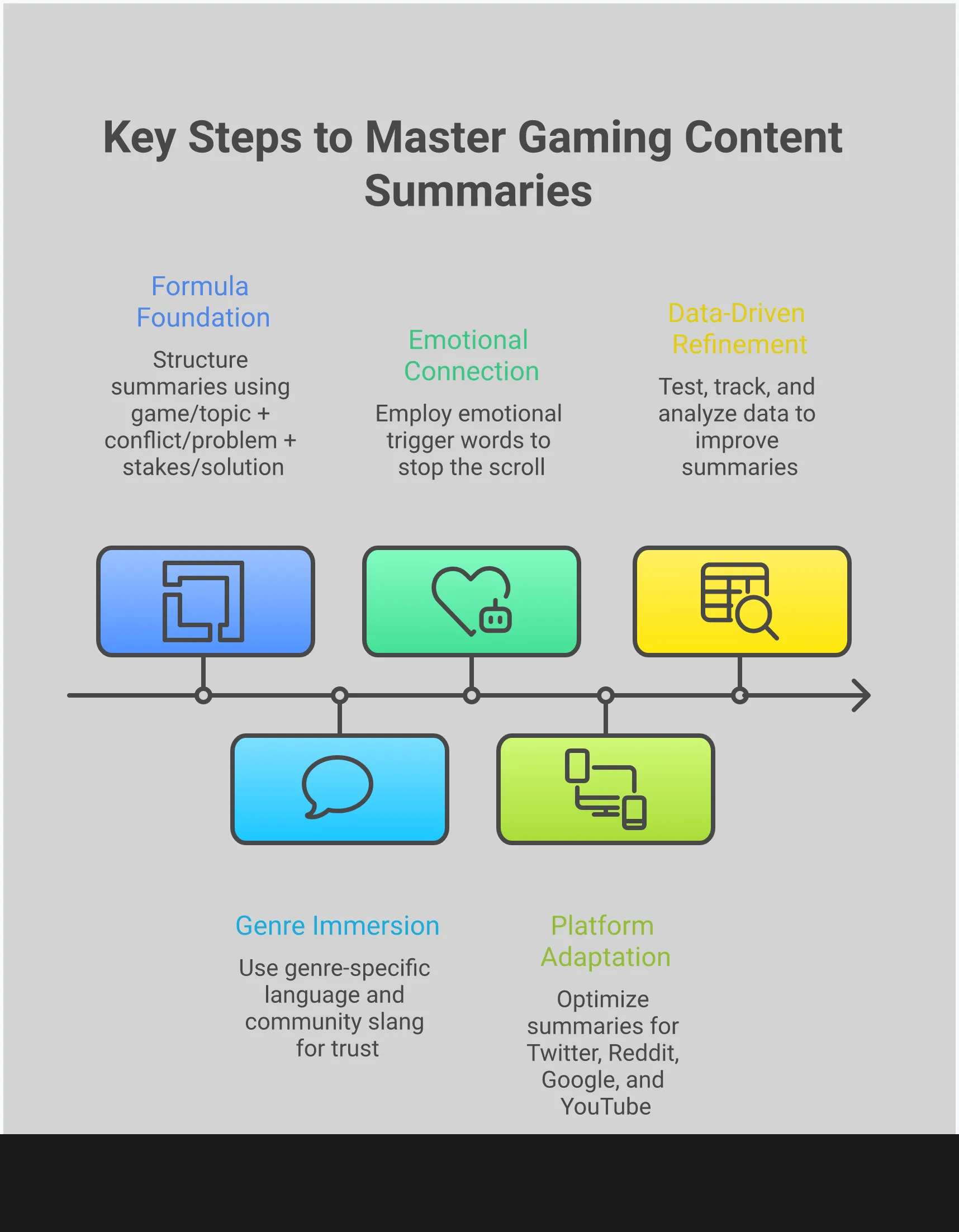
You don’t need to start from scratch every time you write a summary. There are proven structures you can use. One common approach is to start by introducing the game or topic, then explain the main challenge or problem, and finally suggest what’s at stake or how it can be solved. For instance, you could say, “The newest boss in Diablo 4 is incredibly difficult, but this Necromancer build makes it easy.” Another effective method is to focus on a character’s story or difficulties, which works well for explaining lore. Finally, highlighting the conflict and how it’s resolved is great for guides, like those detailing the best loadouts or strategies for games like Warzone, as it naturally grabs the reader’s attention.
Why Do One-Sentence Summaries Resonate with Gamers?
In the busy world of video games, grabbing a player’s attention is incredibly difficult. With so much news, new releases, streams, and online discussion happening constantly, it’s easy to get lost in the noise. A strong, single-sentence summary can break through all that, immediately telling a player something is worth checking out. It’s not just about being short – it needs to be impactful. One well-written sentence can perfectly capture the feeling of a new Diablo 4 season, the heart of a character’s story, or the fun of a Palworld feature. It’s the best way to respect a gamer’s time while promising something worthwhile – a laugh, a clever tactic, or a stronger connection to a game they enjoy.
Cutting Through the Noise in Crowded Feeds
In today’s fast-moving social media, grabbing someone’s attention is tough. A short, impactful one-sentence summary is your best tool to do just that. It’s made to quickly convey a complete thought, perfect for people quickly scrolling through their feeds. Instead of asking for a big commitment like reading an entire article or watching a video, you’re offering a quick, easy preview. A really good summary highlights the most exciting parts of a game’s story or a new character, stopping people in their tracks. It’s what separates a post that gets ignored from one that makes someone stop, consider, and click for more information.
Simplifying Complex Lore and Mechanics
Games such as Apex Legends have rich, detailed backstories that often tie into other games, which can be overwhelming for new players. A simple, one-sentence summary can help newcomers easily grasp this complex history, like the connection between Apex Legends and Titanfall. This isn’t about simplifying the story, but making it easier to get into. Even long-time fans can benefit from a quick refresher or a fresh perspective on a familiar narrative. It allows everyone to understand complicated ideas without losing the depth of the story.
Sparking Community Conversation
Short, one-sentence descriptions are great for starting conversations. They often feel like shared understandings or relatable truths that get people talking, as seen in popular Reddit threads like those summarizing Apex Legends characters – they’re funny, easy to share, and encourage immediate interaction. These summaries can also highlight the emotional core of a character, sparking discussion – for example, describing Mirage’s humor as a way to hide his sadness encourages fans to share their own thoughts on his story. Ultimately, this technique is a strong way to build common ground and strengthen the connections within gaming communities.
How to Write Compelling Summaries for Your Gaming Content
A good summary doesn’t just repeat information – it captures the heart of your content and makes people want to learn more. Think of it as a first impression, whether you’re explaining complicated game stories or sharing a funny moment. Your summary needs to grab attention, pique interest, and show readers why your content is worth checking out. Here’s how to write summaries that stand out and connect with other gamers.
Lead with Your Strongest Hook
Okay, so when I’m writing a summary for a game or anything, the first thing I need to do is grab someone’s attention immediately. The best way to do that is to start with the most exciting part – the bit that’s got the biggest twist, makes you feel something, or is just full of action. Think about what makes a game’s story awesome. Is it a huge betrayal? A tough choice with no easy answer? A character just trying to survive? Whatever it is, that’s what I need to highlight right away. Instead of just saying “This is about a new character,” I’d say something like, “A new hero shows up, but her secrets could destroy everything.” That instantly makes you wonder what’s going to happen! It’s the same reason the Vessel of Hatred trailer was so good – it started with something really powerful and emotional that just hooked you right away.
Use an Active Voice and Strong Verbs
When writing about games, use active voice! It’s clear, exciting, and focuses on who is doing what. For example, instead of saying “The final boss was defeated by the player,” say “The player defeated the final boss.” Notice how much stronger that sounds? Combine active voice with powerful, descriptive verbs. Replace weak words like “gets,” “is,” or “does” with more impactful choices like “unleashes,” “confronts,” “infiltrates,” or “masters.” This will make your writing feel more immersive, whether you’re explaining the best gear or summarizing a key story beat. Strong verbs create a sense of movement that draws readers into your content.
Find the Balance Between Niche and Broad Appeal
Writing for gamers is tough because you need to appeal to both dedicated fans and new players. You want to include detailed lore without confusing those who aren’t already familiar with it. The trick is to explain specialized terms by connecting them to broader concepts. For example, instead of just saying “The Vex,” you could say “a cybernetic race obsessed with controlling time.” This satisfies longtime fans while giving newcomers enough information to understand what’s going on. It’s all about making the content welcoming for everyone. Successful gaming content often fosters a sense of community by making complex ideas and inside jokes enjoyable for a wider audience.
Write for Both Newcomers and Veteran Players
A truly effective summary goes beyond simply defining game terms; it connects with players on a personal level. Great stories, even in games, are rooted in universal feelings like love, loss, and the desire for revenge or redemption. By focusing on the emotional heart of a character or story, you make it interesting to a wider audience. For example, when summarizing the story of Mirage from Apex Legends, you could highlight how he uses humor to cope with the pain of his mother’s memory loss. This approach appeals to longtime fans familiar with the game’s background, while also drawing in new players through a relatable emotional struggle. This connection to feelings is also why a game’s music can be so powerful, and it’s key to creating a summary that truly sticks with readers.
How to Make Your Gaming Summary Stand Out
A helpful summary simply explains what something is about. But a great summary goes further – it makes you feel something. To stand out from all the endless scrolling, your summary needs to do more than just describe the content; it needs to create a connection with the reader. This means using the unique language of the game, referencing community jokes and exciting moments, and communicating your message clearly and powerfully. When you achieve this, your summary becomes an irresistible invitation that a dedicated fan won’t be able to pass up. Let’s explore how to make that happen.
Use Genre-Specific Language and Tone
Each game has its own unique style and language. A description for a dark fantasy game like Diablo IV should sound very different from one for a fast-paced sci-fi shooter like Apex Legends. Using the correct terms and tone shows you understand the game and its community. For example, referencing the Frontier War in Apex Legends will immediately connect with players who enjoyed Titanfall.
To really succeed, fully engage with the game’s world. Listen closely to how characters speak, read item details, and explore the official backstory. A good summary will capture the game’s unique feel – whether it’s the eerie music of Diablo 4 or the specialized language of Warzone – and make a stronger impact.
Weave in Community Humor and Emotion
Games aren’t just about how they’re played; they create strong feelings and memorable moments players share. When you’re summarizing a game, focus on those shared experiences. Don’t just list what happens – suggest the emotional heart of the story. For instance, a summary of Mirage from Apex Legends is much better if it mentions how he uses jokes to hide his sadness over his family. That’s a detail fans who know his story will instantly understand and appreciate.
As a fan, I’ve noticed something really important: paying attention to what the community loves! Whether it’s funny memes about crazy strong character builds or heartfelt reactions to story moments, including those things in what you create instantly shows you get it. It’s like being part of the inside joke and proving you care about the game just as much as they do. For example, if you mention something like the player-made F.A.R.M. team from Honkai: Star Rail, you immediately connect with people – it’s like a little nod that says, ‘I’m one of you!’
Write for Clarity and Impact
A great summary doesn’t matter if people can’t understand it. Make sure your writing is both interesting and easy to follow. Avoid long, complicated sentences and get straight to the point. Use strong, action-packed verbs to create excitement. For example, instead of saying, “This guide explains a new weapon,” try something like, “This new SMG quickly destroys armor up close.” The shorter version is more impactful and creates a clearer image in the reader’s mind.
Always pinpoint the most crucial information. When summarizing an update, emphasize the key change that will significantly affect gameplay. If you’re introducing a new character, concentrate on their most important skill. Concise, informative summaries – similar to those in excellent guides for Warzone weapon builds – value your audience’s time and encourage them to read on.
How to Summarize Complex Game Lore in One Sentence
Explaining the backstory of games like Diablo or Apex Legends to someone new can be incredibly daunting – there’s just so much history! When writing about games, you don’t have time for a long explanation. You need to convey the core story and overall vibe in just one sentence, focusing on the essential conflict rather than every single detail.
Okay, so when I’m trying to explain the lore of a game, I think of it like making a killer movie trailer. You don’t want to spoil everything, just give enough to get people hooked and wanting to know more. A really good one-sentence summary shows I get the story, the main point of everything. It’s about finding that one central idea, that core thread that ties all the little stories and history together. If I can focus on what the game is really about, hint at a bigger backstory, and show how everything connects to the main conflict, I can create a summary that’s both informative and makes people want to jump in and learn more.
Pinpoint Key Themes and Character Arcs
As a gamer, I’ve learned that the best stories always hit you emotionally. When I’m trying to break down a complicated backstory, I start by figuring out the main idea. What’s the story actually about at its heart? Is it about someone finding forgiveness, battling terrifying monsters, or just trying to survive? And with characters, I ask myself what really motivates them. Take Mirage from Apex Legends, for example. I’d sum him up as a charming trickster who uses illusions to cover up the pain of his family’s history. That gets to the core of who he is without having to explain every little detail. Focusing on the emotional side makes the summary really stick with players who already know and love the lore.
Hint at Backstory Without Giving It All Away
You don’t have to detail the entire history of the Frontier War to introduce the world of Apex Legends. Often, just a suggestion of a larger story is enough. A good introduction hints at a detailed past without overwhelming players with information. For example, saying, “Following a massive galactic war, soldiers, rebels, and those left behind compete for glory and wealth in a televised battle royale,” immediately establishes a post-war setting, diverse characters, and high stakes. This creates a sense of history and makes players curious about what happened before and how it shaped the game’s world.
Connect a Single Story to the Bigger Picture
Stories feel more impactful when a character’s personal goals are linked to something much bigger, like the fate of the world. To make your summary more compelling, show how the individual story connects to the overall conflict. Explain why this character’s journey is important – perhaps their actions will decide the outcome of a major war or prevent a global disaster. For example, when summarizing Diablo 4, you could say, “A solitary traveler must face Lilith, the Daughter of Hatred, whose return threatens to engulf the world of Sanctuary in everlasting darkness.” This immediately highlights both the personal journey of the character and the huge, world-changing consequences that fans of the game will recognize.
Tailoring Your Summary for Different Gaming Content
Gaming videos cover a huge range of topics, so your summaries shouldn’t be the same for everything. A video explaining a character’s sad backstory needs a different summary than a guide on the best weapons. The key is to make sure your summary matches the video’s style and what it’s about. Essentially, you want to give viewers a good idea of what to expect – will the video be funny, educational, or immersive?
A good summary should quickly tell readers what your article is about. If you’re reviewing a game, focus on how it feels and what makes it special. If you’re writing about the game’s story, tease the mysteries and history you’ll reveal. By adapting your summary to the topic, you show readers you understand their interests, which builds trust and encourages them to read on. Now, let’s look at how to do this for common gaming articles.
Game Reviews and First Impressions
Okay, so when I’m writing up a quick take on a game, I try to really nail what it feels like to play. Just listing features? That’s boring. I want to get across what makes it fun, you know? Usually, it’s the story or the world that really grabs me. So, instead of saying “It’s got good graphics and fighting,” I’d rather paint a picture – something like, “I was totally lost in this hauntingly beautiful world where my decisions actually mattered.” That gives people a sense of the experience, not just a list of things the game has.
Lore Deep Dives and Character Spotlights
When writing summaries for articles about a game’s story or characters, focus on hinting at deeper meaning and emotional connections. Players interested in these articles want more than just basic gameplay information. Your summary should suggest a rich history or a compelling character backstory. For example, you could tease connections to a wider universe, or highlight a character’s personal struggles to make them feel more relatable than just a set of skills. A strong summary, like “Find out the sad story behind your favorite character’s humor,” will instantly grab a reader’s attention.
Strategy Guides and Build Breakdowns
Summaries for strategy guides and build breakdowns need to be direct and promise a clear benefit. Gamers reading these articles are looking for an edge. Your summary should communicate that you have actionable advice that will help them improve. Focus on the outcome. Instead of a generic “Learn how to play better,” be specific: “Master the one shotgun build that’s dominating the current meta.” This approach makes your guide feel essential and timely. It tells the reader that your article contains the specific Warzone loadouts they need to start winning more matches.
Community News and Fan Reactions
When you’re writing about what’s happening in a community or how fans are reacting to something, focus on capturing the overall feeling and excitement. These articles are about things people experienced together – the funny moments, shared jokes, and lively discussions. Your summary should make readers want to join the conversation. Use words that match how the community feels – whether they’re thrilled, annoyed, or just having fun. For instance, a line like, “See what everyone’s freaking out about in the new trailer!” immediately makes readers feel included and eager to share the experience with other fans.
Common Mistakes That Weaken Your Summary
Creating great gaming content – like detailed guides or funny meme videos – is important, but it’s not enough. If your short description doesn’t grab people’s attention, they might not even click to watch it, which is really discouraging. Luckily, most ineffective descriptions have similar problems. By avoiding these common mistakes, you can easily improve your content and reach a wider audience.
Your summary is like the beginning of a movie trailer – it should grab attention, clearly explain what your article or video is about, and make people want to learn more. If it’s unclear, dull, or uses complicated language, viewers will quickly lose interest and move on. With so much content available, that first impression is crucial. A good summary shows respect for the reader’s time and hints at valuable information, while a poor one just gets lost in the crowd. Let’s look at common mistakes so you can ensure your summaries are effective.
Relying Too Heavily on Jargon
It’s easy to get carried away with gaming slang, but using too much of it in a summary can unintentionally exclude people. Using jargon can make it hard for readers who aren’t familiar with specific gaming terms to understand, limiting who can enjoy your writing. While insider language might appeal to dedicated players, it can leave new or casual fans feeling confused. The aim should be to welcome everyone, not test their game knowledge before they even start reading. You can demonstrate your expertise without making your writing difficult to understand.
Being Too Vague or Overly Complicated
Effective summaries hit the sweet spot between being informative and intriguing. The key is to avoid being too vague or overly detailed. A summary like “New Diablo 4 update reviewed” doesn’t tell readers enough to make them want to click. Conversely, a summary that dives into every detail – like a character’s entire life story – will likely overwhelm people. Aim for clear, concise information. If your summary is confusing or too complex, readers will quickly move on to something easier to understand.
Misjudging Your Audience’s Knowledge
It’s a common mistake, but it can really impact your audience. When you’re creating content, remember that not everyone knows as much about the topic as you do. If you assume your audience is familiar with every detail – like a game’s backstory or inside jokes – your explanations can become confusing. It’s important to understand who you’re talking to. Don’t assume prior knowledge, or you might lose readers. Instead of referencing obscure details, provide enough context so everyone can follow along. This way, you’ll still please your dedicated fans, while also making your content accessible to newcomers.
How to Test and Refine Your Summaries
Writing a killer summary is only half the battle. The other half is figuring out if it actually works. You can’t just post and ghost; you need to see how your audience reacts and be ready to tweak your approach. Think of it like testing a new loadout in Warzone—you try it, see how it performs in a real match, and make adjustments. This feedback loop is what separates good content from great content. It’s about listening to your community, looking at the data, and understanding that what works on one platform might not fly on another. By paying attention, you can turn your summaries into powerful tools that consistently draw readers in.
Read Your Community’s Feedback
Your audience is the best source of information about what works. Pay attention to their comments on platforms like social media, Reddit, and in comment sections – they offer honest and direct feedback. If a summary you wrote about the Diablo 4 soundtrack led to a lively discussion about boss music, that’s great! Lots of laughs on a Palworld joke? You hit the right note. Genuine community feedback shows you what truly connects with your audience. If people seem confused or don’t react at all, it means your summary didn’t quite land. Don’t hesitate to ask them directly for their thoughts.
Analyze Engagement and Click-Throughs
Comments explain why people react to your content, but data shows you what they’re actually doing. Pay attention to your analytics to understand how users are interacting with what you create. Click-through rate (CTR) is especially important – a strong summary will encourage clicks. If your CTR is low, it likely means your opening didn’t grab enough attention. Also, track shares and likes to see how engaging your summary is. Lots of shares show you’re connecting with your audience. These numbers aren’t just about popularity; they reveal whether your summary is effectively doing its job.
Adapt Your Approach for Each Platform
There’s no single perfect way to summarize something. What works well on one platform might flop on another. For example, a short, catchy summary with memes could be popular on Twitter, but it might not be well-received on a more serious forum. It’s essential to customize your summaries for each platform. On Twitter, keep it short and engaging. For blog post titles, prioritize clear language and relevant keywords for search engines. On Reddit, understand the specific community’s culture – a joke that lands in one subreddit might not make sense in another. Always think about where people will see your summary and adjust your writing style, tone, and length to fit their expectations.
Related Articles
- Deus Ex LFG: Connect with Other Augs in LFG Feature on Z League App
Frequently Asked Questions
How can I be sure my summary isn’t just clickbait? The line between an intriguing hook and clickbait comes down to a single thing: honesty. A great summary makes a promise that your content actually keeps. It creates curiosity about the real value inside your article. Clickbait, on the other hand, promises something sensational and then fails to deliver. If your summary says you have a game-changing strategy, your article better have one. As long as you accurately represent the core of your content, you’re creating a compelling hook, not just chasing empty clicks.
Yes, a technical guide, even a build breakdown, benefits from an emotional connection, but it’s not about telling a story. It’s about understanding what motivates your audience. Think about what frustrations or goals they have – like being stuck on a difficult boss or wanting to win more often. Your introduction should acknowledge those feelings and promise a solution. For example, saying something like, “This build will finally help you beat that boss you’ve been struggling with,” directly addresses their problem and makes them want to learn more. It’s about solving a problem, not just presenting information.
How can you explain unique game terms without losing new players? The trick is to offer clear explanations in a way that doesn’t talk down to anyone. Instead of just mentioning a special item or ability, briefly explain what it does. For instance, instead of saying “This guide covers the Anarchy,” try “Learn how the Anarchy, a powerful exotic grenade launcher, can help you defeat challenging bosses.” This way, experienced players will recognize your knowledge, and newcomers will understand why the term is important.
There’s no perfect length for a one-sentence summary. The most important thing is to be clear and concise, capturing your reader’s attention immediately. While aiming for under 160 characters is helpful for things like Google search previews, the true measure of a good summary is how effectively it communicates its message. If it’s clear and impactful, it’s the right length.
Okay, so if I’m totally stuck trying to write a summary, the best thing to do is forget I need to write a summary! Instead, I try thinking about what the article is really about. I ask myself, “If I had to tell a friend just one thing about this, what would it be?” Seriously, boiling it down to that single, most important point—the thing that really grabbed my attention or seemed useful—usually gives me the perfect starting point. That core idea is almost always what a good summary needs, and then I can just refine the wording from there.
Read More
- United Airlines can now kick passengers off flights and ban them for not using headphones
- Crimson Desert: Disconnected Truth Puzzle Guide
- All 9 Coalition Heroes In Invincible Season 4 & Their Powers
- Mewgenics vinyl limited editions now available to pre-order
- The Boys Season 5 Spoilers: Every Major Character Death If the Show Follows the Comics
- Invincible Season 4 Episode 6 Release Date, Time, Where to Watch
- Grok’s ‘Ask’ feature no longer free as X moves it behind paywall
- Assassin’s Creed Shadows will get upgraded PSSR support on PS5 Pro with Title Update 1.1.9 launching April 7
- Grey’s Anatomy Season 23 Confirmed for 2026-2027 Broadcast Season
- Crimson Desert Guide – How to Pay Fines, Bounties & Debt
2026-02-05 13:43