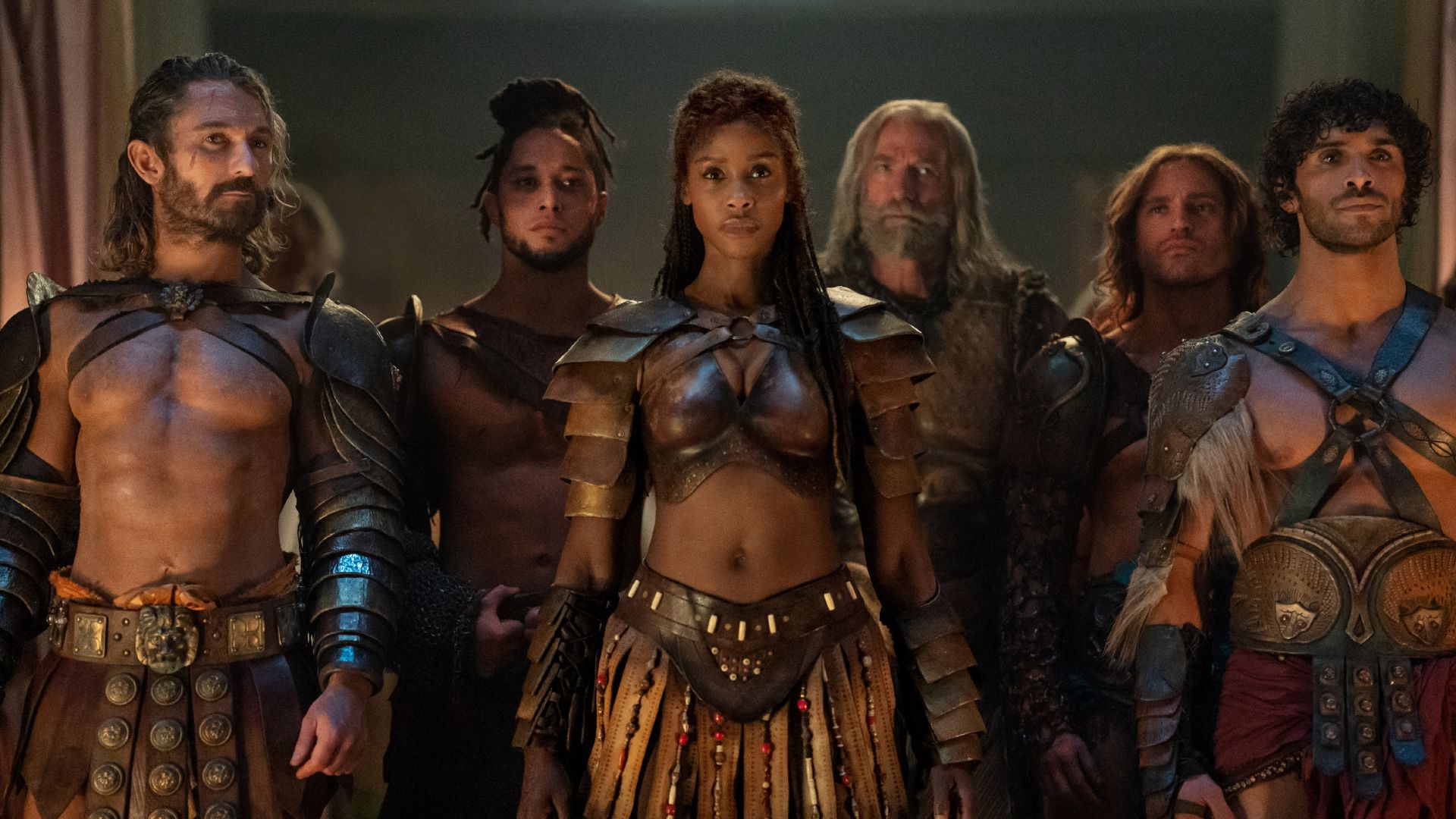
These days, TV shows rarely disappear for good. With so many streaming services needing content, old favorites can often be brought back, and that’s exactly what happened with Spartacus. Twelve years after the original series finished, the story continues with Spartacus: House of Ashur. While many fans hoped for a spin-off focused on Julius Caesar – following his compelling storyline in the final season – we’re getting a longer look at the character of Ashur, the former slave, instead.
Critics are praising the new series, House of Ashur. It initially received a perfect 100% score on Rotten Tomatoes, and currently holds a very strong 91%. This is particularly noteworthy because the previous Spartacus series never achieved a rating above 80%. While the original show and its spin-off were often criticized for being overly dramatic and focusing too much on sex and violence, overshadowing the plot, House of Ashur is now facing accusations of being overly focused on current social issues. So, what’s behind this mixed reaction?
Ashur is Back, Richer and More Tolerable
MGM
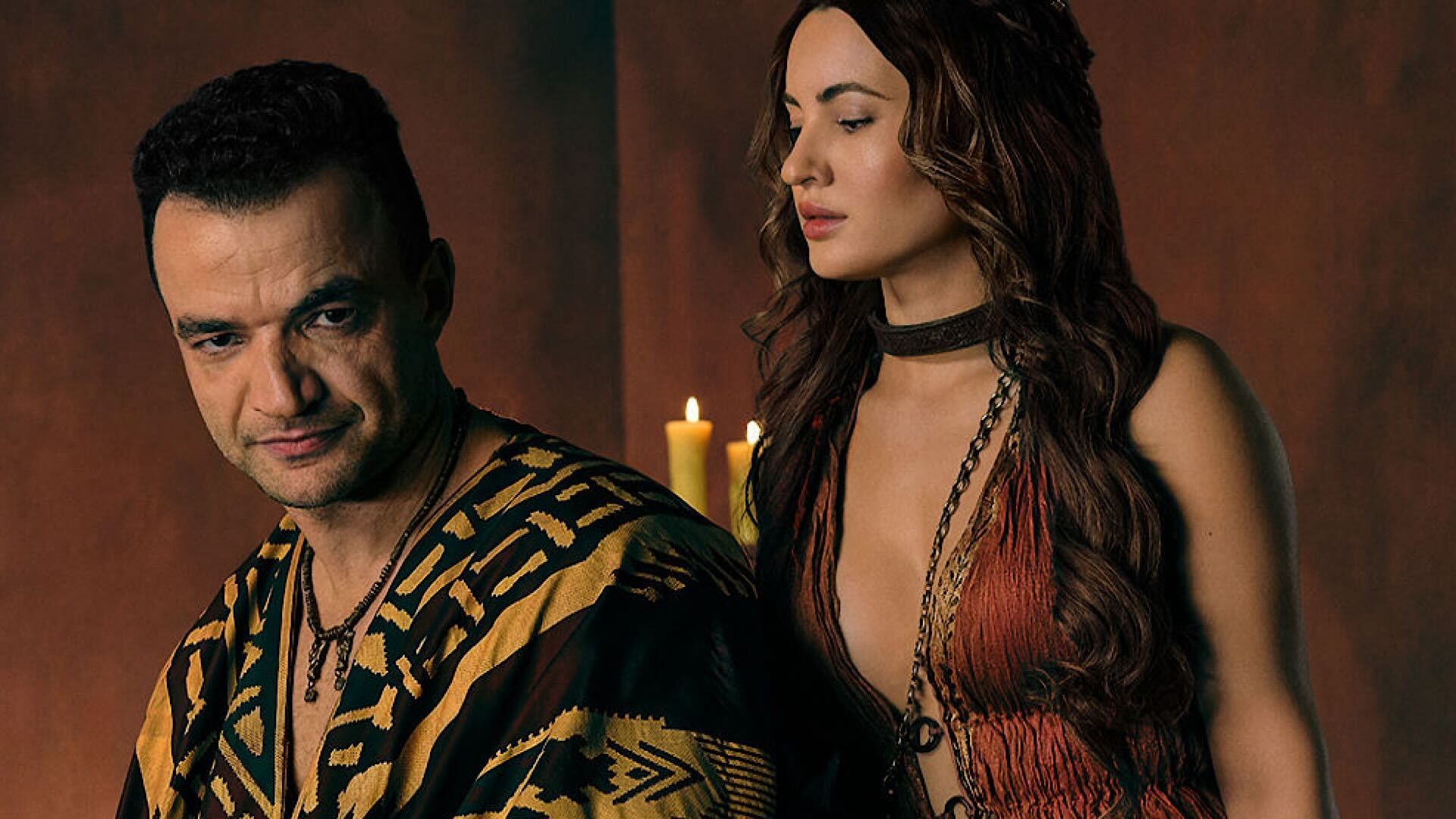
Ashur was a frustrating character in the original series, making him a surprising choice to lead a new show. It’s comparable to centering a series around someone like Joffrey Baratheon or Janice Soprano. After a leg injury ended his fighting career, Ashur became a helper for his scheming boss, Batiatus, often running errands and assisting with questionable deals in Capua. When Batiatus died during the slave revolt, Ashur tried to gain favor with Praetor Glaber, hoping to climb the ranks of power.
Ashur was a truly awful person, responsible for terrible acts like framing Barça, assaulting Naevia, torturing Oenomeus, and betraying Lucretia. He also supported Crassus during the Third Seville War. Though he eventually faced justice when Naevia beheaded him on Mount Vesuvius, the new series, House of Ashur, reimagines his story. It begins with Ashur being given a second chance after death, allowing him to return to a timeline where he survived. In this new reality, he actually helped defeat Spartacus and was rewarded with ownership of Batiatus’s gladiatorial school.
The reimagined Ashur is a clear improvement over his previous portrayal. Nick E. Tarabay delivers one of his most captivating performances since his role as Cotyar Ghazi in The Expanse. While he doesn’t fit the typical mold of a muscular, charismatic hero, he brings a unique charm to the character. This new Ashur is a skilled gladiator, immediately showcasing his abilities with his trainees. He carries himself with an effortless grace, appearing capable of overcoming any obstacle. Beyond his physical prowess, Ashur is also shown to be patient, level-headed, and a shrewd negotiator, and it’s this combination of traits that’s sparking debate.
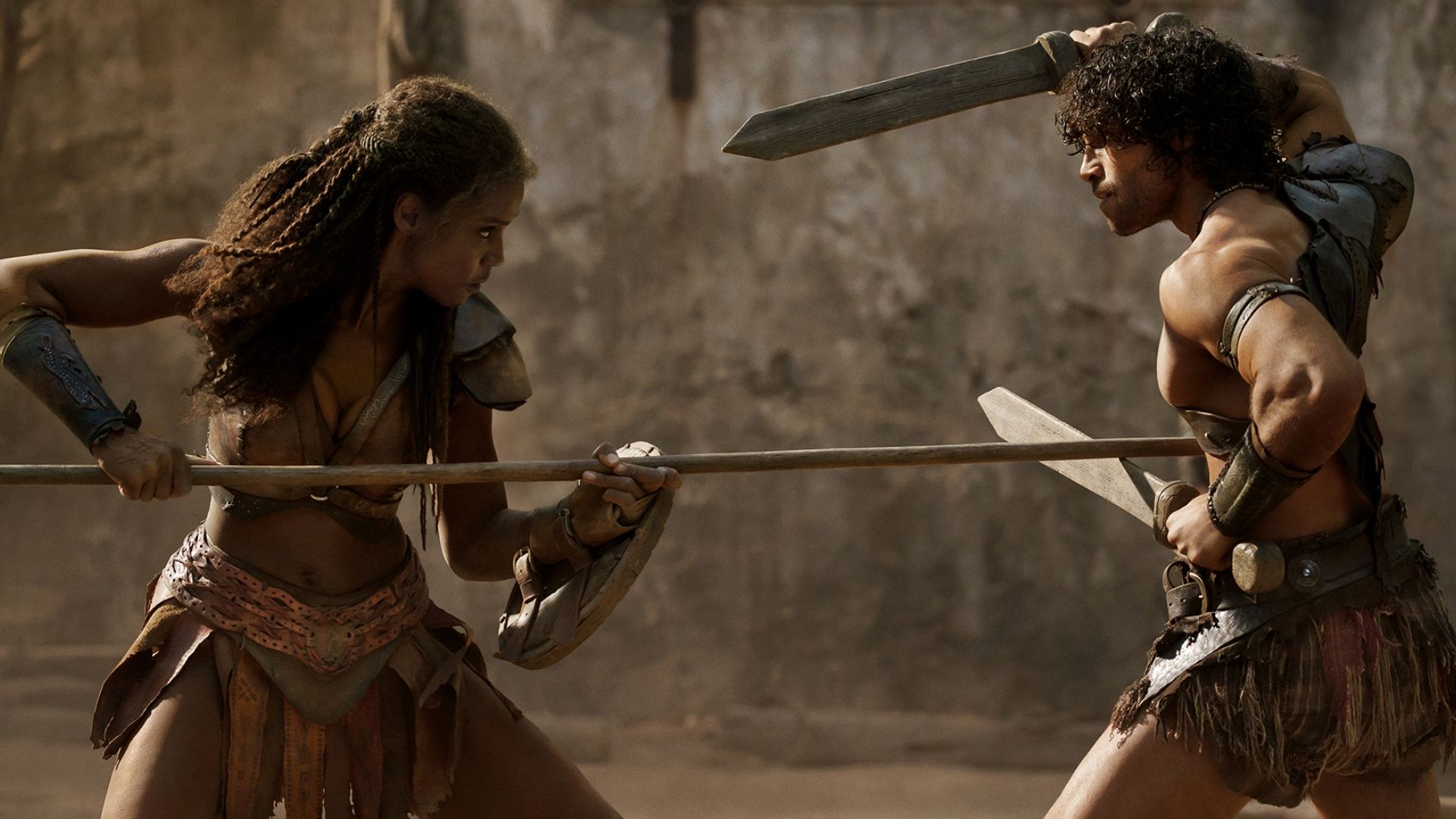
After a defeat in the arena, Ashur goes to the docks to buy a new gladiator. He immediately notices Achillia, a Black woman enslaved and being paraded in chains, who is powerfully fighting off Roman soldiers. He buys her before the soldiers can harm her, determined to train her into a champion. However, some viewers have reacted negatively to the inclusion of a Black female gladiator, calling the show overly focused on social issues (“woke”).
Has ‘House of Ashur’ Been Review-Bombed?
Starz
The audience score for House of Ashur on Rotten Tomatoes is currently 40%, which is significantly lower than the 91% rating from critics. This is a big difference compared to the original Spartacus series, where each season consistently received audience approval ratings above 80%. For example, Season 1 (‘Blood and Sand’) earned 88%, Season 2 (‘Vengeance’) had 86%, and Season 3 (‘War of the Damned’) also scored 86%. Even the prequel series, Spartacus: Gods of the Arena, was highly rated by audiences with a score of 93%.
One reviewer writes:
I’m honestly surprised by this new direction. I watched Spartacus specifically for the male characters, and adding a Black female lead feels like a misstep. The character isn’t compelling, the acting isn’t great, and her inclusion feels unnatural and forced – a far cry from what made the original series so good. I really miss Andy Whitfield! And changing Ashur into a powerful figure ruins the character; we loved him as a weak, anxious man constantly striving for approval.
Another says
I didn’t enjoy the show. I tried watching it because I loved the original Spartacus series, which I actually thought was even better than Game of Thrones. Unfortunately, it turned out to be exactly what I expected – a disappointing and overly politically correct production.
I’ve been reading a lot of reactions to the new show, and honestly, it’s been pretty brutal. Many people are calling it just plain awful. What’s really frustrating is seeing some claim that negative reviews are unfairly taken down from Rotten Tomatoes, while positive reviews from certain groups are allowed to stand. One person even suggested the site’s moderators are quick to silence criticism unless it’s a show that fits a specific agenda. It seems like some feel Rotten Tomatoes isn’t focused on quality storytelling anymore, but instead prioritizes shows that are perceived as ‘woke.’ It’s a really disheartening trend to see.
Honestly, if someone really managed to scrub a bunch of negative reviews, wouldn’t the audience score be higher than 40%? It feels like there’s a lot of pushback against anything perceived as ‘woke’ these days, and this show definitely stirred things up – taking a story about a legendary strongman and reimagining it with a woman in the lead was always going to get a reaction. But the big question is, is all the anger actually deserved?
Is ‘House of Ashur’ Really Woke?

Starz
To figure out if the show House of Ashur is prioritizing social commentary over historical accuracy, we need to consider two things: Were there female gladiators in reality, and were there Black gladiators? If the answer to both of those questions is no, it suggests that Starz and the show’s creator, Steven S. DeKnight, are simply focused on making the show more inclusive.
In 2001, archaeologists in Southwark, London discovered a cremation burial that might have belonged to a female gladiator, nicknamed the ‘Great Dover Street woman’. Further evidence comes from a marble carving in the British Museum, originally from Halicarnassus and dating back to the 1st or 2nd century AD. This carving shows two women fighting as gladiators, both equipped with weapons, shields, and protective gear. One is named Amazonia, and surprisingly, the other is called Achillia. This discovery is believed to have inspired Steven S. DeKnight. While we have no other historical information about Achillia, the carving confirms she was a real fighter. Whether the stories about her – like one claiming she castrated a criminal – are true remains a mystery, known only to those who lived at the time.
Not much is known about female gladiators, but historical records briefly mention them during the late Roman Republic and early Roman Empire. They were seen as unusual and were outlawed after 200 AD. Our story, set in 31 BC, takes place during a time when women were still permitted to fight for public entertainment.
Emperor Domitian, who reigned from 81 to 96 AD, was known for unusual arena spectacles, including fights between female gladiators and dwarves. The show ‘House of Ashur’ features a similar event: Ashur is set to battle three dwarves who previously defeated members of his group in an earlier contest.
Paul Christessen and Ronald G. Kyle’s book, A Companion to Sport and Spectacle in Greek and Roman Antiquity, shows that gladiators generally fought opponents with similar skill levels, regardless of their gender or size. This supports the show’s decision to have Achillia fight male gladiators.
How did Ancient Rome view race? Historian Frank Snowden, an expert on Black people in the ancient world, argues that race didn’t have the same social meaning it does today. Skin color wasn’t a barrier to opportunity; people could achieve any position based on their skills and strength. Snowden suggests that modern racism developed after the classical era.
People in ancient times didn’t believe in racism based on skin color. Greeks and Romans didn’t exclude people from society because of their race. Despite their other flaws, ancient civilizations never used color as a reason to judge someone’s worth.
It’s obvious that House of Ashur isn’t simply following current trends; it’s genuinely delving into history, though with some inaccuracies in the timeline. The story doesn’t primarily focus on Achillia; Ashur is the main character, and they have big plans for Julius Caesar’s storyline too. Given that the original series featured a prominent Black character, Oenomaus, the current backlash seems unwarranted. The show isn’t claiming to be historically accurate anyway, so perhaps those upset about ‘wokeness’ in other productions should take a step back and give this one a chance.
Read More
- United Airlines can now kick passengers off flights and ban them for not using headphones
- Gold Rate Forecast
- How to Solve the Glenbright Manor Puzzle in Crimson Desert
- How to Get to the Undercoast in Esoteric Ebb
- How to Complete Bloom of Tranquility Challenge in Infinity Nikki
- All Golden Ball Locations in Yakuza Kiwami 3 & Dark Ties
- 8 Actors Who Could Play Blackbeard In One Piece Live-Action Season 3
- A Dark Scream Theory Rewrites the Only Movie to Break the 2-Killer Rule
- Katanire’s Yae Miko Cosplay: Genshin Impact Masterpiece
- Booker T gets honest on new WWE 2K26 role
2025-12-11 18:39