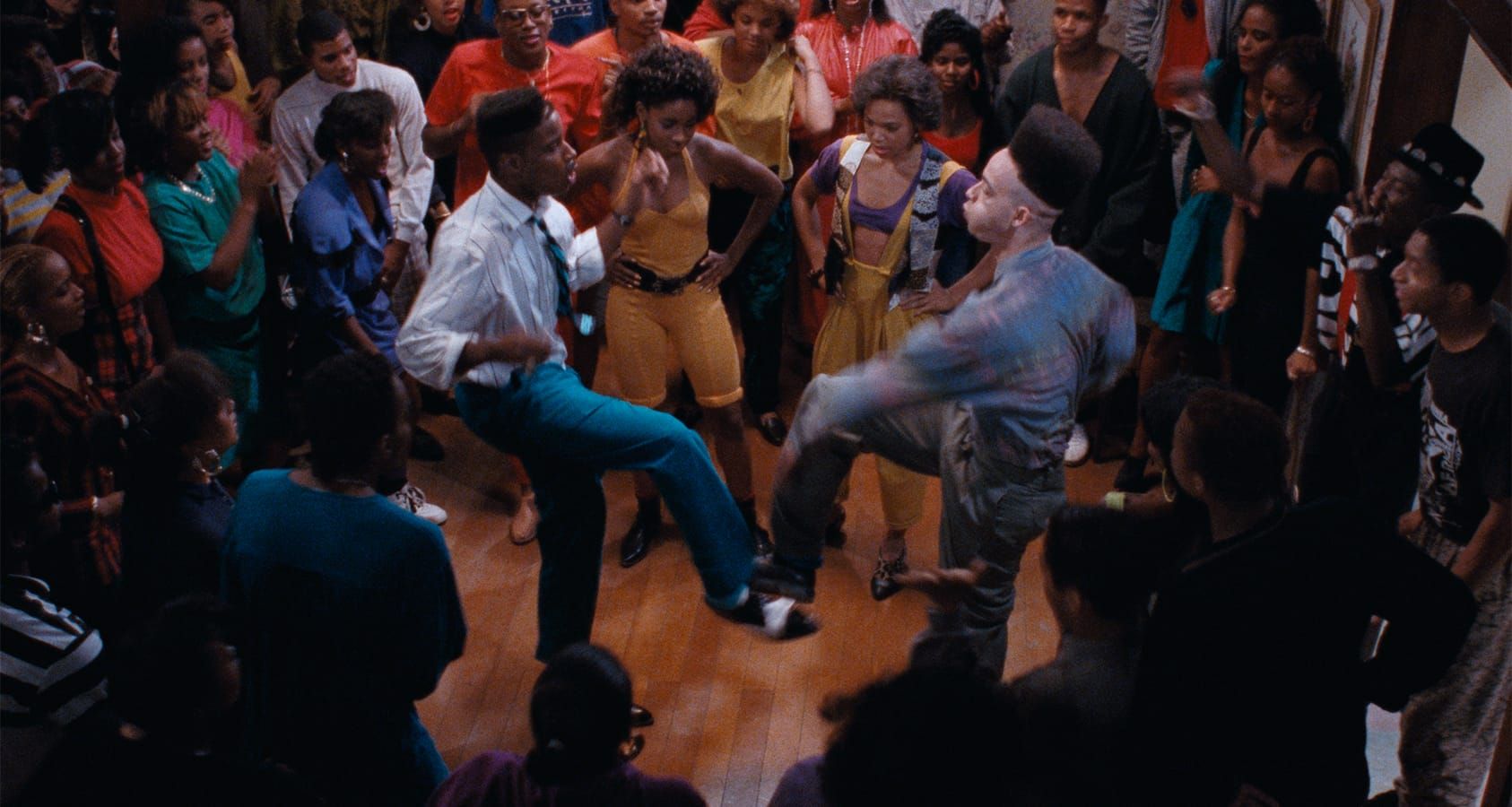
The headline for this story doesn’t overstate: features the best dance-off in cinema history.
About 44 minutes into the film, there’s a memorable scene featuring the main characters, Kid (Chris Reid) and Play (Chris Martin), with their respective love interests, played by Tisha Campbell and A.J. Johnson. However, focusing solely on that moment doesn’t fully capture how truly excellent – and groundbreaking – Reginald Hudlin’s first feature film is. Hudlin drew inspiration from comedies like Animal House and Risky Business, as well as important Black films such as Cooley High, with the goal of making a wild and funny teen movie that centered on the experiences of people of color. The film was a huge success, earning $25 million in theaters, starting a series of movies, and making Kid and Play famous.
Martin believes the movie’s success comes from how relatable it is to audiences. He explained to Ebaster that viewers connected with the characters, seeing people they knew from their own communities reflected on screen.
The film House Party has remained popular for decades, spawning four sequels and even a 2023 remake. Its cultural impact is so significant that it’s been added to the Criterion Collection, a highly respected archive of important films. Director Reginald Hudlin notes that people still recreate scenes from the movie, especially the iconic dance battle, on social media, proving its lasting appeal.
Screen Rant recently interviewed Reid, Martin, and Reginald Hudlin to celebrate the 4K release of House Party by Criterion. They clarified the story of how the movie came to be, including why Kid and Play were chosen over DJ Jazzy Jeff & Fresh Prince, and shared how their real-life friendship shaped the characters’ on-screen chemistry. They also discussed every detail of the film’s iconic dance battle.
These interviews have been edited and condensed for clarity.
Let’s clear up some confusion about this movie. There’s been talk that it was originally planned with different stars, including Groove B Chill, Jazzy Jeff & the Fresh Prince, and Kid ‘n Play. The question is, which of these groups was considered first?
The movie House Party started because I kept bumping into Reggie at nightclubs in New York City. I was out late a lot back then, and Reggie would always talk to me about working together on a Kid & Play project.
I’d made a short film in college and was working on the script for the full movie on my own. We connected with Andre Harrell, who was launching a new record label called Uptown Records. He was planning a big party song featuring all the artists on his label, and we were set to direct the music video. During rehearsal, only one group showed up on time: Groove B Chill. They were fantastic – funny, smart, and incredible dancers. At the time, I wasn’t sure how I’d finance the movie; I was planning to do it independently, so I thought, ‘Why not them? I couldn’t afford anyone else.’ Then Spike Lee’s first film, She’s Gotta Have It, came out, and suddenly there were more possibilities. I had a script and a short film, but almost every studio turned me down until New Line expressed interest, saying they liked Groove B Chill but didn’t think they were famous enough to attract an audience.
Reginald approached us about directing our music videos, but we were happy with the director we already had, so that didn’t happen. Later, he came to us with a movie idea. I told Play and our manager, Hurby “Luv Bug” Azor, and we received the script. I didn’t love it completely, but I thought Play and I could improve it. As I remember, Play wasn’t initially on board with the project.

I recall when the idea was first brought up, I didn’t think much of it, but looking back, it was probably because I lacked confidence. We were doing well with our music, but I honestly didn’t believe I could succeed with a movie. At the time, Run DMC was incredibly popular and had made a film called Tougher Than Leather that wasn’t very successful. I thought, if Run DMC couldn’t make a movie work, what chance did Kid & Play have? But the three of us – Kid, myself, and Hurby Luv Bug – had agreed that if someone was outvoted, the decision would stand. They outvoted me on doing the movie, and it’s a good thing they did!
I suggested Kid ‘n Play to New Line, because I’d seen their music videos and thought they had a great image. I told the studio they had gold and platinum records – I wasn’t sure if that was true at the time, but I said it anyway. They brought Kid ‘n Play in for a meeting, but the studio executives were worried they didn’t have a large enough fanbase. Ironically, as they were leaving, school let out, and a crowd of high school students started shouting, ‘It’s Kid ‘n Play!’ That sealed the deal – we knew they were popular enough.
Even though Jazzy Jeff & the Fresh Prince had already won a Grammy, they weren’t even in the running?
So, Will Smith and DJ Jazzy Jeff sampled audio from the movie A Nightmare on Elm Street in a song called “A Nightmare on My Street” without getting permission. New Line Cinema sued them and won, and as part of the agreement, Will and Jazzy Jeff had to make a movie for New Line. They suggested using them in our hip-hop movie, but when I approached Russell Simmons, their manager, he dismissed me – a young filmmaker from the Midwest with a Harvard education – saying we were too small for their big Hollywood project. I then had to ask about other potential cast members.
Watching the movie again, Play comes across as a bit self-centered. It’s clear the actors had great chemistry in person, but can you talk about how you built that connection between their characters on screen?
I drew inspiration from my own experiences growing up. I wasn’t exactly popular, but I managed to befriend people who were. Interestingly, the character Kid always admired Play, seeing him as really cool. That’s why when they teamed up, it felt natural – Kid wanted to work with someone he considered ‘cool,’ and it worked well for both of them.

That dynamic was already there, because it felt like how we actually were in person. When I first moved into the neighborhood, I was trying to figure things out and make friends. Play was someone I noticed right away – I thought he might be a good person to get to know. He quickly taught me the ropes and how things worked around there.
I hope I didn’t come across as exactly like the character I played in real life, but I definitely understood him. He felt like someone I would have known growing up in my neighborhood. I didn’t overthink the role at the time, but after the movie came out, many people assumed I was just like him, especially because of my character’s controversial line about how to treat a pregnant woman. People reacted strongly to that, but surprisingly, it didn’t stop a lot of women from being interested in me. It was a really strange and unsettling experience, almost like something out of The Twilight Zone.
Reid: That part was on brand though, at the time.
I realized my son and I had a sort of unspoken agreement. He admired my confidence and street smarts, while I was really impressed by his intelligence and academic abilities. I hadn’t done well in school – I was actually expelled from a few high schools – so I encouraged him to pursue his strengths. He ended up reading a script, and he thought it was good.
Reid: We were already a package with a bow on it, if you will.
Martin and Kid had a genuine connection. They weren’t just acting; there was a real friendship built over time, and Reggie recognized that. I think the audience sensed it too, because everything felt natural and unforced. We understood each other so well – even now, sometimes it feels like one of us could finish the other’s thoughts.
One of the best things about this movie is how genuinely good and heartwarming it is, without feeling like it was deliberately made bland. Could you talk about the decision to largely avoid things like alcohol and sex, which are often associated with more mature stories?
There were a couple of key ideas behind the movie. First, it’s a celebration of what I call the ‘happy rap’ period – songs were just fun and about everyday things like parties and dating, and the film captures that spirit. Second, I was really inspired by comedies like Animal House and Risky Business. I thought, ‘Why couldn’t we make a movie like that?’ Those films are mischievous, but lighthearted, and that’s what I aimed for. The script came from years of collecting observations, so it felt authentic because it was based on my own experiences. I wasn’t trying to portray a ‘cool’ life, just the things I saw happening around me.

Did you intentionally play with common themes from teen movies, and show how Black characters might experience them in a unique way?
I definitely borrowed a lot from the Coen brothers’ style. When I saw Raising Arizona, I was blown away – I thought it was brilliant. So, I directly lifted the idea of a chase scene running through a house with contrasting events happening simultaneously – a party in the front, a wake in the back, and people making out in the middle. I saw it as a chance to include a lot of funny visual jokes. I think Raising Arizona really inspired a lot of filmmakers because most comedies don’t prioritize visual style, but that movie had it in spades.
What kind of movies were you hoping to make when you started out, Kid and Play?
For me, the best is definitely Cooley High, with Glynn Turman and Lawrence Hilton Jacobs. Right after that, I’d say Uptown Saturday Night – those are just classic buddy movies. But Cooley High really stands out, especially with its memorable party scene and the dynamic between Cochise and Lawrence Hilton Jacobs’ character, and all their friends.
Reid: There’s definitely a slice of those within House Party.
I’m curious about the dance-off scene. A.J. mentioned at the cast reunion that she came up with the idea, even though it wasn’t originally written into the show. Was that actually how it happened?
Everyone says this now, but I honestly don’t recall much detail! There might have been a basic idea for a dance sequence, but I’m no dance expert, and those performers are incredible. They really took that initial concept and turned it into something amazing, and I give them complete credit for what was truly one of the best days of my life – not just the best day on set, but overall. We filmed the entire number in just half a day, and I was having so much fun I didn’t want it to end!
Did you have a specific character journey or overall story you were aiming for with that scene? It’s so strong it could be dropped into almost any movie and instantly become a highlight.
If you’re going to make a movie about a house party, it absolutely needs to show people dancing! Some of my best memories growing up happened on the dance floor, and it would be a mistake to leave those moments out. I wanted to include all those little details you see in real life – like the DJ changing the music, someone accidentally bumping the equipment, or even trying to keep up with a better dancer – things I’d never really seen captured on film before.

Reid explained that the script sometimes only included brief instructions, such as simply stating “dance battle” or “rap in jail.”
Hudlin explained that parties always have those incredible, showstopping moments. He grew up with a father who was a Lindy Hop dancer, and in that scene, the goal was to get everyone to stop and gather around to watch you dance. This idea—creating a moment so captivating it draws a crowd—is similar in both Lindy Hop and hip-hop, and he wanted the film to capture that energy.
Was there a dance-off in another film that gave you inspiration on how to film it?
I wasn’t really inspired by dance-offs specifically, although I love Gene Kelly musicals. The film that truly made me want to become a filmmaker was Ken Russell’s Tommy, based on The Who’s rock opera. Seeing it, I thought, ‘Wow, movies can be this imaginative!’ Ever since, my goal has been to create a film like Tommy, but drawing on the unique world and music of George Clinton and Parliament-Funkadelic.
Wow.
Hudlin: I’m still dragging that dream around. I’m not done yet.
Kid and Play, your dance-off clearly used a lot of the choreography you were already known for on stage. Can you recall how much you discussed with A.J. and Tisha about making their dancing style different from your own?
What we did in the movie was essentially a direct reflection of our live concerts and tours. I call it ‘copy and paste’ because when something was written into the script, we’d just perform it the same way we always did on stage.
Honestly, what happened with Tisha and A.J.’s work felt like a direct copy of ours. Once we figured out how long something would take, we pretty much knew where it would end up. We weren’t worried about them, though! We had a lot of confidence in their talent and knew they’d create something just as good, if not better, than what we did.
Tisha is incredibly talented – she can sing, dance, and act – and A.J. is a professional choreographer. When they learned what they needed to do for the project, they quickly rehearsed in a hotel room and put everything together. I saw the final performance while we were filming, and it was amazing – it was actually the first time I’d seen it!
Reid believes that when everyone involved is talented, the overall result is great. However, it’s hard to judge the quality of your own work while you’re in the middle of creating it.
We need authentic dancers – it’s frustrating when dance moves look fake, just like with martial arts. Let’s cast people who are truly skilled so the audience believes what they’re seeing and understands the space. But beyond technique, the movements need to feel powerful, both for the performers and for the viewers. Especially during moments like the split spin – we need to capture those fully. Luckily, our Steadicam operator, Kurt Gardner, was incredible – he was like a fifth dancer in the scene, always in the right place, no matter the camera angle or position. We had a tight schedule – just half a day – and needed to film this number thoroughly.
What really made that recording special was acknowledging Full Force and Reggie’s talent for arranging the horns. It felt like everyone involved brought their best skills together, and the result is something truly memorable even now.

Did you have any concerns about using a Full Force song for your dance routine instead of one of your own songs?
For me, part of the experience was just being on a movie set – there was a sense of wanting to avoid causing problems. If Kid and I didn’t like the music, we definitely would have spoken up and suggested changes, maybe even worked with Full Force to improve things. But I actually thought it sounded good. Especially the beginning of ‘Ain’t My Type of Hype’ – those horns really hit you right away!
What I find so great about this number is the contrast in the dancing styles. The women perform traditionally feminine and energetic moves, while Kid ‘n Play embodies a distinctly masculine style with moves like the elbow pop and the slide. It’s fantastic because it celebrates both – the women showing off their powerful, feminine energy and the men expressing their own strength through dance. It’s similar to Gene Kelly, a classic example of a man who can really dance. We captured that dynamic, that blend of masculine and feminine energy, and that’s what makes it so captivating, beautiful, and romantic.
You brought up your Steadicam operator, but Peter Deming is a truly exceptional cinematographer. Given his impressive work, including on Evil Dead II, what led you to choose him as the director of photography for this teen comedy?
My brother and I were in Times Square, waiting to meet someone outside a movie theater. Back then, theaters used to play trailers on small TVs. They were showing the trailer for Evil Dead II, and I was blown away – it was amazing! I watched people see the trailer, and it instantly made them want to buy tickets. The trailer showed them running through the woods, the house, the backyard, and then right into someone’s mouth! It was so effective. I knew I had to work with whoever created that trailer. It was an easy decision, and we had a blast. Even now, when I get together with Peter, we still joke about things that happened 35 years ago because we enjoyed working together so much.
 Photo credit: Ingrid Hertfelder
Reginald, your work with Boomerang really launched an amazing career. But even as more people of color started working behind the scenes in Hollywood, it felt like there was competition between filmmakers. When you were working alongside people like Spike Lee, did you feel a sense of support and teamwork? Or did you worry that Hollywood would limit the number of Black filmmakers who could succeed simultaneously?
We were all very supportive of each other. I specifically remember a photoshoot for The Source magazine with Mario Van Peebles, Spike Lee, and myself. After that, Mario suggested we all hang out at his place, and we ended up talking until 6:00 AM. It was amazing being around so many talented people, including Oz Scott, the director of Bustin’ Loose. We realized we needed to do this more often, so we started taking turns hosting. We all understood that each of our successes helped pave the way for the next – I’m Gonna Git You Sucka‘s success led to House Party getting made, and House Party‘s success led to New Jack City. If one of our movies failed, it could jeopardize other projects. So, even if there were personal disagreements, we knew our success was linked. It was a really special time for Black cinema, and that collaborative spirit was one of the best things about it.
This movie really launched your careers and led to a lot more opportunities – films, animation, even comic books. Looking back, were there any projects that felt as successful or had the same exciting vibe as this one?
Although House Party was our first movie and will always be special, we’ve made other films like the other House Party sequels and Class Act that people have also enjoyed over the years. House Party was really where our careers took off, it was our big break. It’s like our first love – important, but not the only one.
I’ve seen this cool thing on YouTube where younger generations, people who weren’t even alive when our music videos first came out, are watching them for the first time and filming their reactions. They’re genuinely surprised by how we performed and the style of our videos. It’s interesting to see them discover a side of us they weren’t aware of, and realize there’s more to our music than they previously thought.
Looking back, what’s the most important thing this movie taught you? Even with all your experience, like directing the NAACP Image Awards, did you first learn that lesson way back in 1990, and are you still using it today?
Making my first movie was a real learning experience, and we felt like we were on the right track. I definitely worried it might not work out, but it actually did! Now, with every film I make, I push myself to take on new challenges. There’s always that risk of failure, that uneasy feeling of ‘what if this doesn’t work?’ But I remind myself that the first time, it did work, and that gives me the confidence to keep going.
Read More
- United Airlines can now kick passengers off flights and ban them for not using headphones
- All Itzaland Animal Locations in Infinity Nikki
- Katanire’s Yae Miko Cosplay: Genshin Impact Masterpiece
- How to Get to the Undercoast in Esoteric Ebb
- All Golden Ball Locations in Yakuza Kiwami 3 & Dark Ties
- Crimson Desert: Disconnected Truth Puzzle Guide
- How to Complete Bloom of Tranquility Challenge in Infinity Nikki
- BloxStrike codes (March 2026)
- 6 Ways Invincible Season 4’s Hell Episode Rewrites The Comics
- Australia’s New Crypto Law: Can They Really Catch the Bad Guys? 😂
2026-01-28 19:35