Author: Denis Avetisyan
A new analysis reveals that Low Earth Orbit satellite networks harbor unexpected vulnerabilities that standard network metrics fail to detect.
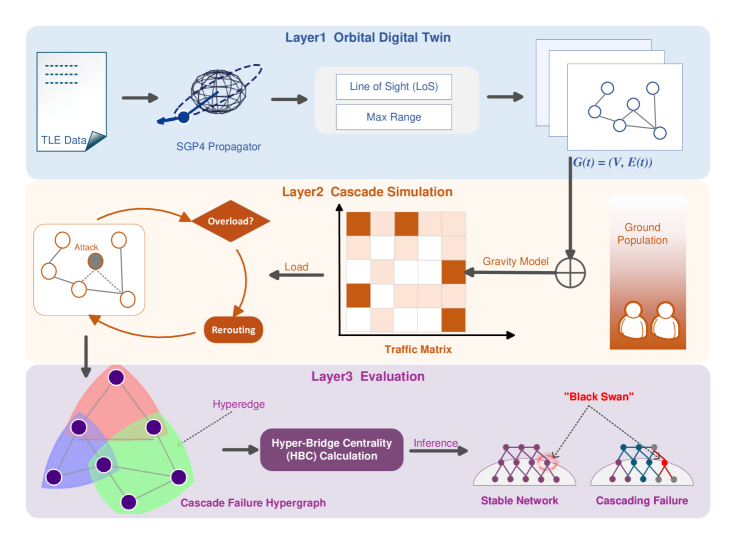
This paper introduces HYDRA, a hypergraph framework and HBC metric, to identify systemic risks and cascading failures in LEO satellite constellations.
As Low Earth Orbit (LEO) satellite constellations become critical infrastructure, conventional security analyses fail to capture systemic risks arising from dynamic load imbalances and complex dependencies. This paper introduces ‘HYDRA: Unearthing “Black Swan” Vulnerabilities in LEO Satellite Networks’, a novel hypergraph-based framework and a new metric, Hyper-Bridge Centrality (HBC), to identify unexpectedly lethal vulnerabilities. Our analysis reveals that the most critical failure points are often found not within the densely connected satellite core, but at the seemingly marginal ground-space interfaces-nodes topologically peripheral yet structurally devastating. Could a fundamental redesign of redundancy strategies, focused on securing these network edges, be the key to ensuring the resilience of future LEO constellations?
The Looming Instability of Low Earth Orbit Networks
The burgeoning reliance on Low Earth Orbit (LEO) satellite constellations, spearheaded by networks like Starlink, has fundamentally reshaped global connectivity, yet simultaneously introduced a critical vulnerability. These constellations now underpin essential services – from maritime communication and remote disaster response to financial transactions and broad-based internet access – creating a concentrated dependency. Unlike geographically diverse terrestrial networks with multiple redundant pathways, the increasing centralization of these services within a relatively small number of LEO systems establishes a single point of failure. A disruption to this infrastructure – be it due to space weather, geopolitical events, or technical malfunction – could therefore precipitate widespread and cascading effects across numerous sectors, impacting billions of users and highlighting the need for proactive resilience strategies.
Current network analysis techniques, largely developed for static infrastructure like terrestrial fiber optics, prove inadequate when applied to Low Earth Orbit (LEO) satellite constellations. These systems are characterized by constant change – satellites launching, deorbiting, and adjusting their positions – creating a fluid web of interdependencies. Traditional methods often treat network connections as fixed, failing to account for the dynamic topology and the shifting load balancing inherent in LEO constellations. Consequently, these analyses struggle to predict how a disruption in one area of the network will propagate, potentially underestimating the risk of cascading failures and hindering proactive mitigation strategies. The sheer scale and velocity of change within these constellations demand new analytical approaches capable of modeling and predicting emergent behavior in a truly dynamic environment.
The architecture of Low Earth Orbit (LEO) constellations introduces a surprising vulnerability: the potential for minor disruptions to escalate into systemic failures. Because these networks rely on a relatively small number of orbiting nodes providing service to a vast user base, even a localized event – such as a single satellite malfunction or a temporary ground station outage – can initiate a cascade of reconfigurations and service handoffs. As the system attempts to compensate, the increased load and complex interdependencies between satellites can overwhelm its capacity, leading to further failures and a rapid, uncontrolled spread of disruption. This isn’t a matter of individual satellite reliability, but rather a systemic risk inherent in the interconnectedness of the constellation; a minor anomaly can quickly propagate, exceeding the network’s ability to self-correct and potentially causing widespread connectivity loss.
HYDRA: A Framework for Modeling Dynamic Interdependence
HYDRA utilizes time-varying graphs to dynamically represent Low Earth Orbit (LEO) network topology, accounting for the constant changes in satellite positions and connectivity. Unlike static network models, HYDRA’s graph structure is updated continuously, reflecting real-time link establishment and disruption as satellites move in and out of communication range. This is achieved by treating the network as a series of graphs, each representing the connectivity state at a specific point in time. The framework captures not only the presence or absence of a link, but also potentially link quality metrics, such as signal strength or data rate, which are also updated over time to provide a granular representation of network conditions. This capability is crucial for accurately simulating network behavior and assessing the impact of dynamic changes on system performance and resilience.
HYDRA employs hypergraphs to represent satellite interdependencies as they extend beyond simple pairwise connections; traditional graph theory models, which limit an interaction to two nodes, are insufficient for scenarios involving multiple satellites collaborating on a single task or sharing resources. Hypergraphs allow for modeling these many-to-many relationships by enabling edges – known as hyperedges – to connect any number of nodes. This is crucial for accurately depicting complex scenarios such as phased array radar systems where data from multiple satellites is combined, or cross-link communications involving several nodes relaying information. By representing these non-pairwise interactions, HYDRA provides a more realistic and comprehensive depiction of LEO network topology and dependencies.
HYDRA’s simulation capabilities focus on modeling cascading failures within interconnected systems by representing component interdependencies and simulating failure propagation. This detailed approach allows for the identification of critical vulnerabilities and potential failure pathways not readily apparent in less comprehensive models. Benchmarking demonstrates HYDRA achieves a 24.1% improvement in vulnerability identification compared to traditional simulation methods, indicating a significantly enhanced capacity to proactively assess and mitigate risk within complex, dynamically changing networks. The architecture supports granular analysis of failure scenarios, enabling operators to prioritize remediation efforts and enhance system resilience.
Validating HYDRA Against Established Standards
HYDRA utilizes the Simplified General Perturbations 4 (SGP4) propagator for calculating satellite positions, a method widely adopted within the space industry due to its balance of accuracy and computational efficiency. SGP4 models perturbations caused by the Earth’s gravitational field, atmospheric drag, solar radiation pressure, and other forces acting on orbiting objects. Integration of SGP4 ensures that HYDRA’s orbital modeling reflects real-world satellite dynamics, accounting for non-Keplerian effects that significantly impact long-term trajectory prediction. This approach allows for the simulation of realistic satellite constellations and facilitates the analysis of orbital maneuvers, collision avoidance strategies, and the overall health of Low Earth Orbit (LEO) networks.
HYDRA’s validation process utilized the Walker Delta constellation, a well-defined and widely accepted idealized satellite network configuration, as a benchmark for comparative analysis. This constellation consists of satellites distributed in multiple orbital planes, enabling standardized performance evaluation against a known system. By simulating HYDRA’s behavior alongside this established configuration, researchers could objectively assess the accuracy of HYDRA’s orbital modeling and cascade failure predictions. The Walker Delta constellation’s predictable characteristics facilitated the isolation of HYDRA-specific performance metrics, ensuring a focused and reliable validation process.
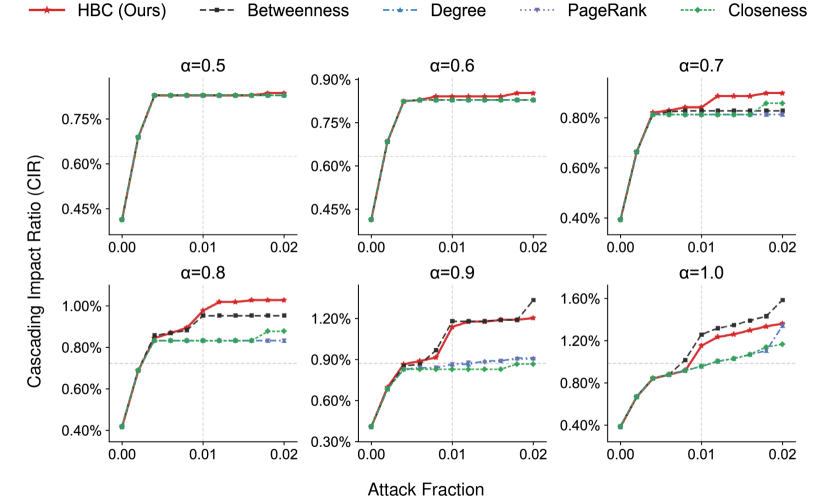
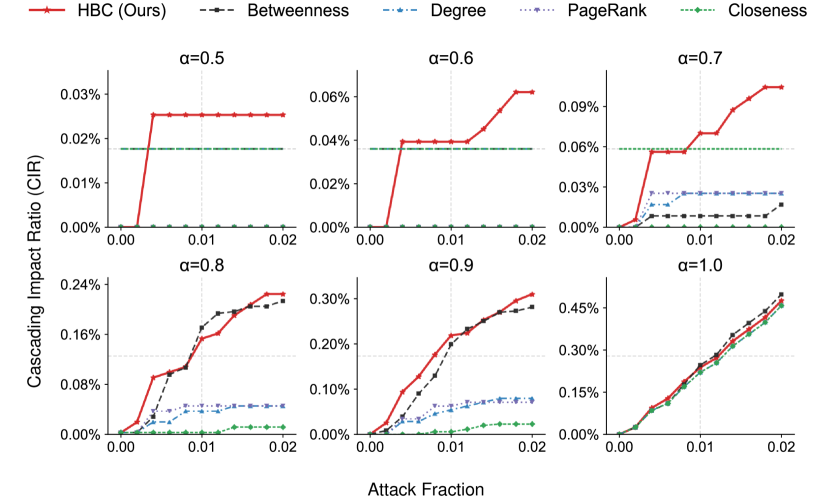
Validation testing demonstrates HYDRA’s capability to accurately model Low Earth Orbit (LEO) network dynamics and predict potential failure scenarios. Comparative analysis against a Walker Delta Constellation revealed an 8.2% improvement in cascading impact ratio when utilizing HYDRA’s modeling techniques, as opposed to those derived from Betweenness Centrality calculations. This metric quantifies the extent of propagated failures within the network following an initial node failure, indicating HYDRA’s enhanced ability to forecast and assess the overall resilience of LEO constellations under disruptive events. The observed improvement suggests a more realistic representation of inter-satellite dependencies and failure propagation mechanisms within HYDRA’s simulations.
Implications for a Resilient Space Infrastructure
HYDRA functions as an essential diagnostic for the increasingly complex architecture of Low Earth Orbit satellite networks. This tool moves beyond assessing individual component failures, instead modeling the intricate web of interdependencies that define these systems; it pinpoints vulnerabilities arising from correlated failures-where a single event can trigger a cascade of disruptions. By simulating a wide range of potential stressors-from geomagnetic storms to adversarial attacks-HYDRA reveals systemic weaknesses that might otherwise remain hidden until a critical incident occurs. The platform doesn’t simply identify these weak points, but also quantifies their impact, allowing engineers to prioritize mitigation efforts and build more resilient network designs. This proactive approach is crucial for safeguarding vital services-such as communication, navigation, and Earth observation-that rely on the uninterrupted operation of LEO satellite constellations.
HYDRA facilitates a shift from reactive troubleshooting to preemptive risk management in Low Earth Orbit satellite networks. By simulating potential failure scenarios – encompassing everything from individual satellite malfunctions to widespread collisions – the system allows engineers to rigorously test network resilience before disruptions occur. This proactive analysis informs the development of robust contingency plans, detailing specific procedures for mitigating damage and restoring functionality. Moreover, the insights gained from HYDRA directly contribute to improved network design, enabling the implementation of redundancies, optimized orbital configurations, and automated fault-tolerance mechanisms. The result is a space infrastructure demonstrably better prepared to withstand unforeseen events and maintain uninterrupted service, fostering greater reliability and long-term sustainability.
The sustained functionality of space-based infrastructure, vital for uninterrupted global connectivity, is significantly bolstered by HYDRA’s capabilities. This system doesn’t merely react to failures, but proactively enhances the long-term resilience of Low Earth Orbit satellite networks. Rigorous testing demonstrates HYDRA’s effectiveness; it exhibits a five-fold improvement in identifying and mitigating potential attacks during the critical initial stages of cascading failure, a substantial leap beyond the performance of existing analytical tools. This enhanced efficacy translates directly into a more stable and dependable space environment, safeguarding essential services that increasingly rely on satellite communication and data transmission.
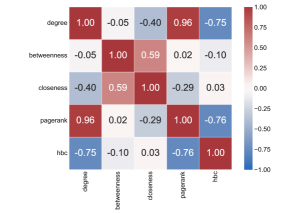
The study demonstrates a crucial principle: systemic resilience isn’t simply about reinforcing the most obvious connections, but understanding the interplay of all components. This resonates deeply with John von Neumann’s observation: “The sciences do not try to explain away mystery, but to refine it.” HYDRA, by moving beyond traditional centrality metrics and modeling LEO networks as hypergraphs, attempts precisely this refinement – uncovering hidden vulnerabilities that simpler models miss. The framework acknowledges that cascading failures aren’t isolated incidents but emergent properties of complex systems, where the behavior of the whole is more than the sum of its parts. Identifying these vulnerabilities, as HYDRA aims to do through the novel HBC metric, is not about eliminating risk, but about intelligently managing it within a dynamic, interconnected ecosystem.
Beyond Resilience: Charting the Unknown
The HYDRA framework illuminates a crucial point: resilience is not merely a function of redundant links or high-degree nodes. It is, fundamentally, a property of the structure itself. Traditional centrality metrics, while useful, operate under the assumption of a static network, failing to account for the dynamic interplay of orbital mechanics and the potential for cascading failures triggered by seemingly minor perturbations. The introduced Hypergraph-based Centrality metric (HBC) represents a step towards addressing this, but the true cost of this added fidelity remains to be fully understood. Every abstraction, even one incorporating orbital dynamics, leaks-and the fidelity gained must be weighed against the computational complexity introduced.
Future work should not focus solely on refining centrality metrics. A more fruitful avenue lies in exploring the predictability of these systemic failures. Can one reliably anticipate the propagation of disruptions before they manifest? This requires moving beyond static analysis towards models that incorporate realistic operational constraints, such as maneuvering capabilities and inter-satellite communication protocols. The elegance of a solution will not be found in clever algorithms, but in a minimalist representation of the core dependencies.
Ultimately, the pursuit of resilient satellite networks is a lesson in humility. The system’s behavior will always exceed the scope of any single model. Good architecture, in this context, is not about preventing failure-it is about ensuring that when failure does occur, its consequences are contained, understood, and rapidly mitigated. The true measure of success will not be the absence of “black swan” events, but the ability to gracefully absorb them.
Original article: https://arxiv.org/pdf/2602.06612.pdf
Contact the author: https://www.linkedin.com/in/avetisyan/
See also:
- United Airlines can now kick passengers off flights and ban them for not using headphones
- All Golden Ball Locations in Yakuza Kiwami 3 & Dark Ties
- Gold Rate Forecast
- 15 Lost Disney Movies That Will Never Be Released
- Best Zombie Movies (October 2025)
- 2026 Upcoming Games Release Schedule
- What are the Minecraft Far Lands & how to get there
- These are the 25 best PlayStation 5 games
- How to Complete Bloom of Tranquility Challenge in Infinity Nikki
- The Best ’90s Saturday Morning Cartoons That Nobody Remembers
2026-02-09 20:43