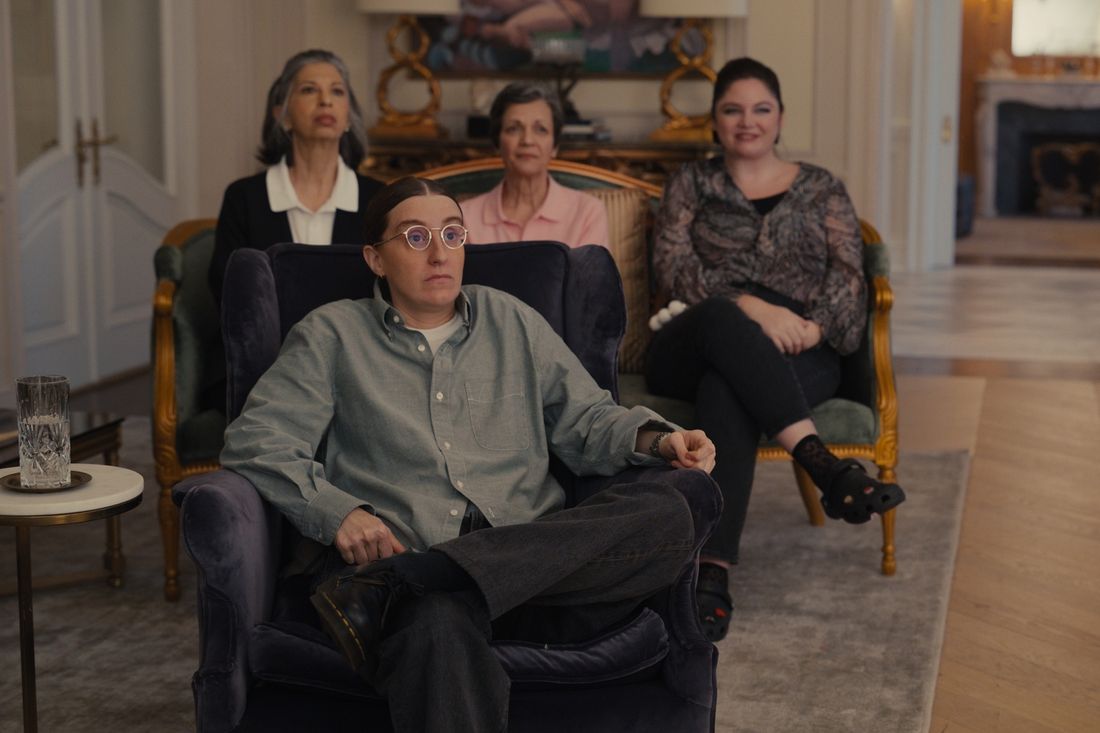
Do you remember a few years ago, around the mid-2010s, when there was a lot of discussion about what made comedy good? People were debating whether jokes actually needed to be funny, or if it was enough for a comedian to just make a point. Hannah Gadsby’s show Nanette, which feels like ages ago now (almost ten years, even with the pandemic years!), sparked a lot of that conversation. This episode explores a similar idea, ultimately arriving at a pretty straightforward conclusion: comedy needs to be funny! If it’s not, people won’t pay attention to whatever important message you’re trying to share.
Here’s my take: anger can be a great engine for comedy, but it absolutely can’t become the whole show. And that’s exactly what’s happening with Deborah. Her new stuff, where she’s positioning herself as the ultimate victim, just isn’t connecting. She keeps saying comedy is supposed to be uncomfortable, and while that’s true to a point, Ava rightfully points out that, shockingly, people are also supposed to laugh.
So, the crew is going to a 50th anniversary event for Who’s Making Dinner?, which, as a Hacks fan, you know is the sitcom Deborah created with her late husband, Frank. It’s a really painful story, actually. He basically talked her into letting him take sole writing credit on the first episode – promising she’d get the second one! – which completely erased her from the show’s origin story. It’s a complicated relationship for her – with Frank, with the show itself, and with how she’ll be remembered. There’s so much pride, resentment, gratitude, and a real hunger for recognition all mixed up in it. It’s fascinating and heartbreaking to watch.
It’s incredibly frustrating to watch Deborah navigate this situation! Because of the gag order, she can’t really say anything at the event, so she’s relying on visuals. She and Josefina are hilariously photoshopping old pictures – making Deborah look amazing and Frank look…well, not so great. It’s all about sending a message without speaking. And she made it crystal clear to Ava why this show is so important: she sees Bob as another man trying to control her, just like Frank, and she needs the Madison Square Garden show to be a monumental moment. It’s about reclaiming her narrative, and honestly, I’m completely on her side.
Ava gets some exciting news: Jessica Duncan, a TV executive, absolutely loved her script, “Mall Girl!” Ava heads into a meeting feeling hopeful, but Jessica quickly adds a catch – while she praises the script’s originality, she says it’s too unique to actually be made into a show. It’s another frustrating experience for Ava, reminiscent of past disappointments at HBO Max. Jessica offers to buy any TV show Ava comes up with, as long as it meets certain requirements – a list that feels very similar to the demands made on the show “The Other Two.” She wants diversity, including queer representation, but specifically not a limited series. Throughout the episode, Ava starts brainstorming by pointing at everyday things and asking if they could be a TV show, a habit that will likely resonate with and annoy many writers.
At Kayla’s bat mitzvah (even though she’s not Jewish – her party theme was Anna Faris!), Jimmy is greeted a little too warmly by Beth (Anna Konkle from PEN15). Both Randi and Kayla quickly realize Beth’s behavior is inappropriate for the workplace. Jimmy tries to be professional, but that only seems to encourage Beth, until he tries to explain he’s only interested in a business relationship, which ends up upsetting her.
Deborah walks through the art exhibit, remembering the rollercoaster of emotions she experienced while creating the show with the man she loved. He’d praised her, made her laugh, but also openly flirted with other women while they worked. She snaps back to the present and introduces her daughter, Ava, to Eddie. Eddie directed the pilot episode of the show-within-a-show, Who’s Making Dinner?, and is relieved to see Deborah still has her sense of humor, especially considering the public attention surrounding her personal struggles.
Deborah discovers that a previously unseen interview with Frank will be broadcast tonight. As the special airs, she learns the soundstage where the show was filmed will be dedicated in his honor, renamed “the Frank Vance Stage.” Essentially, this ensures Frank Vance’s lasting legacy in Hollywood.
Deborah is clearly struggling and seems to be losing it on camera. Despite the awkwardness, the livestream continues, and her jokes aren’t going over well with the audience. People are trying to be understanding, assuming she’s just happy to be out. While a clip from Who’s Making Dinner plays, Ava has an idea for a reboot of the show: a new story centered around the grandchild of the original couple, who inherits their house but has to live with roommates. She describes it as a funny take on “downward mobility.” Ava points out the idea is similar to the show Adults, but without any existing intellectual property, which is fine because originality isn’t the goal. Jessica wouldn’t be able to buy the concept if it were original. Deborah doesn’t currently own the rights, but Jimmy is investigating the possibility of acquiring them. More updates to come!
As Deborah deals with the fallout from the show’s failure, an interview with Frank airs. He echoes what Ava has been saying – that they weren’t aiming to create something revolutionary, just a funny show about their relationship, and that’s why people watched. When asked what made the show funny, Frank immediately points to Deborah, saying she was naturally the funniest person in any situation.
It’s striking how much Deborah is affected by the praise. In a way, it’s even harder for her than an insult would be, because an insult would at least give her something to argue with. Instead, she’s left feeling flawed for still wanting approval from this particular man. Ava understands, saying that sometimes you just want one person’s validation. But before Deborah can fully process that, she’s arrested for breaking her restraining order – even though Ava argues Deborah’s comments weren’t strong enough to be considered harassment.
While in jail with the other protestors, Deborah effortlessly charms everyone with her speeches about their situation. It’s almost surreal – are we actually starting to romanticize being in jail because people are so desperate for community spaces? It makes me wonder if she’s planning a concert tour of prisons, like Johnny Cash! By the time she’s released, she’s gained a whole group of supporters, even the woman who assaulted a police horse. She then proceeds to pay everyone’s bail, which begs the question: just how wealthy is Deborah to be able to afford this lifestyle?
Deborah finally understands what Ava has been trying to tell her all along: making people laugh is the key to being memorable. It seems obvious now, but at least they’ve figured it out!
Read More
- Netflix’s Little House On The Prairie Reboot: Release Date, Cast & Everything We Know
- Off Campus Season 1 Soundtrack Guide
- YouTuber arrested after viral AI bodycam videos spark real police complaints
- Silver Rate Forecast
- Prime Video’s New R-Rated Spy Thriller Is Officially No.1 On Streaming Despite Poor Reviews
- Gold Rate Forecast
- Brent Oil Forecast
- Peaky Blinders: The Immortal Man’s Tommy Shelby Is a Better Father Than Michael Corleone
- EUR ZAR PREDICTION
- Bulgakov’s Take: Koreans Bet the Farm on Chips, Crypto, and Chaos
2026-05-01 05:58