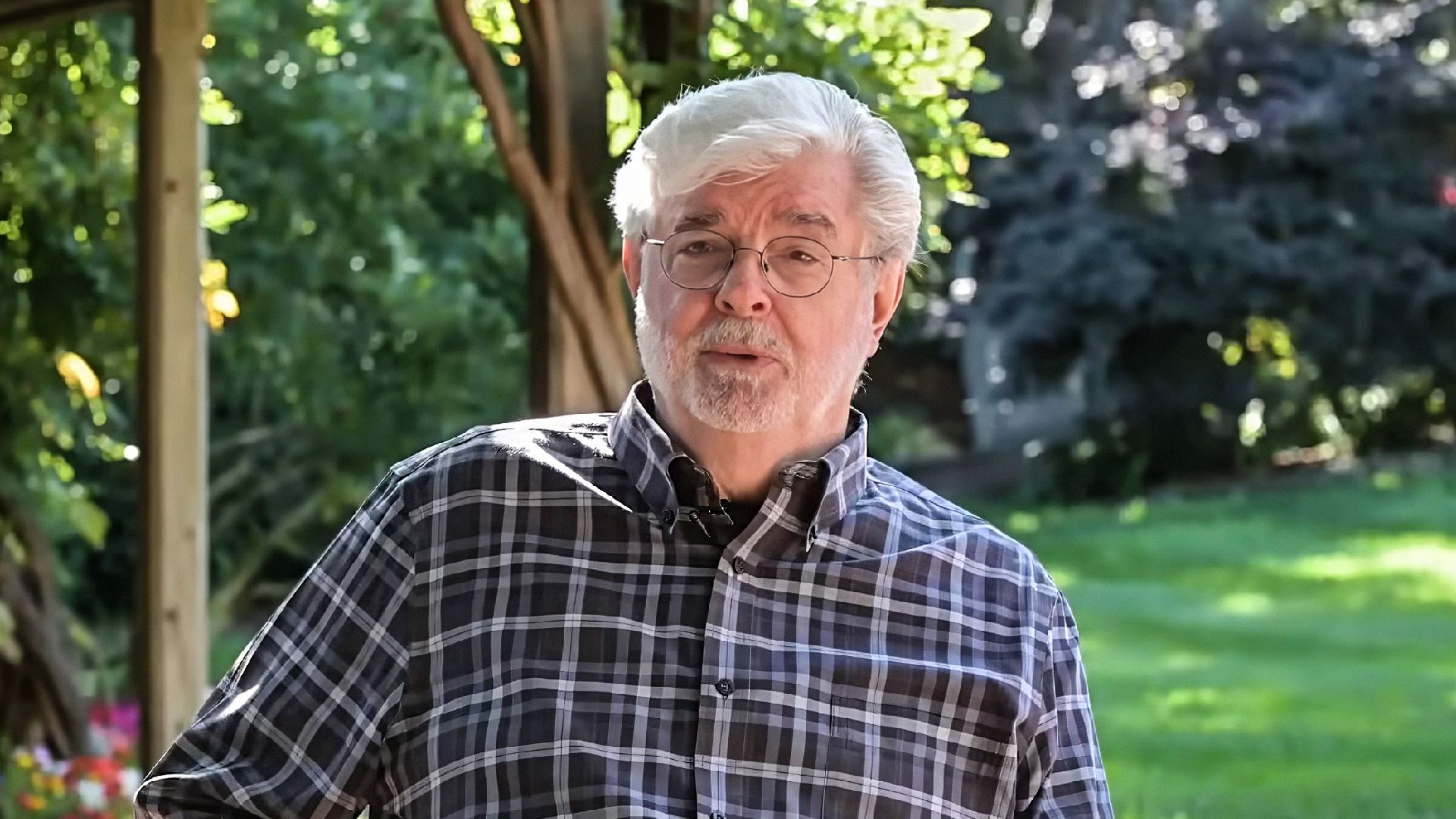
George Lucas is celebrated as a groundbreaking figure in science fiction thanks to the Star Wars films, but he’s also faced criticism for repeatedly revising them long after they first came out. These changes, made years or even decades later, aren’t always visual effects. In fact, the most significant alteration Lucas made to the saga wasn’t something audiences would see on screen.
The first Star Wars movie, Episode IV – A New Hope, launched the hugely popular franchise we still enjoy today. This film and the two that immediately followed make up what fans call the Original Trilogy. Nearly 50 years have passed since Star Wars first appeared in theaters, and many generations have seen various versions of those original three films. While there’s always debate about details like who shot first, one change made to the classics was a clear improvement over the original releases.
How George Lucas Wildly Improved ‘Return of the Jedi’s Final Scene
Released in 1983, Return of the Jedi features several key and memorable scenes. The film sees the destruction of the second Death Star and the fall of the Empire, but it’s also known for Darth Vader’s journey back to becoming Anakin Skywalker, providing a satisfying conclusion to his story. However, the Ewoks – a group of small, furry aliens – proved controversial. While some viewers enjoyed seeing these seemingly harmless creatures defeat the galaxy’s most powerful military force, others found it hard to take seriously.
The ending of Return of the Jedi didn’t impress everyone. After a galaxy-spanning war across three films, many fans found the celebratory scene – featuring the Ewoks singing – unsatisfying. This song, known as “Yub Nub,” was a unique piece in John Williams’ otherwise perfect score. However, being sung entirely in the Ewok language, it only reinforced the dislike some fans already had for the Ewoks’ prominent role in the movie, making the ending feel silly to them.
When Return of the Jedi was re-released years later, it wasn’t just a simple update to the visuals. The 1997 edition seemed designed to build excitement for the upcoming The Phantom Menace in 1999, but it included significant changes beyond improved special effects, including added scenes. One of the most talked-about alterations was the removal of the song “Yub Nub.” John Williams, the original composer, collaborated with George Lucas on the re-release and created a new track, “Victory Celebration,” to take its place.
The music for “Victory Celebration” strikes a better balance with the Ewok presence. Since Luke and his friends are still celebrating with the Ewoks, a purely orchestral score wouldn’t have felt right. Instead, the composer cleverly blended traditional sounds with new melodies and powerful strings, adding a lot of emotional depth to the scene. The vocal elements, while potentially sung by the Ewoks within the story, feel more like distant, wordless chanting—perhaps not even audible to the characters. Even the percussion sounds like it could have been created and played by the Ewoks themselves. Because of its success, “Victory Celebration” has been included in every subsequent remastered version of the film.
The Ewok Celebration Scene in ‘Return of the Jedi’ Is Still Divisive (For Another Reason)

20th Century Studios
The improved soundtrack for Return of the Jedi didn’t stay that way for long. In 2004, the original Star Wars trilogy was remastered and released on DVD. Along with many other changes to all three films, one alteration proved particularly controversial. Originally, in 1983, Sebastian Shaw played the ghost of Anakin Skywalker. His only scene in the entire trilogy was when Luke takes off Vader’s helmet after escaping the Death Star.
As a huge Star Wars fan, I always found the changes George Lucas made to the DVDs a bit odd. Specifically, in the 2004 remaster, he swapped out Sebastian Shaw as Anakin’s Force Ghost with a younger Hayden Christensen. I get why he did it – Revenge of the Sith was about to come out in 2005, and it made marketing sense to have Christensen’s face representing Anakin across all six films. But honestly, it never sat right with me from a story perspective. A lot of us fans point out that by the time of Return of the Jedi, Anakin hasn’t looked like his younger self for decades, so seeing Christensen as the ghost always felt…off.
It seems odd that Anakin Skywalker would appear as he did right before becoming Darth Vader in Revenge of the Sith, but some fans disagree. The last time Anakin remembered being himself, he looked like Hayden Christensen, not an older version. Since we don’t fully understand how Force Ghosts work, it’s possible Anakin’s ghost appeared as he last remembered himself. He never really saw himself as an older man, so it makes sense that Christensen’s appearance influenced his form as a Force Ghost. This is likely one of those Star Wars questions fans will continue to debate endlessly.
Read More
- United Airlines can now kick passengers off flights and ban them for not using headphones
- All Itzaland Animal Locations in Infinity Nikki
- Katanire’s Yae Miko Cosplay: Genshin Impact Masterpiece
- How to Complete Bloom of Tranquility Challenge in Infinity Nikki
- How to Get to the Undercoast in Esoteric Ebb
- All Golden Ball Locations in Yakuza Kiwami 3 & Dark Ties
- Crimson Desert: Disconnected Truth Puzzle Guide
- A Dark Scream Theory Rewrites the Only Movie to Break the 2-Killer Rule
- Gold Rate Forecast
- 6 Ways Invincible Season 4’s Hell Episode Rewrites The Comics
2026-03-10 01:21