
In the movie Jay Kelly, George Clooney’s character bumps into a former acting school roommate at a funeral. Timothy Galligan, played by Billy Crudup, didn’t become a successful actor and now works as a child therapist, but he was once the more talented of the two. Over drinks, Jay remembers how Timothy could make even the most ordinary things sound fascinating and challenges him to demonstrate this skill. Jay watches, captivated, as Timothy accesses a cherished memory and begins to dramatically recite a menu – “Truffle parmesan fries… brussels sprouts with balsamic honey glaze” – as if delivering a powerful speech from Death of a Salesman, tears welling up in his eyes.
It seems like a simple skill, but it highlights the difference between these two performers. Timothy is genuinely talented, while Jay achieved fame through his appearance, good fortune, and a bit of ambition. Jay also possesses a certain charisma that draws people to him, even from afar. Timothy works hard at his craft – he’s a dedicated actor – but Jay is a natural movie star. He has an unteachable quality, and he’s starting to question whether he truly earned his success.
Okay, so George Clooney’s character in Jay Kelly isn’t him, exactly. I mean, Clooney’s personal life is different – he hasn’t gone through the same relationship struggles as Jay, and his relationship with his kids is thankfully not strained like it is in the film. It’s interesting though, because Jay feels close to Clooney’s public persona, and it makes you wonder how much of that character’s inner turmoil comes from Clooney’s own experiences. Even their names sound similar, almost deliberately! There’s this scene where people in Paris are chanting “Zhay Kelly!” and it instantly reminded me of a story Clooney told about a motorcycle accident he had in Italy. Apparently, everyone just started yelling “A-George Clooney!” with their phones out. It’s a really subtle connection, but it adds another layer to the film for me.
Like George Clooney, Jason Bateman isn’t just well-known, he’s genuinely liked – the kind of celebrity people dream of being near, rather than becoming. He also faces the common criticism that he often plays versions of himself, a label often applied to actors we still enjoy watching. While it’s true Clooney doesn’t typically transform dramatically for roles, the fact that the character Jay wrestles with whether his success is simply luck is far less compelling than Clooney’s own complex feelings about his position in life proves he’s not just playing himself, especially in this case.
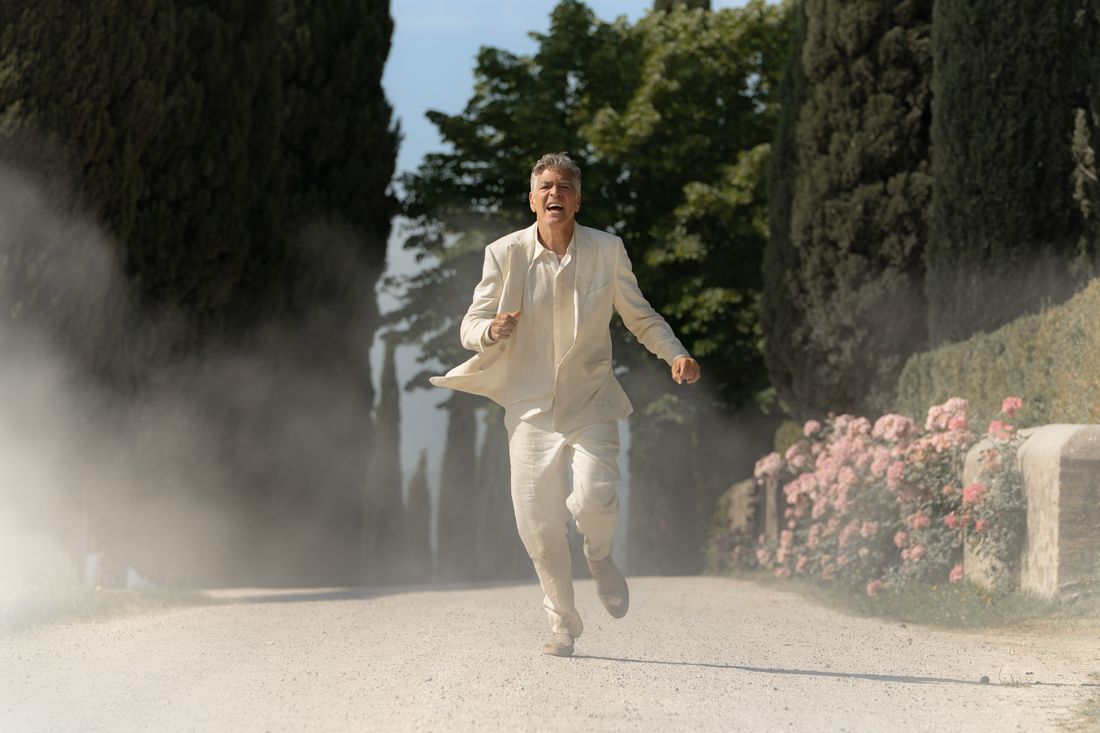
You know, everyone always says George Clooney is one of the last true movie stars, and I totally get why. He reminds me of those classic Hollywood leading men – the handsome suits, that amazing jawline, and just a really polished, elegant vibe. It’s like he’s from a time when stars weren’t supposed to be just like us, but better – more glamorous, more effortlessly cool, and a little bit mysterious. While Tom Hanks became known as the new Jimmy Stewart – a relatable guy who was still a big star – Clooney always felt more like a modern Clark Gable. I even read he lived in Gable’s old house for years! He’s got that same confident, playful, and almost untouchable quality.
George Clooney understands the art of self-awareness when it comes to his celebrity. He carefully avoids drawing parallels between himself and legendary actors like Robert Redford and Paul Newman, recognizing their iconic status. When discussing classic stars, Clooney focuses on their legacies rather than suggesting he’s their equal. He’s noted for candidly discussing the realities of fame – a skill that allows him to connect with interviewers and present himself as someone reflecting on his own fortunate life alongside them. He points out that even the most celebrated careers don’t last as long as people think, and acknowledges a desire to move beyond simply being an actor as time passes.
Many people imagine George Clooney always living a glamorous life, effortlessly stylish and traveling the world. But his path to success wasn’t instant like it was for some actors who become stars after one big role. Clooney spent years working in smaller films and making guest appearances on TV shows – he even played the villain on Street Hawk and appeared in the silly sequel Return of the Killer Tomatoes. He didn’t become famous overnight; he gradually grew into the leading man he appears to be on screen. The calm confidence he projects now isn’t natural – it’s the result of a lot of hard work, carefully crafted to make everything look easy.
https://youtube.com/watch?v=watch?v=zdY_LS__eq0
When George Clooney joined the cast of ER at age 33, he was the oldest of the original actors. The show was a huge success, making him well-known, though television wasn’t considered a major path to fame at the time. In his first appearance as Dr. Doug Ross – a dedicated pediatrician and charming womanizer – Clooney’s character arrives at the hospital intoxicated, needing an IV. Seeing the pilot episode from 1994 now is surprising, because Clooney’s silver hair has become so iconic. He even joked about having to dye his hair brown for his role as Edward R. Murrow in the Broadway play Good Night, and Good Luck (based on his 2005 film), as if losing his grey temples diminished his power.
Early in his film career, George Clooney faced a period where his acting roles didn’t quite showcase his talent, leading to criticism. He recalls getting simple but effective direction from Steven Spielberg on the set of ER – to hold his head still. He famously didn’t work out as Batman in the 1997 film Batman & Robin, a performance he now jokes about. While handsome alongside Michelle Pfeiffer in One Fine Day (1996), he blended into the role. He was also unremarkable in The Peacemaker (1997), playing a standard intelligence officer. Though he wasn’t as disastrous as David Caruso’s attempt to move from NYPD Blue to film, looking back at Clooney’s early movies after ER, it’s easy to see how his career could have stalled in the 90s. Simply being likable isn’t enough to make a good movie.
George Clooney truly became a major star thanks to his collaborations with director Steven Soderbergh, who has a remarkable ability to showcase actors’ charisma. In 1998’s Out of Sight, Clooney is equally compelling whether he’s persuading a bank teller to give him money or seducing Jennifer Lopez in a memorable, playfully romantic hotel scene. Later, as Danny Ocean in the Ocean’s trilogy (2001-2007), he’s utterly charming, delivering a heartfelt speech about fate to his close friend Rusty Ryan (Pitt) before playfully admitting he rehearsed it, undercutting the serious moment with his self-deprecating humor.
Throughout his heist films, Soderbergh frequently points out the similarities between pulling off a crime and making a movie. He even includes a running joke in one film where Julia Roberts’ character pretends to be the famous actress herself. Soderbergh gets how fun acting can be, and how a talented performer can connect with the audience and share in the playful illusion.
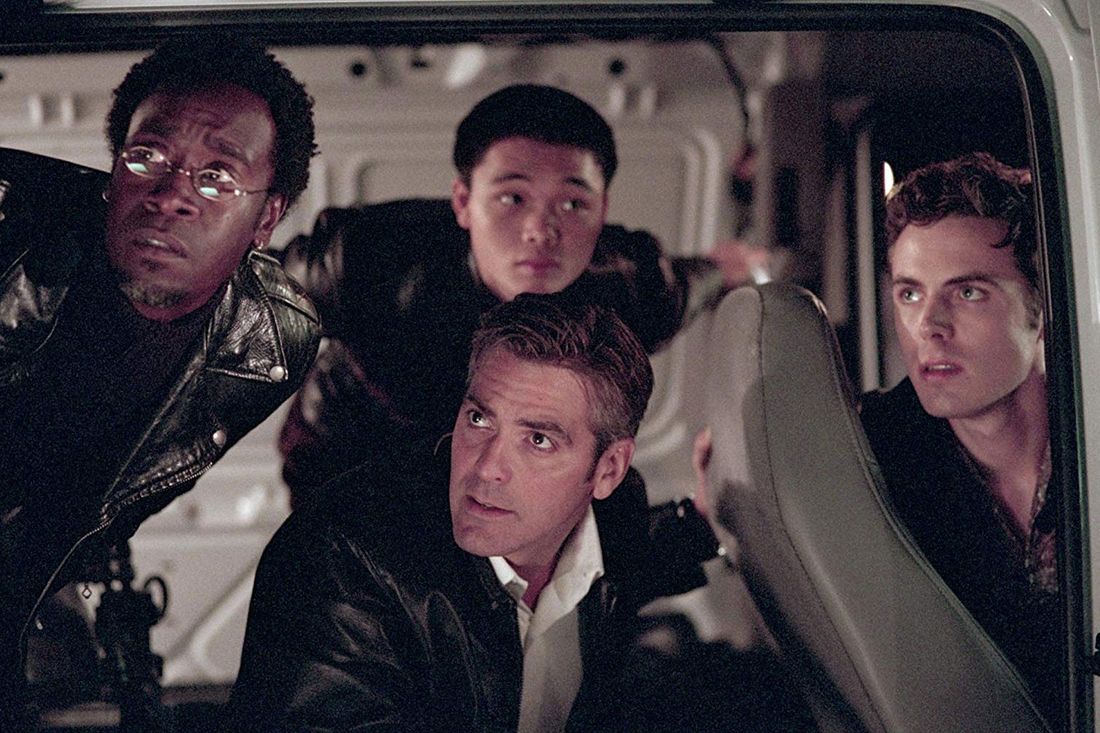
I’ve always loved George Clooney because he’s just so good at playing those charming, slightly flawed characters – you know, the lovable rogues. He often plays roles where his good looks and charisma get him far, and he’s really skilled at balancing that with the character’s flaws. I think his best performance is in Michael Clayton; it’s amazing how much his natural charm contributes to the role of this fixer who seems like he should be further along in his career, like he deserves a bigger office. The Coen brothers really seem to enjoy casting him as these somewhat self-important guys who need to be brought down a peg or two. Think about Ulysses Everett McGill in O Brother, Where Art Thou?, or Miles Massey in Intolerable Cruelty, or even Harry Pfarrer in Burn After Reading – he’s always playing these characters who are used to things going their way, and it’s so fun to watch them get their comeuppance.
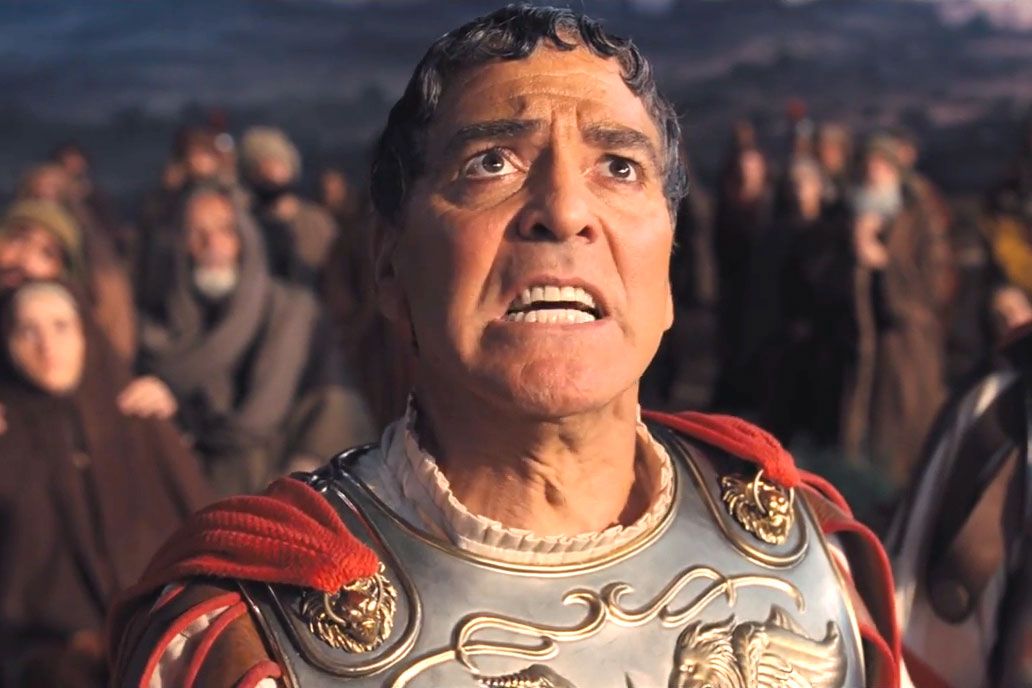
In the movie Hail, Caesar!, actor Baird Whitlock performs a scene reminiscent of one in Ocean’s Eleven. Playing a Roman soldier in a biblical film, Whitlock delivers a monologue while standing before a crucified Jesus, explaining how a past encounter with him led to a spiritual awakening. As he speaks, his tanned face and bright eyes captivate even the cynical film crew, who begin to appear genuinely touched by the performance.
Just when Baird is building to a powerful conclusion, his voice trembling as he speaks of a deeper truth, he falters and forgets the final part of his line, instantly ruining the moment. This scene mirrors Timothy Galligan’s emotional reading of a bar menu, showing how easily you can captivate an audience even while reciting words you don’t truly connect with – to the point where even the obvious answer (“Faith!” Baird finally shouts after being prompted) escapes him.
The worry of being seen as superficial – someone who relies on looks and charm but lacks depth – is a central theme in George Clooney’s work, particularly in his choices as he’s gained more control over his roles. He seems determined to move beyond his natural charisma, showing he can either completely suppress it or subtly control it. A prime example is his Oscar-winning role as CIA officer Bob Barnes in Syriana, where he famously gained weight to demonstrate his commitment to the part and prove his serious acting ability.
Interestingly, George Clooney’s most controlling creative outlet – directing – has produced some of his least compelling work. He began directing in 2002 with Confessions of a Dangerous Mind and has since directed eight other films. As a director, Clooney consistently aims for solid, rather than spectacular, results, often focusing on true stories presented with careful attention to historical detail, like Good Night, and Good Luck and The Boys in the Boat, as well as war dramas like The Monuments Men. A clear desire to prove his abilities seems to drive these choices, whether it’s by showcasing a stand against McCarthyism or, as in the 2017 thriller Suburbicon, attempting to address complex social issues – though not always successfully.
Just because something is effortless doesn’t make it unimportant, but George Clooney often seems unaware of his own charm. This is evident in choices like starring in and directing The Midnight Sky, where he plays a character who glumly wanders alone in the Arctic, almost as if he’s gone to the most remote place on Earth to get away from his own appeal.

Last year, when he teamed up with Brad Pitt again for the moderately successful Wolfs, where they played arguing criminals, the press event they did at the Venice Film Festival actually showed off his charisma more than the movie itself. The character he played was deliberately written as having a rather empty personal life—a stark contrast to the actor, who has spoken to Congress about Sudan and South Sudan, published opinion pieces in The New York Times, and built a family with prominent human rights lawyer Amal Alamuddin. Interestingly, Charli XCX recently admitted in her new Substack newsletter that being a pop star, at a certain level, is genuinely enjoyable.
The film’s portrayal of a troubled movie star feels cliché compared to the real emotional struggles of the actor it’s based on. The movie ends with the character, Jay, crying while watching clips from his films—which are actually clips of George Clooney. This choice of footage feels odd, likely due to budget constraints, and features many very short snippets and shots of Clooney simply walking or moving away from explosions.
Honestly, the most powerful moment for me was watching Jay deliberately choose to ride the same train as his daughter and her friends. His team was stressed because there wasn’t any private, first-class seating for their important client, but Jay didn’t seem to care. He just jumped right in with everyone else – it was almost like seeing a celebrity ditch their entourage to connect with regular people! He chatted with a couple about their trip, made a self-deprecating joke about the bathroom, and then just started talking to everyone. He’d ask what people did and where they were headed, and then immediately find something he had in common with them. It was amazing to watch him connect with strangers like that.
Jay doesn’t shy away from attention; he thrives on it, appearing more relaxed and authentic when he’s around others than when he’s alone. Clooney, with his distinguished silver hair and warm eyes, conveys a charm that goes beyond the typical loneliness often associated with fame. He makes you believe that people see Jay as someone truly exceptional, and that his willingness to appear approachable and connect with the public only adds to his appeal.
Read More
- United Airlines can now kick passengers off flights and ban them for not using headphones
- Crimson Desert: Disconnected Truth Puzzle Guide
- All 9 Coalition Heroes In Invincible Season 4 & Their Powers
- Mewgenics vinyl limited editions now available to pre-order
- Viral Letterboxd keychain lets cinephiles show off their favorite movies on the go
- Assassin’s Creed Shadows will get upgraded PSSR support on PS5 Pro with Title Update 1.1.9 launching April 7
- Grey’s Anatomy Season 23 Confirmed for 2026-2027 Broadcast Season
- How to Get to the Undercoast in Esoteric Ebb
- All Golden Ball Locations in Yakuza Kiwami 3 & Dark Ties
- Does Mark survive Invincible vs Conquest 2? Comics reveal fate after S4E5
2025-12-23 15:57