
Fontaine, a country that prides itself on justice, recently responded to the destruction of a popular automaton – a mechanical bird – with shockingly brutal public torture. This extreme punishment deeply disturbed the entire community and perfectly illustrates the harsh reality of life there. Justice in Fontaine isn’t about fairness or helping people change; it’s about inflicting a terrifying and memorable punishment. This raises the question: how could damaging a machine deserve such a cruel, human cost? The answer exposes a society where laws are used as weapons, and compassion is considered a weakness. We’ll delve into this notorious case to understand the fear that underpins Fontaine’s entire system.
Key Takeaways
- Justice in Fontaine is a tool for control, not fairness: The nation’s legal system relies on public, brutal punishments to create a culture of fear, ensuring citizens remain compliant through terror rather than a sense of morality.
- Fontaine’s darkness feels disturbingly real: The story moves beyond high-fantasy conflicts to explore familiar themes like systemic corruption and human suffering, making its horror feel more immediate and personal for players.
- Genshin’s storytelling is growing up: Fontaine represents a narrative shift towards more mature, morally complex themes, forcing players to confront difficult questions about law and ethics without offering easy answers.
Fontaine’s Justice System: A Foundation of Fear
Fontaine appears to be a nation dedicated to justice, known for its advanced technology, beautiful art, and dramatic courtroom trials that are also a popular form of entertainment. However, a closer look reveals a disturbing truth. The legal system, overseen by the Hydro Archon and the mysterious Iudex Neuvillette, isn’t focused on true fairness or helping people change. Instead, it’s a harsh and impersonal system based strictly on the letter of the law and designed to maintain control through fear and public displays.
The story makes you really think about what justice truly means. It repeatedly examines the difference between what’s legal and what’s morally right, demonstrating that following the law doesn’t automatically lead to fairness. The legal system in this world is harsh and inflexible, and it doesn’t just punish wrongdoing—it also fails to protect those who are most in need. The large number of orphaned, exploited, and neglected children sadly shows that the system prioritizes strict rules over kindness and empathy.
Fontaine’s story is disturbing because its darkness feels relatable. The game doesn’t rely on typical fantasy tropes to create a sense of dread; instead, it taps into real-world fears and anxieties that many players recognize. The story reveals a justice system that prioritizes public spectacle and maintaining power over true fairness. It’s not simply a tale of gods and magic, but a frightening exploration of how a society can build its power on a foundation of fear and distorted justice.
Why We Can’t Look Away from Fontaine’s Dark Lore
Look, I’ve played a lot of Genshin, and I’m used to some sad stuff happening. But Fontaine’s story? It’s hitting different. It’s way darker and honestly, more unsettling than anything else we’ve seen so far. Before, it was always about gods fighting or ancient wars, but this feels…real. It’s not about epic battles, it’s about how messed up people can be, how systems can fail, and how easily justice can be broken. And that’s exactly why I, and a lot of other players, are totally hooked.
The game’s story is particularly disturbing because it connects to fears we all share. It doesn’t feel like the lore has become more about monsters and darkness, but rather more realistic and relatable. The game explores difficult topics like orphaned and exploited children, a flawed justice system focused on entertainment, and a society losing its moral compass. These aren’t made-up threats; they mirror real-world problems, which makes the story feel intensely personal and raises the stakes for players.
The game tackles difficult questions, making players really think. The story of Fontaine, a nation focused on justice, constantly blurs the lines between what’s legal and what’s truly right. It asks us to consider whether a law is just simply because it exists, and what happens when the systems meant to help people actually cause them harm. This isn’t a new direction for the game; long-time players have noticed Genshin Impact becoming more mature and complex with each update, and Fontaine takes that even further. The story respects the player’s ability to engage with these serious topics, and as a result, offers a deeply memorable and thought-provoking experience.
The Mecha Bird Incident: An Eye for an Eye?
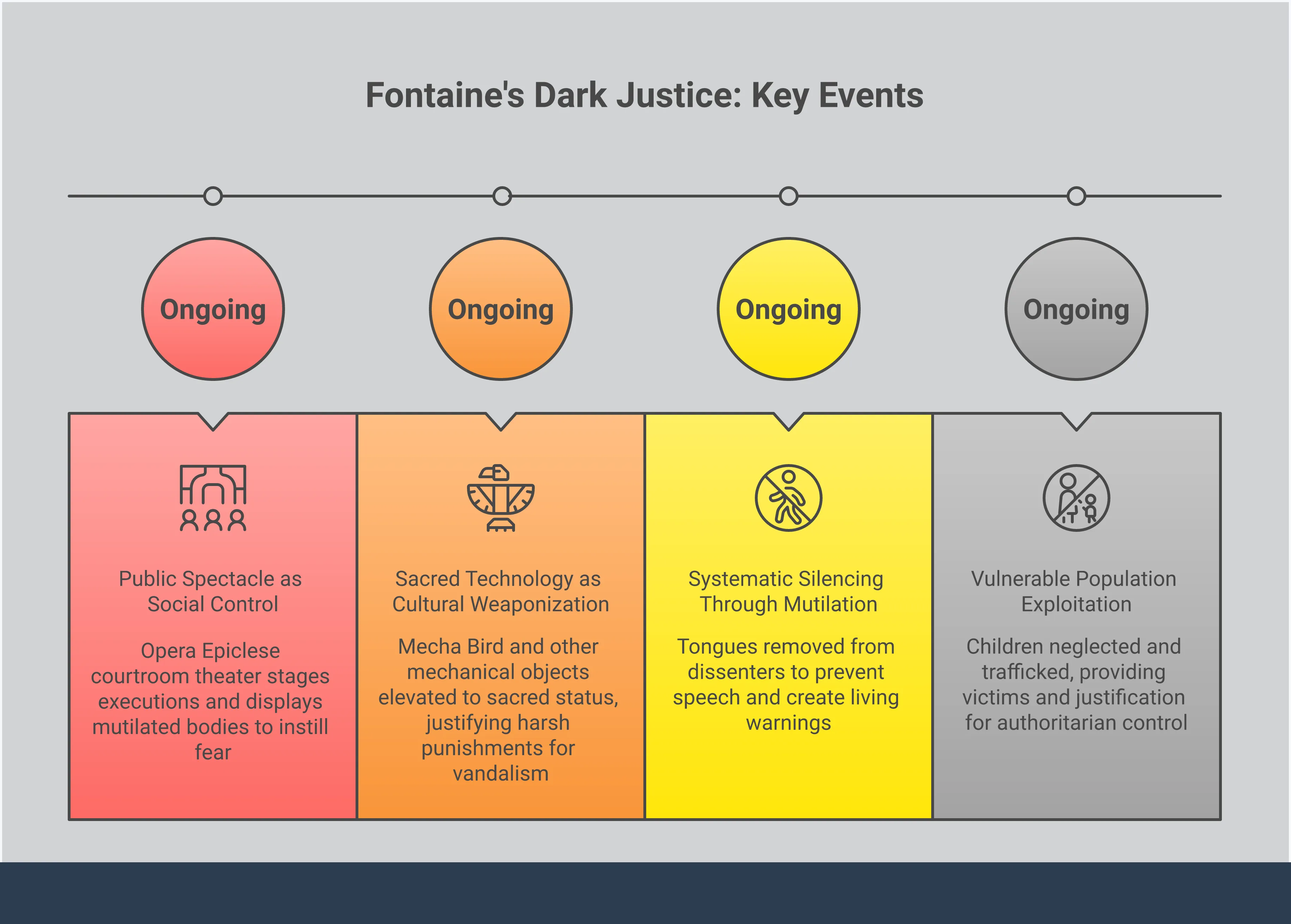
Fontaine prides itself on justice, but its methods are often harsh, dramatic, and disturbing. The ‘Mecha Bird’ incident perfectly illustrates this. While the crime itself – the destruction of a popular device – seemed simple, the punishment was shockingly severe. The person responsible was publicly tortured in a gruesome display that left many players shocked. This wasn’t about simple law enforcement; it was a deliberately frightening show of power.
This event compels us to examine some difficult truths about Hydro. Why did destroying a machine result in such a terrible human cost? The answer is rooted in the core of Fontaine, where the difference between justice and revenge is blurred. This incident exposes a society where laws can be used as weapons, and doing what’s right feels like a privilege. It’s a clear sign that Genshin’s storytelling is becoming more direct and unsettling, shifting from hinting at tragedy to showing it plainly. In Fontaine, punishment isn’t just about correcting a wrong; it’s about sending a brutal message, and that message is delivered with bloodshed.
What Sparked the Brutal Retribution
The trouble started with a simple act of vandalism – someone damaged a public mechanical bird. While most countries would likely issue a fine or short jail sentence, Fontaine saw it as a serious offense against their core beliefs. Fontaine is a nation constantly wrestling with what’s legal versus what’s right, and this incident perfectly illustrates that conflict. The law called for a harsh punishment, even if it felt disproportionate to the actual crime. The severe response wasn’t just about the damaged bird; it was a way to firmly demonstrate that any disruption to their strict system would be met with forceful consequences.
Why a Machine’s Destruction Led to Human Torture
To truly understand the strong reaction, it’s important to consider Fontaine’s past with violence and its need for control. The nation has a hidden darkness, revealed by the large number of orphaned and trafficked children, showing a society that could be indifferent to human suffering. Public torture wasn’t just punishment; it was a brutal form of entertainment designed to instill fear. This spectacle tapped into a basic desire for revenge while making an example of anyone who dared to disobey. Destroying the machine was seen as an attack on the established order, and the response – publicly punishing a person – reinforced that order. It’s a disturbing situation where property seems to be valued more than human life and respect.
A Message Written in Blood
Fontaine’s legal system isn’t subtle; it makes a very public example of those it punishes, often with extreme and horrifying consequences. The punishment for damaging the mechanical bird wasn’t simply about justice, but a deliberate, harsh warning meant for everyone to see. This public cruelty is central to how Fontaine keeps order, using fear to control its citizens. The punishments are deliberately gruesome, symbolic, and frighteningly effective, making sure no one dares to break the law.
This system turns punishment into a public display, a brutal warning intended to frighten others into obedience. It shows a society that prioritizes control over kindness, and where the difference between justice and oppression is intentionally obscured. In this ‘Nation of Justice,’ mercy is rare, and those in power will do anything to demonstrate their authority. Each public punishment isn’t just about correcting wrongdoing; it’s a carefully planned event designed to reinforce who holds the power and remind everyone who is in charge. The message is unmistakable: disobedience will not be accepted, and the consequences will be severe, visible, and lasting.
The Gory Details of Fontainian Justice
Despite its beautiful appearance, Fontaine has a dark side. Justice isn’t about being fair; it’s about harsh punishments carried out publicly to scare people. This cruelty has a real impact on society, and the story suggests that many children in Fontaine are orphaned, sold into trafficking, or left to fend for themselves. This shows how the harsh legal system actually creates more suffering, and makes Fontaine a particularly difficult place to grow up.
The Meaning Behind Ripping Out His Tongue
Removing the criminal’s tongue is a deeply symbolic act, far more than just violence. It’s a clear statement about suppressing opposition. In a culture that values public speaking and performance, silencing someone completely is the harshest penalty imaginable. This brutal act prevents the condemned from defending themselves, sharing their perspective, or encouraging others to fight back. It’s a strong method of control, demonstrating that challenging those in power carries deadly consequences. Many players have commented that this kind of storytelling is effective because it makes the game’s world feel more believable, touching on themes of oppression that resonate with real-world issues.
How to Use a Body as a Public Warning
In Fontaine, when someone dies, their body isn’t just seen as a loss – it’s used as a warning by the government. By publicly displaying the bodies of criminals, the authorities aim to scare others into obeying the law. This is a deliberate tactic of psychological manipulation, meant to keep citizens fearful and compliant. The intention isn’t simply to punish an individual, but to terrify anyone who witnesses the outcome. Historically, Fontaine has used this manipulation of public fear as a way to maintain control, turning justice into a display of power and exploiting people’s desire for retribution to enforce order.
How Violence Forges Fontaine’s Characters
The difficult events in Fontaine aren’t just meant to be shocking; they fundamentally shape the people who live there. Everyone, from leaders to ordinary citizens, is affected by the nation’s harsh approach to justice. This constant exposure to violence – whether experiencing it directly, causing it, or simply witnessing it – creates characters who are complicated, conflicted, and very human. Their actions are often driven by the need to survive, a desire for revenge, or a desperate search for purpose within a system focused more on punishment than healing. This challenging environment forces characters to make difficult choices, revealing their true selves under pressure and making their stories captivating. We see this in the cautiousness of the guards, Navia’s determined spirit, and Furina’s dramatic persona, which often seems to hide deeper pain. The violence isn’t just a setting; it’s a powerful force that influences relationships, drives conflict, and defines the heart of Fontaine. It’s why even a simple conversation can feel fraught with tension, and why everyone seems to be concealing a hidden sorrow.
Trauma as a Defining Character Arc
Fontaine’s story stands out because its darkness feels relatable and realistic. While previous regions like Sumeru and Inazuma focused on ancient curses or divine conflicts, Fontaine’s horrors – such as wrongful accusations, public shaming, and deliberate cruelty – feel uncomfortably close to real-world issues. This makes the characters’ trauma feel central to who they are. Their challenges aren’t simply part of the plot; they’re deeply personal experiences of dealing with loss and unfairness. The lore hasn’t necessarily become darker, but it’s become more grounded in reality, and that change makes the characters’ stories much more impactful and emotionally resonant.
The Lasting Impact of Witnessed Brutality
In Fontaine, trauma isn’t something individuals experience in isolation—it’s a shared burden. The nation’s harsh legal system is public, constantly reminding everyone of the violence at the heart of their society. Even newcomers quickly sense this tension, as described in the game’s story. This widespread awareness creates a culture of fear that affects how everyone acts. Characters are shaped not only by their own hardships, but also by the brutality they see around them. This leaves a lasting mark, breeding cynicism and distrust, and forcing people to live in a world where the pursuit of justice can be just as frightening as the crimes themselves.
Where Character Morals Get Blurry
Fontaine heavily explores the idea of justice, but constantly asks us to consider what justice really means. The game’s strict legal system often conflicts with what feels right, putting characters in complicated situations. This is where the story excels, forcing characters and players alike to grapple with tough moral choices. It asks difficult questions – is it okay to follow a law that’s unfair? And when does seeking justice simply become revenge? The game doesn’t provide simple answers, mirroring how games can challenge our own sense of right and wrong. This ambiguity makes the characters feel more like flawed individuals simply trying to navigate a flawed system, rather than clear-cut heroes or villains.
Why the Mecha Bird Mattered So Much
It’s understandable to question the severity of the punishment following the Mecha Bird incident – after all, it was just a machine. However, in Fontaine, the Mecha Bird wasn’t simply gears and metal; it was a deeply meaningful symbol of the community’s identity and hopes. To truly understand the strong reaction to its destruction, you need to appreciate what it meant to the people of Fontaine.
The destruction of the bird wasn’t simply about damaging property; it felt like a blow to the heart of Fontaine’s culture. The bird symbolized the nation’s balance between innovation and heritage, and destroying it was seen as an attack on Fontaine’s identity. It was akin to vandalizing a treasured national landmark – the impact went far beyond the physical damage. For the people of Fontaine, the Mecha Bird was a constant symbol of their beliefs and their place in the world. Considering this, their strong reaction, though extreme, becomes understandable. It was a frantic, desperate act born from a fear that their way of life was falling apart.
The Cultural Role of Sacred Technology
In Fontaine, technology and spirituality are deeply connected, not separate things. The Mecha Bird perfectly showed this connection. It wasn’t just an impressive invention; it was a sacred object that represented Fontaine’s culture and identity. The people saw it as a constant reminder of their efforts to balance new advancements with their traditions. This special technology embodied their shared dreams and their belief in innovation to improve their lives. It was a powerful symbol of everything they valued as a society, and they greatly respected it.
Why Destroying It Was a Death Sentence
The destruction of the Mecha Bird wasn’t just damage to property; it felt like an attack on the very foundations of Fontainian society. It was a bold act of rebellion, a direct challenge to everything they believed in. The bird represented stability and order, and its loss left the people feeling vulnerable and hopeless. The harsh response from the authorities wasn’t simply about punishing the perpetrators; it was a desperate attempt to regain control and send a message that any threat to their way of life would be crushed. They saw the act as an attack on the heart of Fontaine itself, and reacted accordingly.
The Hydro Archon’s Role in This Violent System
Fontaine’s legal system is famously messy, and at its center is the Hydro Archon, Focalors, who appears publicly as Furina. While you’d expect the God of Justice to uphold fairness, Fontaine’s justice system often feels like a cruel game, blurring the line between right and wrong. This leaves players wondering: is Furina intentionally creating this harsh environment, is she powerless to change it, or is there more to the story?
The entire story in Fontaine seems to revolve around this central contradiction: the goddess of justice presides over a system that causes so much suffering. The Opera Epiclese isn’t simply a place for trials; it’s a spectacle where people’s lives are treated as entertainment, and the outcome of a case depends on what the public thinks. This raises serious questions about what justice really means in Teyvat. It implies that laws and even the power of a god can be twisted for selfish reasons, resulting in a society ruled by fear instead of fairness.
A Twisted Definition of Divine Justice
Fontaine is a nation where simply following the law doesn’t always lead to fair outcomes. The story delves into the conflict between what’s legal and what’s truly right, portraying a system that takes the rules to their absolute limit, even when it’s morally questionable. The Hydro Archon seems to represent this flawed approach to justice, valuing strict adherence to rules over empathy. It’s not about simple good versus evil, but a look at the complicated problems found in society. This makes Fontaine’s story feel believable and relatable, even with all its fantastical elements. The justice system feels unsettlingly similar to those in our own world, highlighting real-world imperfections.
The Unspoken Rules of Revenge
Fontaine isn’t just about what happens in court. The city operates with a hidden, harsh code where getting revenge is common and almost expected. This creates a constant cycle of conflict, as people are encouraged to turn on each other. Sadly, this atmosphere has led to a large number of children becoming orphaned, trafficked, or abandoned. While Fontaine appears glamorous on the surface, this dark side is impossible to ignore. Many players have noticed Genshin Impact’s regions becoming increasingly bleak, and Fontaine represents the most obvious example yet of a society falling apart due to its flawed sense of justice.
How the Community Is Reacting to Fontaine’s Moral Questions
Reading about dark fantasy is different from truly feeling it, and that’s exactly what’s happening with Fontaine. The strong reaction from players comes from how its themes of unfairness, corruption, and hardship resonate with real-world issues. Unlike other areas in the game which focus on fantastical battles, Fontaine’s problems feel disturbingly relevant, making the experience more impactful. Players aren’t simply watching a story unfold; they’re facing difficult moral dilemmas without simple solutions, leading to thoughtful discussions online about the meaning of justice.
When the Game Gets a Little Too Real
Players have noticed that the darkness in Genshin Impact’s Fontaine region feels particularly impactful. While the game has always included tragic elements, the story in Fontaine feels less like a faraway tale and more like a commentary on current real-world issues. One Reddit user pointed out that the quests are so unsettling because they tap into widely known, disturbing realities. Unlike previous storylines focused on ancient curses or monsters, Fontaine explores difficult themes like human trafficking, false imprisonment, and the failings of systems. This change makes the story feel more urgent and has led many players to feel that the lore isn’t just darker—it’s become more grounded in reality.
Does This Lore Hit Too Close to Home?
The main conflict in Fontaine centers around justice, but it’s a flawed and distorted system. The story consistently challenges players to think about the difference between what’s lawful and what’s truly right. As the lore unfolds, it’s becoming apparent that the game deliberately portrays laws being used to cause harm, leading to extensive discussion among players about legality versus morality. It’s a complex theme that makes you question whether the systems meant to keep people safe are actually responsible for their suffering.
What Players Think About Justice in Fontaine
Players have noticed a disturbing trend in Fontaine: a lot of vulnerable children are orphaned, abandoned, or victims of trafficking. This isn’t just a minor detail – it’s a key part of many stories and quests within the game. It’s led to conversations about whether Fontaine is the most dangerous place for children, and whether its society truly values justice when so much suffering exists. The nation appears deeply flawed, suggesting that justice is only available to those who can afford it, not everyone.
The Twisted Logic Behind Extreme Retribution
Honestly, the way justice works in Fontaine feels…off. It’s not about fair punishment, it’s like they’re trying to make an example out of people with ridiculously harsh penalties. It’s not just random meanness either, there’s a really unsettling pattern to it. It feels like they’re not just punishing individuals, but trying to scare everyone else into following the rules. Digging into the story, you realize these over-the-top punishments aren’t accidents – they’re carefully planned moves to keep everyone under control and maintain power. It’s a really creepy system when you think about it.
As a fan, I’ve been really struck by how the violence in Fontaine isn’t just random—it feels like a deliberate message. It’s a way for those in power to scare everyone else into submission, and honestly, it’s terrifying. To really understand what’s going on, you have to look past the shocking parts and think about why these things are happening, what the people doing them are hoping to achieve, and the messed-up system that allows it all to continue. It’s a really dark story, and that’s what makes it so gripping and disturbing—it feels so thought-provoking.
What Was the Perpetrator Thinking?
It’s tempting to simply call people who commit terrible acts monsters, but the stories often reveal a more complex truth. In Genshin Impact’s darker tales, those responsible aren’t always motivated by pure evil. They often act out of desperation or because they’re being forced to. The game explores how someone can be driven to commit awful deeds when they’re controlled or manipulated, perhaps by a powerful, malicious entity that exploits their vulnerabilities. While this doesn’t justify their actions, it presents them as victims within a larger, more tragic cycle of cruelty.
When Violence Is the Only Message
Sometimes, a message needs to be powerfully delivered to ensure it’s not overlooked. In the world of Fontaine, extreme violence serves this purpose. The graphic details aren’t just meant to be shocking; they’re a deliberate way to communicate a serious point. These darker storylines resonate because they tap into real-world horrors we already recognize, making the danger feel immediate and personal. When a character suffers a violent fate as a public example, it signifies that words have failed and demonstrates the consequences of disobedience.
Creating a Cycle of Fear and Control
These harsh punishments aren’t about true justice; they’re about power and control. Fontaine’s society is completely based on the Hydro Archon’s strict and inflexible idea of what’s right and wrong. There’s no room for understanding or compassion; only complete obedience is expected. By severely punishing someone, the authorities scare others into following the rules. This creates a never-ending cycle where fear keeps everything in order. The story isn’t just trying to be grim; it feels believable because it shows how fear can be used as a weapon to control people.
What This Means for Genshin Impact’s Storytelling
As a Genshin Impact fan, I’m really struck by how Fontaine is changing things up. It feels like the story is getting so much deeper! We’ve had epic battles and world-saving quests before, but now it’s diving into really thought-provoking stuff about what’s right and wrong. The whole region is based on the Hydro Archon’s idea of justice, but it quickly shows you that things aren’t so simple. You’re constantly put in situations where doing what’s legal doesn’t necessarily feel moral, and it’s honestly a little unsettling. It’s not just a story about heroes and villains; it’s about a flawed system, and it makes you really think about things – and sit with the uncomfortable feelings that brings up.
Fontaine’s serious and unsettling themes resonate deeply because they feel strikingly realistic. Previous areas in the game focused on fantastical conflicts like god wars and ancient curses, but Fontaine tackles issues that mirror real-world problems – corruption, social inequality, and a flawed justice system that favors the rich and powerful. Players have observed that the story isn’t just becoming darker, it’s becoming more grounded in reality. This makes the events in the game feel more impactful, and the suffering of characters more meaningful. When the struggles feel so human, it creates a complex moral landscape that makes you think carefully about your choices and actions within the world.
The game’s realistic and impactful storytelling doesn’t shy away from the harsh realities faced by its characters. The large number of orphaned, exploited, and abandoned children in Fontaine is a particularly striking detail, revealing serious problems within the society. By focusing on these vulnerable individuals and the consequences of a broken justice system, the story feels deeply personal and creates a strong sense of urgency. This demonstrates a new level of storytelling skill for Genshin Impact, proving its ability to deliver both grand adventures and emotionally resonant, thought-provoking narratives.
Frequently Asked Questions
Fontaine’s story is particularly unsettling because its problems feel very human and relatable. Unlike other regions that focus on things like ancient curses or conflicts between gods, Fontaine deals with issues like a broken system, corruption, and a decline in morals. This focus on real-world concerns, like injustice, makes the story’s horror feel more personal and impactful than the more fantastical problems we’ve seen in other areas.
Is the Hydro Archon, the goddess of justice, truly to blame for all of this suffering? That’s the main question we’re facing. She oversees a justice system that’s become a cruel public spectacle, with harsh consequences. But she doesn’t seem simply evil; she appears to be a result of a flawed system where laws are followed strictly, even when the outcome is unjust. Her position is complicated – she’s a leader, a performer for the public, and almost a prisoner of the system her nation has created.
I’ve been trying to understand why the punishment for destroying the Mecha Bird was so harsh, and it’s really hit me that it wasn’t just about a broken machine. That bird meant something to the people of Fontaine – it was a really important symbol of their culture and how far they’d come. Destroying it wasn’t just a crime, it felt like attacking everything they believe in. The public punishment wasn’t about justice, honestly, it felt like a really scary warning to anyone who might even think about challenging the way things are in Fontaine.
Does the violence in the story truly impact the characters, or is it simply there to be shocking? It definitely changes them. The characters live in a world defined by fear and dramatic displays, and they have to adjust to survive. This is clear in how they act, what drives them, and their lack of faith in the system. The constant danger and unfairness push them to make difficult choices and operate in morally ambiguous ways. The violence isn’t just something happening in the background; it’s the main reason the characters are so complex and interesting.
Seriously, is it just me, or is Genshin Impact getting way more serious with each new area? I’m not crazy, though – it totally feels like the game is growing up. It started with simpler conflicts in Mondstadt and Liyue, but then Inazuma got into some really messy politics, and Sumeru started asking some deep questions. Now, with Fontaine, it feels like the developers are really trusting us to deal with some heavy stuff and morally gray choices. It’s a big jump, and honestly, I’m here for it.
Read More
- United Airlines can now kick passengers off flights and ban them for not using headphones
- Crimson Desert: Disconnected Truth Puzzle Guide
- All 9 Coalition Heroes In Invincible Season 4 & Their Powers
- Mewgenics vinyl limited editions now available to pre-order
- The Boys Season 5 Spoilers: Every Major Character Death If the Show Follows the Comics
- Invincible Season 4 Episode 6 Release Date, Time, Where to Watch
- Grok’s ‘Ask’ feature no longer free as X moves it behind paywall
- Assassin’s Creed Shadows will get upgraded PSSR support on PS5 Pro with Title Update 1.1.9 launching April 7
- Crimson Desert Guide – How to Pay Fines, Bounties & Debt
- ‘Timur’ Trailer Sees Martial Arts Action Collide With a Real-Life War Rescue
2026-01-16 17:12