Ah, Fidelity Investments, that venerable titan of the financial world, has deigned to grace the crypto realm with its presence. On a Wednesday, no less, when the world was surely holding its breath in anticipation, they announced the birth of their stablecoin, the Fidelity Digital Dollar (FIDD). Behold, the masses shall soon revel in its glory on Ethereum, for both the humble retail investor and the lofty institutional giant.
In this age of greed and folly, where every institution clamors for a piece of the $316 billion stablecoin pie, one must wonder: who shall reign supreme? Who shall be cast into the abyss of obscurity? The stage is set, the players are many, and the drama-oh, the drama-is only beginning.
Fidelity Joins the Circus of Stablecoins with FIDD
In their grand proclamation, Fidelity declared that FIDD would be the beacon of stability, a marriage of blockchain’s wild promises and the US dollar’s staid reliability. A noble endeavor, indeed, though one cannot help but smirk at the irony of such ambition.
“At Fidelity, we have long waxed poetic about the digital assets ecosystem, pouring years into research and advocacy for stablecoins,” intoned Mike O’Reilly, the high priest of Fidelity Digital Assets. “And lo, here we are, ready to bestow upon the world yet another token of our wisdom.”
This divine revelation comes mere weeks after Fidelity’s national trust bank received the sacred nod from the US Office of the Comptroller of the Currency. A bureaucratic blessing, if ever there was one, to issue the hallowed FIDD.
Fidelity, ever the humble servant, proclaimed itself a pioneer among traditional institutions, daring to mint its own digital dollar. Fear not, for FIDD shall be backed by reserves, a promise as solid as the faith in fiat itself.
O’Reilly, ever the optimist, cited the United States’ newfound affection for stablecoins as the wind beneath FIDD’s wings. The GENIUS Act, he declared, was a beacon of clarity in a sea of regulatory murk.
“With the GENIUS Act, the path is lit, and we march forward with FIDD, a stablecoin for the ages. Regulatory clarity, thou art a fickle mistress, but we embrace thee nonetheless,” he proclaimed with a flourish.
Yet, in this crowded arena, Fidelity is but another gladiator, sword in hand, stepping into the colosseum of stablecoins.
The Stablecoin Frenzy Post-GENIUS Act
Since the GENIUS Act’s ascent, the stablecoin market has exploded, a fireworks display of greed and ambition. At the time of this scribbling, trading volumes hover near $100 billion, a testament to humanity’s unquenchable thirst for digital dollars.
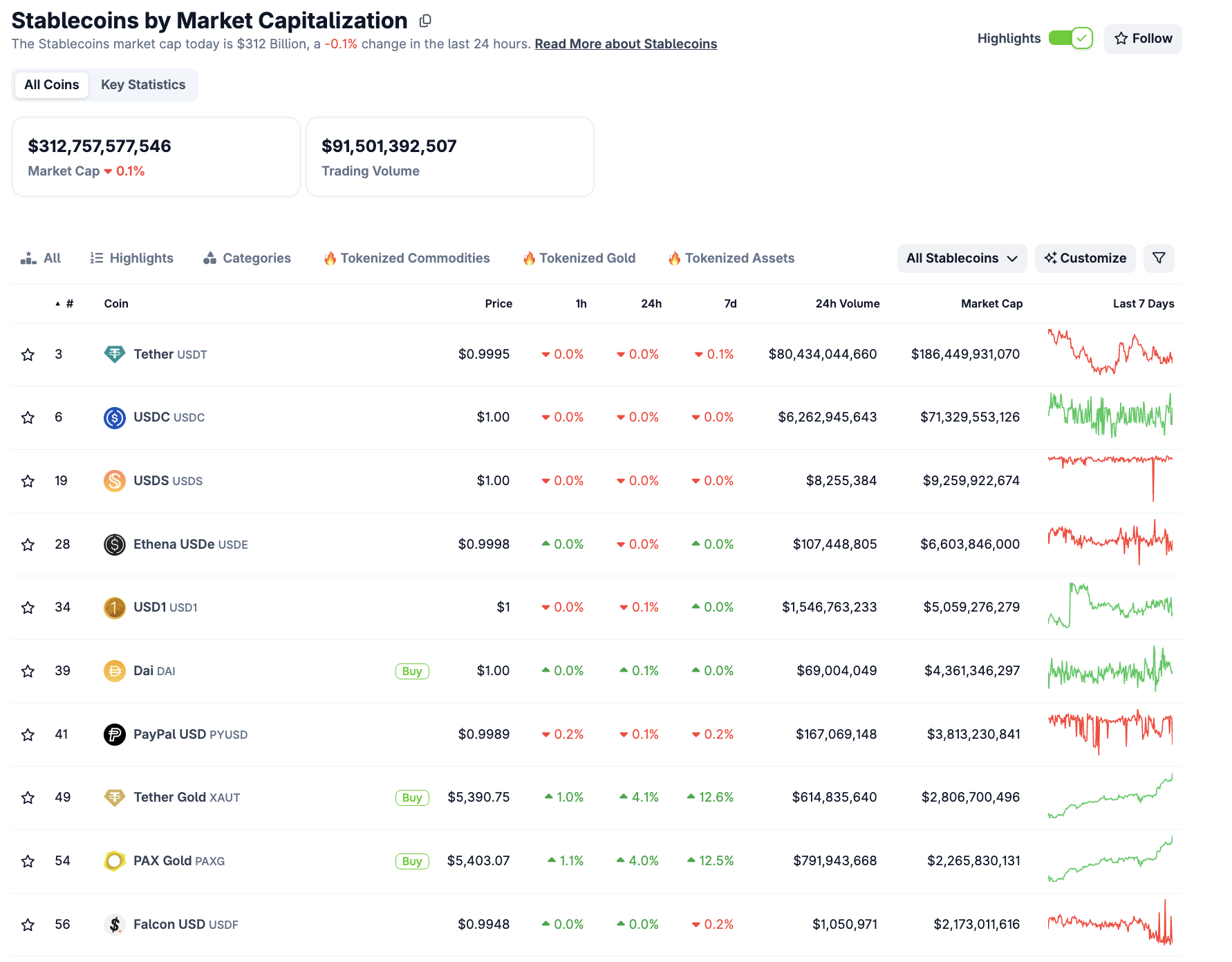
Tether, that enigmatic behemoth, reigns supreme with its USDT, a token so dominant it commands nearly 60% of the market, its market cap a staggering $186 billion. Yet, even Tether is not above the law, birthing USA₮ to appease the regulatory gods.
Circle’s USDC, the second fiddle in this grand orchestra, holds its own with a market cap of $71 billion. But let us not forget the newcomers, PayPal, Ripple, and now Fidelity, each vying for a slice of the pie, though their efforts thus far are but crumbs compared to the giants.
And so, Fidelity steps into the fray with FIDD, a bold move in a world already teeming with stablecoins. Will it rise to glory, or shall it be but a footnote in the annals of crypto history? Only time, that cruel and unforgiving judge, will tell.
Read More
- United Airlines can now kick passengers off flights and ban them for not using headphones
- All Itzaland Animal Locations in Infinity Nikki
- Katanire’s Yae Miko Cosplay: Genshin Impact Masterpiece
- Crimson Desert: Disconnected Truth Puzzle Guide
- How to Get to the Undercoast in Esoteric Ebb
- All Golden Ball Locations in Yakuza Kiwami 3 & Dark Ties
- BloxStrike codes (March 2026)
- 6 Ways Invincible Season 4’s Hell Episode Rewrites The Comics
- How to Complete Bloom of Tranquility Challenge in Infinity Nikki
- Gold Rate Forecast
2026-01-29 03:07