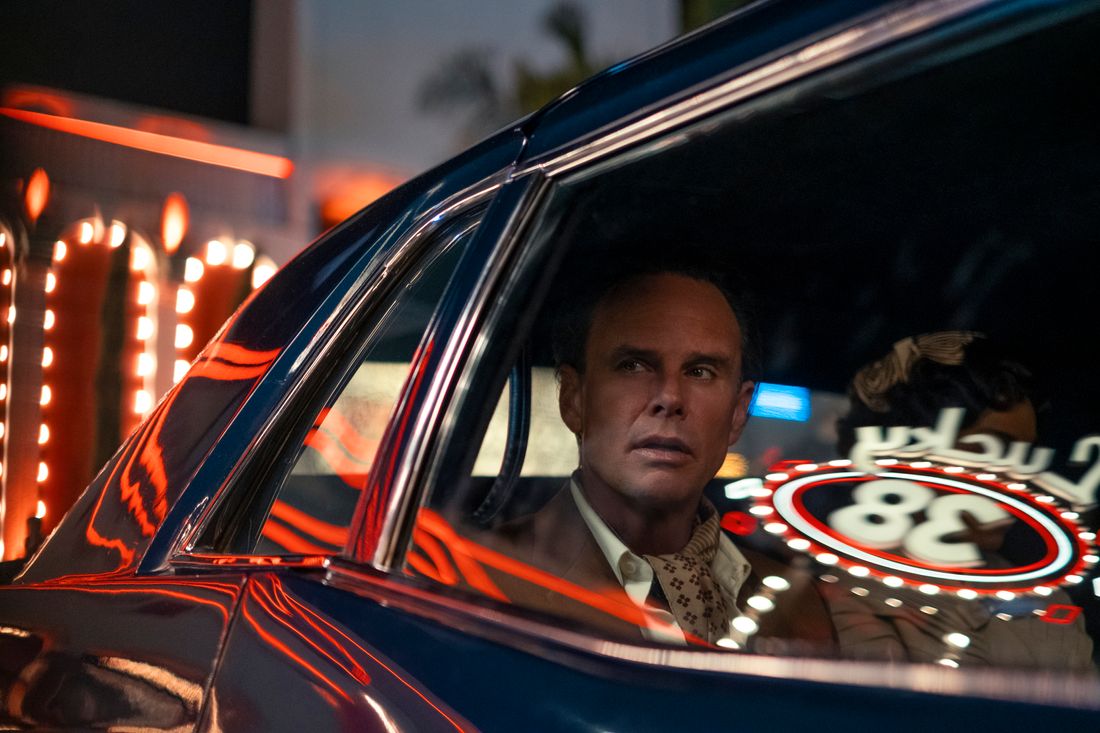
The popular series Fallout is back for a second season, continuing the story after the nuclear apocalypse. This time, the action moves from California to the iconic city of New Vegas, introducing new creatures and enemies while following the same three main characters. We learn more about the Ghoul (Walton Goggins), formerly Cooper Howard, a Hollywood actor who was shocked to discover his wife’s involvement in the war that destroyed America. Lucy (Ella Purnell), a hopeful resident of Vault 33, ventured into the wasteland to find her father, Hank (Kyle MacLachlan), and quickly realized how difficult it is to maintain her principles in such a harsh world. Maximus (Aaron Moten), a member of the Brotherhood of Steel, was sent on a mission to recover powerful cold-fusion technology that could solve the energy crisis. At the end of the first season, Lucy discovered her father’s dark past with Vault-Tec, the Ghoul resolved to find his family, and Maximus secured the potentially world-changing cold-fusion technology.
The themes explored in the first season of Fallout return in the second, which maintains the same distinctive retro-futuristic style but features a more complex and expanding storyline. This season will be released one episode per week, a change Prime Video also made with The Boys after its successful first season – a promising sign for continued discussion around Fallout. This means we’ll have almost two months to follow the show’s take on New Vegas, grapple with our complicated feelings about the Ghoul, and wonder if Lucy will return to her vault or if Maximus will escape his power armor. While I’ve seen the first six of the eight episodes and have a sense of the season’s main goals, it’s still unclear how they fit into the bigger picture. We’ll have to wait until the finale on February 4th to get all the answers, but here are three key questions that the new season raises.
Is Walton Goggins going to run away with this show again?
The performances remain strong – Purnell expertly captures Lucy’s initial optimism, and gradually shows it being eroded by the harsh realities she faces. Justin Theroux is a compelling addition as the enigmatic Mr. House, bringing a surprising vulnerability to his villainous role, even if it feels somewhat familiar. MacLachlan clearly enjoys playing Hank’s self-satisfied character and his hidden agenda. However, six episodes in, this season truly belongs to Walton Goggins. The show delves deeper into the Ghoul’s present-day struggle against his transformation, while also exploring the past to reveal the connections between Cooper and Vault-Tec, making Goggins the standout performer.
This season, Ian Goggins’s performance as the Ghoul feels more nuanced, likely due to subtle changes in the character’s makeup. He’s able to show a wider range of emotions – from frustration with Lucy’s innocence to growing fear about finding his family – which makes the shifts between the Ghoul and his alter ego, Cooper, feel seamless. This also highlights how Cooper’s increasing cynicism mirrors the Ghoul’s desperation. Goggins is captivating in every scene, whether he’s in intense confrontations with House (his scenes with Justin Theroux are among the show’s best) or sharing lighter moments with returning characters like Dallas Goldtooth and Sarita Choudhury. While the entire cast is strong, Goggins’s performance and the Ghoul’s expanded storyline truly stand out. The first season focused on Lucy’s loss of innocence, but this season delves much deeper into the Ghoul’s internal struggles, and Goggins carries that weight brilliantly.
Where is all the corporate-conspiracy stuff leading?
The first season of Fallout revealed shocking truths: Barb proposed a ruthless plan to secure a complete monopoly for Vault-Tec, and Lucy discovered her father’s involvement in the death of her mother and the destruction of a community—all to benefit the company. It’s clear Vault-Tec is the villain. Now that this is established, the show can explore several exciting plot directions.
The show reveals what Lucy’s brother, Norm, is investigating in the underground vaults. We learn two of them – Vaults 32 and 33 – were secretly built by Vault-Tec as a place for carefully selected people to repopulate the world after the bombs fell. Vault 31 holds frozen Vault-Tec employees. Norm is shocked to discover this deception, and as people begin new lives in the vaults, intended to “inherit the Earth,” he starts to become a more strategic and calculating character – similar to Hank, but with his own style. Moisés Arias, who plays Norm, gets more to do this season, and his interactions with new cast members Jeremy Levick and Rajat Suresh are particularly strong. While the vault storyline remains somewhat separate from the main plot, Norm’s reaction is a key part of its development.
Beyond the main plot, the second season of Fallout really shines in its character work. We see Barb, who abruptly became power-hungry in the first season, explored with more depth as Cooper tries to understand what drove her. Another compelling storyline follows Mr. House, initially presented as a cartoonish villain, but who gradually reveals himself as a more relatable, though still self-serving, individual. Overall, the season cleverly suggests that no single person is truly to blame for the world’s devastation – a surprising approach for an adaptation of a video game, where players typically feel in control. The only concern is whether expanding the Fallout story even further will ultimately be beneficial.
… Will Fallout pull a Westworld?
The idea for a New Vegas storyline was hinted at the end of Fallout‘s first season, when the Ghoul invited Lucy to join him on a trip there, asking her to “meet your makers.” This phrase clearly echoes the plot of Westworld, where the robotic hosts search for their creators and those who enslaved them. While some overlap is expected between sci-fi shows exploring what humans do with unlimited power and a fear of death, Fallout is starting to resemble Westworld in more than just its themes. Both shows use a similar structure – short, self-contained scenes separated by fades to black and dramatic musical cues. Fallout also frequently cuts away from important moments to switch to different characters, and it keeps hinting at a much bigger, almost incomprehensible threat looming in the background.
While Jonathan Nolan and Lisa Joy (of Westworld) are executive producers and directors on Fallout, the series is actually created and run by Graham Wagner and Geneva Robertson-Dworet. However, Fallout is starting to feel a lot like Westworld, which worries me. It risks becoming overly complicated and losing track of its core themes. If characters start making references to loops or stumble upon obvious metaphors, the show could fall into the same trap. The final two episodes haven’t been shown to critics yet, and how Fallout wraps up this season – with a third already planned – will be crucial in determining if these concerns are justified.
Read More
- United Airlines can now kick passengers off flights and ban them for not using headphones
- All Itzaland Animal Locations in Infinity Nikki
- Crimson Desert: Disconnected Truth Puzzle Guide
- Katanire’s Yae Miko Cosplay: Genshin Impact Masterpiece
- All Golden Ball Locations in Yakuza Kiwami 3 & Dark Ties
- How to Get to the Undercoast in Esoteric Ebb
- How to Complete Bloom of Tranquility Challenge in Infinity Nikki
- DC Comics’ Absolute Two-Face and Absolute Penguin Confirmed
- BloxStrike codes (March 2026)
- 6 Ways Invincible Season 4’s Hell Episode Rewrites The Comics
2025-12-16 20:55