Author: Denis Avetisyan
Researchers are leveraging generative machine learning to dramatically increase the scope of climate model ensembles, offering a path toward more robust and reliable predictions.
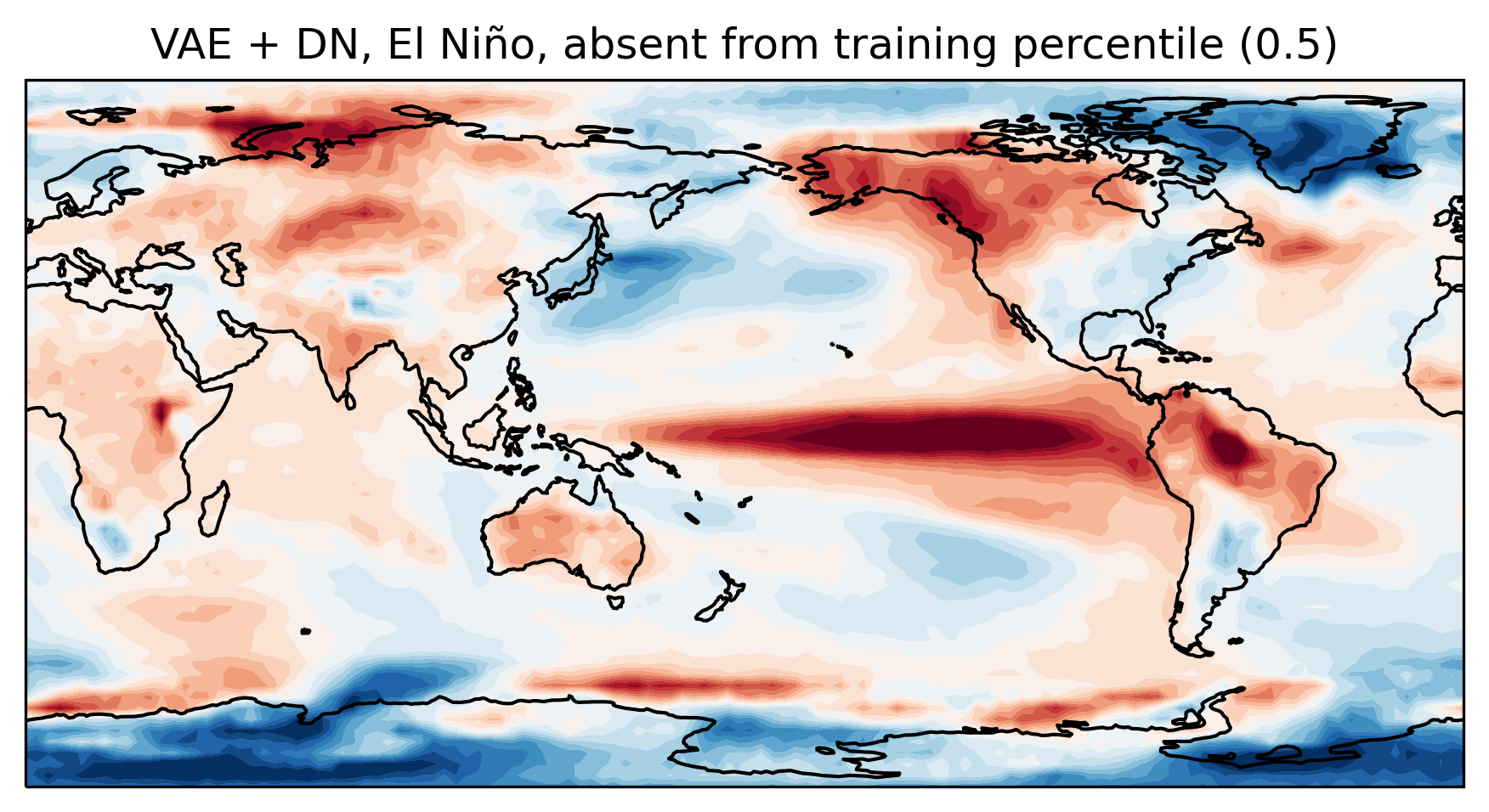
A conditional variational autoencoder expands limited climate model ensembles to generate physically realistic simulations, even with training on a single member.
Accurately quantifying uncertainty in climate projections requires large ensembles, yet computational constraints limit both ensemble size and model resolution. This study, ‘Toward generative machine learning for boosting ensembles of climate simulations’, introduces a conditional Variational Autoencoder (cVAE) trained on limited climate model output to generate expanded, physically consistent ensembles. The cVAE successfully reproduces realistic climate statistics, including extreme events, and captures global teleconnection patterns even under novel climate conditions. Could this approach unlock a pathway to more robust and computationally tractable climate uncertainty assessment?
Expanding the Horizon of Climate Prediction
Generating reliable climate projections demands the use of climate ensembles – multiple simulations run with slightly different initial conditions or model parameters. These ensembles allow scientists to assess the range of possible future climates and quantify the inherent uncertainty. However, each simulation is computationally expensive, requiring significant supercomputing resources and time. This creates a fundamental trade-off: increasing the ensemble size to better capture climate variability and reduce uncertainty is often limited by budgetary and technological constraints. Consequently, many existing climate projections utilize ensembles that, while valuable, may not fully represent the breadth of potential climate futures, potentially underestimating extreme events or long-term shifts and impacting the accuracy of risk assessments.
Climate modeling relies on simulating the Earth’s complex systems, a computationally intensive task that historically limits the scope of potential future climates explored. Traditional methods often involve running a relatively small number of simulations – an ensemble – each with slightly different starting conditions or parameterizations. However, the true range of possible climate outcomes is vast, influenced by chaotic interactions and uncertainties in forcing factors. Insufficient computational resources prevent scientists from generating sufficiently large ensembles to fully capture this breadth of possibilities, leading to an incomplete picture of future climate risks. This limitation isn’t simply about predicting a future, but about understanding the range of plausible futures, which is crucial for informed decision-making regarding mitigation and adaptation strategies. Consequently, current modeling approaches may underestimate the likelihood of extreme events or the sensitivity of the climate system to various perturbations, hindering effective long-term planning.
A climate model ensemble, representing multiple simulations with slightly different starting conditions or model parameters, is crucial for quantifying the inherent uncertainty in future climate projections. However, a limited ensemble size systematically underestimates this uncertainty, potentially leading to overly confident predictions and inadequate preparation for extreme events. This underestimation arises because rare but plausible climate outcomes – such as abrupt shifts in ocean currents or unexpectedly rapid ice sheet melt – are less likely to be captured with fewer simulations. Consequently, risk assessments based on insufficient ensembles may fail to identify critical vulnerabilities, hindering effective adaptation planning for infrastructure, agriculture, and public health. Ignoring the full spectrum of potential futures, therefore, represents a significant challenge to building resilient communities and mitigating the most severe consequences of climate change.
Synthesizing Climate Data with Conditional Variational Autoencoders
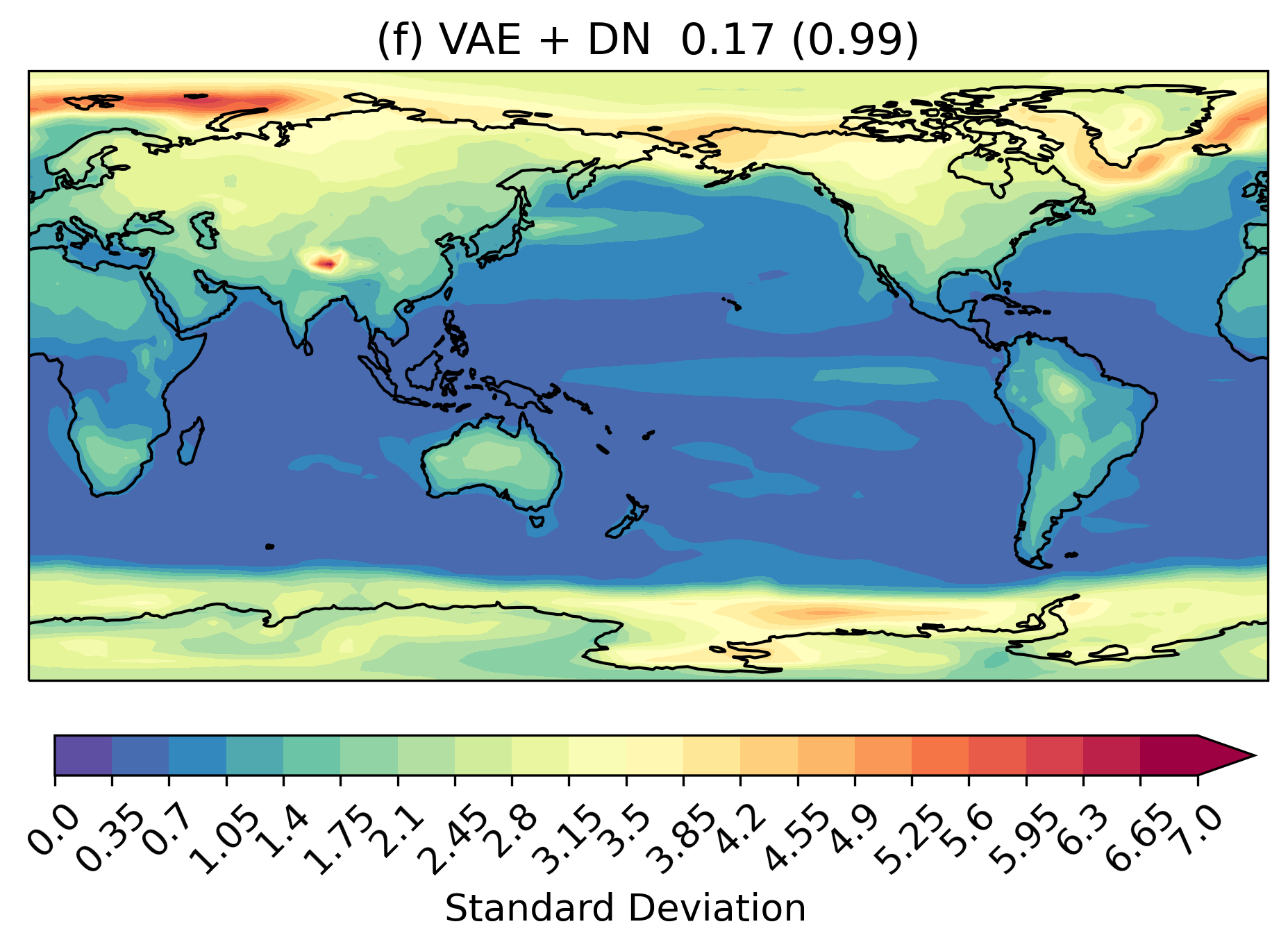
A Conditional Variational Autoencoder (CVAE) is utilized to synthesize novel climate simulations based on data originating from the CanESM5 climate model. This approach involves training the CVAE on existing CanESM5 output, allowing it to learn the underlying distribution of climate variables. The CVAE then generates new data points – complete climate simulations – that are statistically consistent with the CanESM5 training data, effectively expanding the available dataset for analysis and model improvement. The ‘conditional’ aspect of the CVAE ensures that generated simulations are influenced by, and thus related to, specific input data provided during the generation process.
The Conditional Variational Autoencoder (CVAE) operates by reducing the high dimensionality of climate simulation data into a lower-dimensional ‘Latent Space’. This is achieved through an encoder network which maps input climate variables to a probability distribution in the latent space. Subsequently, samples are drawn from this distribution and decoded back into climate variable fields by a decoder network. This process allows the CVAE to capture the essential features of the climate data with significantly fewer parameters than the original data, enabling the efficient generation of new, diverse simulations by varying the sampled points within the latent space. The dimensionality of this latent space is a key hyperparameter, balancing compression efficiency with the ability to represent complex climate phenomena.
The Conditional Variational Autoencoder (CVAE) utilizes a ‘Condition Embedding’ to constrain generated climate simulations to physically realistic outcomes. This embedding is created by encoding input climate data – such as temperature, precipitation, and wind patterns – into a fixed-length vector. This vector is then provided as additional input to the CVAE’s decoder during the simulation generation process. By conditioning the decoder on this embedding, the CVAE learns to generate outputs that are statistically consistent with the input data’s characteristics, effectively ensuring the generated simulations remain within plausible climate states and maintain relevance to the original CanESM5 model’s behavior.
Correcting for Bias and Uncertainty in Generated Ensembles
Generative models used in climate science frequently exhibit spectral bias, a tendency to underrepresent the amplitude of high-frequency components within climate data; this results in simulations that lack the full range of variability observed in real-world climate patterns. Our Conditional Variational Autoencoder (CVAE) addresses this limitation through a specialized training regime that explicitly focuses on reconstructing and generating these higher-frequency elements. This is achieved by incorporating techniques that penalize the model for suppressing high-frequency information during the learning process, thereby improving its ability to accurately represent the full spectrum of climate variability and produce more realistic simulations.
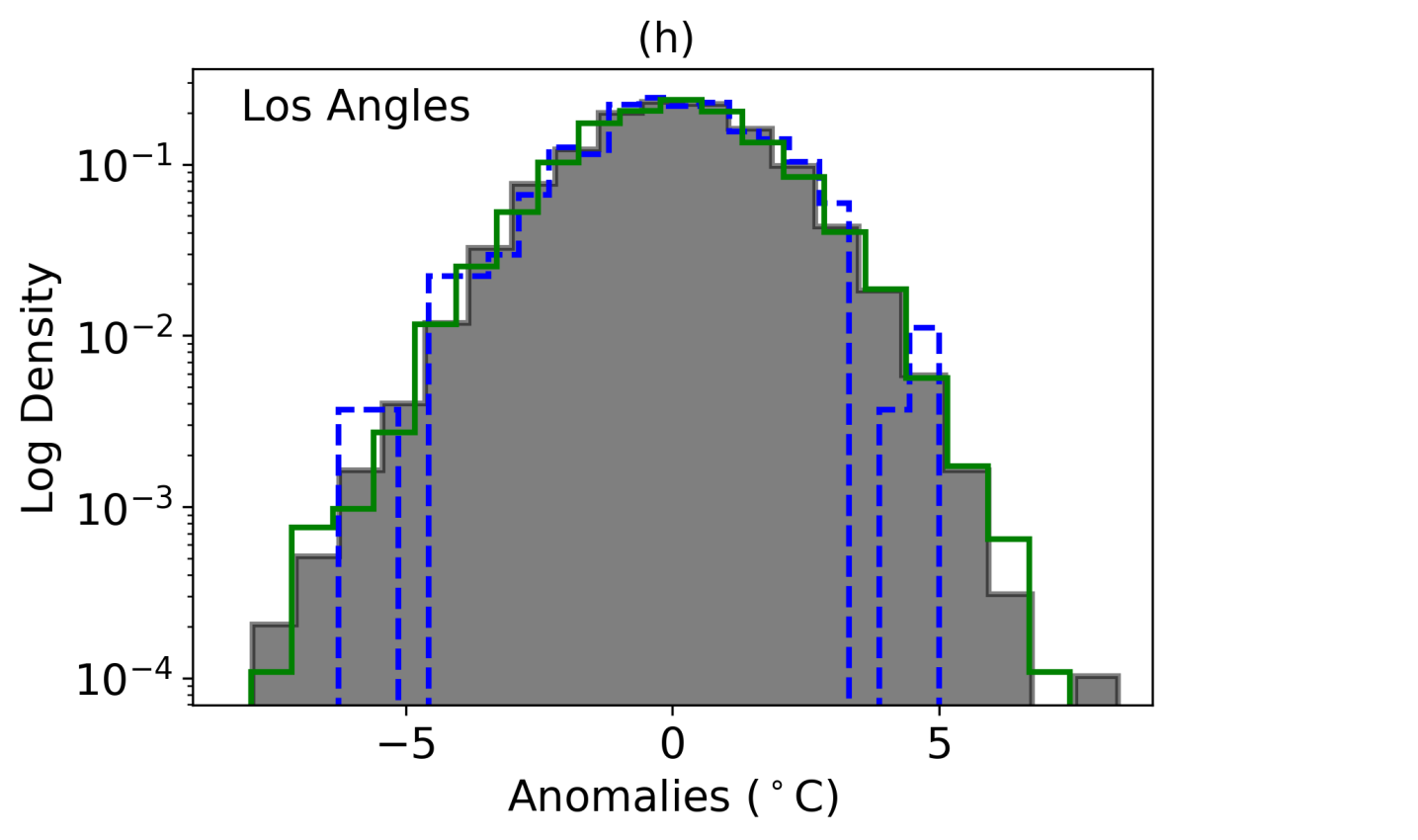
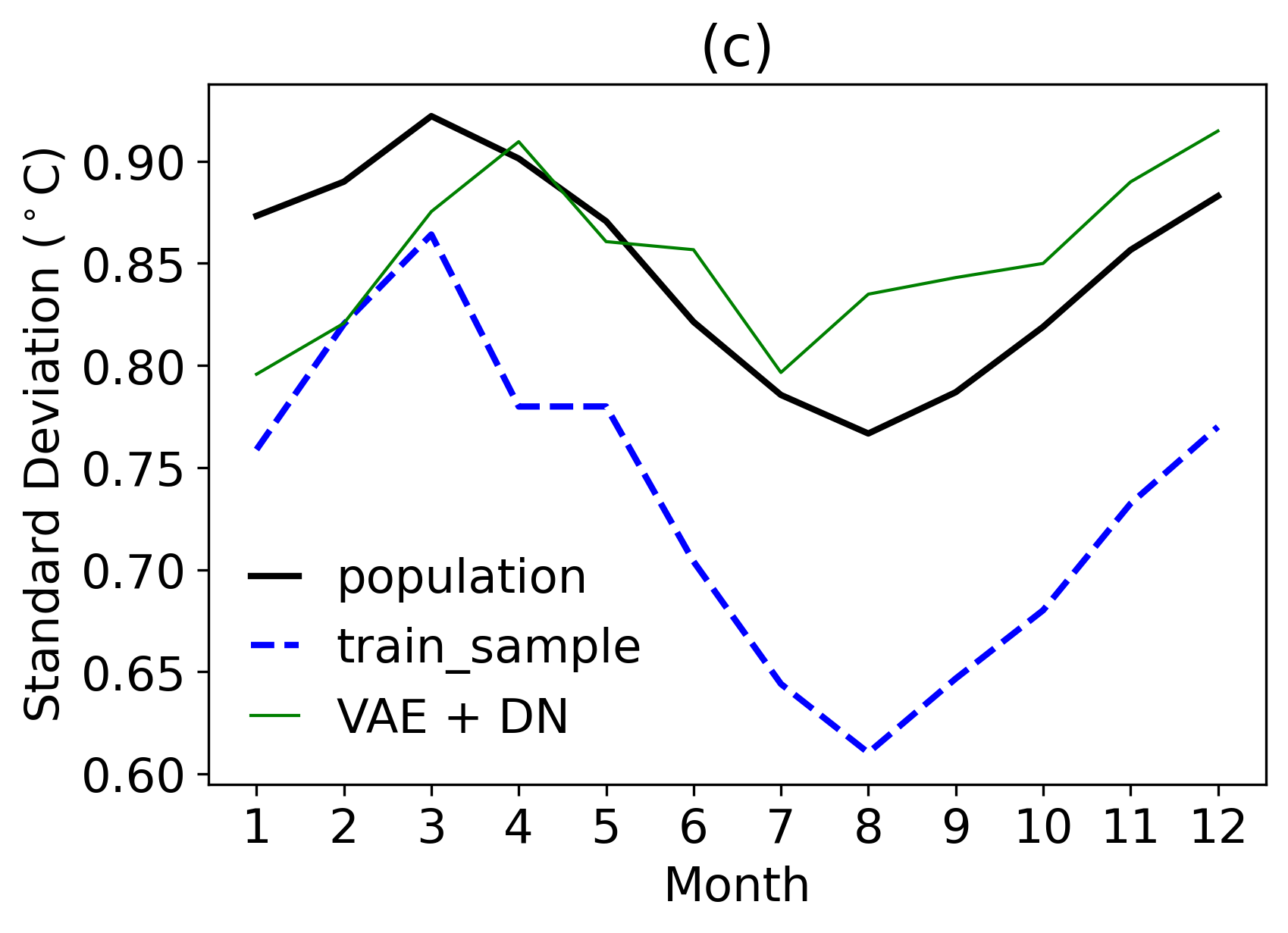
Underdispersion, a common issue in generative climate modeling where the range of predicted outcomes is narrower than observed in reality, is effectively addressed by the Conditional Variational Autoencoder (cVAE). Quantitative evaluation reveals the cVAE significantly improves the representation of forecast uncertainty; specifically, the cVAE-generated ensembles demonstrate a variance more closely aligned with observed climate variability compared to traditional methods. This is achieved through the probabilistic framework of the cVAE, which allows for a more comprehensive exploration of the potential solution space and avoids the collapse to a single, most-likely outcome often seen in deterministic or poorly calibrated models. The resultant ensembles provide a more realistic spread of possible climate states, crucial for robust risk assessment and decision-making.
A conditional Variational Autoencoder (cVAE) was successfully implemented to generate extensive ensembles of climate data. This CVAE architecture facilitates the creation of synthetic climate datasets that accurately replicate established physical patterns observed in historical climate records. Specifically, the generated ensembles demonstrate the reproduction of known El Niño-Southern Oscillation (ENSO) teleconnections – the long-distance atmospheric linkages initiated by ENSO events – validating the model’s ability to capture critical climate dynamics and providing a robust foundation for further climate analysis and prediction.
Amplifying Predictive Skill and Understanding Climate Dynamics
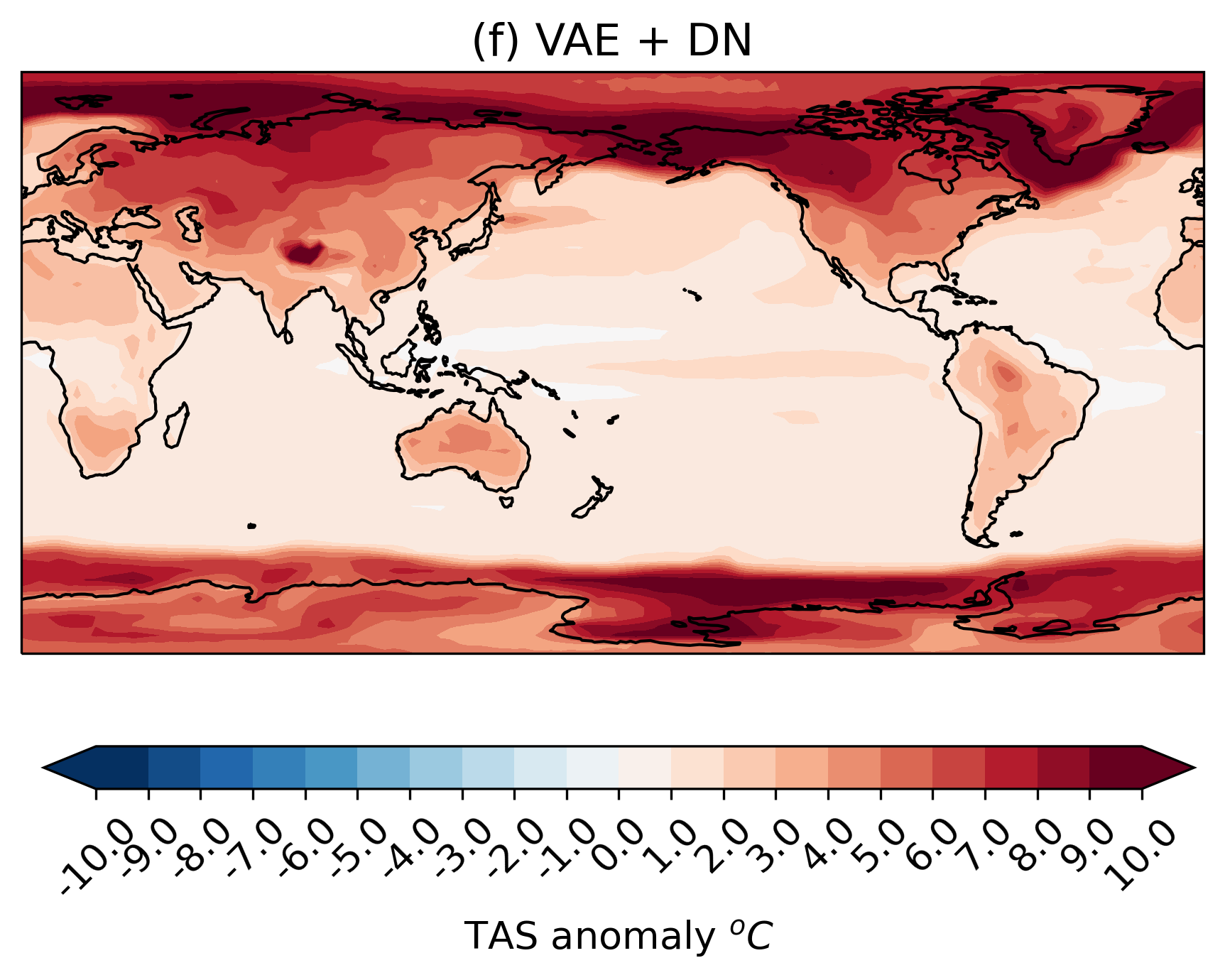
The capacity to accurately forecast climate conditions years in advance – known as seasonal-to-decadal prediction – is fundamentally enhanced through the use of expanded climate ensembles generated by Conditional Variational Autoencoders (CVAEs). These CVAEs effectively amplify limited climate model simulations, creating a larger, more representative dataset that captures a wider range of possible climate futures. This expanded ensemble doesn’t just increase the quantity of predictions, but crucially, improves their quality, allowing for more reliable assessments of risks associated with events like droughts, heatwaves, and extreme precipitation. Consequently, policymakers and planners gain access to more robust information for developing effective adaptation strategies, from infrastructure investments to resource management, ultimately bolstering societal resilience in the face of a changing climate.
The complexities of Earth’s climate system mean that even seemingly identical starting conditions can lead to drastically different outcomes, a phenomenon known as internal climate variability. Recent advancements utilizing Conditional Variational Autoencoders (CVAE) enable a significantly more detailed investigation of this variability, particularly focusing on crucial climate patterns like the El Niño-Southern Oscillation (ENSO). By generating a diverse range of plausible climate scenarios from a single initial state, the CVAE effectively expands the scope of climate modeling beyond traditional ensemble methods. This expanded view allows researchers to better quantify the inherent uncertainty within the climate system and assess the full spectrum of potential climate states, ultimately leading to a more robust and comprehensive understanding of climate dynamics and improved predictions of future climate behavior.
The fidelity of the generated climate ensemble is strikingly demonstrated through its accurate reproduction of El Niño events. Analysis reveals a pattern correlation of 0.97 between composite maps derived from the generated ensemble and those from the complete CanESM5 climate model. This indicates an exceptionally strong agreement in the spatial structure of these crucial climate phenomena. Furthermore, the root mean squared error (RMSE) between the composite maps is a mere 0.85 °C, suggesting the generated ensemble not only captures the pattern, but also the magnitude of El Niño events with remarkable precision. This level of accuracy underscores the potential of this approach to refine seasonal climate predictions and deepen understanding of the complex dynamics governing these impactful events.
The pursuit of expanding climate model ensembles, as detailed in this work, echoes a fundamental tenet of systems design. One must consider the interconnectedness of all components. As Donald Davies observed, “The way to approach a complex problem is to break it down into smaller, manageable pieces.” This approach is particularly relevant when applying generative machine learning-specifically, conditional variational autoencoders-to climate modeling. The cVAE effectively distills the essence of a single ensemble member, allowing for the generation of physically plausible variations. This isn’t merely about increasing the quantity of simulations; it’s about intelligently leveraging existing data to represent a broader range of climate variability, acknowledging that altering one aspect-in this case, the ensemble size-has cascading effects on the overall predictive capability.
The Road Ahead
The demonstrated capacity to augment climate model ensembles with generative approaches, even from a single source, represents a shift, though not necessarily a revolution. The immediate challenge lies not in generating more data, but in rigorously quantifying the uncertainty inherent in these generated samples. Current metrics of climate model fidelity often fail to capture subtle but crucial shifts in the probability distributions governing extreme events; simply achieving visual realism is insufficient. A deeper exploration of latent space traversal and its relationship to physically plausible climate states is paramount.
Further research must address the limitations of variational autoencoders in representing complex, multi-scale phenomena. The tendency towards mode collapse and the smoothing of sharp features remain significant hurdles. Hybrid approaches, integrating the strengths of generative models with established physical constraints – perhaps through adversarial training schemes guided by dynamical core equations – seem a promising avenue. The true test will be not whether these models can replicate past climate, but whether they can robustly project future climate variability under novel forcing scenarios.
Ultimately, the pursuit of generative climate modeling is a quest for an efficient representation of a fundamentally chaotic system. The elegance of the approach will be judged not by its ingenuity, but by its ability to reduce real-world risk. Good architecture is invisible until it breaks, and only then is the true cost of decisions visible.
Original article: https://arxiv.org/pdf/2602.06287.pdf
Contact the author: https://www.linkedin.com/in/avetisyan/
See also:
- Solo Leveling’s New Manhwa Chapter Revives a Forgotten LGBTQ Story After 2 Years
- The Boys Season 5 Spoilers: Every Major Character Death If the Show Follows the Comics
- Gold Rate Forecast
- All Itzaland Animal Locations in Infinity Nikki
- How to Get to the Undercoast in Esoteric Ebb
- Mewgenics vinyl limited editions now available to pre-order
- Smarter, Faster Networks: Optimizing Early-Exit Architectures for Edge AI
- Shiba Inu reappointed as “inspector” dog by Japanese police
- CBR’s Official Spring 2026 Anime Series Power Ranking (Week 1)
- TikToker’s viral search for soulmate “Mike” takes brutal turn after his wife responds
2026-02-10 03:18