As a huge thriller fan, I always think about how much modern thrillers owe to Brian De Palma’s Body Double. That film’s tagline – ‘A seduction. A mystery. A murder.’ – feels like the basic formula for so many stories we see today. But honestly, a lot of thriller series now flip that order. Think of shows like The White Lotus – they often start with the murder, immediately grabbing your attention. It’s all about jumping right into the action and then flashing back to show you how things unfolded, the seduction and the build-up to that shocking moment. Let’s face it, we all have pretty short attention spans these days, so shows need to hook us fast. But the really good ones don’t stop there. They use that framework – the seduction, the mystery, the murder – to explore deeper themes, like morality, what drives people to commit terrible acts, and the darkness that can exist within us all.
The new series, DTF St. Louis, immediately establishes itself as a darkly funny and thrilling show for today’s audiences. The story centers around the murder of Floyd Smernitch, played by David Harbour, a somewhat awkward Sign Language interpreter for a St. Louis news station. Harbour quickly delivers a compelling performance, reminiscent of his work in Revolutionary Road, but with a comedic edge. The opening scene shows Floyd participating in a painfully awkward therapy session, attempting to hug his reluctant stepson while reading him a prepared statement.
“I just don’t want you to someday get grown-up C’s,” Floyd tells Richard, which, as he explains, means “maybe you’re in a relationship with someone who’s unkind” or lacking in meaningful friendships, or finding yourself in middle age without ever having figured out how to express yourself. “I want you to get grown-up A’s,” Floyd concludes with Richard’s forearms still braced up against his belly — the only thing between them a sweaty, too-tight polo which, as Floyd explains, he wears to avoid the “snowball effect” of going up a size after you gain a lot of weight. This kind of signaling a central character’s internal conflicts upfront feels a bit cute to me, but it quickly shows us the internal stakes. This is especially clear once the other two sides of our fatal love triangle appear. It also sets up how Steven Conrad blends absurdity and sincerity in his approach to the genre.
Enter the other two points of our fatal love triangle: Floyd’s wife Carol (Linda Cardellini) and local weatherman Clark Forrest (Jason Bateman). Both Bateman and Cardellini are well familiar with this type of material, having cut their teeth on thriller series of this ilk in the streaming era (Cardellini in Netflix joints from Bloodline to Dead to Me, and Bateman in Ozark and Black Rabbit), and both have ample experience playing violent, borderline psychopathic criminals in mid-life crisis.
The way the scene is set up for Floyd’s downfall happens quickly, but it’s effective thanks to the chemistry between the actors playing Harbour and Bateman. When Floyd awkwardly apologizes to Clark for using his last name – right after Clark saved the weatherman from a falling sign – all it takes is a quick look and a dry response from Bateman to establish their dynamic. It’s clear Floyd is naive and easily led, and Clark, posing as a weatherman, will take advantage of that, forming a one-sided friendship reminiscent of George and Lenny from Of Mice and Men.
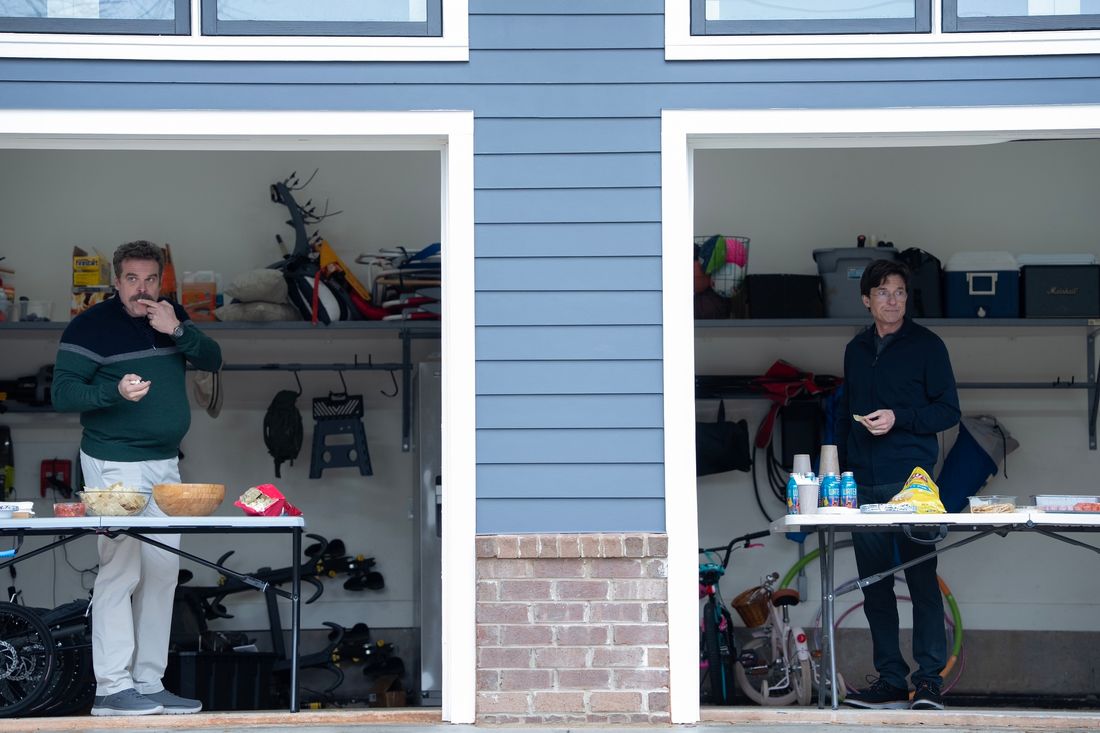
The story quickly introduces us to the troubled home lives of Floyd, Carol, and Clark, all living in the made-up town of Twyla, near St. Louis. A backyard gathering is central to the plot, where Clark – whether intentionally or not – starts a chain of events leading to Floyd’s death, using a dating app called “DTF St. Louis.” Set in 2018, a time when online affairs were still a recent topic of discussion, the show explores how technology allows Clark to escape his boring suburban life and enter a world of simple, but exciting, pleasures.
Okay, so this film introduces us to Floyd, a guy clearly stuck in a rut with his wife, Eimy. He’s practically spying on their neighbor, Clark, and that’s where the trouble really begins. Clark subtly plants the seed of an affair, suggesting Floyd try this new dating app for St. Louis singles – one that’s all about ‘non-attachment,’ which is… a choice. Their sex life is described as pretty tame, and Floyd initially resists the idea, but Clark is relentless. He comes up with this bizarre plan – a family game night designed to deliberately annoy Floyd’s wife. Picture this: Floyd wearing a card that says ‘I Am Spaghetti’ on his head, failing to bond with her son… it’s all meant to push Carol’s buttons. Honestly, seeing Carol as a weekend umpire – earning her own money, which apparently threatens Floyd’s ego – already had him on edge. Then Clark proposes they seal the deal with a ridiculous ‘blood pact’ at Outback Steakhouse to set up his dating profile. Let me tell you, that part gave me the ick. It’s a really uncomfortable setup, and sets a pretty bleak tone for what’s to come.
Around the middle of the episode, we see a deliberately unclear but captivating glimpse into the growing tension between the three main characters, revealing the issues that ultimately led to one of their deaths. This is also when the story jumps forward six weeks, and we discover Floyd’s body in an abandoned poolhouse. We’re introduced to the investigation through the eyes of Richard Jenkins, playing Sheriff’s Detective Donoghue Homer, and Joy Sunday as Twyla, a special crimes officer. This classic buddy-cop duo, working across different jurisdictions, first meet while examining the evidence – a Playgirl magazine and a ready-made bloody mary. Homer accepts things as they appear, but Plumb, due to her experience in a “porn-positive” relationship, starts to suspect there’s more to the story.
I found the show’s humor and serious tone a bit confusing. The idea that a lot of online content about “Indiana Jones and… well, you get the idea” is what initially makes the character question the evidence feels strange. It leads them to investigate, but the connection seems weak. I usually enjoy shows that mix tones in unexpected ways, and this show definitely offers something different from typical HBO Max programs. However, I’m starting to question whether this unusual mix is intentional or just a result of compromises made during production.
After Plumb presents Sheriff Homer with indirect evidence connecting Clark to the bicycle seen in the pool surveillance footage – and linking it to Floyd’s car – Homer starts investigating Clark again. A brief interview at the police station and a search warrant for Clark’s phone quickly confirm he’s the suspect. However, the case is more complex than it appears, and the story of Floyd Smernitch’s murder will be revealed through Clark’s hesitant account. The episode, “Cornhole,” concludes with a fast-paced montage of mini-twists and misleading clues, ending on a shocking revelation: Floyd signing a confession about an affair with Clark’s wife.
The three main actors seem perfectly suited for this project, and their energy should translate well to the screen. The show also explores some interesting themes, such as how dating apps might be changing the way we think about relationships. However, it remains to be seen whether this HBO dark comedy has enough substance to keep viewers engaged for the entire six-episode run. We’ll have to wait and see if it can deliver a consistently compelling mystery.
Read More
- United Airlines can now kick passengers off flights and ban them for not using headphones
- Gold Rate Forecast
- How to Solve the Glenbright Manor Puzzle in Crimson Desert
- All Golden Ball Locations in Yakuza Kiwami 3 & Dark Ties
- How to Get to the Undercoast in Esoteric Ebb
- How to Complete Bloom of Tranquility Challenge in Infinity Nikki
- 8 Actors Who Could Play Blackbeard In One Piece Live-Action Season 3
- Netflix’s 4-Part Crime Thriller Is One Of Its Very Best
- Katanire’s Yae Miko Cosplay: Genshin Impact Masterpiece
- Blind Tekken 8 player reaches one of the game’s highest ranks after two years of grinding
2026-03-04 16:59