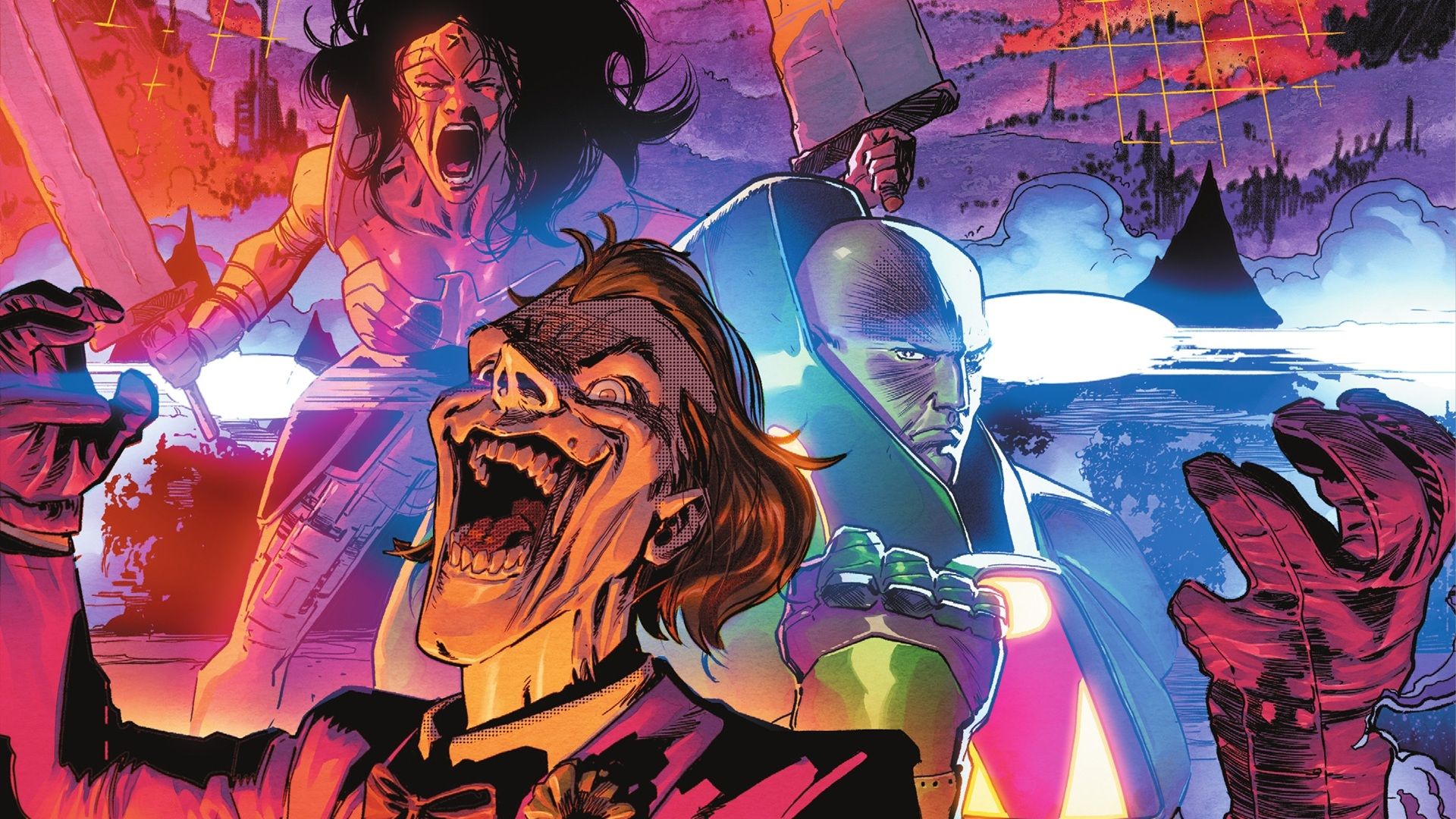
I started “Comics Should Be Good” over twenty years ago, and honestly, one of the main reasons was because I was frustrated with how comic book criticism was being dismissed. It felt like anytime someone pointed out a flaw, the response was always, “Fans won’t even notice,” or “They don’t care.” I wanted to actually talk about the good and the bad, you know?
I once argued that comic book fans should care about stories making sense, and that became a central theme of my website, Comics Should Be Good. Over the past twenty years, I’ve discussed many different topics, but I was recently reminded of this original point when a friend complained about how confusing the plot of DC KO #2 was.
Honestly, I get where this person is coming from. It feels like a lot of this event is just…showy. The way things are happening doesn’t really make sense, like the rules are changing on the fly. And it’s super obvious who they wanted to be the stars – everything seems built around them. It doesn’t feel earned, you know?
This comic book is consistently inconsistent – it deliberately bends its own rules, and has been doing so from the start. This isn’t a flaw, though. The comic embraces prioritizing what’s exciting and visually impressive – what’s known as ‘the rule of cool’ – and that’s precisely why any apparent inconsistencies actually make sense within its world.
This comic isn’t confusing because of bad writing. It’s intentionally wild and chaotic because the story is powered by the Heart of Apokolips, and that naturally leads to a bizarre and unpredictable experience.
Issue #3 of DC KO is written by Scott Snyder and Joshua Williamson, with art by Javi Fernández and Xermánico, colors by Alejandro Sánchez, and lettering by Hassan Otsmane-Elhaou. The story focuses on the final four competitors in the tournament, and it’s full of exciting, visually impressive moments!
How does this crossover continue to develop Superman?
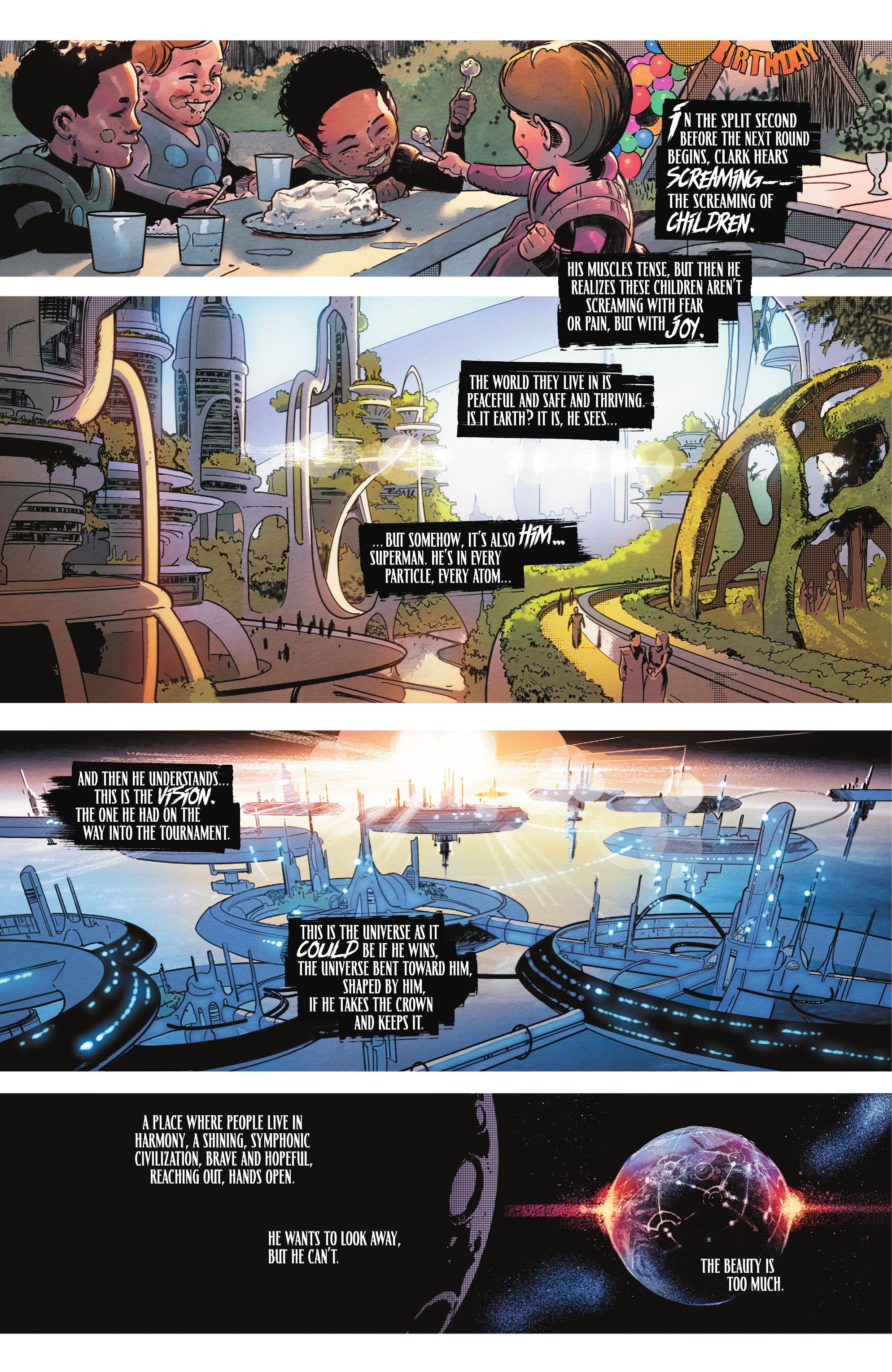
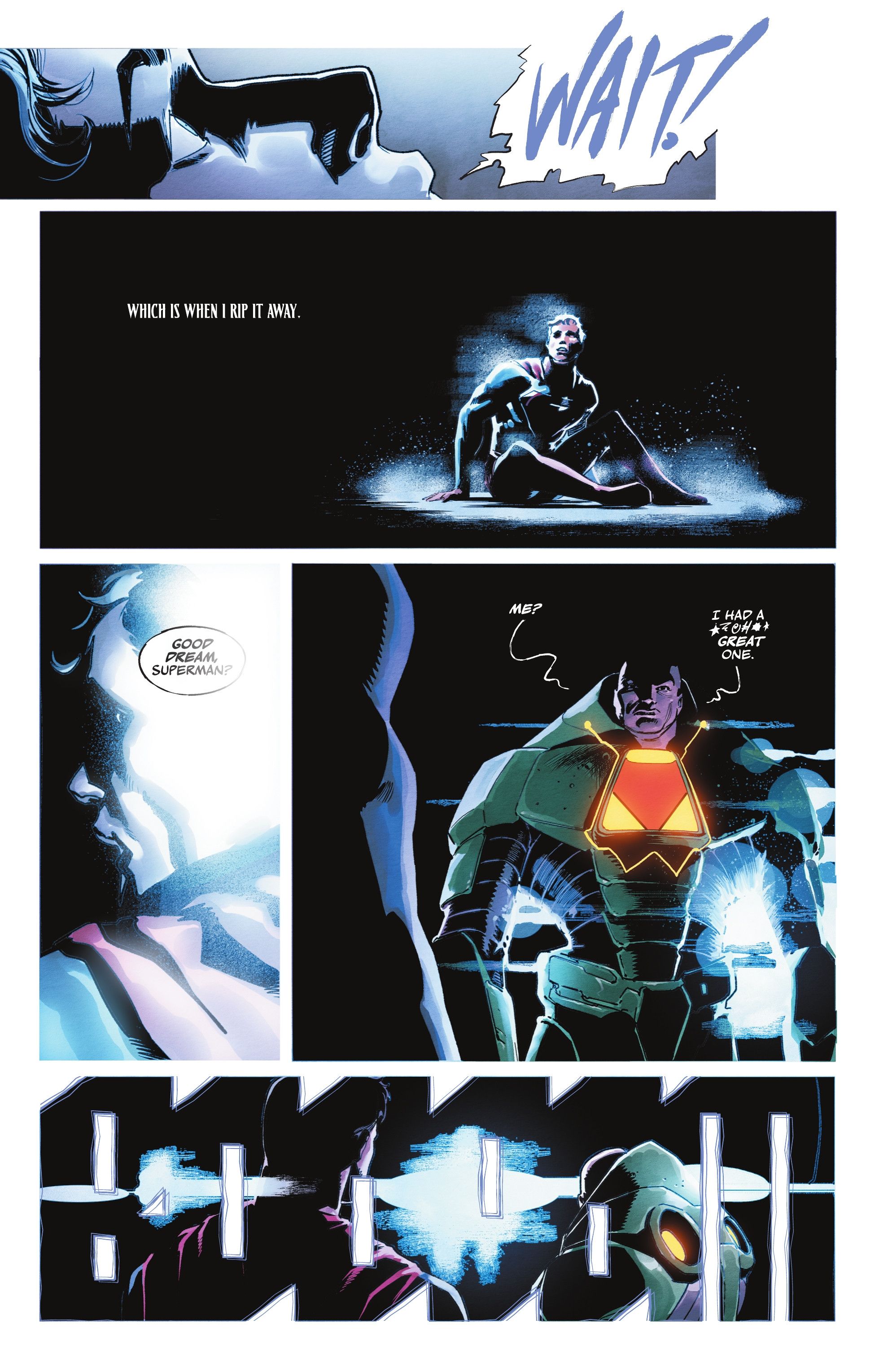
What’s made this crossover so successful is that Scott Snyder and Joshua Williamson have focused on Superman and how this situation is affecting him mentally and emotionally.
Superman, known for his dedication to Truth, Justice, and the American Way, faces a new challenge: saving the universe. But it won’t be easy. The only way to succeed is to defeat all enemies – and even those you care about. It’s not enough for others to sacrifice themselves; they must actively try to kill you first. Only by surviving those attacks can you gather “Omega Energy,” become King Omega, and ultimately undo the damage caused by Darkseid.
Okay, the idea of “collecting Omega energy” sounds ridiculous, but that’s how comic books work best – they need to treat even silly ideas with sincerity. I talked about this yesterday, using Killer Moth as an example. The problem is, we accept a character dressed as a bat as being serious, but someone dressed as a killer moth is automatically seen as a joke. It all comes down to how seriously these concepts are taken.
The ideas themselves aren’t special; it all comes down to execution. Focusing the story on Superman and the internal struggle he faces – being forced to kill both allies and enemies – is what surprisingly makes a seemingly outlandish plot point, like gathering Omega energy, feel meaningful.
How does this crossover even highlight DC’s most iconic heroes and villains?
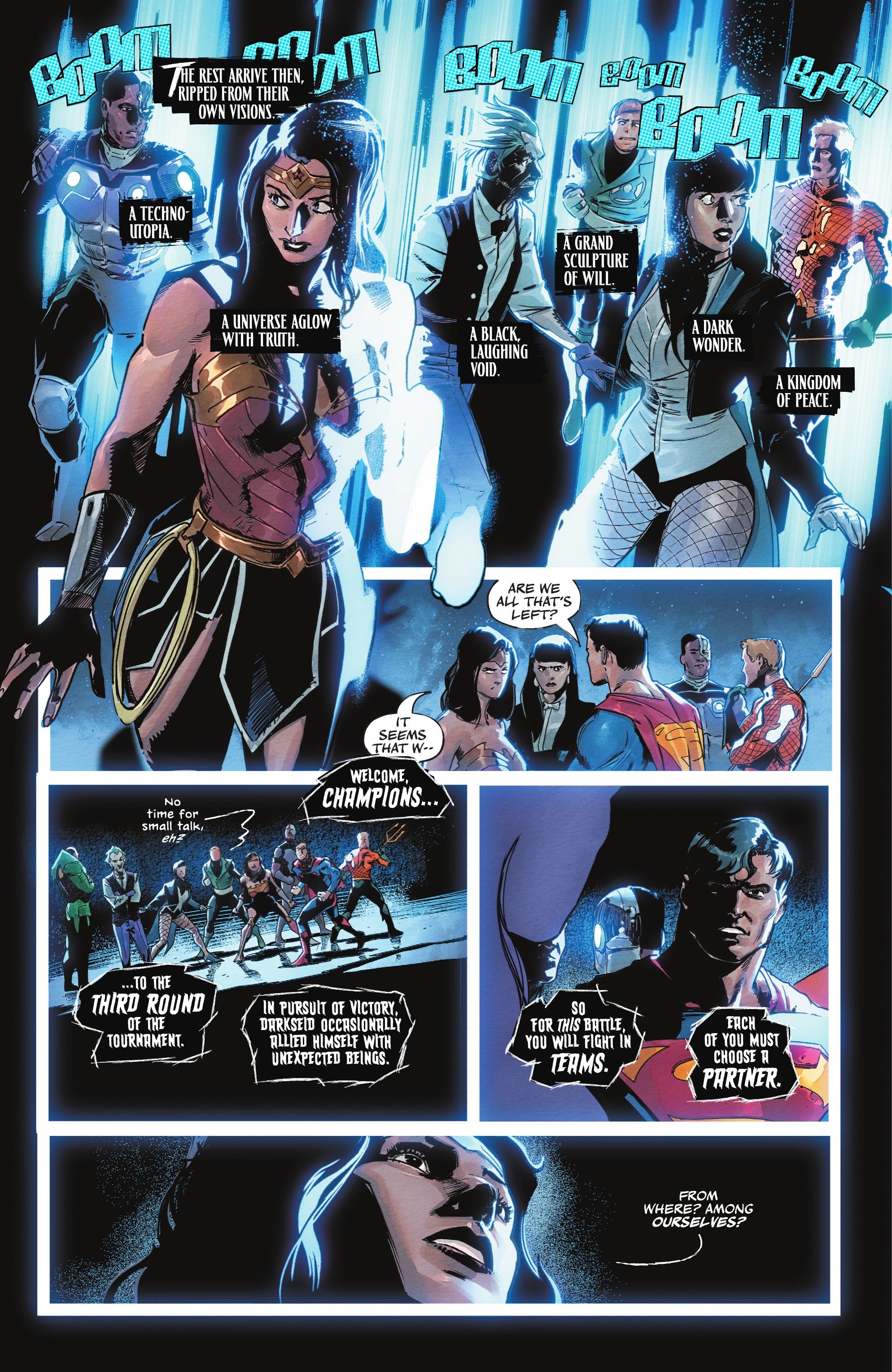
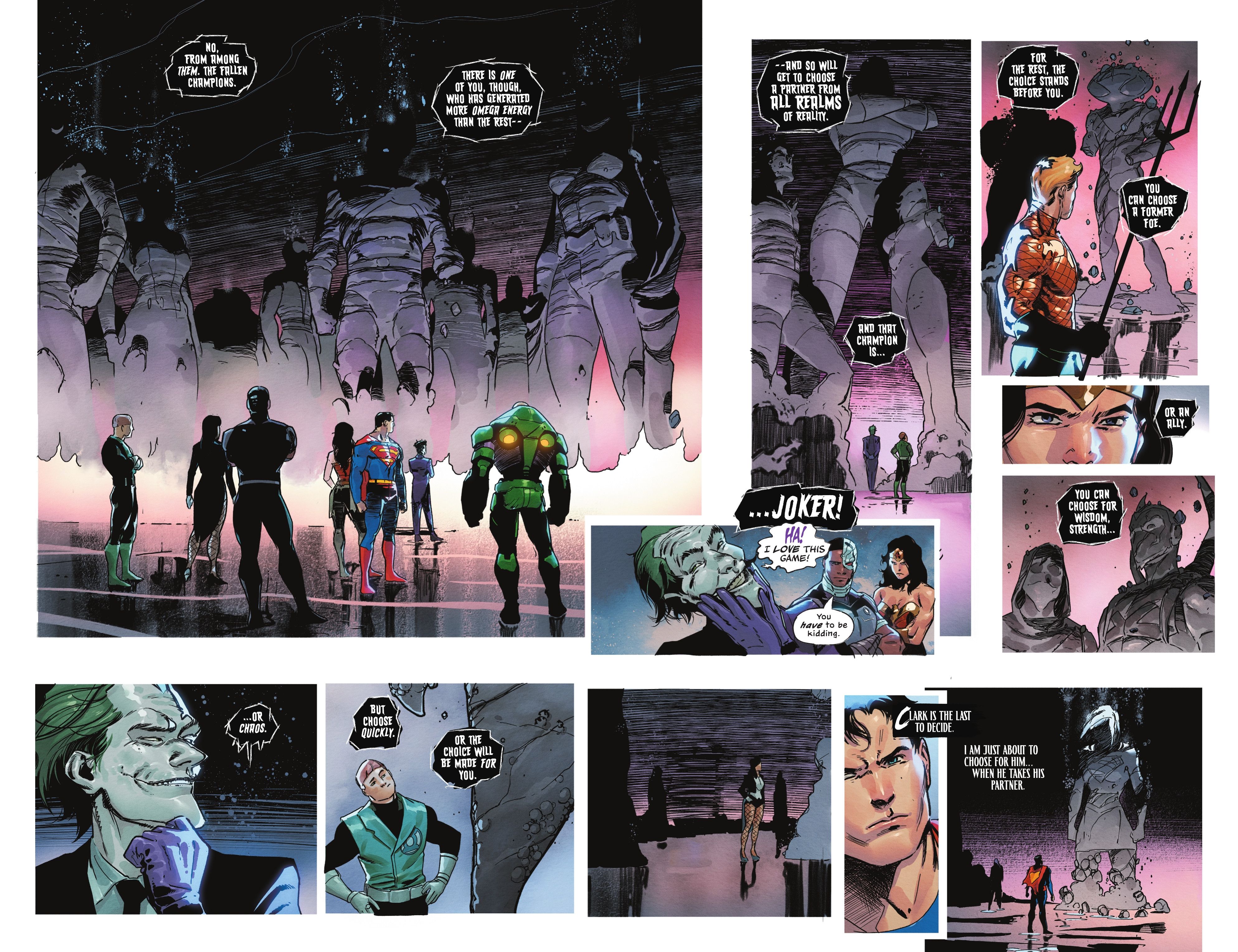
Following the second round of competition, only eight contenders remain: Superman, Wonder Woman, Lex Luthor, Joker, Guy Gardner, Aquaman, Cyborg, and Zatanna.
This time around, players can choose a teammate from previous rounds. The only exception is the Joker, who’s currently in the lead thanks to defeating Batman and gaining a lot of power. He gets to pick anyone from across the entire Multiverse to join his team.
Snyder cleverly plays with our assumptions by initially presenting the Joker as if he’ll choose The Batman Who Laughs, a character Snyder created himself. However, the Joker unexpectedly goes a different route, which is a really smart move.
Javi Fernández and Alejandro Sánchez have done excellent work on the latest battles. Fernández skillfully handles the variety of artistic styles, but the real challenge was for Sánchez, who had to create dramatically different color schemes for each scene. It was a difficult task, and they both succeeded brilliantly.
In this installment, Snyder wisely focuses on the most recognizable characters – Wonder Woman, the Joker, and Lex Luthor – showcasing their unique strategies to reach the final four. Superman also makes it, and his path there is particularly clever thanks to the teammate he selected.
The lettering by Hassan Otsmane-Elhaou is particularly impressive in this comic. Even though his role is limited to voicing the Heart of Apokolips, he manages to convey so much through his work, and it’s done brilliantly. He’s a truly talented letterer, and it really elevates the story.
The series ends on a dramatic cliffhanger: the Final Four must battle evil versions of Superman, Batman, and Wonder Woman who are all controlled by a powerful force, along with Booster Gold who’s under Darkseid’s control. It’s an over-the-top, exciting showdown – exactly what you’d hope for! Scott Snyder really delivers a thrilling spectacle that, while wild, still feels logical within the story’s universe, and the series has been incredibly fun to read so far.
Read More
- United Airlines can now kick passengers off flights and ban them for not using headphones
- Crimson Desert: Disconnected Truth Puzzle Guide
- All 9 Coalition Heroes In Invincible Season 4 & Their Powers
- Mewgenics vinyl limited editions now available to pre-order
- Assassin’s Creed Shadows will get upgraded PSSR support on PS5 Pro with Title Update 1.1.9 launching April 7
- Viral Letterboxd keychain lets cinephiles show off their favorite movies on the go
- Grey’s Anatomy Season 23 Confirmed for 2026-2027 Broadcast Season
- Grok’s ‘Ask’ feature no longer free as X moves it behind paywall
- All Golden Ball Locations in Yakuza Kiwami 3 & Dark Ties
- Katanire’s Yae Miko Cosplay: Genshin Impact Masterpiece
2026-01-15 07:44