Ah, the digital age – where even the most sophisticated thieves have traded in their hacking tools for the lowly art of deception. Bybit, ever vigilant, managed to block a staggering $300 million in unauthorized withdrawals during the final quarter of the previous year. A figure so colossal, it practically mocks the mere $50 million stolen across the entire crypto industry last month. It seems that thieves are, indeed, getting more creative… or perhaps just a bit lazy.
Attackers Home In On Human Error
Why bother with complicated code when you can simply exploit the well-known human penchant for gullibility? While the drop from January’s $385 million in losses may seem like progress, the real story here is the rise of the oldest trick in the book: social engineering. Ah yes, the art of tricking people into handing over the keys to their digital vaults, no questions asked. A fine strategy, indeed.
It wasn’t a rogue line of code that brought February’s damage, but rather a surge in phishing campaigns – because who doesn’t love a good fraudulent message promising untold riches in exchange for a click? And of course, the hapless victims fell for it. Who needs encryption when you have trust? The most common method? Authorization abuse, where poor souls were convinced to grant wallet permissions without the slightest inkling of what they were agreeing to.
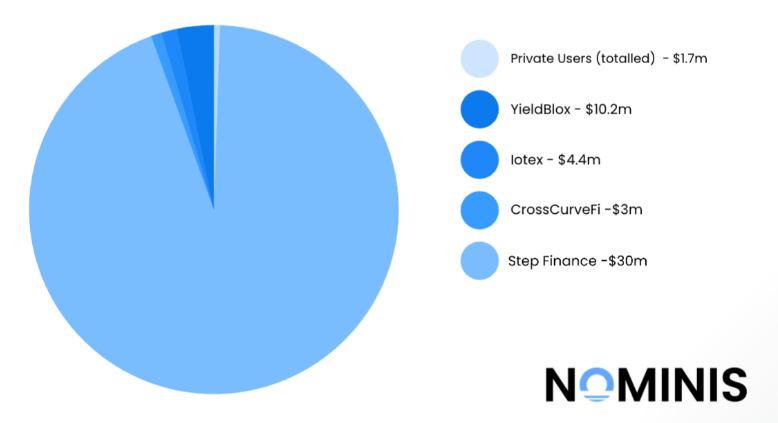
With the victim’s consent secured, attackers waltzed away with their funds as though it were their right. No exchanges, no protocols – just good old-fashioned human folly. Let’s face it: the weak link in the chain was never the code, but rather the people.
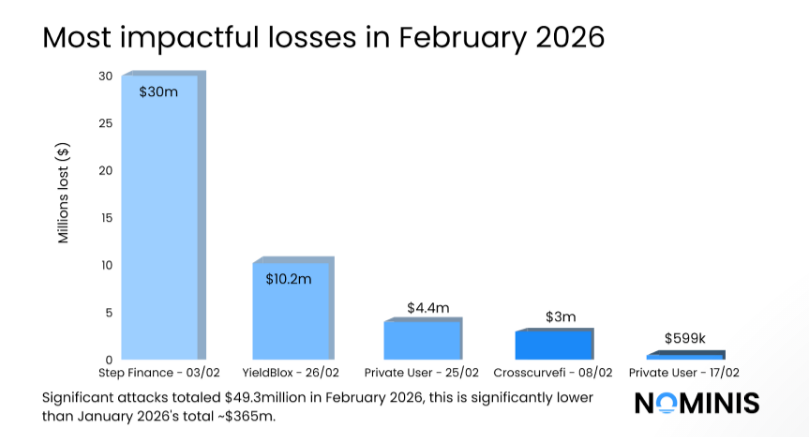
One Breach Drove Most Of The Damage
But let’s not get too carried away with the details of digital trickery. February had a single, spectacular incident that accounted for the majority of the losses: Step Finance, a portfolio analytics platform on Solana, found itself relieved of $30 million. A rather impressive heist, if you ask me. Remove that singular event, and February would have been practically quiet – a gentle lull in a storm of cybercrime.
It’s clear that this year, the industry is showing some signs of restraint. According to PeckShield, February losses totaled a paltry $26.5 million, the lowest since March 2025. They credited this decline to improved risk controls and better security practices. But I imagine the real reason is far simpler: the criminals have found a new, far more fruitful avenue of attack. Why hack a protocol when you can simply scam a thousand unsuspecting individuals?

Big Losses Still Loom Over The Industry
And while February may have been quieter than usual, let’s not kid ourselves – the crypto industry’s annual tally of $3.4 billion in hacks last year is a far cry from “secure.” The thefts, it seems, are far from contained. Bybit, for instance, flagged 350 high-risk addresses and prevented 8,000 potential scams. That’s no small feat, but it’s also a mere drop in the ocean.
The rise of scams targeting the average user signals that criminals have simply redirected their efforts, as they always do. More audits, better on-chain monitoring – perhaps one door is closing, but as long as people remain ripe for deception, the thieves will continue their merry work. There’s always a door left ajar for the cunning and the crafty.
Read More
- United Airlines can now kick passengers off flights and ban them for not using headphones
- Crimson Desert: Disconnected Truth Puzzle Guide
- Katanire’s Yae Miko Cosplay: Genshin Impact Masterpiece
- How to Get to the Undercoast in Esoteric Ebb
- All Golden Ball Locations in Yakuza Kiwami 3 & Dark Ties
- All Itzaland Animal Locations in Infinity Nikki
- Gold Rate Forecast
- Fox McCloud Actor Announced as Glen Powell Joins The Super Mario Galaxy Movie
- Australia’s New Crypto Law: Can They Really Catch the Bad Guys? 😂
- Nippon Ichi will release Curse Warrior for Switch, PS4, and PS5 on March 26 in Japan
2026-03-12 06:05