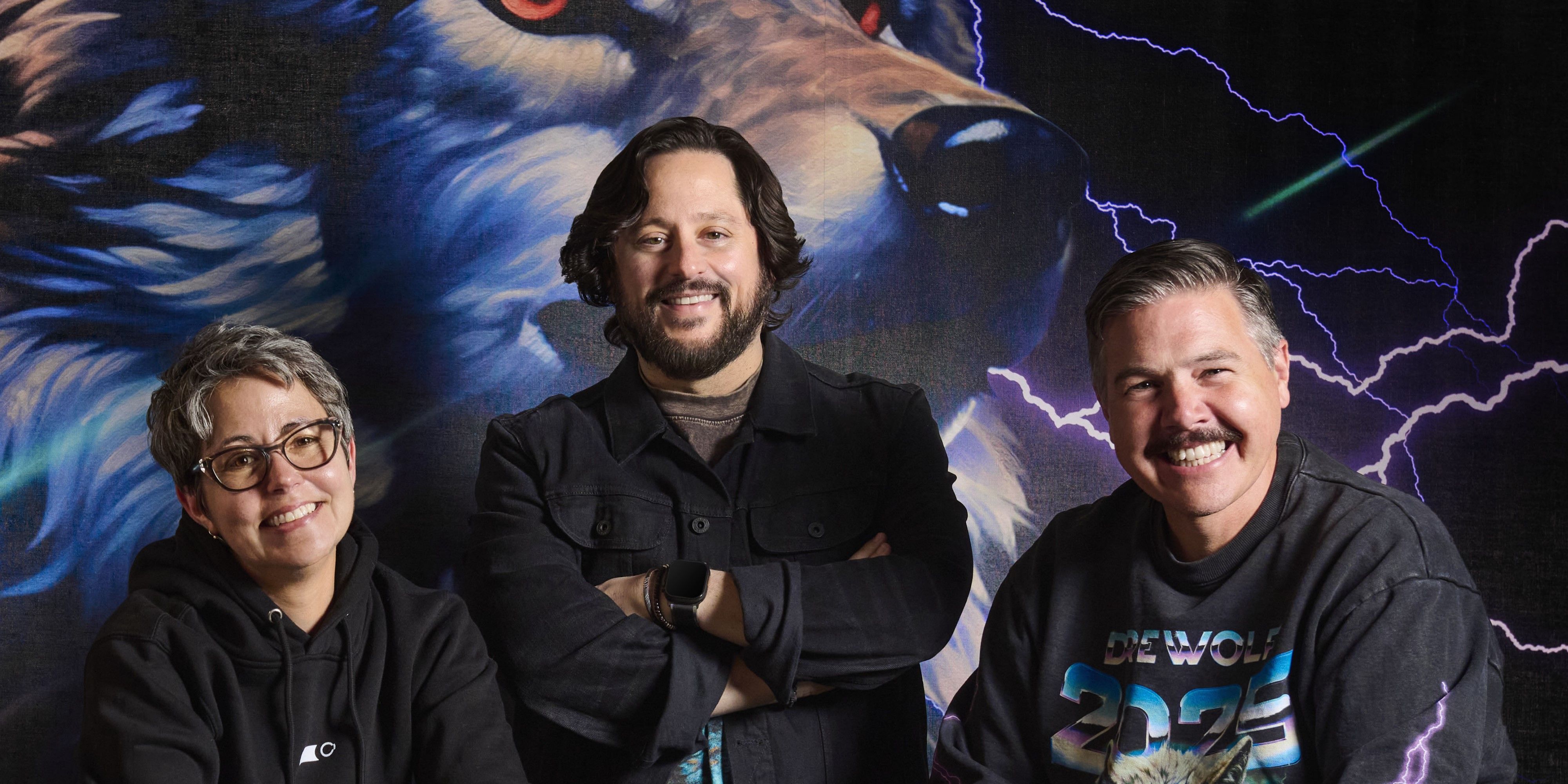
I’ve been hooked on dinosaurs and science ever since seeing Jurassic Park when I was a kid. But the last year has been incredible – as a journalist, I’ve gotten to follow Colossal Biosciences and their amazing work trying to bring back extinct animals like the woolly mammoth, thylacine, dodo, and giant moa. It’s been a real privilege!
Colossal’s Lobby Led to a Great Tour and Even Greater Interview
Walking into Colossal, the first thing I saw was this incredible animatronic dinosaur – seriously, it moved its head and tail and just stared at you from its rocky perch, it was amazing! And right across from it was a full-size mammoth, preserved in ice. Now, I know they wouldn’t actually find a mammoth like that, but it was a fantastic way to spark your imagination and really bring prehistory to life. It instantly grabbed your attention!
The lab tour gave us a behind-the-scenes view of Colossal Biosciences’ projects, starting with the mammoth and thylacine efforts. We saw how much testing and gene editing is involved to get things right – or as close as possible. It really highlighted how lengthy the process is, but also how much faster progress is being made now compared to the past.
During the bird portion of the tour, we observed scientists carefully collecting blood from developing embryos – without causing them any harm – as part of research and dodo revival efforts. This is a particularly challenging project, but it’s been incredibly successful, giving researchers valuable insights into bird genetics. This work then connected to the cloning exhibit, where we saw how cell samples are used to transfer genetic information and help protect endangered species.
We then had the opportunity to discuss the latest progress in thylacine and dodo revival projects with the lead scientists, Dr. Andrew Pask and Dr. Beth Shapiro. Dr. Pask explained that advancements have accelerated rapidly, saying, “I’ve accomplished more in the last three years than I did in the previous twenty.” He attributed this to the scale of the current team and the powerful collaboration and idea-sharing among its members.
We also discussed conservation efforts. While a lot has been achieved, there’s still much work to do, and it’s been difficult to get everyone working together. Dr. Pask believes this challenge isn’t unique to conservation – it happens whenever fields are rapidly changing and people feel left behind. She hopes people can embrace collaboration and see it as a positive step forward, rather than a choice between old and new approaches.
Dr. Pask explained that they’re simply adding to the existing methods of conservation, not replacing them. Traditional conservation efforts – like protecting habitats and tracking animal numbers – are still crucial. However, we also need to develop new and innovative approaches to help species thrive.
Colossal’s Matt James Gave Us an Update on the Dire Wolves and More
After speaking with Dr. Shapiro and Dr. Pask, we talked with someone about the dire wolves and their progress. They’re not only learning to hunt successfully, but the team also intends to expand the pack by adding more wolves.
We’re still responsible for watching over and safeguarding these animals in their protected habitats. We have quite a bit of space dedicated to them currently. We’ve also been discussing a potential partnership with the MHA Nation in North Dakota, and they’re considering establishing similar wildlife preserves on their tribal lands.
People also asked if the public could visit areas where the wolves live, instead of only hearing about them through reports. James explained that allowing visitors could help educate people about extinction and conservation efforts, which is becoming increasingly important to their work. He believes they are moving in that direction.
A significant advancement in conservation is the use of artificial intelligence. AI systems have successfully rediscovered species previously believed to be extinct and are freeing up conservationists from tedious data work, allowing them to focus on more important tasks. Matt James of Colossal highlighted that his organization views AI as a tool to support human roles, not replace them. He explained, “Ideally, we can use AI to help people in conservation, like ranchers and park rangers, so everyone benefits. And by fostering a connection between humans and animals, we can change how people feel about and interact with these species.”
Imagine you’re a Kenyan farmer who relies on a single watermelon harvest each year. If elephants come and destroy that crop, it’s devastating – it represents your entire income for the year, which is why people sometimes feel driven to kill them. Providing ways to protect crops is important, but if we can also demonstrate that elephants are intelligent, emotional creatures with complex social lives and even connections with humans, we might be able to reduce the conflict and prevent them from being harmed.
Colossal’s Ben Lamm Has Big Hopes For the Future
Colossal Biosciences has achieved significant progress in just the past two years, with plans for further expansion. A recent conversation revealed exciting possibilities for the future, including updates on their ambitious woolly mammoth revival project, which remains scheduled to launch in 2028.
A particularly fascinating development was Colossal’s research into artificial wombs, designed to support the growth of these animals before they are implanted into a surrogate mother.
Regarding potential public concerns about the biovault updates, Lamm shared an interesting story. He said he welcomes criticism, adding that while a large segment of one particular community isn’t supportive of their work, they are actively involved in and contribute to that same community. He declined to name the community, but mentioned someone in the biobanking field specifically disagreed with their recent announcement.
We received some critical feedback on our viewpoint. Surprisingly, when I finally had a chance to reply – which isn’t always possible in this conversation – five or six people who usually disagree with us actually offered strong support, and explained their reasons even more clearly than I could have.
I’ve been following Colossal Biosciences, and even though their work is pretty ambitious, it’s amazing to see how they’re slowly winning people over. It’s not just about bringing back extinct species – they’re using science to help conservation efforts and genuinely get people excited about the field. What I really appreciate is that their main goal is purely to help the planet and encourage more scientists, especially young people, to get involved. They definitely face criticism, but they handle it so well – with a lot of grace and a clear vision for the future. It’s really inspiring to watch!
The main aim is to get young people excited about science, animals, and pursuing their own ambitions. When asked for advice to those who doubt they can achieve their goals, she simply said: “Don’t be afraid to take risks, and don’t pay attention to negative online comments.”
Read More
- United Airlines can now kick passengers off flights and ban them for not using headphones
- Katanire’s Yae Miko Cosplay: Genshin Impact Masterpiece
- All Itzaland Animal Locations in Infinity Nikki
- How to Complete Bloom of Tranquility Challenge in Infinity Nikki
- How to Get to the Undercoast in Esoteric Ebb
- Gold Rate Forecast
- All Golden Ball Locations in Yakuza Kiwami 3 & Dark Ties
- A Dark Scream Theory Rewrites the Only Movie to Break the 2-Killer Rule
- Fire Force Season 3 Part 2 Episode 24 Release Date, Time, Where to Watch
- BloxStrike codes (March 2026)
2026-02-17 16:07