Hidden in the Noise: Unmasking Data Secrets in AI Image Generation

New research demonstrates that the initial noise used in image generation models can reveal whether a specific image was part of their training dataset.
New research demonstrates that the initial noise used in image generation models can reveal whether a specific image was part of their training dataset.
![Despite variations in decision consistency-measured as [latex]1 - Flip Rate[/latex]-across different models, all demonstrated comparable narrative drift within the bounds of Recurrent-Only Parameter Encoding (ROPE), suggesting observed inconsistencies stem from inherent stochasticity rather than deliberate narrative control.](https://arxiv.org/html/2601.21439v1/x9.png)
New research reveals that advanced artificial intelligence consistently outperforms humans in resisting emotional manipulation when making logical decisions under pressure.
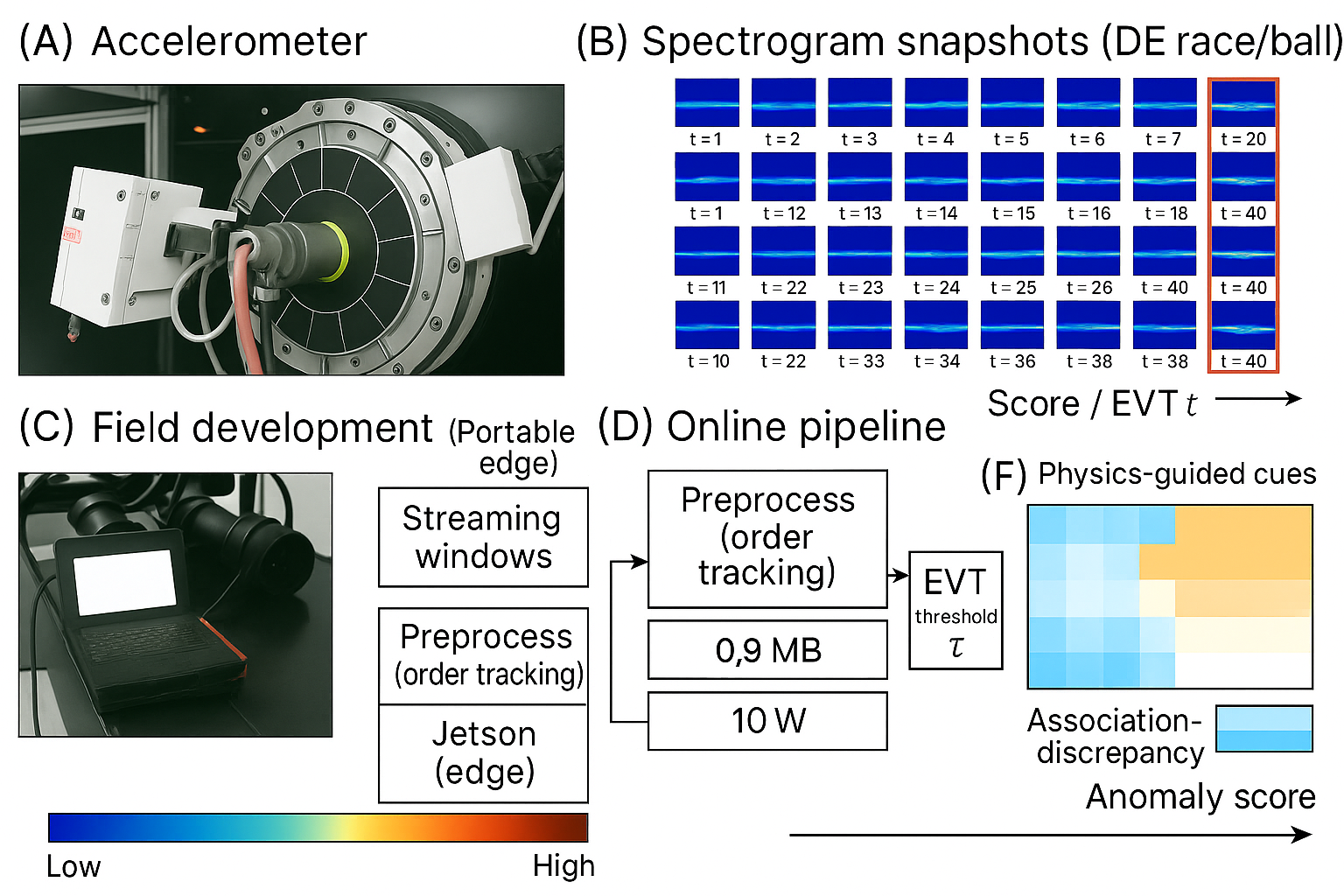
Researchers have developed a novel framework that blends physics-based modeling with advanced machine learning to anticipate equipment failures with improved accuracy and reliability.

A new framework leverages probabilistic modeling and deep learning to reconstruct complete 3D scenes from limited depth information.

A new benchmark moves past simple accuracy to assess how well ECG foundation models actually understand heart data and generalize to real-world clinical scenarios.
A new review examines how large language models are changing the game for software maintenance and evolution, offering both powerful assistance and potential pitfalls.
Researchers have developed a novel strategy for generating reliably accurate prediction intervals for future insurance claims, even with limited data.

New research presents a powerful method for filtering unwanted signals from data organized as complex networks, improving the accuracy of analysis and prediction.
![The current lifecycle of machine learning models creates a blind spot regarding their true environmental cost, as emissions are meticulously tracked during initial training [latex] but largely ignored in the proliferation of derivative artifacts like fine-tunes and quantized versions[/latex]; Data and Impact Accounting addresses this by establishing a standardized, automated system for reporting and aggregating the full ecosystem impact of models through accessible public dashboards.](https://arxiv.org/html/2601.21632v1/x2.png)
As open-source AI models proliferate, a growing concern is the collective environmental impact of their development and derivative works.

A new framework moves beyond traditional fairness metrics to assess the risks of harmful outputs from large language models, focusing on how those risks are distributed across different groups.