Resurrecting Legacy Models with AI’s Symbolic Touch
![NSR-Boost establishes a framework for enhancing performance through a novel boosting mechanism, fundamentally altering the decision boundary via weighted samples to achieve improved generalization capabilities, as demonstrated by its iterative refinement process detailed in [latex] \mathcal{L} = \sum_{i=1}^{N} L(y_i, f(x_i)) [/latex].](https://arxiv.org/html/2601.10457v1/x1.png)
A new framework combines the power of large language models with traditional machine learning to intelligently correct and enhance existing industrial applications.
A new framework combines the power of large language models with traditional machine learning to intelligently correct and enhance existing industrial applications.
A new study explores the rising anxieties among future computer scientists about job security in an era of rapidly advancing artificial intelligence.
New research reveals a method for gauging how reliably we can forecast future trends from past data, before even building a predictive model.
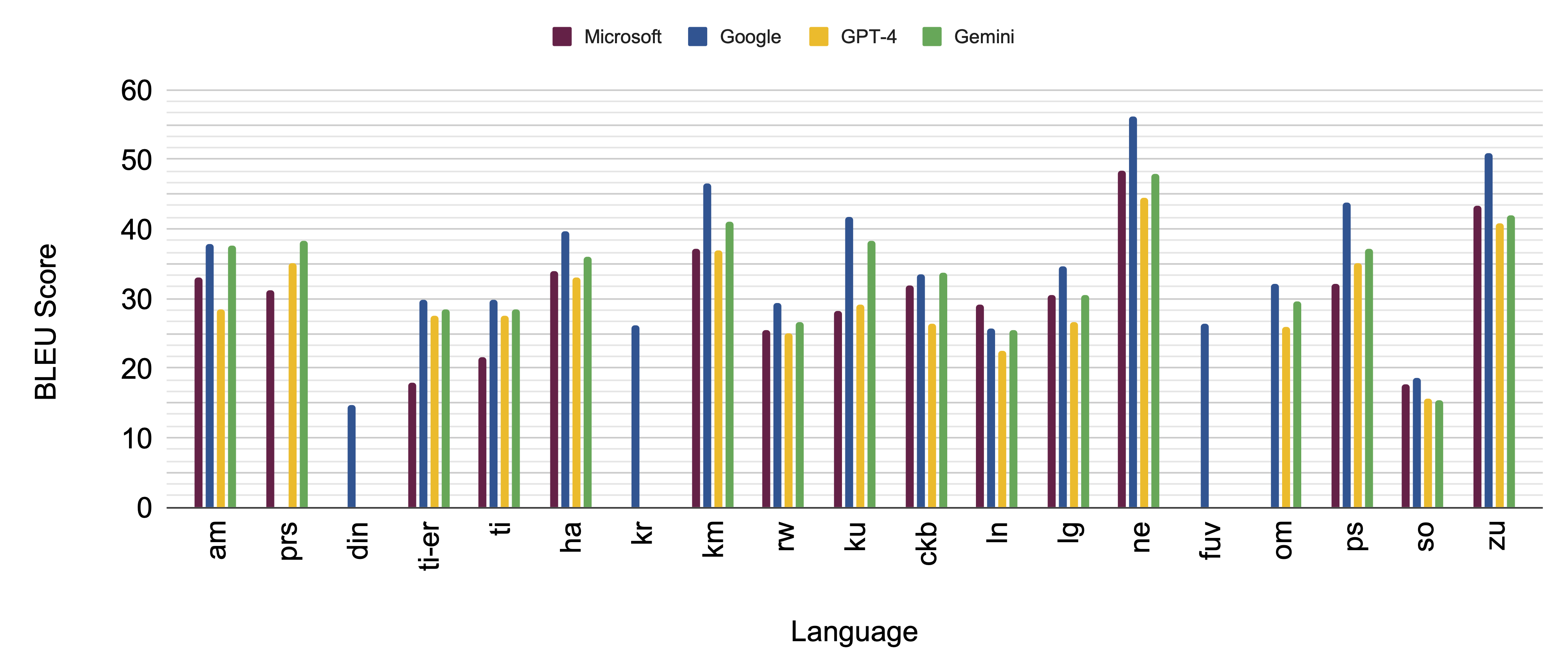
A new assessment reveals uneven progress in machine translation capabilities, leaving vulnerable communities at risk during emergencies.
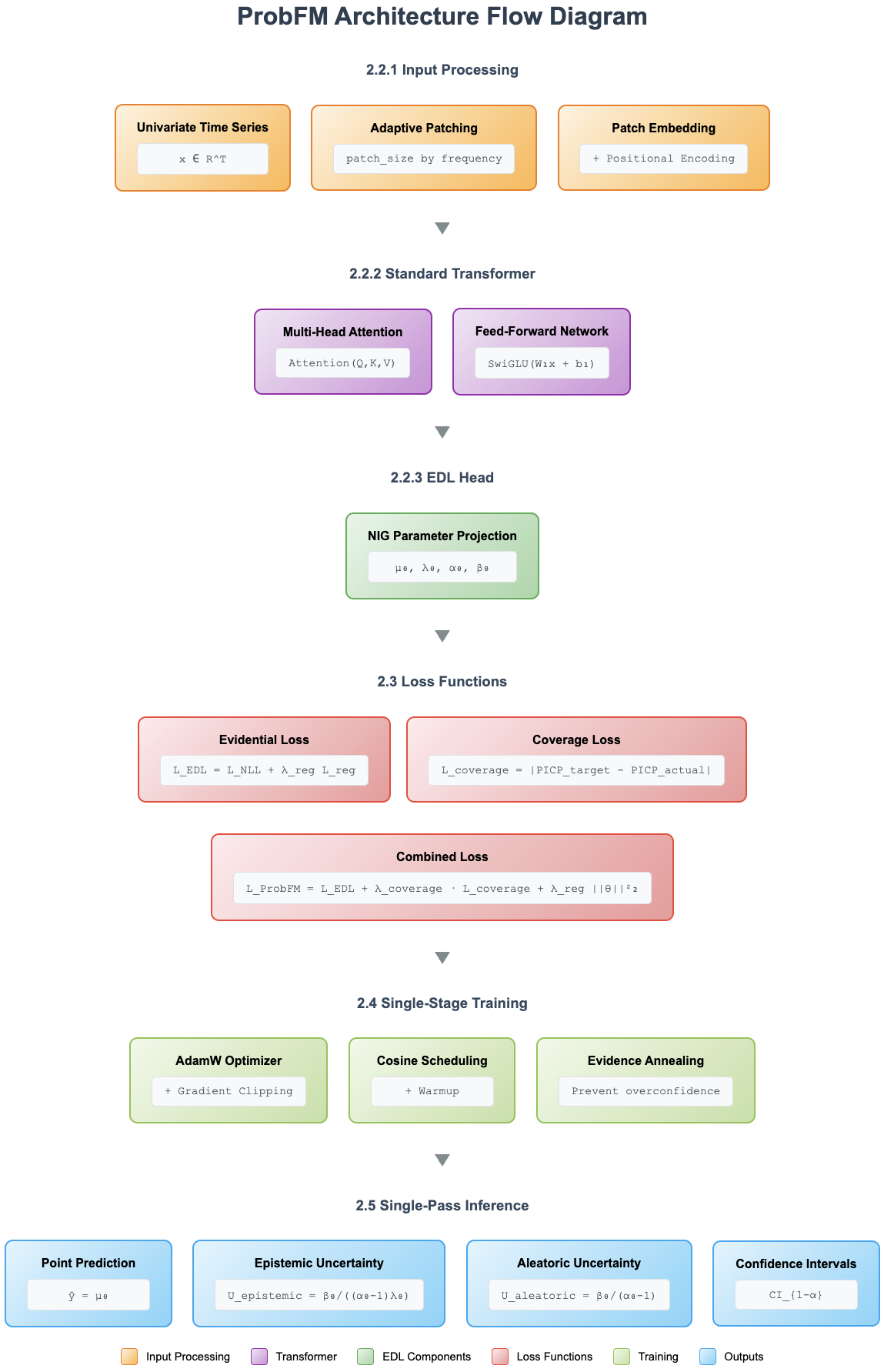
Researchers have developed a novel approach to time series forecasting that not only predicts future values but also rigorously quantifies the uncertainty surrounding those predictions.
![The system establishes a closed-loop feedback mechanism-the Dynamic-Control Buyback Mechanism-where deviations between a target price and real-time market values are processed by a PID controller to determine intervention intensity, subsequently constrained by solvency parameters and enacted through market buy-and-burn operations, ensuring asymptotic solvency even amidst volatile conditions and effectively stabilizing the decentralized AI economy via iterative price adjustments [latex] e_{k} [/latex].](https://arxiv.org/html/2601.09961v1/figures/overall.png)
New research demonstrates how applying control theory can dynamically stabilize the often-volatile token economies powering decentralized artificial intelligence networks.
Researchers have harnessed artificial intelligence to identify a key climate indicator for more accurate long-term rainfall forecasting in Thailand.
New research proposes a framework for urban antifragility, demonstrating that cities can not only withstand shocks but actively grow stronger through them.
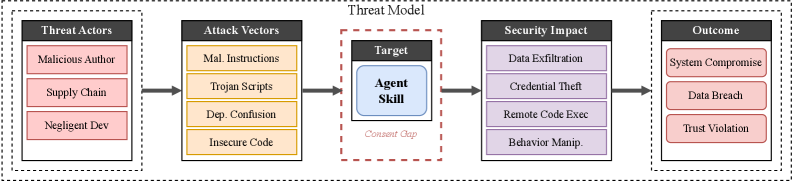
A new large-scale study reveals that a significant portion of skills used by AI agents harbor security vulnerabilities that could lead to data breaches and unauthorized access.
A new framework proposes shifting AI safety from internal constraints to robust, external governance structures designed for complex multi-agent systems.