Guarding the Gate: Probing for Safer Language Model Responses
![The reduction in overlap between density distributions of original and Safety-Awareness Enhanced [latex]\mathcal{L}_{disc}[/latex] on both benign and harmful samples-achieved through in-decoding probing-indicates the method effectively isolates signals indicative of harmful content, suggesting a robust mechanism for discerning potentially dangerous inputs.](https://arxiv.org/html/2601.10543v1/x6.png)
Researchers have developed a novel technique to bolster the defenses of large language models against adversarial prompts designed to bypass safety protocols.
Researchers have developed a novel technique to bolster the defenses of large language models against adversarial prompts designed to bypass safety protocols.
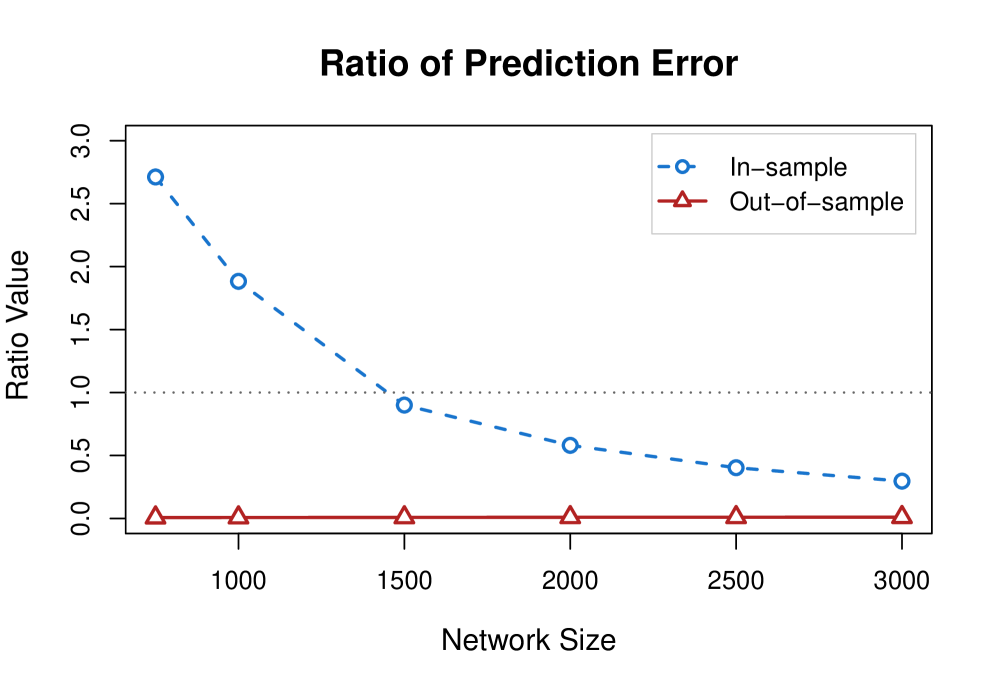
Researchers have developed a statistically rigorous method for modeling dependencies within network data, offering improvements over existing approaches.
New research reveals a surprising willingness to penalize individuals for interacting with large language models, suggesting complex social dynamics are emerging around AI adoption.
![The training process demonstrates a predictable pattern: initial loss fluctuations gradually converge, mirroring the ascent of average episodic reward-a testament to the algorithm’s capacity to learn and optimize performance over iterative refinement, as reflected in the diminishing [latex] L [/latex] and increasing [latex] R [/latex] values across epochs.](https://arxiv.org/html/2601.10044v1/dvrp_rl_eval_reward.png)
A new approach uses artificial intelligence to rapidly deploy repair crews following severe weather events, minimizing outage times.
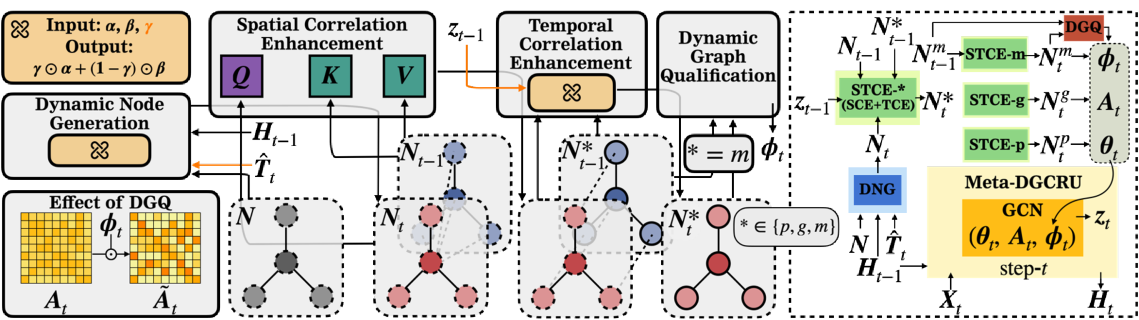
Researchers have developed a novel framework that leverages dynamic graph structures and meta-learning to improve the accuracy of traffic flow forecasting.
New research demonstrates that carefully instructing a powerful language model can dramatically improve its ability to identify key financial entities.
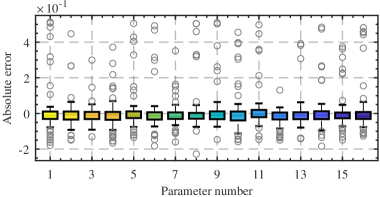
Researchers have developed a framework that learns the governing equations of complex, changing systems in real time, even with incomplete information.
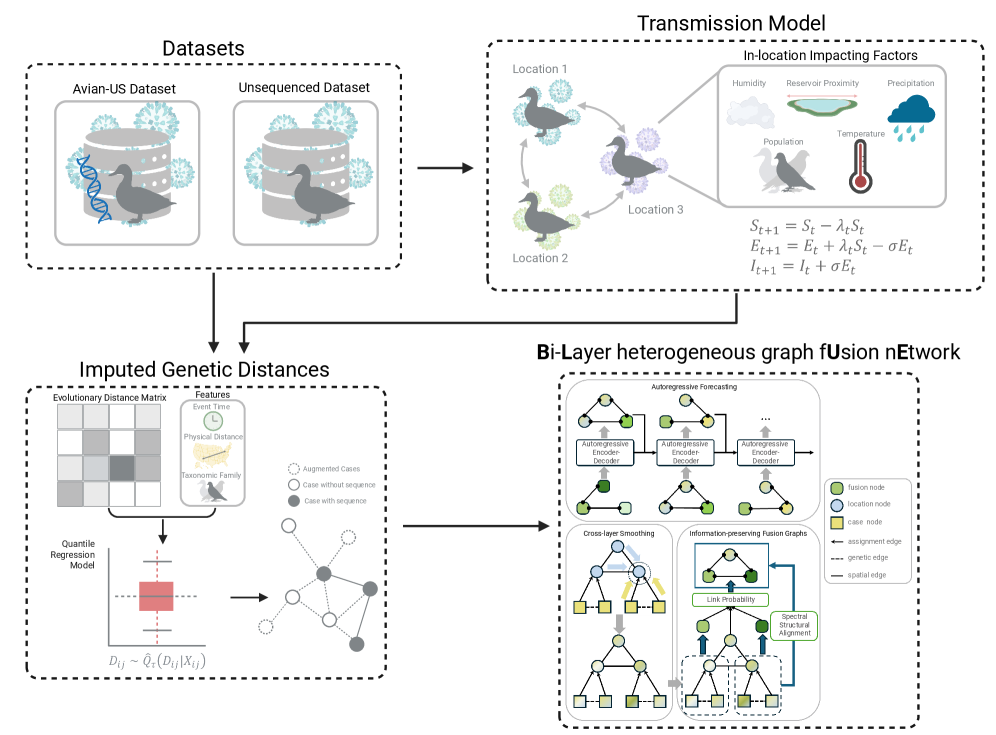
A new framework integrates wildlife movement, genomic data, and environmental factors to improve forecasting of highly pathogenic avian influenza outbreaks.
Researchers have developed a specialized artificial intelligence model to better understand and process conversations related to debt collection in Vietnam.

A new study reveals that even finely-tuned language models can be surprisingly vulnerable to phishing attacks, highlighting critical weaknesses in how these systems learn to identify malicious content.