Decoding Cyber Threats: Can AI Make Security Reports Easier to Understand?
![The GemmaAgent architecture facilitates complex reasoning through the synergistic integration of a large language model (LLM) and specialized tools, enabling it to iteratively refine plans and execute actions based on observed states and [latex] \mathbb{R} [/latex]-valued rewards, ultimately achieving robust task completion.](https://arxiv.org/html/2602.11982v1/x1.png)
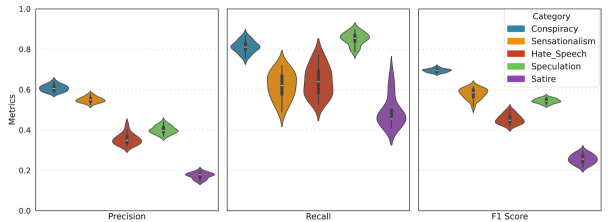
Researchers are exploring how artificial intelligence can automatically simplify complex cybersecurity vulnerability descriptions, improving accessibility for a wider audience.
![The system exhibits distinct regimes of interpretational behavior-ambiguity, where interpretations diverge semantically yet yield consistent results ([latex] \mathbf{W}\_{RR} [/latex] high, [latex] \mathbf{W}\_{II} [/latex] off-diagonal low, resulting in high [latex] H_{I} [/latex], low [latex] H_{R|I} [/latex]), and instability, where similar interpretations produce widely varying results ([latex] \mathbf{W}\_{II} [/latex] off-diagonal high, [latex] \mathbf{W}\_{RR} [/latex] low, yielding low [latex] H_{I} [/latex], high [latex] H_{R|I} [/latex])-as evidenced by the relationships encoded within the system matrices [latex] \mathbf{W} [/latex] and the interpretation-result assignments [latex] \mathbf{W}\_{IR} [/latex].](https://arxiv.org/html/2602.12015v1/figure_1.png)
![Figure 1: Overview of AIR. The architecture anticipates inevitable decay, manifesting as a recursive loop where learned representations are continuously refined through iterative prediction - a process formalized as [latex] x_t = f(x_{t-1}) + \epsilon [/latex] - and subsequently distilled into a latent space, acknowledging that any attempt to impose rigid structure upon a dynamic system merely delays, rather than prevents, its eventual entropic unraveling.](https://arxiv.org/html/2602.11749v1/x1.png)