Smarter, Not Bigger: A New Path to Efficient AI
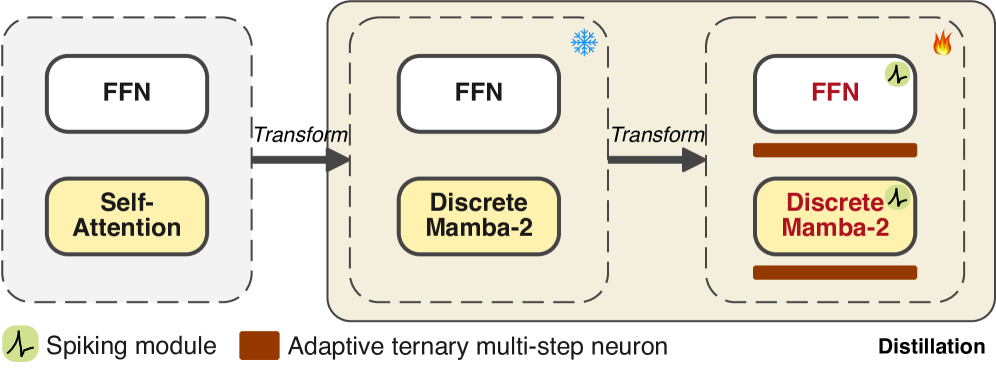
Researchers have developed a framework that dramatically reduces the energy demands of large language models without sacrificing performance.
Researchers have developed a framework that dramatically reduces the energy demands of large language models without sacrificing performance.
New research demonstrates how reinforcement learning can build resilient and efficient data pathways within complex on-chip networks, overcoming the challenges of hardware failures.
As artificial intelligence increasingly guides engineering decisions, ensuring the validity and traceability of underlying assumptions is critical to avoid designs built on outdated or unreliable information.
A new framework combines the power of large language models with graph-based scene understanding to enable more robust and efficient long-term task planning for embodied AI agents.
![Differential causal networks, assessed through variations in parameters [latex]A^{(i|j)k}_{nq}[/latex], [latex]C^{(i|j)k}_{nq}[/latex], and [latex]K^{(i|j)k}_{nq}[/latex] between case and control groups, revealed no significant alterations following multiple testing corrections, despite initial parameter variations; this finding contrasts with the absence of significant lagged correlations-typically indicative of functional connectivity-after similar adjustments, suggesting a decoupling of direct causal influence and broader functional relationships.](https://arxiv.org/html/2601.21478v1/figures/functional_connectivity.png)
Researchers have developed a powerful new method for analyzing EEG data, enabling a deeper understanding of brain connectivity and its alterations in neurological conditions.

New research reveals that repeated interactions between generative AI models can exacerbate existing demographic biases, leading to the reinforcement of harmful stereotypes.
A new framework enhances AI’s ability to generate realistic vehicle damage images tailored to specific risk factors, improving applications like fraud detection and insurance claim assessment.
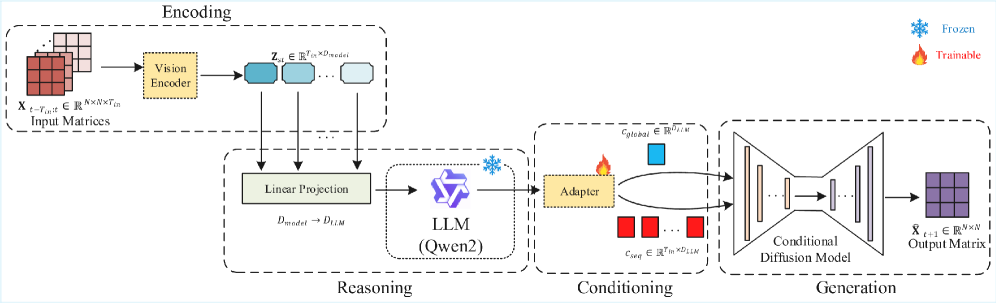
A new approach combines the reasoning power of large language models with generative AI to significantly improve the accuracy of network traffic predictions.

Researchers have developed a novel neural network architecture that leverages the principles of fluid dynamics to significantly improve the accuracy and reliability of weather forecasting.
A new physics-informed machine learning approach accurately predicted the evolution of a slow slip event off the coast of Japan, offering a promising tool for understanding and potentially forecasting these subtle but significant seismic phenomena.