Forecasting with the Few: Improving Predictions from Intermittent Expert Input

A new Bayesian method boosts the accuracy of combined forecasts even when experts participate irregularly, offering a solution for real-world survey panels.
A new Bayesian method boosts the accuracy of combined forecasts even when experts participate irregularly, offering a solution for real-world survey panels.
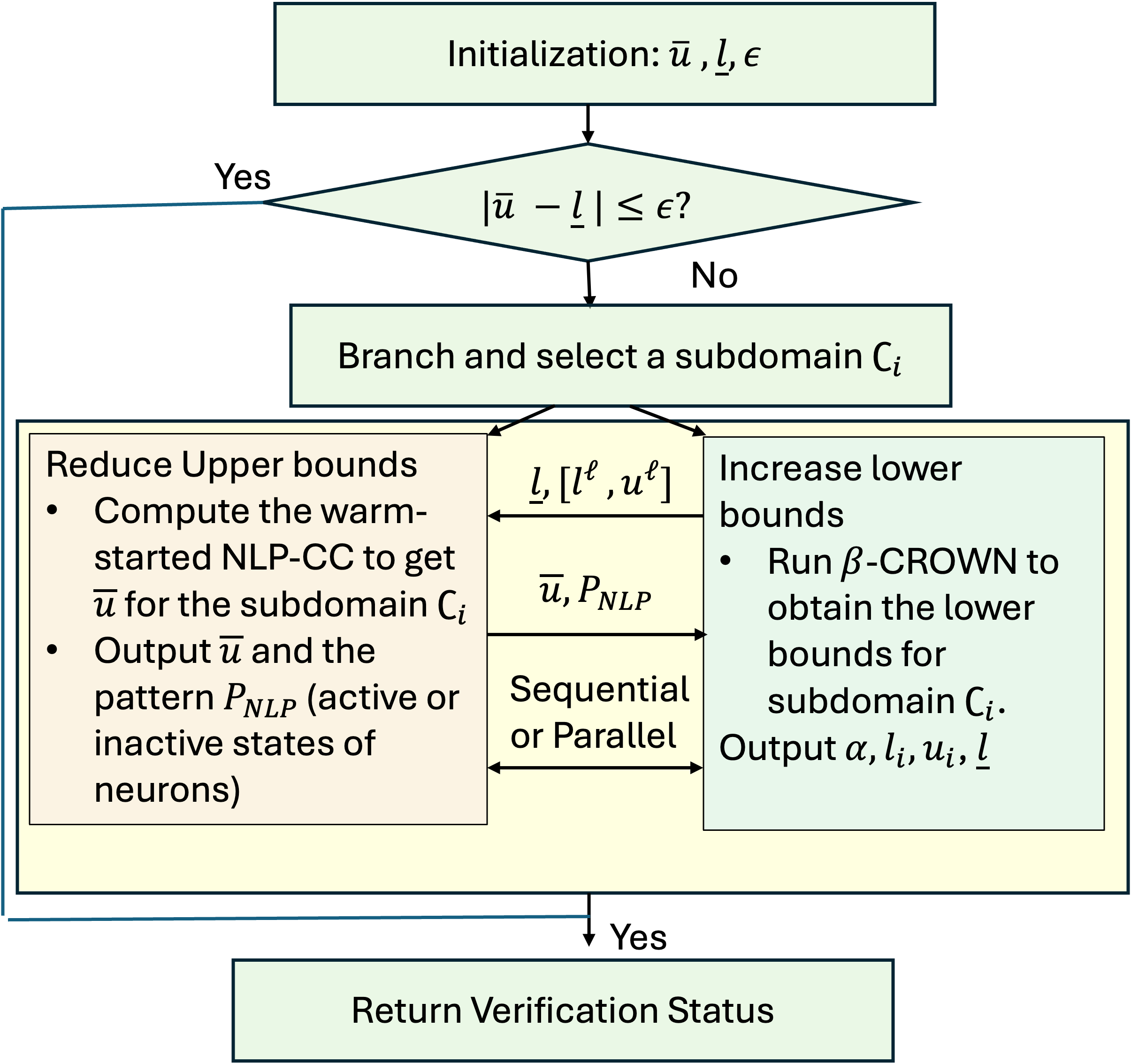
Researchers have developed a hybrid verification method that significantly speeds up the process of ensuring neural network reliability and safety.
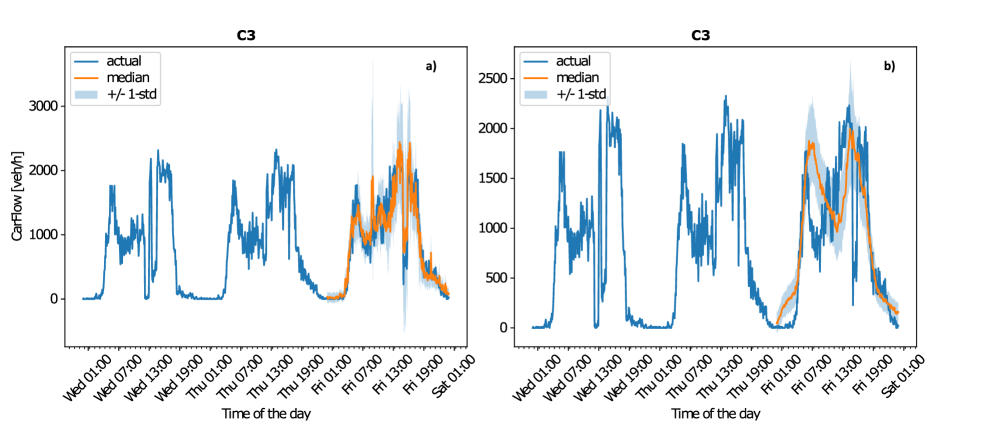
A new forecasting model uses spatial awareness and transformer networks to predict traffic patterns with greater accuracy.
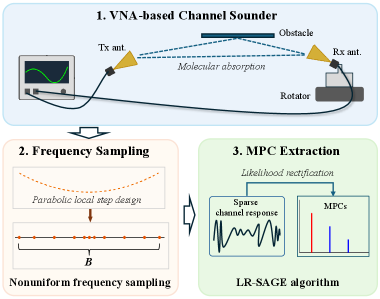
A new framework dramatically reduces data acquisition time for millimeter-wave and terahertz channel sounding, enabling more practical large-scale measurements for future 6G wireless systems.
![The study demonstrates a nuanced relationship between feature extraction (F), reliability (R), and operational toil (O) within a simplex, revealing that a Euclidean alarm can trigger even when the F/R ratio remains constant, while conversely, no alarm may sound despite an unsafe F/R ratio exceeding 1.5, indicating the limitations of a simple Euclidean threshold for accurately assessing system state when [latex] F = R [/latex] or [latex] F = 1.5R [/latex].](https://arxiv.org/html/2602.05483v1/x1.png)
A new approach leverages compositional data analysis to monitor evolving software systems and maintain reliable observability.
![Electricity load forecasting performance-measured by metrics including mean squared error (MSE), spectral divergence, autocorrelation MSE, and maximum mean discrepancy-is evaluated across varying context lengths [latex] \ell [/latex], demonstrating the comparative efficacy of LISA, ALSA, and PTST models in predicting energy demand with established statistical rigor.](https://arxiv.org/html/2602.04906v1/figures/electricity_mse.png)
Researchers have developed a novel framework that combines geometric modeling with in-context learning to achieve more accurate and adaptable predictions for complex time series data.
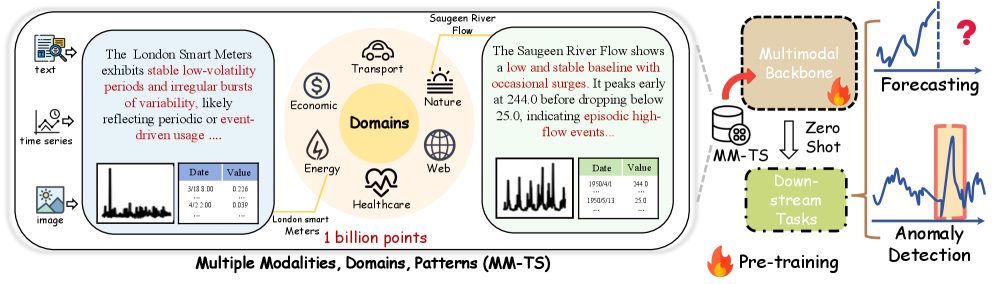
Researchers are harnessing the power of multimodal data and large-scale pretraining to dramatically improve the accuracy and robustness of time series forecasting and anomaly detection.
New research reveals that performance gains from increasing datasets aren’t guaranteed in materials modeling, challenging established scaling laws.
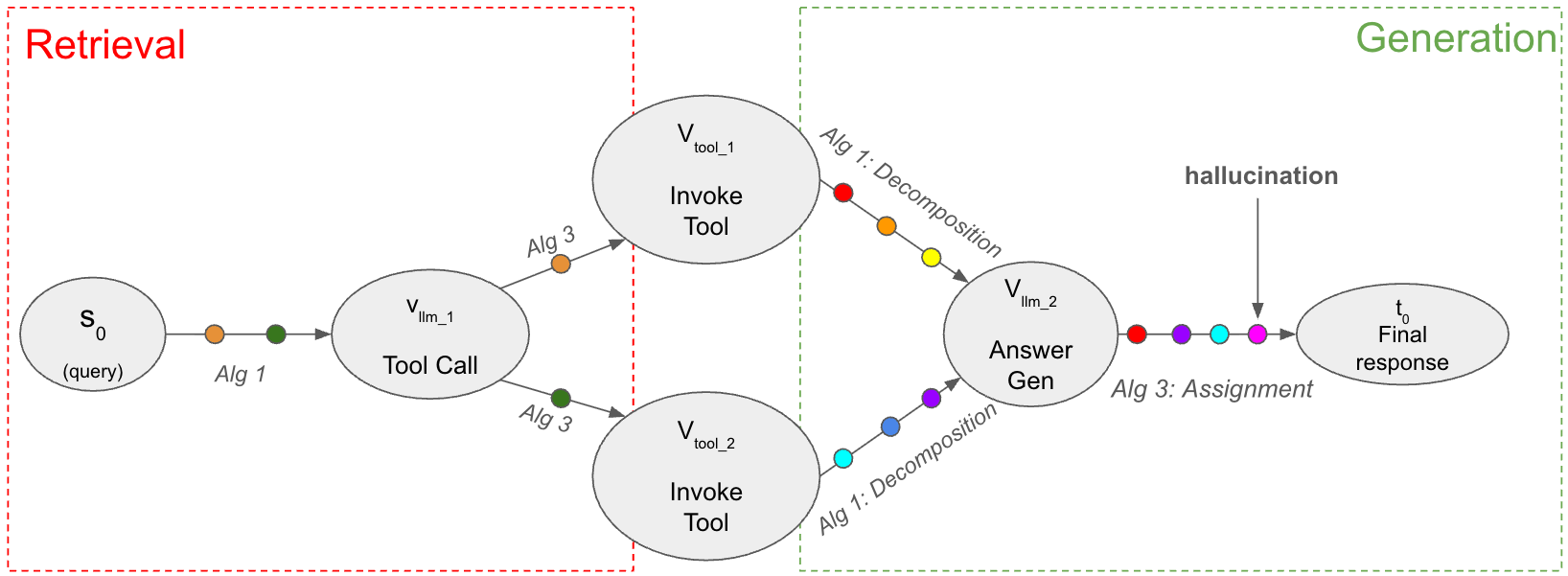
A new framework dissects how AI systems like those powered by retrieval-augmented generation arrive at their answers, offering unprecedented insight into their reasoning.

A new approach to set function learning, called Quasi-Arithmetic Neural Networks, boosts expressiveness and transferability by moving beyond simple summation of set elements.