Dynamic Networks: Rewiring Graphs for Smarter AI
![A graph neural network framework embraces sparsity as an inherent characteristic, initializing weight matrices with the ε-based Erdős-Rényi method or proceeding without, then optimizing parameters via gradient descent while either maintaining fixed sparsity [latex]\zeta_{f}[/latex] or adaptively rewiring connections with [latex]\zeta_{a}[/latex] throughout training-a process diverging from baseline training and ultimately yielding graph classification.](https://arxiv.org/html/2602.10754v1/x2.png)
A new approach to graph neural networks dynamically adjusts connections to improve performance and efficiency, even under critical conditions.
A new approach to graph neural networks dynamically adjusts connections to improve performance and efficiency, even under critical conditions.
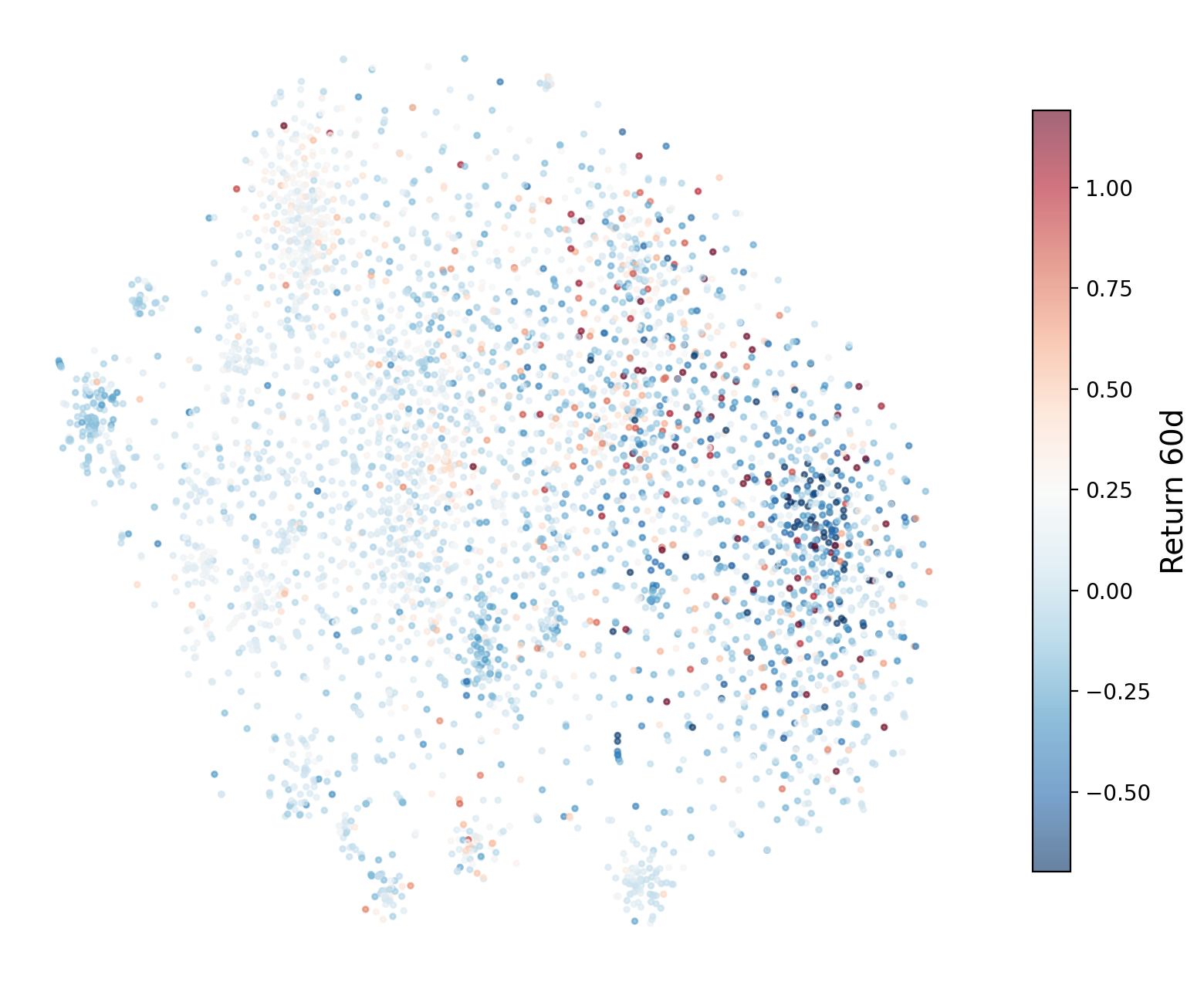
A new framework learns to represent assets in a way that anticipates future correlations, improving portfolio construction and risk management.
![The study systematically mapped the outcomes of stellar collisions across a comprehensive range of primary and secondary masses, revealing how the resulting stellar remnants-whether fully merged or stripped of material-varied with collision parameters like pericenter distance [latex]r_{p}[/latex] and velocity at infinity [latex]v_{\in fty}[/latex], ultimately demonstrating the complex interplay of these factors in shaping post-collision stellar evolution.](https://arxiv.org/html/2602.10191v1/x1.png)
New research leverages machine learning models trained on detailed simulations to rapidly and accurately forecast the outcomes of stellar collisions.
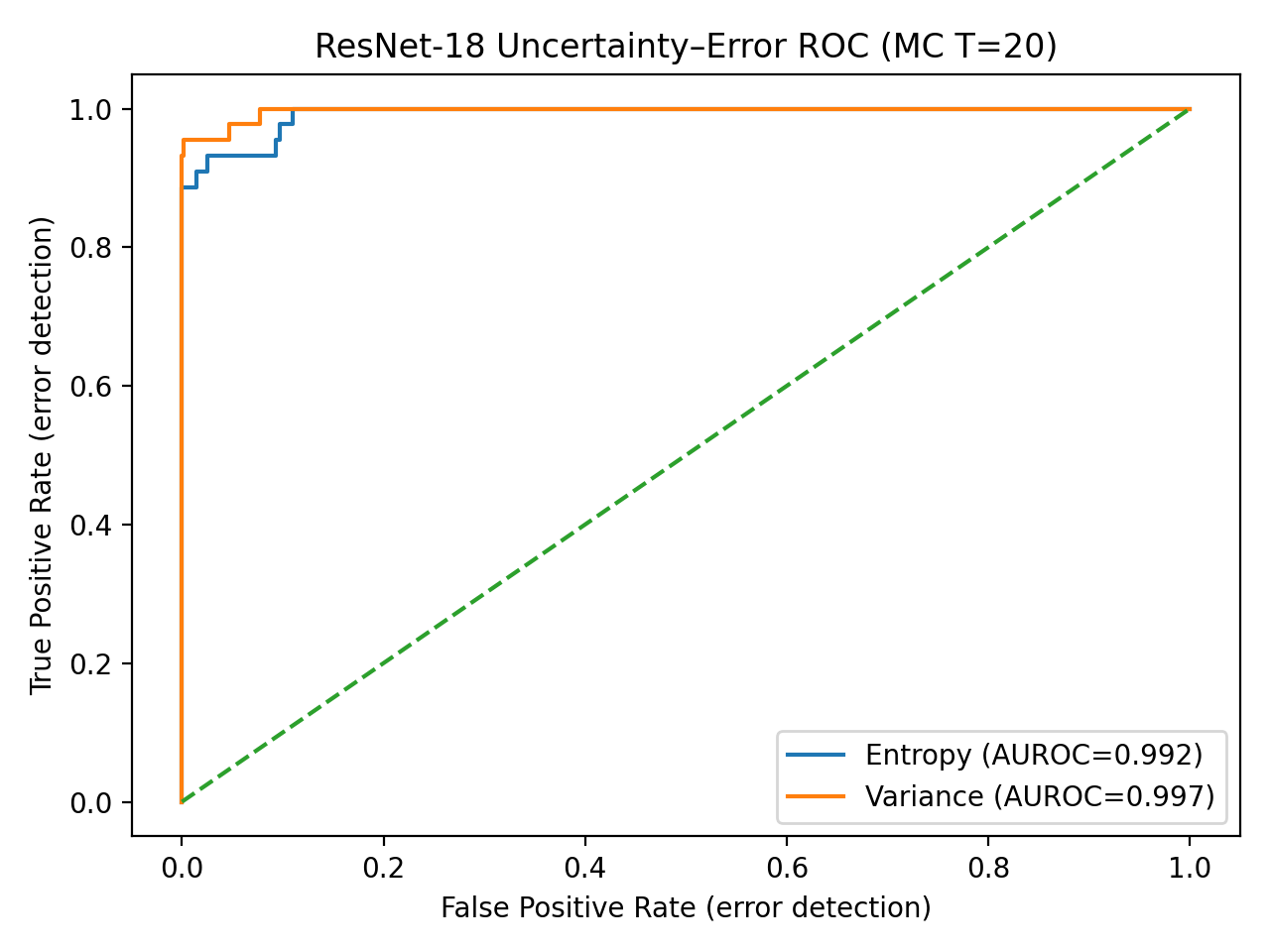
New research explores how quantifying uncertainty can help deepfake detection systems identify when they don’t know, leading to more trustworthy results.

Researchers have published the first comprehensive analysis of Moltbook, a social network populated entirely by artificial intelligence agents, revealing a surprisingly complex and sometimes troubling digital ecosystem.
A new benchmark is emerging to rigorously assess the ability of advanced AI systems to understand and reason about financial data presented in multiple languages and formats.
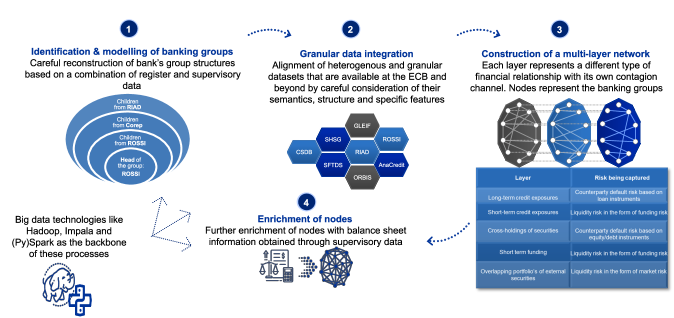
A new network model integrates detailed financial data to reveal hidden connections and vulnerabilities within the euro area’s banking system.
![A neural network variational Monte Carlo technique optimizes a representation of a quantum system’s ground state-defined by a first-principles Hamiltonian-through energy minimization, identifying magnetic order via total and staggered magnetization calculations; this approach, when applied to a moiré semiconductor model of WSe2/WS2 with 2828 electrons, reveals an itinerant ferromagnetic state characterized by spin density and visualized through spin polarization-quantified as [latex]\frac{\langle\hat{n}\_{\uparrow}\rangle-\langle\hat{n}\_{\downarrow}\rangle}{\langle\hat{n}\_{\uparrow}\rangle+\langle\hat{n}\_{\downarrow}\rangle}[/latex]-and total density.](https://arxiv.org/html/2602.09093v1/x1.png)
A new machine learning approach leverages first-principles calculations to accurately forecast magnetic properties, paving the way for the discovery of novel materials.
New research reveals that current AI-powered systems consistently fail at diagnosing complex cloud issues, not because of a lack of intelligence, but due to fundamental flaws in how those systems are designed.
![A novel contingency screening framework leverages conditional graph diffusion to efficiently identify high-risk [latex]N-k-k[/latex] outage scenarios in power networks by directly sampling from the severity distribution and utilizing a topology-aware EVGNN-trained on base-case and [latex]N-1[/latex] data-as a fast risk surrogate, thereby circumventing the computational intractability of exhaustive contingency analysis caused by combinatorial growth and eliminating the need for iterative AC power-flow simulations.](https://arxiv.org/html/2602.09461v1/x1.png)
A new approach leverages diffusion models to rapidly identify critical vulnerabilities in power systems before they escalate into widespread outages.