Predicting Australia’s Spring Rainfall with Ocean Signals
A new deep learning approach successfully forecasts September-October rainfall in southeastern Australia by leveraging the interplay of Indian and Pacific Ocean variability.
A new deep learning approach successfully forecasts September-October rainfall in southeastern Australia by leveraging the interplay of Indian and Pacific Ocean variability.
A new framework uses artificial intelligence to dramatically improve how we identify and understand the fixes hidden within software security updates.
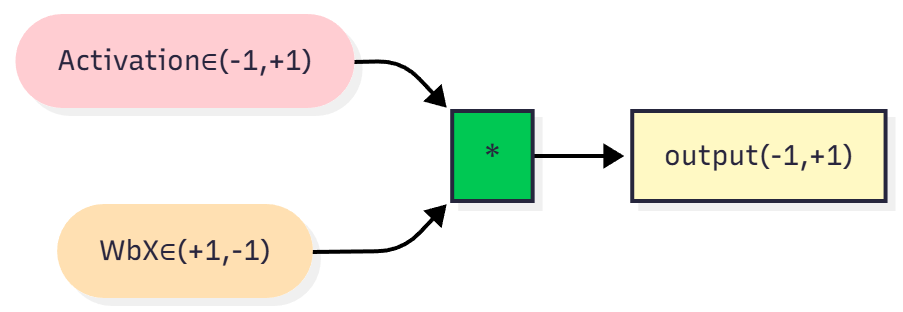
Researchers are leveraging the formal rigor of Petri nets to gain deeper insight into the behavior of binary neural networks, paving the way for improved verification and understanding.
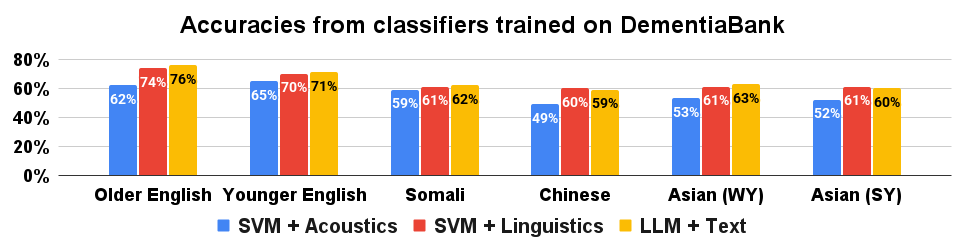
New research reveals that artificial intelligence tools designed to detect cognitive impairment may unfairly underestimate the abilities of multilingual individuals in the UK.
A new approach leverages the power of artificial intelligence to autonomously respond to and resolve network security incidents.
A new Monte Carlo framework efficiently values corporate bonds by modeling the complex interplay of default risk within interconnected financial networks.
A new approach leverages the power of natural language processing to improve forecasts of financial instability by incorporating information from news articles.
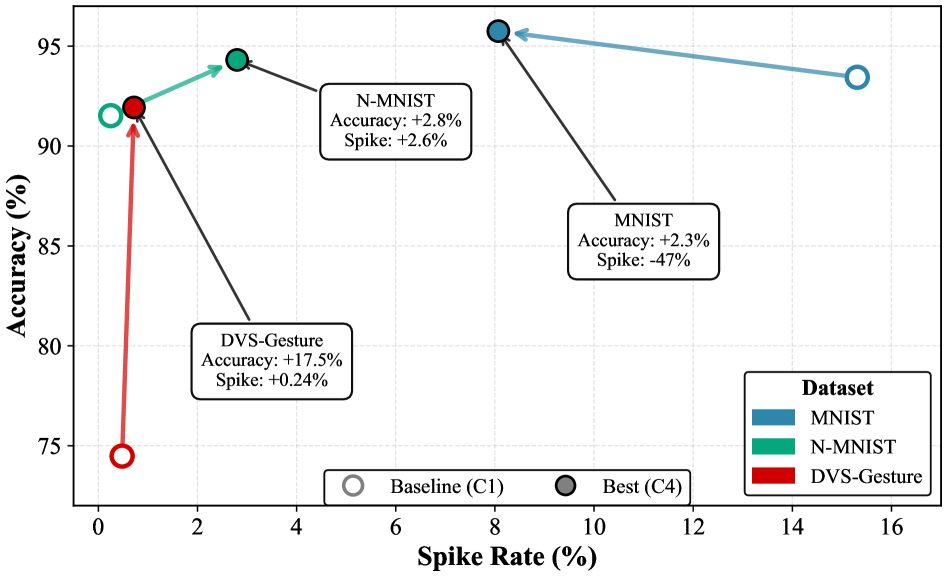
Researchers have developed a novel framework for controlling activity in spiking neural networks, enabling continual learning across vision tasks while minimizing energy consumption.
A new loss function, SYNC Loss, improves the reliability of selective prediction models by harmonizing how they estimate confidence.
![The framework employs a differentiable graph neural network simulator to solve inverse problems in granular flows, iteratively refining parameters [latex]\boldsymbol{\theta}[/latex] through gradient-based optimization-starting from an initial state [latex]\hat{\mathbf{X}}\_{0}(\boldsymbol{\theta})[/latex]-until the simulated granular flow state at time [latex]t[/latex], [latex]\hat{\mathbf{X}}\_{t}(\boldsymbol{\theta})[/latex], converges with observed states [latex]X\_{t}^{\text{obs}}[/latex].](https://arxiv.org/html/2602.11621v1/figs/diff_gns.png)
Researchers have developed a computationally efficient framework using graph neural networks to predict post-liquefaction strength and simulate landslide runout.