Rating Sustainability: Can AI Build Trust?
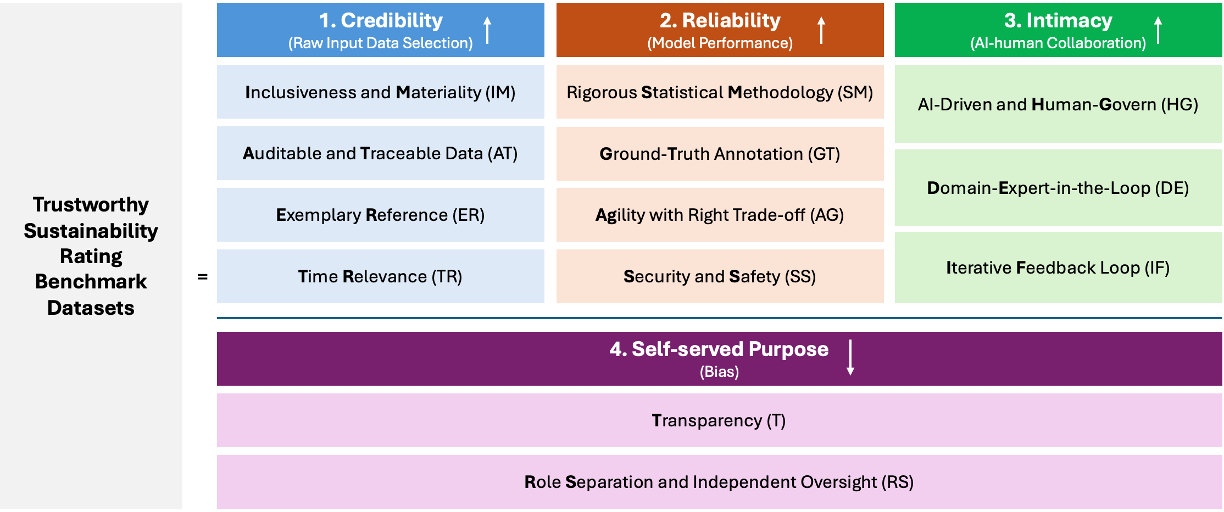
A new framework leverages the power of artificial intelligence and human expertise to assess the reliability of corporate sustainability ratings.
A new framework leverages the power of artificial intelligence and human expertise to assess the reliability of corporate sustainability ratings.
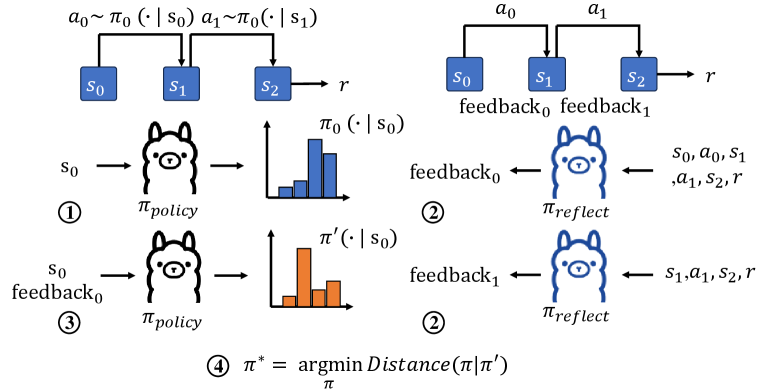
A new framework empowers artificial intelligence to learn more efficiently by retrospectively analyzing past experiences and assigning credit where it’s due.
![PaIRWaL encodes random walks on similarity networks derived from gyral folding to produce invariant sequences, subsequently aggregated to facilitate graph-level classification-a process fundamentally reliant on the topological properties of the underlying data and yielding representations insensitive to node permutations [latex] \mathbb{R}^n [/latex].](https://arxiv.org/html/2602.17557v1/x1.png)
Researchers are leveraging the unique folding patterns of the brain to build more accurate diagnostic tools for Alzheimer’s and Lewy body dementia.
New research reveals how Bayesian algorithms like Thompson Sampling behave when faced with inaccurate models, offering insights into their robustness and potential pitfalls.
![The system’s state space trajectories, captured at intervals of approximately 10 seconds, demonstrate the predictive capacity of a Gaussian State Space model (red) and an autoencoder-LSTM network (green) against the backdrop of a periodically forced system (cyan) and its true response (black) as projected onto different phase space coordinates-specifically, [latex]x_{10}, \dot{x}_{10}, x_{11}[/latex] and [latex]x_1, \dot{x}_1, x_{20}[/latex]-revealing the models’ ability to approximate system behavior across varying states.](https://arxiv.org/html/2602.16848v1/x16.png)
A new computational approach offers a faster and more precise method for determining the stable states of mechanical systems under unpredictable external influences.
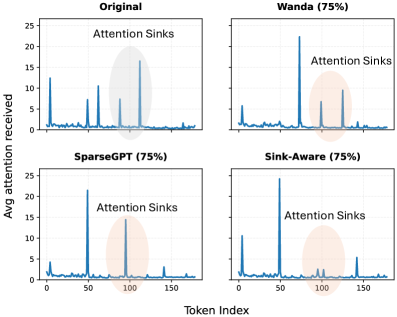
A new pruning strategy targets unstable attention patterns in diffusion models to significantly improve computational efficiency without sacrificing performance.
A novel framework combines established physical models with data-driven techniques to achieve more accurate and efficient identification of complex nonlinear systems.
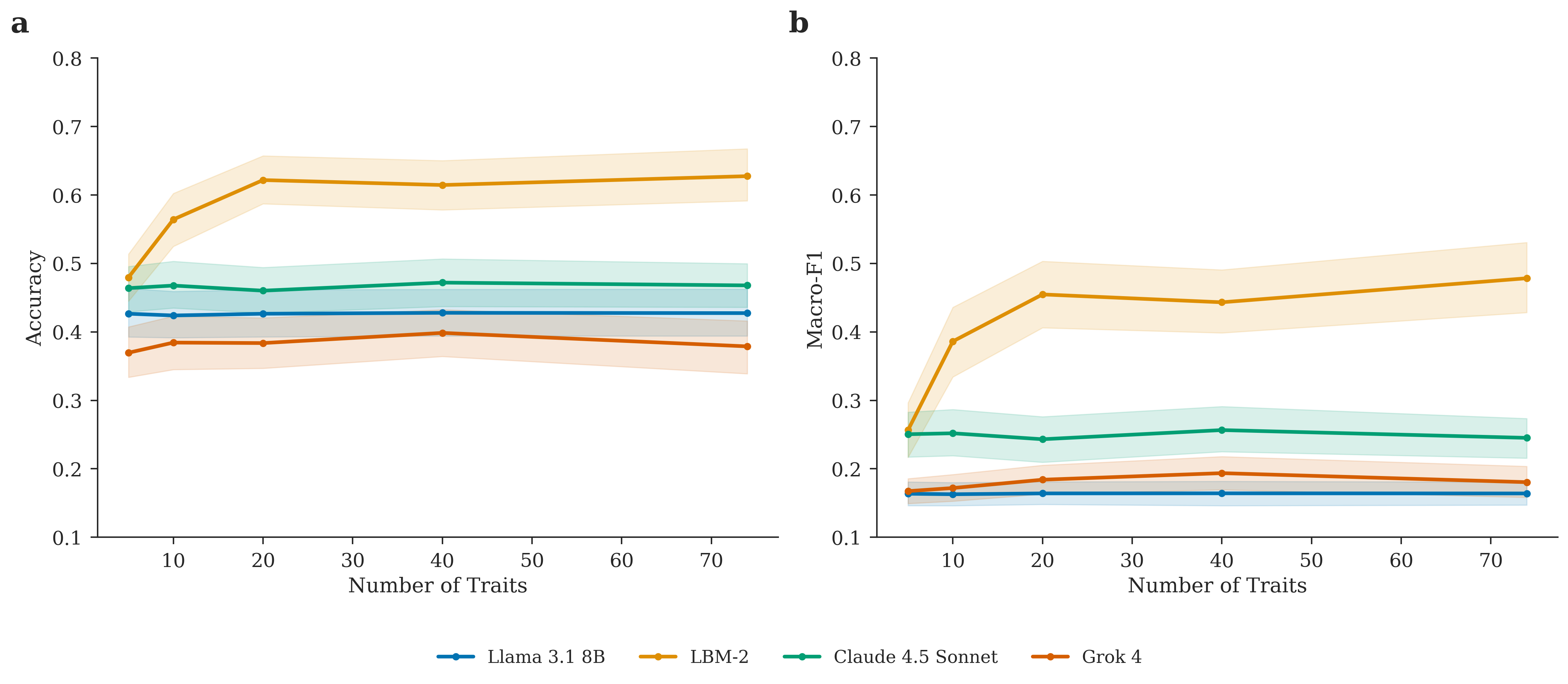
Researchers have developed a novel approach to forecasting individual actions by integrating psychological traits with the power of large language models.
A novel data-driven framework offers a robust method for detecting subtle structural changes that signal critical transitions in high-dimensional dynamical systems.
A new approach utilizes advanced 3D reconstruction techniques to create detailed digital twins of civil infrastructure, enabling precise damage assessment and long-term monitoring.