When Cyberattacks Go Viral: Modeling Firm Risk and Insurance Impact
![The data reveals a temporal pattern of newly infected firms across size categories from May to July 2024, quantified as [latex] I_{k} [/latex], indicating the daily incidence of infection spreading through the business landscape.](https://arxiv.org/html/2603.15369v1/x4.png)
A new stochastic model connects the spread of cyberattacks within organizations to their growth and the potential cascading effects on insurance portfolios.
A new stochastic model connects the spread of cyberattacks within organizations to their growth and the potential cascading effects on insurance portfolios.
![A normalization process-applied to financial indicators including Money Flow Index, Relative Strength Index, Bollinger Bands percentage, and Moving Average Convergence Divergence for both EURUSDT and BTCUSDT-centers the data by subtracting a 5000-minute rolling median [latex]I~^{(k)}\_{t}=I^{(k)}\_{t}-m^{(k)}\_{t}[/latex], then scales it using the rolling Median Absolute Deviation [latex]s^{(k)}\_{t}[/latex] to produce a dimensionless, comparable metric [latex]Z^{(k)}\_{t}=\tilde{I}^{(k)}\_{t}/s^{(k)}\_{t}[/latex] that facilitates direct cross-indicator analysis and aggregation.](https://arxiv.org/html/2603.13638v1/x1.png)
A new strategy leverages causal inference and forward-looking indicators to adapt to the ever-changing dynamics of financial markets and improve portfolio performance.
![The process recursively forecasts using a Generalized Autoregressive Conditional Heteroskedasticity (GARCH) model integrated with a Fuzzy Inference System (FIS), enabling iterative refinement of predictions through a feedback loop defined by [latex] GARCH(p,q) [/latex] parameters and fuzzy logic rules.](https://arxiv.org/html/2603.14793v1/x1.png)
A new hybrid model combines the strengths of volatility modeling and fuzzy logic to deliver improved accuracy in financial time series prediction.

Researchers have developed a powerful new approach to seismic data processing that leverages diffusion models and a large-scale open dataset to reconstruct clearer images of Earth’s subsurface.
This review examines how artificial intelligence is being deployed to defend against the growing threat of ransomware attacks.
As AI systems grow more autonomous, ensuring responsible behavior requires moving beyond internal safeguards and focusing on the external structures that incentivize compliance and accountability.

As companies increasingly rely on artificial intelligence to analyze lengthy Environmental, Social, and Governance reports, ensuring the factual accuracy of those analyses is paramount.
![This work details a computational pipeline-from extracting the Lyα forest and computing the one-dimensional power spectrum [latex]P_{\rm 1D}(k)[/latex], through a neural network input/output configuration, to a schematic normalizing flow-demonstrating how complex cosmological data can be processed and transformed via interconnected computational stages, potentially obscuring fundamental truths within layers of abstraction.](https://arxiv.org/html/2603.13011v1/x6.png)
New research leverages the power of neural networks and simulated data to extract cosmological insights from the subtle patterns within the Lyman-alpha forest.
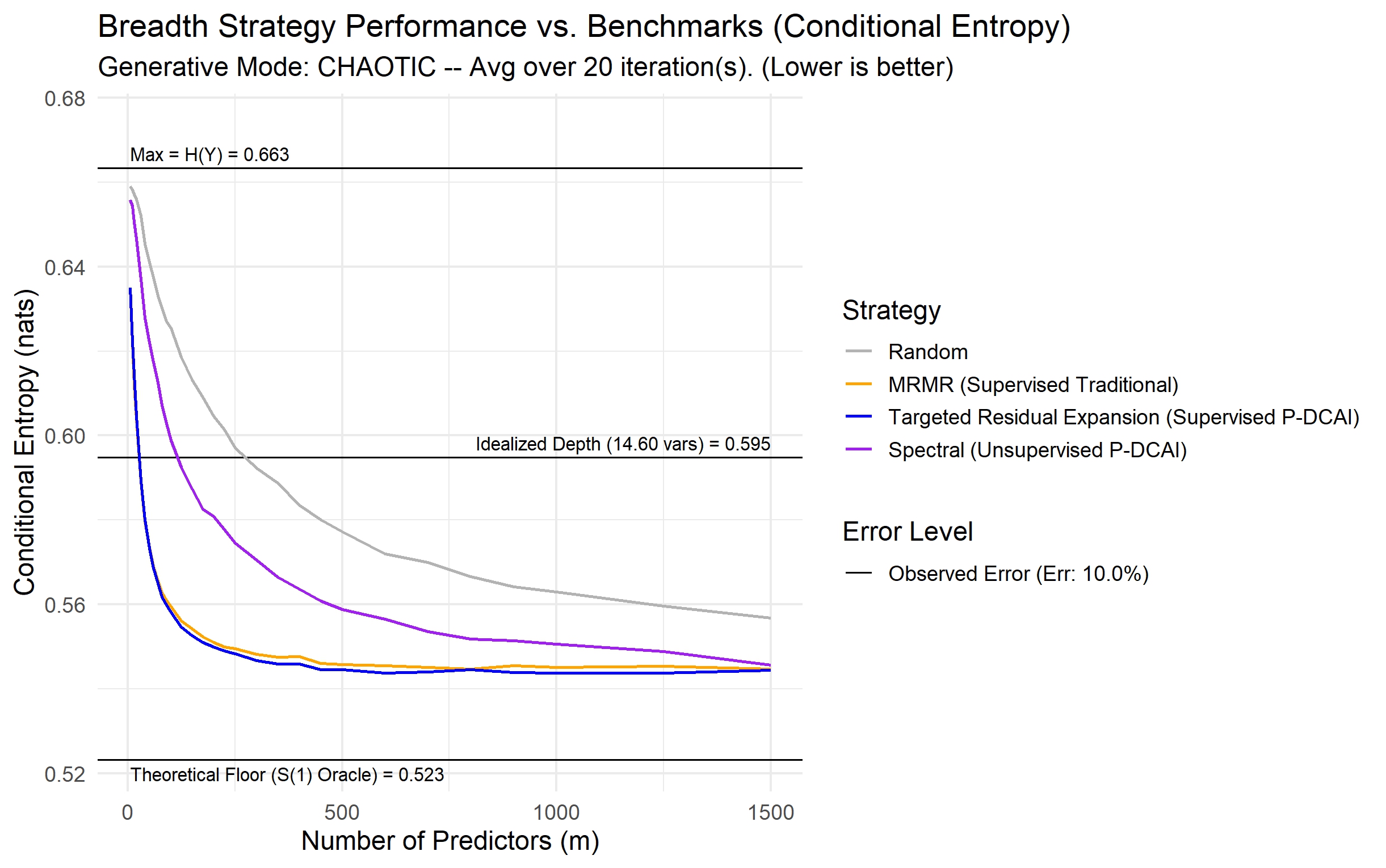
A new framework reveals how embracing high-dimensional data, when combined with a focus on quality, can unlock surprisingly accurate and robust machine learning models.

A new review examines the rapid evolution of AI dialogue systems designed to provide mental health support, charting a course from specialized models to the age of large language models.