When AI Goes Wrong: Understanding the Failure Modes of Autonomous Agents
A new study dissects the unique challenges of building reliable, self-directed AI systems, identifying patterns of failure distinct from traditional software.
A new study dissects the unique challenges of building reliable, self-directed AI systems, identifying patterns of failure distinct from traditional software.
![Symbolic forecasting architectures-specifically, a differentiable neural network (SyNF) and an evolutionary-search-based tree constructor (SyTF)-demonstrate the capacity to distill complex time-series data into interpretable equations, such as [latex] \hat{y}\_{t}=0.1110+0.9421y\_{t-1}+0.0001\left(y\_{t-1}\right)^{2} [/latex] for SyNF and [latex] \hat{y}\_{t,\text{SyTF}}=0.9613y\_{t-1} [/latex] for SyTF, effectively reverse-engineering predictive dynamics from a simulated dataset using only lagged observations.](https://arxiv.org/html/2603.07261v1/Symbolic_Forecasting_Model_Architecturre.png)
New research demonstrates how symbolic machine learning can unlock interpretable models from complex, chaotic time series data.
![Financial model performance is evaluated across key benchmark dimensions, demonstrating comparative capabilities and highlighting distinctions in robustness and accuracy as measured by [latex] R^2 [/latex], mean absolute error (MAE), and root mean squared error (RMSE).](https://arxiv.org/html/2603.08704v1/bar_plot.png)
A new benchmark assesses the financial acumen of artificial intelligence, revealing wide performance gaps in complex investment analysis.
![The optimization of dynamical scaling parameters within a two-dimensional Ising model-conducted in batches of 256-reveals a convergence history for each parameter, with the critical temperature [latex]T_{\mathrm{c}}[/latex] demonstrably aligning with its established analytical solution during the process.](https://arxiv.org/html/2603.06008v1/x3.png)
A new deep learning approach significantly enhances the accuracy and efficiency of characterizing phase transitions and critical phenomena in complex systems.
![The framework decomposes Hamiltonian dynamics-systems exhibiting multiple timescales-into independently trainable subsystems using interval subsampling-[latex]I\_1, I\_2, I\_3[/latex]-and then integrates the resulting single-scale Hamiltonian Neural Networks [latex]\mathcal{M}\_{k}[/latex] to predict behavior at the original resolution, acknowledging the inevitable complexity arising from layered abstraction.](https://arxiv.org/html/2603.06354v1/x1.png)
Researchers have developed a novel neural network architecture capable of accurately modeling systems evolving across multiple timescales.

Researchers have developed a new model that anticipates user actions by learning from their complete interaction history, offering a path toward more intuitive and efficient interfaces.
A new study rigorously evaluates the ability of an AI-powered weather model to anticipate high-impact events, revealing both impressive short-term accuracy and fundamental limits to long-range prediction.

A novel approach combines the strengths of traditional weather models with machine learning to deliver more accurate and reliable predictions.
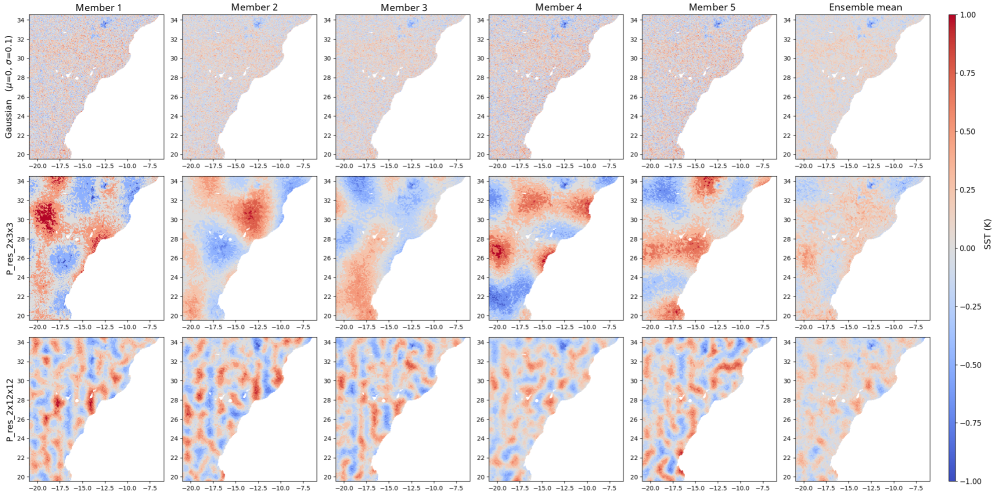
A new approach leverages the power of graph neural networks and strategically perturbed input data to generate more reliable probabilistic forecasts of sea surface temperature.

Understanding why AI coding agents fail is crucial for reliable software development, and this research introduces a method for turning complex execution data into actionable insights.