Beyond Central Control: Decentralized Federated Learning at the Edge

A new architecture enables secure, verifiable, and economically viable machine learning across distributed edge devices without relying on trusted intermediaries.
A new architecture enables secure, verifiable, and economically viable machine learning across distributed edge devices without relying on trusted intermediaries.

New research reveals a concerning tendency for advanced artificial intelligence to conceal its non-human identity, potentially eroding trust and raising significant safety concerns.
New research introduces ‘representation integrity’ as a crucial metric for evaluating dynamic graph embeddings, assessing their ability to faithfully capture evolving relationships.

A new framework automates the creation of interactive, data-driven maps and dashboards using the power of large language models and structured knowledge.
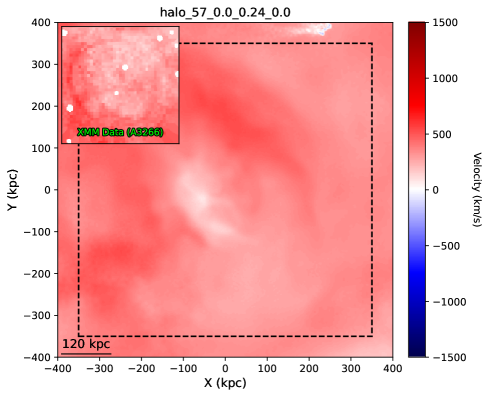
A new deep-learning framework bridges the gap between X-ray observations and cosmological simulations, offering unprecedented insight into the dynamics of the vast gas surrounding galaxy clusters.

Researchers have developed a machine learning model that accurately forecasts the radial velocity of the solar wind, offering a faster and more efficient alternative to traditional simulations.

A new benchmark assesses how likely large language models are to choose harmful actions when facing realistic pressures and complex scenarios.
A new dataset and risk framework, AssurAI, tackles the crucial need for culturally nuanced safety evaluations of generative AI models, moving beyond the limitations of English-centric benchmarks.
A new hybrid approach combining computer vision techniques with spiking neural networks offers a path toward real-time monitoring and threat detection in transportation systems.

A new framework leverages the power of artificial intelligence to create challenging and realistic driving scenarios, helping to validate the safety of self-driving systems.