It’s often fun to spot familiar sets when watching American movies and TV shows. For example, the set of The Good Place was also used for the 1931 Frankenstein film. The house from House of 1000 Corpses is the same building that served as the brothel in The Best Little Whorehouse in Texas. Peacock’s new show, The ’Burbs, is filmed on the same street as the original movie, and that same street was also famously Wisteria Lane on Desperate Housewives. Interestingly, Kelly Rowland also filmed the music video for “Dilemma” there, memorably pretending to text on an Excel spreadsheet!
Fans of British TV have an even bigger advantage when it comes to location spotting. While many American period pieces are filmed on studio backlots, the grand estates used in British dramas are often genuine historical landmarks. These houses have witnessed significant events, unlike those only featured in TV shows. For example, Highclere Castle, famously known as Downton Abbey, is actually the ancestral home of the Earl of Carnarvon, who discovered King Tut’s tomb – his death even helped create the legend of the mummy’s curse. The building used as Spectre headquarters in the James Bond film isn’t just a set; it’s also where Winston Churchill was born and was featured in Gulliver’s Travels and Bridgerton (though Bridgerton films in many locations). Just as New York City feels like a character in Sex and the City, British stately homes are like seasoned character actors – versatile, well-connected, and with a rich history of their own.
We chose ten rooms that have appeared in many British period dramas and ranked them based on three things: how distinctive they are, how often they’re used in shows, and how versatile they are (meaning, can they convincingly represent different time periods and locations?). Here’s our ranking of these rooms, based on how much of a star presence they have.
10.
Red Room at Sudbury Hall
https://youtube.com/watch?v=watch?v=SlSxCY7bKwc
This location, found in Derbyshire, has been featured in the films Pride and Prejudice (1995) and Jane Eyre (2006). You’ll recognize it by its unique dark-red damask wallpaper.
This bedroom at Sudbury Hall is strikingly dramatic, with its rich red color – it’s the kind of room you’d expect to see often in films and TV shows, but surprisingly, it isn’t used much. While it’s best known as Mr. Darcy’s bedroom in the popular Colin Firth miniseries, it wasn’t even the most memorable location where Firth appeared with his shirt open – that was the famous lake scene! The room was also effectively used in the 2006 film Jane Eyre to create a chilling atmosphere when Jane is sent away to school. It’s a beautifully staged scene, but given its potential, you’d think more episodes of shows like Father Brown and Poirot would have been filmed there by now.
9.
Bath Assembly Rooms
https://youtube.com/watch?v=watch?v=4yiHeZkMnss
Location: Somerset
As seen in: Bridgerton, The Duchess
How to spot it: A balcony, Georgian austerity
It’s disappointing the Bath Assembly Rooms aren’t featured more prominently in Austen adaptations, especially since Jane Austen herself danced there between 1801 and 1806. The settings for scenes in Persuasion and Northanger Abbey were inspired by her time there. The balcony, famously used for observing and gossiping – like at Lady Danbury’s ball in Bridgerton – adds to the atmosphere. However, despite their historical significance, they haven’t been used in any major Austen film or TV versions. This might be because, while historically accurate in their simple, Georgian style, they lack the visual extravagance that Hollywood often prefers.
8.
Staircase at Wrotham Park
https://youtube.com/watch?v=ETXKu03o7is?si=SSKHwZ9kFfMqHxRQ&t=2376
This location is in Hertfordshire and has been featured in several popular shows and films, including Jeeves and Wooster, Mr. Selfridge, Gosford Park, and Bridget Jones’s Diary. You’ll recognize it by the numerous paintings adorning the walls.
The grand, open staircase at Wrotham Park is perfect for displaying artwork. It has a distinctly museum-like quality, and you’ll often recognize it from period dramas. Interestingly, the house was originally built in 1754 by Admiral John Byng, who was tragically executed around the time of its completion – a rather somber fact! While this room first made me notice how often sets are reused in historical films, it isn’t as versatile as some other locations. The staircase’s design, particularly the ironwork and open sides, was advanced for its time, but clearly places it in the Industrial Revolution era and beyond. This means Wrotham Park is best suited for settings like Jane Austen adaptations, Tudor-era stories, or high fantasy – it wouldn’t work for earlier periods.
7.
Great Conservatory at Syon House
https://youtube.com/watch?v=watch?v=Swap4CWjX9Y
This location is in London and has been featured in several films and TV shows, including Poirot, The Nutcracker and the Four Realms, Downton Abbey, and Vanity Fair. You’ll recognize it by its large glass dome and tall, white columns.
Syon House has a fascinating history. Centuries ago, Lady Jane Grey learned she’d briefly become queen within its walls. Later, in the 1820s, the stunning Great Conservatory was added, designed by Charles Fowler. More recently, it served as a memorable backdrop for the popular series Bridgerton. Because of its accessible London location, Syon Park is a favorite among filmmakers shooting period dramas. (A quick note: the Ionic Temple at Chiswick House would also be perfect, if it were an indoor space!) The conservatory itself is a striking mix of indoor and outdoor spaces, easily identified by its tall, white Doric columns. Its neoclassical design, combined with glass, is reminiscent of a transparent U.S. Capitol building – though perhaps we shouldn’t inspire any further renovation ideas!
6.
Art Deco Room at Eltham Palace
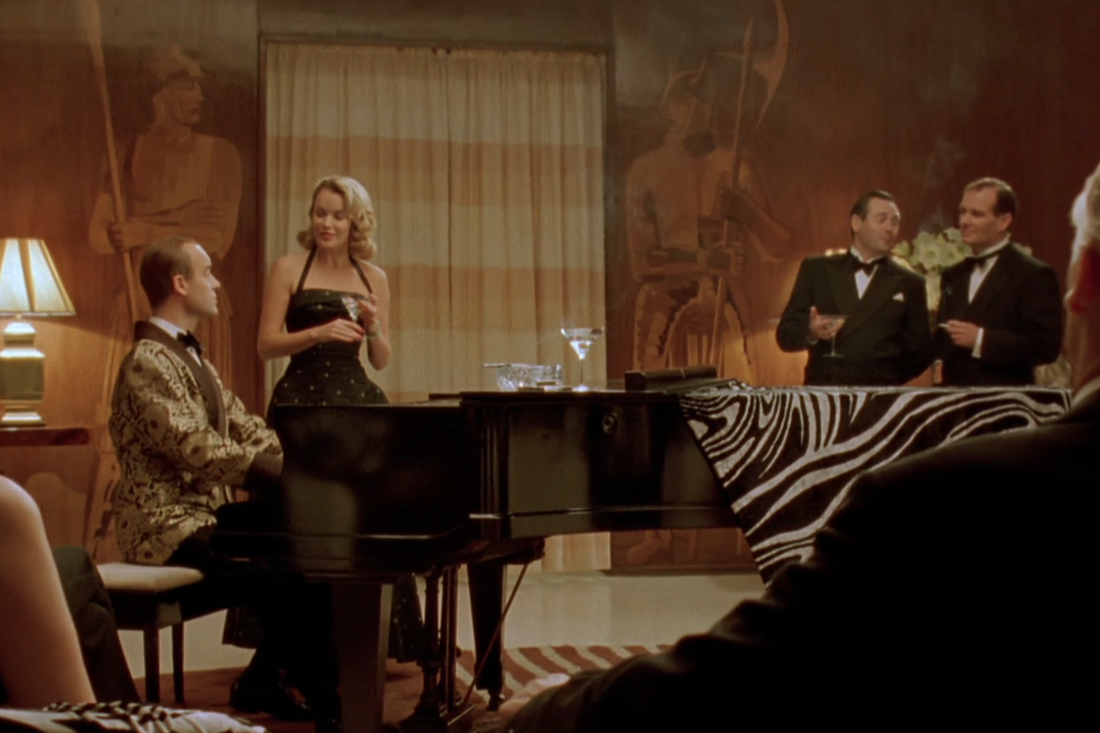
This location is in London and has been featured in Agatha Christie’s Marple, The Crown, and Wonka. You can identify it by its wood-inlay murals.
Eltham Palace has a long history, with parts of the building dating back to the 1400s – it’s where Henry VIII spent his childhood. However, we’re focusing on the stunning Art Deco addition from the 1930s. The entrance hall feels distinctly like a 20th-century space, or perhaps a vision of the future from the past, and it’s unique enough to earn a spot on our list. Art Deco was a short-lived design style, making every surviving example truly special. The inlaid murals are particularly beautiful, hinting at Chinese-inspired art without being overly stereotypical. You might recognize the room from TV and film – it’s stood in for Bermuda’s Government House in The Crown, the headquarters of a villain in Wonka, and the London apartment of Noël Coward in Agatha Christie’s Marple.
5.
Painted Hall at Chatsworth House
https://youtube.com/watch?v=watch?v=MzDLxTRUYPk
As a huge fan of period dramas, I’m always thrilled when I recognize a filming location! This one’s in Derbyshire, and it’s absolutely stunning. You might remember it from the 2005 version of Pride & Prejudice, or even Death Comes to Pemberley and Peaky Blinders. What really catches your eye are the incredible, sweeping staircases and the beautiful murals painted on the ceilings – they’re truly unforgettable!
Chatsworth House has a rich history, beginning with its origins in 1553 when Bess of Hardwick started building on the land. The stunning Painted Hall, added in the 1700s, features beautiful murals on its ceiling. Beyond its architectural beauty, Chatsworth is famous for its connection to Pride & Prejudice – it served as the iconic Pemberley estate in two different adaptations, once with Matthew Macfadyen in 2005 and again with Matthew Rhys in 2013. However, its history extends far beyond film. The Painted Hall was once a prison for Mary, Queen of Scots, and a place where Georgiana Spencer, a Duchess of Devonshire and ancestor of Princess Diana, hosted lavish parties. While many significant events have occurred within its walls, it’s perhaps best known as the setting where Keira Knightley’s character in Pride & Prejudice realized the splendor of Darcy’s estate. The fact that location scouts chose Chatsworth to represent the ultimate luxurious home – Pemberley – speaks volumes about its impressive grandeur and lasting appeal.
4.
North Hall at Badminton House
https://youtube.com/watch?v=watch?v=rly2v1Ce9YM
This location in Gloucestershire has been featured in several popular productions, including The Pursuit of Love, Bridgerton, and Agatha Christie’s Seven Dials. You’ll recognize it by its exceptionally tall windows – which are actually doors!
Badminton House is famous not for sandwiches (though that’s a fun guess!), but as the birthplace of the sport of badminton. It’s likely the game was first played in the North Hall, a spacious entrance area. Fans of the show Bridgerton might recognize it as the duke’s breakfast room, and it also appeared in the 2020 series The Pursuit of Love. A sure sign you’re on a film or photoshoot set in the North Hall? If you see a horse inside! The hall is incredibly versatile – it can be transformed to look like almost anything, and it has a cozy, intimate feel that most grand halls lack.
3.
Landing and Stairwell at Highclere Castle
This location is in Hampshire and has been featured in several films and TV shows, including Downton Abbey, Robin Hood: Prince of Thieves, and Eyes Wide Shut. You can identify it by its Gothic-style wood paneling.
Often called the ‘Downstairs’ of Downton Abbey, Highclere Castle—and especially its grand staircase and landing—has become instantly recognizable thanks to the show. The castle also appeared in Jeeves and Wooster. The staircase, with its Jacobean wood and stone, is incredibly versatile. It can convincingly portray settings from the Middle Ages, as seen in Kevin Costner’s Robin Hood, to more modern stately homes like in Downton Abbey, Agatha Christie’s Marple, and even the elaborate party scene in Eyes Wide Shut. Just like an actor can play characters of vastly different ages, this staircase can seamlessly adapt to any period.
2.
Double Cube Room at Wilton House
https://youtube.com/watch?v=watch?v=Spzm4ZSjzsM
This location in Wiltshire has been featured in Barry Lyndon, Bridgerton, and Emma. You’ll recognize it by a single, large painting that dominates an entire wall.
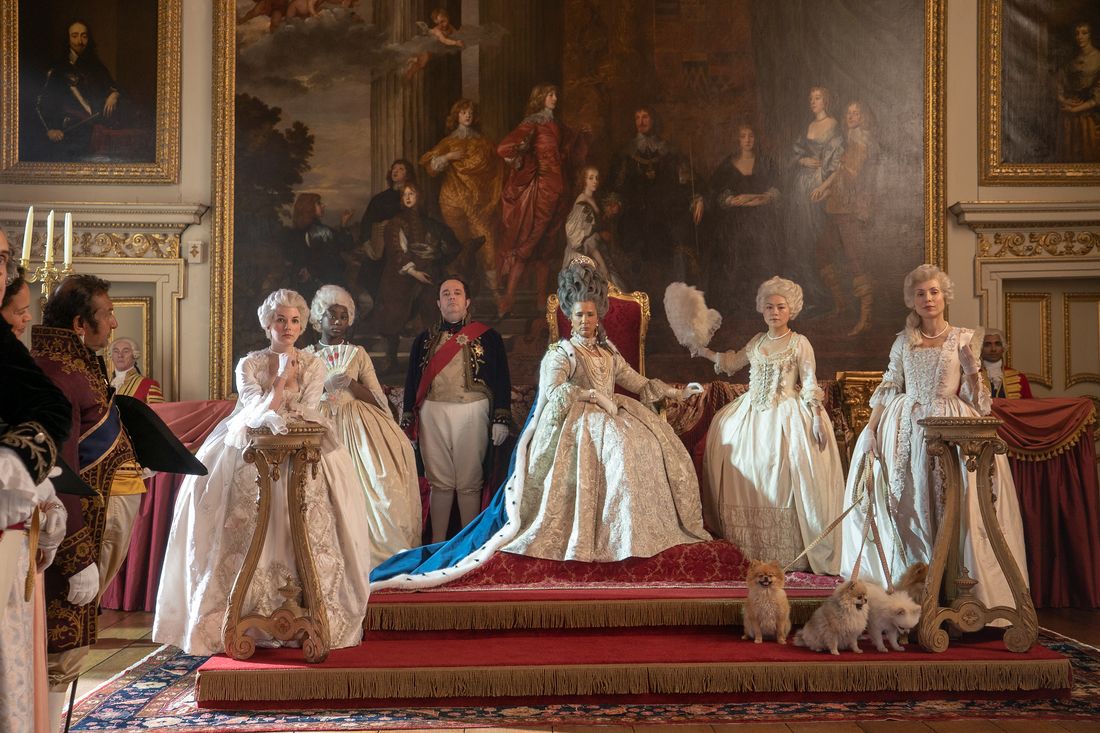
The Double Cube Room is similar to the stairs at Wrotham, but instead of many small paintings, it features one enormous one. This impressive portrait of the 4th Earl of Pembroke, painted by Anthony van Dyck over two years (1634-35), often dominates scenes filmed there – directors naturally position actors within its frame. Several famous characters, including Queen Charlotte, Barry Lyndon, Emma Woodhouse, and Georgiana Darcy, have appeared before it, and the room exudes a distinctly Dutch artistic quality. The room served as the backdrop for a key scene in Bridgerton, where Daphne Bridgerton was presented at court and named the season’s diamond – much like the painting itself, it’s truly captivating and fit for royalty.
1.
Marble Hall at Hatfield House
https://youtube.com/watch?v=watch?v=2cNj8URL51k
This location is in Hertfordshire and has been featured in several films and TV shows, including The Favourite, Enola Holmes, Batman, and Elizabeth: The Golden Age. You can identify it by its distinctive checkerboard floor and Gothic wood paneling.
Hatfield House is the most popular filming location in Great Britain. Its striking black-and-white floors are perfect for stories involving intrigue or clear-cut good versus evil. The list of movies and TV shows filmed there is incredible! It’s appeared in both Paddington films, as well as Angelina Jolie’s Tomb Raider movies. It’s also played the childhood homes of iconic characters like Batman and Tarzan, and served as the setting for Armie Hammer’s Manderley in Rebecca. Russell Brand even filmed a music video for Get Him to the Greek there. Seriously, you’ll recognize it from a lot of different projects!
Hatfield House, like Highclere Castle, dates back to the 1600s and often stands in for medieval settings – especially for productions that imagine the Middle Ages as a romantic, artistic period. However, it’s more frequently used to represent the imposing, and sometimes corrupt, homes of established families in modern stories. Hatfield’s walls have housed the antagonists of Enola Holmes, the regal setting of The Golden Age, and even the drama surrounding Queen Anne in The Favourite. The dark wood and patterned floors create a sense of long-standing history, but also of decay and something being fundamentally wrong. Ultimately, Hatfield House conveys a feeling of sadness and decline, which is why it’s such a popular location for portraying troubled aristocratic homes.
Read More
- United Airlines can now kick passengers off flights and ban them for not using headphones
- Crimson Desert: Disconnected Truth Puzzle Guide
- How to Get to the Undercoast in Esoteric Ebb
- Katanire’s Yae Miko Cosplay: Genshin Impact Masterpiece
- All Golden Ball Locations in Yakuza Kiwami 3 & Dark Ties
- All 9 Coalition Heroes In Invincible Season 4 & Their Powers
- All Itzaland Animal Locations in Infinity Nikki
- Zendaya’s 4 Big 2026 Movies Could Beat Brie Larson’s Box 2019 Office Record
- Gold Rate Forecast
- HBO’s Harry Potter Is Already Breaking My Heart
2026-03-12 16:57