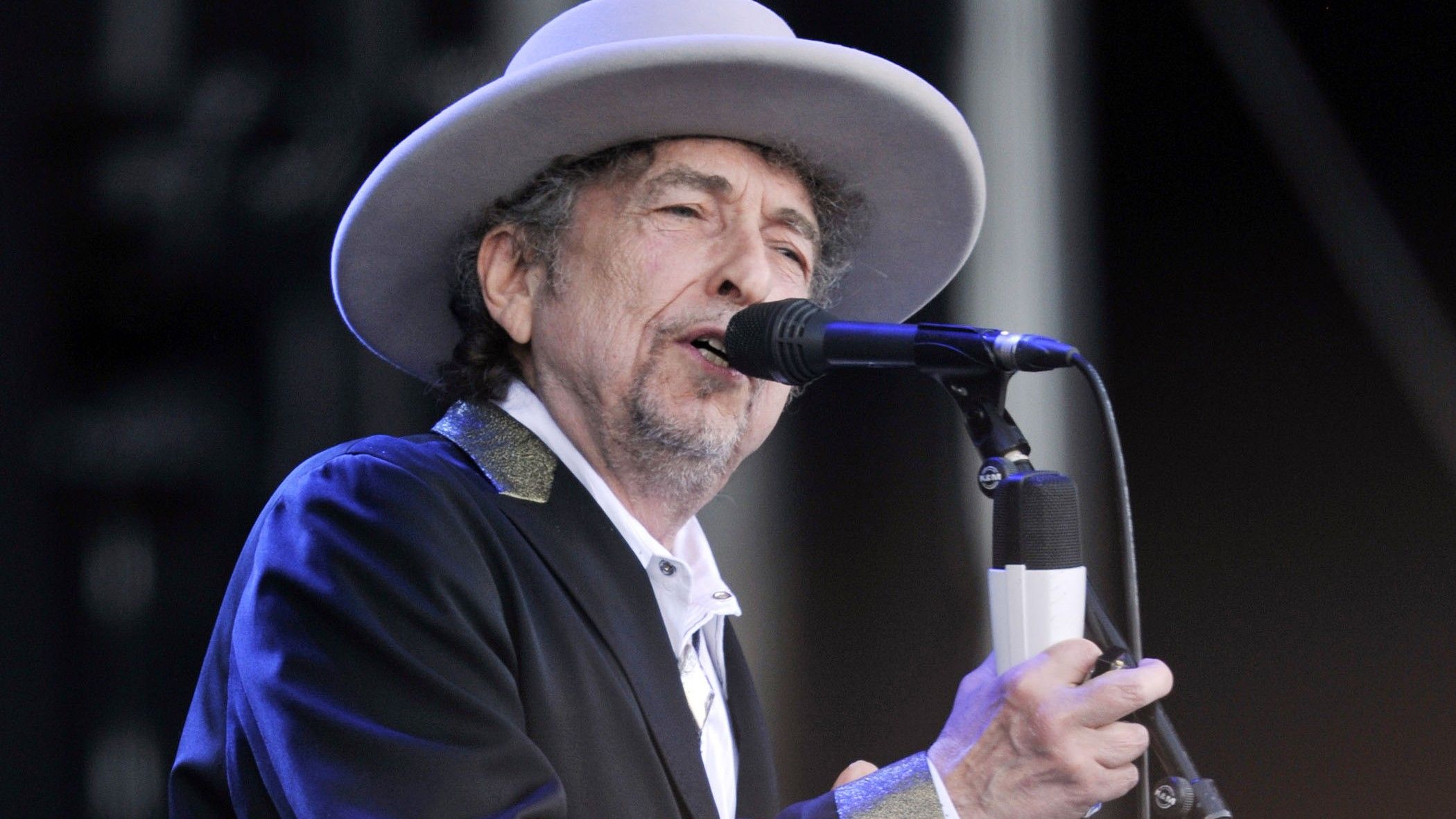
While the film A Complete Unknown, starring Timothée Chalamet as Bob Dylan, brought the artist to a wider audience, for many it was just the beginning of their discovery. Even two years after the movie came out, Dylan’s music continues to resonate, especially with new, younger listeners who are adding his songs to their playlists. With a career lasting over sixty years and a huge collection of albums covering genres like blues, folk, country, rock, and gospel, it’s hard to pick just ten songs to represent his influence. But looking back from today, these tracks clearly stand out as the most important parts of his incredible musical legacy.
Bob Dylan has continually reinvented himself throughout his 60-year career, whether as a passionate protest singer in the 1960s, a groundbreaking rock artist who embraced electric instruments, or a celebrated literary figure honored with the Nobel Prize. He’s often seen as the voice of his generation, consistently staying relevant in cultural discussions. Widely considered the most influential singer-songwriter of all time, his songs set the standard for poetic lyricism. While choosing the “best” songs is always a matter of opinion, these ten tracks offer a crucial look into the life, the persona, and the lasting legacy of Bob Dylan.
10. “Song To Woody”
Bob Dylan (1962)
From the very beginning, Bob Dylan openly showed the musicians who inspired him, as evidenced by his 1962 debut album. Though mostly comprised of traditional folk songs, the album included his original song, “Song to Woody,” which revealed his deep admiration for folk icon Woody Guthrie. Written with the energy of a young man fresh off a train from Minnesota and new to New York City, the song hinted at Dylan’s future as a defining voice of his generation – a tribute to a legend that also signaled his own rise to prominence.
As a folk music fan, I’ve always been struck by Woody Guthrie’s impact. He wasn’t just a songwriter; he was a voice for the underdog, and songs like “This Land Is Your Land” really helped push for social change. You can absolutely see his influence on artists like Bob Dylan, who practically built his career on that same kind of protest music. It’s a powerful connection. And there’s this incredible story – depicted in the film A Complete Unknown – that a young Dylan, even while Guthrie was battling Huntington’s disease in the hospital, secretly went to his room and sang to him. It’s a beautiful, heartbreaking image of one artist paying tribute to the legend who came before.
9. “Blowin’ In The Wind”
The Freewheelin’ Bob Dylan (1963)
Bob Dylan’s song “Blowin’ in the Wind” perfectly embodies the spirit of the civil rights movement. Through questions about peace, freedom, and war – like his famous line, “How many roads must a man walk down before you call him a man?” – the song suggests that the answers to these important questions aren’t simple, but rather are all around us, ‘blowin’ in the wind.’ This simple yet powerful message made the song an enduring anthem for social change and a rallying cry for activists across generations.
“Blowin’ in the Wind” began Bob Dylan’s second album, The Freewheelin’ Bob Dylan, and was one of several protest songs on the record, including “Masters of War” and “A Hard Rain’s a-Gonna Fall.” He continued to write similar songs on later albums, such as “The Times They Are a-Changin’” and “The Lonesome Death of Hattie Carroll,” all reflecting the struggles of the 1960s civil rights movement. Though Dylan wrote many famous songs, “Blowin’ in the Wind” is often considered his most representative work.
8. “Don’t Think Twice, It’s Alright”
The Freewheelin’ Bob Dylan (1963)
Bob Dylan is famous for his protest songs, but he was also a remarkably gifted songwriter when it came to love songs. Tracks like “Girl from the North Country,” “Boots of Spanish Leather,” and “Love Minus Zero” demonstrate his ability to express deep feelings in a simple, folk style. Among these touching songs, “Don’t Think Twice, It’s Alright” especially captures the sad acceptance that comes with a relationship ending.
“Don’t Think Twice, It’s Alright” was written by Dylan during his relationship with Suze Rotolo, who was portrayed as Sylvie Russo in the film A Complete Unknown. The song, played with a delicate finger-picked acoustic style, has greatly influenced many indie folk artists, who often copy Dylan’s distinctive, raw, and personal songwriting and vocal delivery. The song showcases a sophisticated, knowing tone, making it feel both classic and current. Dylan’s lyrics hint at a careful protection of his feelings as he reflects on a love that has ended.
7. “Subterranean Homesick Blues”
Bringing It All Back Home (1965)
Bob Dylan’s album Bringing It All Back Home made a huge impact, starting with the song “Subterranean Homesick Blues.” This track not only marked Dylan’s shift towards electric rock, but also showcased his new, poetic lyrical style – full of dreamlike and rapidly flowing images. By 1965, the song had become Dylan’s first US chart hit, and he’d already become a cultural icon, known for his energetic performances and distinctive look, including sunglasses. The innovative video accompanying the song, featuring cue cards with lyrics, felt cutting-edge and perfectly captured Dylan’s bold musical change, as explored in A Complete Unknown.
“Subterranean Homesick Blues” was full of literary nods and references, capturing the spirit of 1960s youth in just over two minutes. Though some folk music fans disliked Dylan’s move away from protest songs, lyrics like “you don’t need a weatherman to know which way the wind blows” still powerfully reflected the leftist views, popular mood, and anti-Vietnam War sentiment of the time. The song marked the start of a new, energetic, and rebellious phase for Dylan—one that foreshadowed the punk rock movement by over a decade.
6. “Like A Rolling Stone”
Highway 61 Revisited (1965)
The enduring power of Bob Dylan’s “Like a Rolling Stone” is clear – its lyrics actually gave A Complete Unknown its title, referencing the lines: “How does it feel? To be on your own, with no direction home, a complete unknown, like a rolling stone.” This song marked a turning point for Dylan, being his first major hit and showcasing his move towards rock and roll. With its electric guitars, organ, and rebellious spirit, it perfectly captured the feeling of the time. “Like a Rolling Stone” catapulted Dylan to superstardom, making him one of the biggest pop music icons of the era – comparable in popularity only to The Beatles.
Many consider “Like a Rolling Stone” to be Bob Dylan’s best song, and it topped Rolling Stone magazine’s list of the 500 Greatest Songs of All Time in both 2004 and 2010. Dylan himself felt the song was something special, even saying it felt like it was written through him by an outside force, a “ghost” (according to Far Out). Featuring a now-iconic organ riff played by Al Kooper, “Like a Rolling Stone” marked a turning point in rock music history.
5. “Knockin’ On Heaven’s Door”
Pat Garrett & Billy the Kid (1973)
Around the late 1960s and early 1970s, Bob Dylan shifted towards simpler, more personal songwriting. After the complex lyrics of albums like Blonde on Blonde, releases such as John Wesley Harding and New Morning felt calmer and more thoughtful. During this time, Dylan also tried acting, appearing in the Western film Pat Garrett and Billy the Kid. The film’s soundtrack featured mostly instrumental music, but it also included one of Dylan’s most famous songs.
“Knockin’ On Heaven’s Door” is one of Bob Dylan’s most popular songs from after the 1960s, and many artists, including Eric Clapton and Guns N’ Roses, have famously recorded their own versions. The song became a global hit, and its simple, moving melody perfectly captured the feeling of a scene in the film it was featured in, which dealt with themes of facing death and accepting fate. “Knockin’ On Heaven’s Door” has had a significant and lasting impact on popular culture, resonating with audiences beyond the film and speaking to universal experiences of life and death.
4. “Hurricane”
Desire (1976)
Bob Dylan faced criticism in the mid-1960s for shifting away from protest songs, but he revisited those themes with his powerful song “Hurricane.” This nearly nine-minute song detailed the story of boxer Rubin “Hurricane” Carter, who Dylan believed was unjustly imprisoned. Though focused on Carter’s individual case, the song used his experience to represent the broader issues of racism and unfair targeting within the American justice system.
As a huge Dylan fan, I’ve always been amazed by how he went all-in for Rubin ‘Hurricane’ Carter. It wasn’t just the song ‘Hurricane’ – he followed it up with an incredible benefit concert at Madison Square Garden with the Rolling Thunder Revue, raising a massive $100,000 for Carter’s legal defense! And it came right after Blood on the Tracks, which so many people, myself included, consider Dylan’s masterpiece. Honestly, ‘Hurricane’ really brought Carter’s case to the public’s attention, and thankfully, it played a part in his conviction finally being overturned in 1985. It’s a powerful example of how music can really make a difference.
3. “Make You Feel My Love”
Time Out of Mind (1997)
By the 1990s, Bob Dylan was a legendary figure in rock music, but he felt increasingly out of touch with the current music scene. That changed with the 1997 release of Time Out of Mind, an album that marked his return to prominence. The record presented a more mature and reflective Dylan, directly confronting themes of aging and death. While it included popular tracks like “Highlands,” the album also featured one of Dylan’s most famous and frequently performed songs.
“Make You Feel My Love” is now considered a classic song, having been recorded by more than 450 artists, including well-known names like Billy Joel and Adele. The song is a sincere and emotional ballad about loving someone completely, and it stood out for its honesty, which was different from many of Bob Dylan’s more complex songs. Its openly romantic message has made it a popular choice for weddings and has connected with audiences across different musical tastes and age groups.
2. “Things Have Changed”
Wonder Boys (Music from the Motion Picture) (2000)
Let me tell you, the awards just keep piling up for Bob Dylan – Nobel Prize, Presidential Medal of Freedom, you name it. And after hearing “Things Have Changed,” it was clear he was an Oscar winner too! This song was specifically written for the film Wonder Boys, a really interesting comedy-drama starring Michael Douglas as a professor going through a tough time with his personal and professional life. Musically, it felt like a natural extension of his Time Out of Mind album, proving that brilliant period wasn’t just a fluke – Dylan was truly back and firing on all cylinders.
Bob Dylan began the 21st century with “Things Have Changed,” a song that was both playful and thought-provoking, reflecting on the difficulties of life and how time passes. Albums like Love and Theft and Modern Times showed he hadn’t lost his creative energy, even as he aged. Though times have certainly changed since his most famous work in the 1960s, Dylan continues to be a vital and important artist.
1. “Murder Most Foul”
Rough and Rowdy Ways (2020)
Bob Dylan fans were delighted when “Murder Most Foul” unexpectedly appeared during the pandemic. It had been eight years since his last album of original songs, Tempest (2012). Though he released three albums of classic pop songs in the meantime, this over 16-minute song felt like the peak of his career. It powerfully connected the assassination of John F. Kennedy to the broader story of American politics and culture, and seemed to be Dylan’s way of looking back on his own life and relevance in today’s world.
“Murder Most Foul” marked a fresh direction in Bob Dylan’s music, a style he continued with his album Rough and Rowdy Ways, which included popular songs like “I Contain Multitudes.” Considering Dylan has consistently evolved as an artist, it’s remarkable that he produced some of his strongest work nearing his 80th birthday. While the film A Complete Unknown only touched on a small part of his long career, “Murder Most Foul” suggests Dylan still has plenty of new material to share with his fans.
Read More
- United Airlines can now kick passengers off flights and ban them for not using headphones
- How to Complete Bloom of Tranquility Challenge in Infinity Nikki
- Katanire’s Yae Miko Cosplay: Genshin Impact Masterpiece
- Gold Rate Forecast
- All Itzaland Animal Locations in Infinity Nikki
- 8 Actors Who Could Play Blackbeard In One Piece Live-Action Season 3
- How to Get to the Undercoast in Esoteric Ebb
- A Dark Scream Theory Rewrites the Only Movie to Break the 2-Killer Rule
- $2B AI cow collars use “cowgorithm” to herd cattle with no fences
- TV Characters That Underwent Dramatic Appearance Changes Over Time
2026-02-15 19:43