Ah, the marvellous world of Bitcoin, where numbers dance like sugarplums and wallets shrink faster than a chocolate bar in a greedy child’s hands. Fidelity Digital Assets, those clever clogs, are now claiming that Bitcoin’s rollercoaster days might be over. No more 80% crashes? Jolly good show, or so they say. But let’s not pop the champagne just yet, shall we?
In a research note titled “Is Bitcoin’s Four-Year Cycle Over?” (a question as tantalizing as a jar of pickled sweets), analyst Zack Wainwright points out that Bitcoin has grown up. Yes, it’s no longer the spotty teenager crashing parties; it’s now a suave, trillion-dollar asset with a fancy new buyer base. Fidelity reckons Bitcoin’s market cap hit a whopping $2.5 trillion by October 2025, with liquidity deeper than a giant’s bathtub and volatility as steady as a tortoise on a Sunday stroll.
“As Bitcoin matures, its price behavior is as unpredictable as a headmaster’s mood,” they declare. Volatility is down, even as prices soared past $126,000. Remarkable, isn’t it? Or is it just the market playing a clever trick, like a fox in a chicken coop?
Bitcoin Demand: A New Breed of Buyers
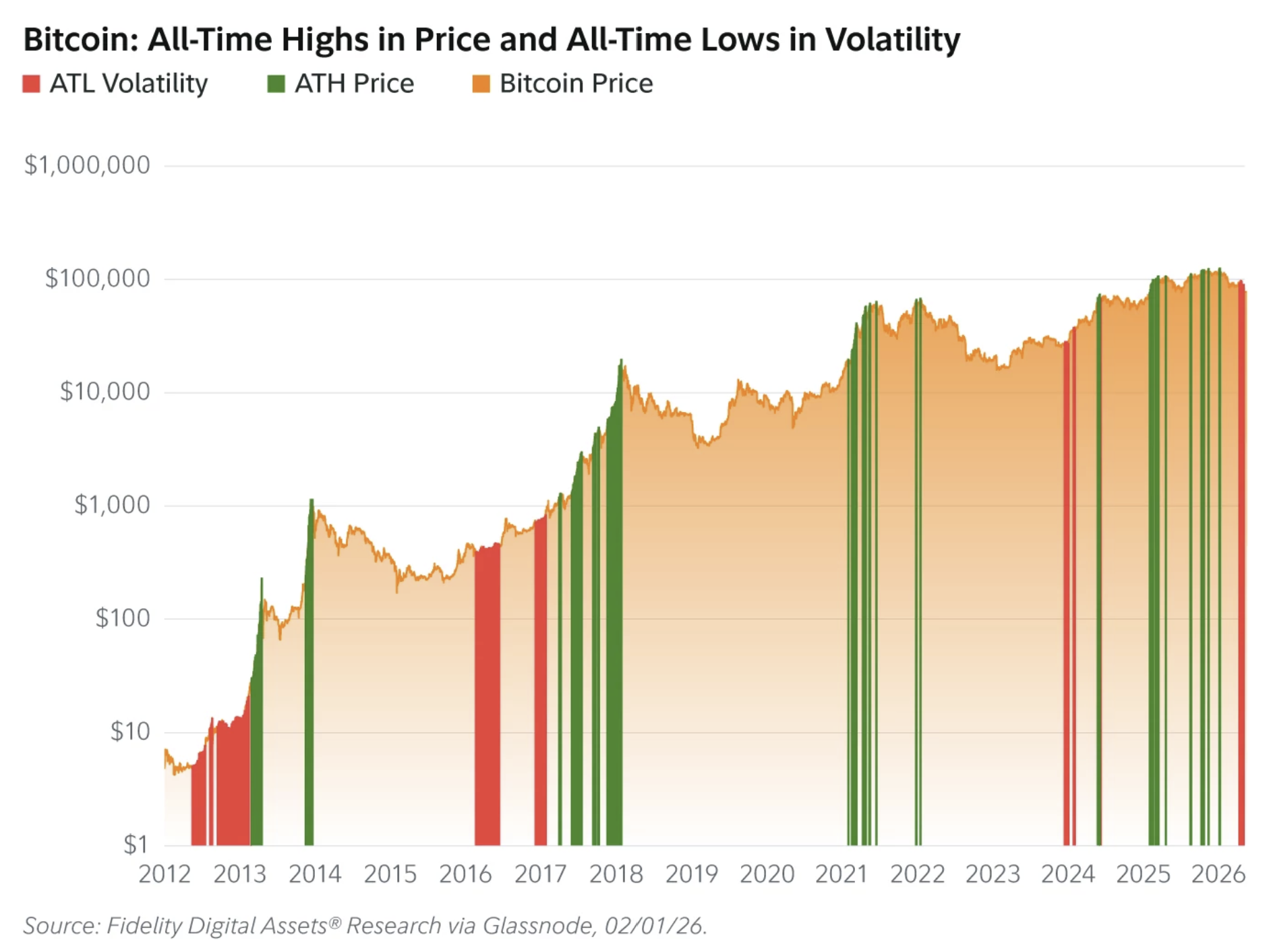
Fidelity’s argument about volatility is as intricate as a spider’s web. They say one-year realized volatility is behaving like a well-trained puppy, compressing sooner after peaks. In January 2026, they spotted 17 new all-time lows in volatility, just months after Bitcoin hit record highs. Why? Because Bitcoin’s market cap is now twice what it was in 2021, ten times 2017’s, and a staggering 200 times 2013’s. It’s like comparing a tricycle to a spaceship.
Then there’s the matter of who’s holding the coins. Fidelity points to 49 public companies, each clutching over 1,000 BTC like misers hoarding gold. Together, they hold more than 1 million BTC, over 5% of the circulating supply. And let’s not forget the ETFs, those shiny new toys, which collectively held nearly 1.3 million BTC by January 2026. That’s 6.4% of the supply, mind you. The category leader even outpaced gold’s ETF, reaching $75 billion in assets faster than a child devouring a birthday cake.
So, public companies and ETFs now hold nearly 12% of the supply, a shift Fidelity calls “structurally important.” But does that mean the days of dramatic drawdowns are behind us? Or are we just in the eye of the storm, waiting for the next tempest?
Fidelity also waves around on-chain metrics like a magician’s wand. Their “Profit to Volatility Ratio” (a name as fancy as a three-tiered cake) suggests the market is stable, with the ratio above 0.015 since late 2023. Even when Bitcoin dipped below $70,000 in February 2026, the ratio held firm. “Very stable,” they say. But stability, my dear reader, is often just a pause before the next adventure.
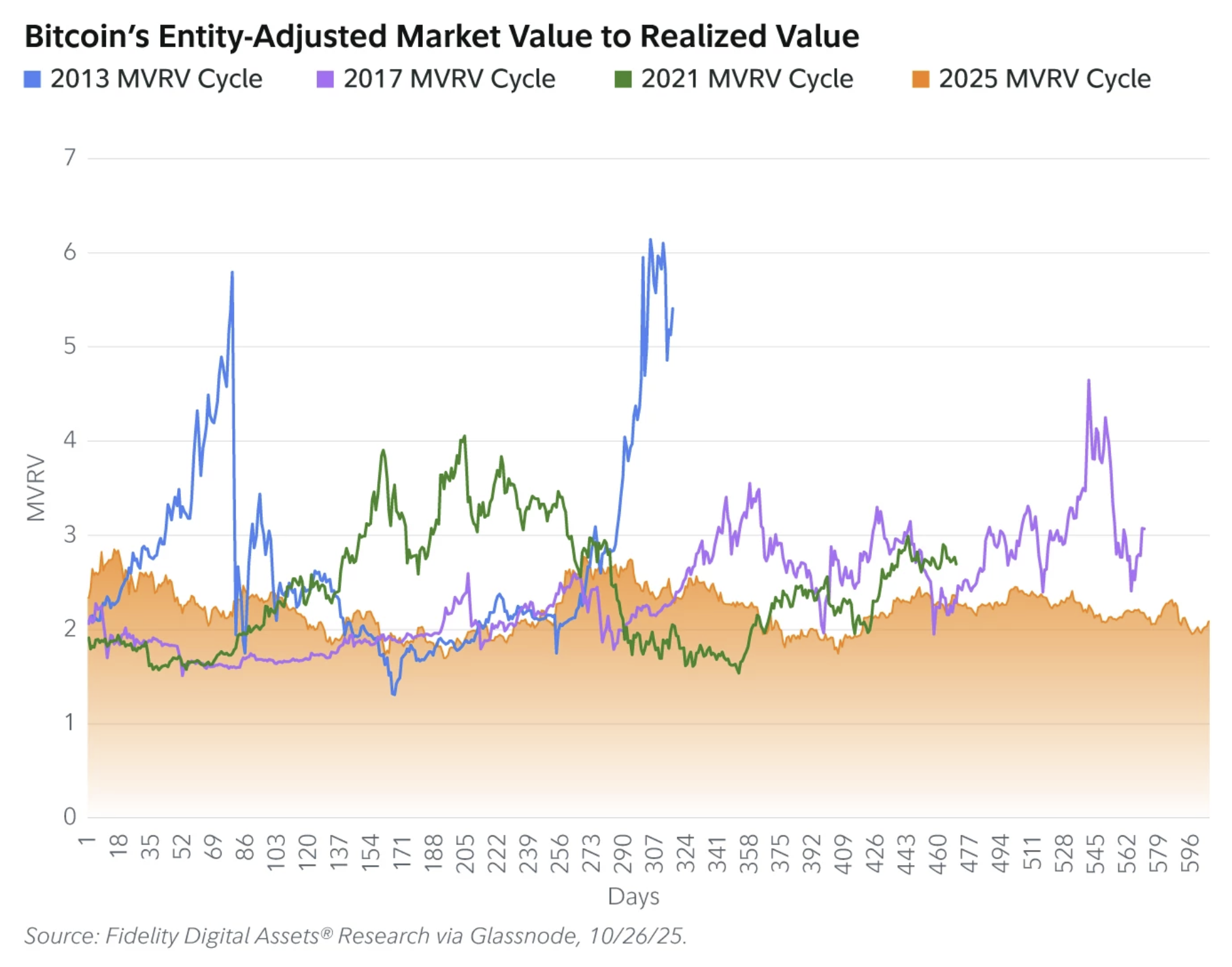
The implication? Volatility won’t vanish like a ghost at sunrise, but those dramatic cycle-ending crashes might become rarer. The next phase, they suggest, could be less of a fireworks display and more of a slow waltz. Higher prices, fewer cliff-edge moments. But remember, in the land of Bitcoin, nothing is certain except uncertainty.
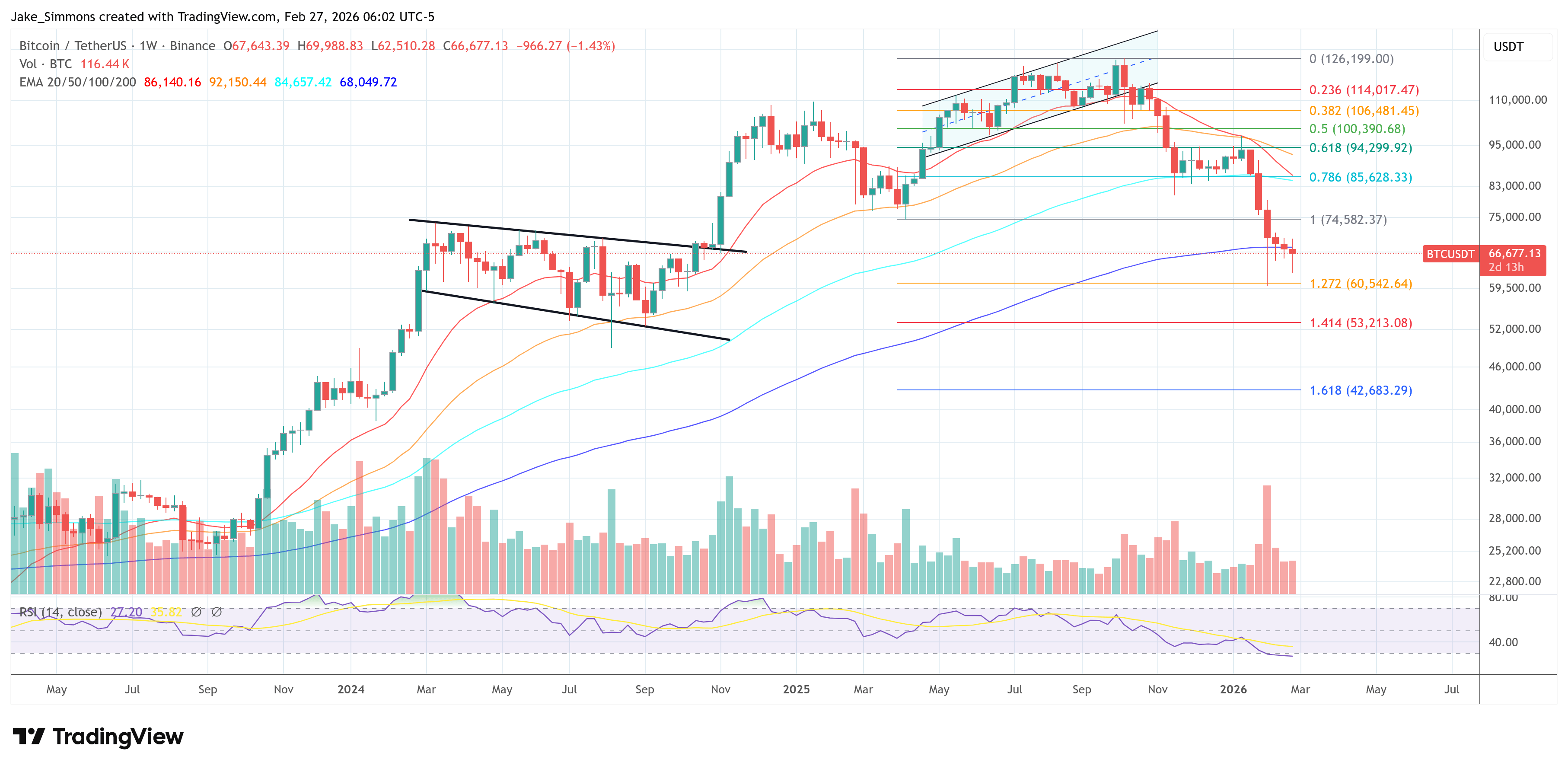
At press time, BTC was trading at $66,677. A devilish number, don’t you think?
Read More
- United Airlines can now kick passengers off flights and ban them for not using headphones
- Crimson Desert: Disconnected Truth Puzzle Guide
- All 9 Coalition Heroes In Invincible Season 4 & Their Powers
- The Boys Season 5 Spoilers: Every Major Character Death If the Show Follows the Comics
- Mewgenics vinyl limited editions now available to pre-order
- Invincible Season 4 Episode 6 Release Date, Time, Where to Watch
- Assassin’s Creed Shadows will get upgraded PSSR support on PS5 Pro with Title Update 1.1.9 launching April 7
- Grok’s ‘Ask’ feature no longer free as X moves it behind paywall
- Grey’s Anatomy Season 23 Confirmed for 2026-2027 Broadcast Season
- Nintendo Officially Rewrites Princess Peach After 41 Years
2026-02-27 17:28