Bitcoin’s recent sell-off has exposed a growing tangle of tensions in the crypto bazaar, as seasoned “buy-the-dip” merchants square off against the creeping specter of structural vulnerabilities.
As the digital coin tumbled in step with a global risk-off mood, analysts offered sharply different readings of the fall and its consequences for mere mortals with wallets.
Bitcoin’s Sell-Off Reveals a Deepening Clash Between Conviction Buyers and Structural Market Weakness
For the octogenarian of bravado, Robert Kiyosaki, the decline is nothing less than a market-wide sale at the price of a nap. He likened it to shopkeepers flashing discount signs: many sprint to snatch bargains, while investors, like startled provincials, clutch their coins and pretend nothing is happening.
“The gold, silver, and Bitcoin market just crashed… I am waiting with cash in hand to begin buying more,” Kiyosaki quipped, presenting the scene as a sale rack for long-term accumulation, as if the gods of finance were handing out coupons at midnight.
Others, however, counsel caution. CryptoQuant CEO Ki Young Ju pointed to a dearth of fresh coin wagons and stalled Realized Cap-a measure of coins at the last price move-as signs that the sell-off is merely the tail-end of profit-taking rather than a comical parade of an unstoppable bull.
“Bitcoin is dropping as selling pressure persists. When market cap falls in that environment, it’s not a bull market,” he warned, acknowledging that while a crash akin to past capers is unlikely, the bottom remains unwritten like a adjourned provincial council.
The weakness in Bitcoin is not a solitary tragedy; it is part of a larger cross-asset comedy of errors. Macro strategists at Bull Theory described the downturn as a chain reaction started by small-cap pretenders and the dollar, hopping through stocks and metals, finally landing in the heavily leveraged crypto salons.
“This wasn’t random. It was a chain reaction: small caps, dollar, equities, metals, crypto,” the firm observed, dramatizing the interconnected tapestry of global markets with the sly humor of a clerk noting the weather.
Quant Models Highlight Bitcoin’s Undervaluation Amid Structural Market Risks
Despite such bearish omens, certain quantitative fiends claim Bitcoin is historically underpriced.
A recent power-law model suggests BTC trades about 35% below its 15-year trend, landing it in an “oversold” zone historically tied to sudden revert-to-the-mean shenanigans.
According to this model, Bitcoin could rebound to $113,000 by mid-2026 and cross $160,000 by early 2027, with projected returns over the next 12 months perhaps exceeding 100%.
Yet the sell-off teaches a sturdier lesson: markets test the nerve of those who fight in the same gloves. Analyst JA Maartun reminded that the market often tests concentration and conviction.
When price action relies on perpetual purchases by a handful, any lull reveals fissures.
Past episodes-from Terra/LUNA to MicroStrategy’s Bitcoin hoard-show that reliance on concentrated inflows can magnify volatility when those flows pause.
As Bitcoin searches for stability, the market seems torn between two comical gods: the dignified conviction of buyers snagging discounts and the stern magistrates of structural risk who stare at a lack of fresh capital and lavish leverage.
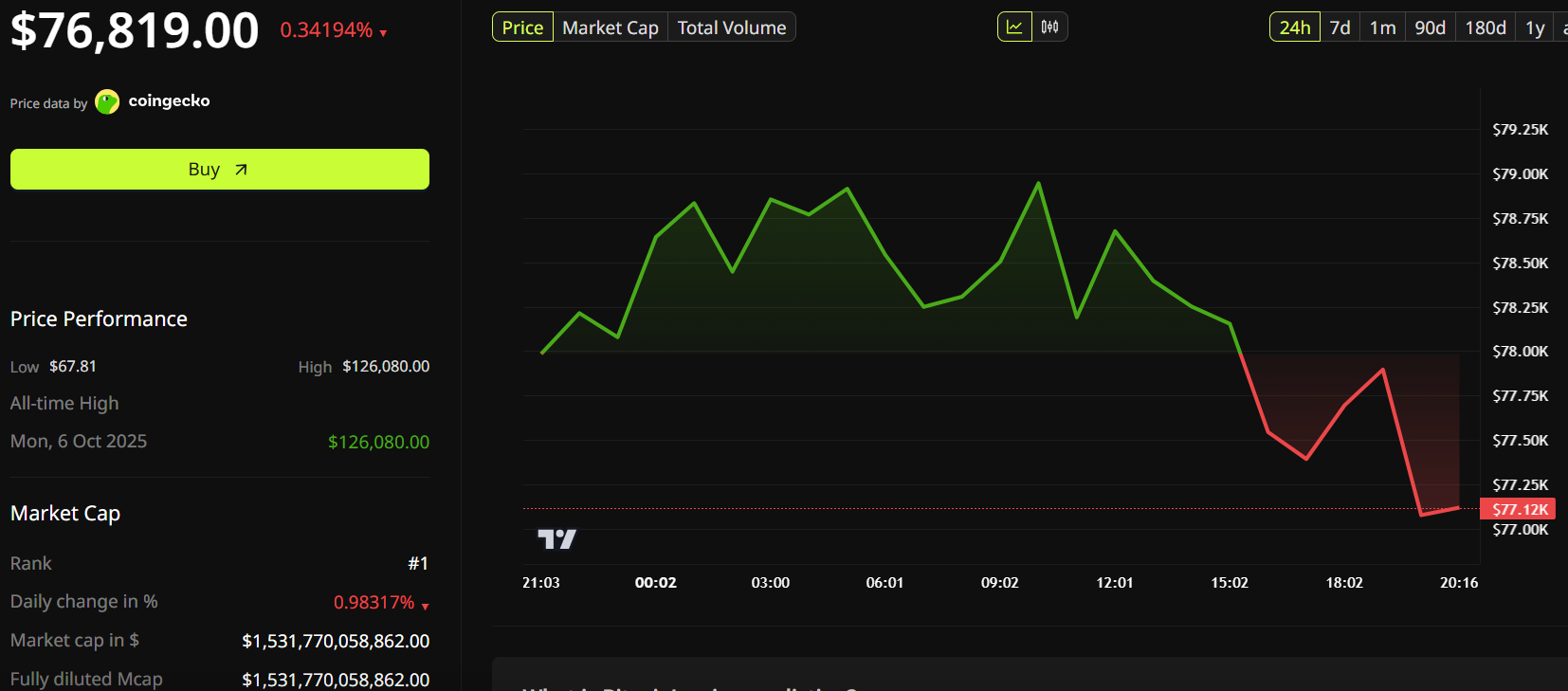
As of this writing, Bitcoin was trading for $76,819, down 0.34% in the last 24 hours.
Read More
- United Airlines can now kick passengers off flights and ban them for not using headphones
- Crimson Desert: Disconnected Truth Puzzle Guide
- All 9 Coalition Heroes In Invincible Season 4 & Their Powers
- How to Get to the Undercoast in Esoteric Ebb
- All Golden Ball Locations in Yakuza Kiwami 3 & Dark Ties
- Mewgenics vinyl limited editions now available to pre-order
- All Itzaland Animal Locations in Infinity Nikki
- Warframe Voruna Prime access begins on April 8 for all platforms, new deluxe cosmetic Warframe skins revealed
- NASA astronaut reveals horrifying tentacled alien is actually just a potato
- Grey’s Anatomy Season 23 Confirmed for 2026-2027 Broadcast Season
2026-02-02 00:11