In the grand theater of financial folly, Binance has taken center stage, dismissing no fewer than five members of its compliance investigations team. Their crime? Daring to uncover over $1 billion in transactions allegedly tied to Iranian entities, as whispered by the ever-reliable Fortune. Ah, the irony of compliance officers being shown the door for, well, complying.
These transactions, a ballet of digital currency, reportedly pirouetted between March 2024 and August 2025. The medium? Tether’s USDT stablecoin, gliding gracefully on the Tron blockchain. A familiar waltz, one might say, in the shadow of sanctions.
USDT on Tron: A Farce in Financial Sanctions
The firings, a dramatic act in this tragicomedy, commenced in late 2025. Among the dismissed were seasoned investigators, their law enforcement backgrounds no match for the whims of corporate loyalty. Fortune, ever the chronicler of misfortune, notes that four additional senior compliance staff have also exited stage left, pushed or pulled, depending on whom you believe.
“Investigators on @binance’s compliance team uncovered evidence that entities tied to Iran had received more than $1 billion through the exchange from March 2024 through August 2025, in potential violation of sanctions laws.”
– Mike Dudas (@mdudas) February 13, 2026
The $1 billion in question, denominated in USDT and sashaying across the Tron network, echoes a pattern as predictable as a Chekhovian plot twist. This same combination has starred in recent sanctions enforcement actions involving Iran-linked activity, a recurring motif in the drama of global finance.
Earlier this month, the US Treasury’s Office of Foreign Assets Control (OFAC) sanctioned two UK-registered crypto exchanges, Zedcex and Zedxion, for their alleged role in processing nearly $1 billion in transactions tied to Iran’s Islamic Revolutionary Guard Corps (IRGC). A billion here, a billion there-soon it adds up to real money.
Today, as the people of Iran bravely take to the streets to demand basic freedoms and economic security, Treasury’s Office of Foreign Assets Control (OFAC) is taking action against the architects of the Iranian regime’s brutal crackdown on peaceful demonstrators, as well as the…
– Treasury Department (@USTreasury) January 15, 2026
According to OFAC and the ever-vigilant blockchain analytics firms TRM Labs and Chainalysis, much of this activity also involved USDT on Tron. A stablecoin, it seems, is only as stable as the hands that wield it.
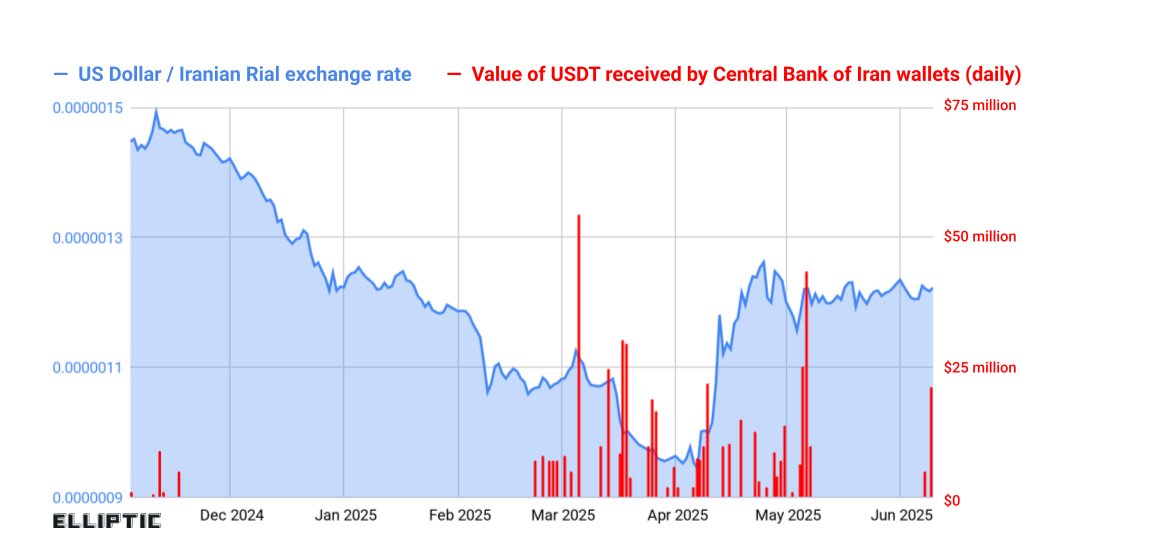
In a separate act of this financial farce, BeinCrypto reported in January that Iran’s central bank amassed over $500 million in USDT, a move likely aimed at securing hard-currency liquidity outside the traditional banking system. Blockchain analytics firm Elliptic quipped that this effectively created a parallel dollar reserve-a shadow treasury, if you will.
Together, these cases paint a portrait of stablecoins, particularly USDT, as the unsung heroes (or villains) of Iran-linked cross-border financial flows. A modern-day tragedy, where the currency of choice is as stable as the geopolitical climate.
Binance, ever the tight-lipped protagonist, has yet to confirm whether these alleged Iran-linked transactions violated sanctions laws. Nor has any regulator announced new enforcement action against the company. The plot thickens, as it always does, in the world of crypto and compliance.
Yet, this episode unfolds against the backdrop of broader scrutiny of stablecoin infrastructure and the role of exchanges in geopolitical sanctions regimes. A drama, indeed, where the stakes are high, and the humor, unintentional.
Read More
- United Airlines can now kick passengers off flights and ban them for not using headphones
- How to Complete Bloom of Tranquility Challenge in Infinity Nikki
- Gold Rate Forecast
- How to Solve the Glenbright Manor Puzzle in Crimson Desert
- Katanire’s Yae Miko Cosplay: Genshin Impact Masterpiece
- All Itzaland Animal Locations in Infinity Nikki
- All Golden Ball Locations in Yakuza Kiwami 3 & Dark Ties
- 8 Actors Who Could Play Blackbeard In One Piece Live-Action Season 3
- All 10 Potential New Avengers Leaders in Doomsday, Ranked by Their Power
- A Dark Scream Theory Rewrites the Only Movie to Break the 2-Killer Rule
2026-02-13 22:36