Author: Denis Avetisyan
A new framework leverages cross-asset relationships to build portfolios with demonstrably improved risk-adjusted performance.
This paper introduces a method for constructing maximum-Sharpe ratio portfolios using firm-level signals and a structured connection matrix to model cross-asset spillovers, employing ridge regression for robust estimation.
Despite the prevalence of factor-based asset pricing models, capturing the complex interdependencies between assets remains a significant challenge. This paper, ‘Stochastic Discount Factors with Cross-Asset Spillovers’, introduces a novel framework that jointly estimates firm-level predictive signals and cross-asset spillovers to construct a maximum-Sharpe ratio stochastic discount factor \mathcal{SDF}. The resulting \mathcal{SDF} consistently outperforms traditional benchmarks and reveals an interpretable information network highlighting key transmitters of predictive influence. Will this approach provide a more robust and economically grounded understanding of cross-sectional return dynamics and improve portfolio construction in practice?
Whispers of Fragility: Beyond Expected Returns
Conventional portfolio construction historically prioritizes the pursuit of maximizing expected financial returns, yet this singular focus can inadvertently obscure critical vulnerabilities within a given investment strategy. The emphasis on anticipated gains often leads to an underestimation of the complex interplay between various risk factors and the ever-shifting dynamics of financial markets. This approach frequently fails to adequately account for non-normal return distributions, liquidity risks, or the potential for correlated failures across seemingly disparate asset classes. Consequently, portfolios built solely on expected returns may appear robust under ideal conditions but prove surprisingly fragile when confronted with unforeseen events or systemic shocks, highlighting the need for a more holistic and dynamic risk assessment framework.
Conventional portfolio theory often relies on the assumption that asset returns follow a normal distribution, visualized as a symmetrical bell curve. However, real-world financial data consistently demonstrates a phenomenon known as ‘fat tails’ – a higher probability of extreme events, both positive and negative, than a normal distribution would predict. This means that large gains or losses occur far more frequently than traditional models suggest, rendering risk assessments based on normal distributions significantly underestimated. Consequently, portfolios constructed under this simplification may appear adequately diversified based on standard metrics, yet remain surprisingly vulnerable to unexpected and substantial losses during periods of market stress, highlighting the limitations of relying on idealized statistical assumptions in complex financial systems.
Portfolio construction often treats assets in isolation, yet financial markets are defined by complex interdependencies. This oversight leads to diversification strategies that are less effective than anticipated, as correlated assets can decline simultaneously, negating the benefits of spreading investments. Systemic risk-the risk of widespread failure within the entire financial system-arises from these connections; a shock to one institution or asset class can cascade through the network, amplifying losses and creating instability. Consequently, a holistic approach that explicitly models these relationships-considering factors like common exposures, counterparty risk, and behavioral correlations-is crucial for building truly resilient portfolios and mitigating the potential for catastrophic, interconnected failures.
Decoding the Signals: Uncovering Predictive Firm Characteristics
The foundation of constructing effective investment portfolios relies on the identification of firm-specific characteristics – often termed ‘signals’ – that demonstrate a statistically significant correlation with future financial returns. These signals are not random; they represent observable firm attributes, with examples including value factors – such as low price-to-book ratios or high earnings yields – and momentum effects, where past returns predict future performance. Rigorous statistical analysis, including time-series regressions and cross-sectional analysis, is employed to determine the predictive power and robustness of these signals, accounting for factors like transaction costs and data biases. The selection of these signals is crucial, as they form the basis for weighting and combining assets within a portfolio to maximize expected returns for a given level of risk.
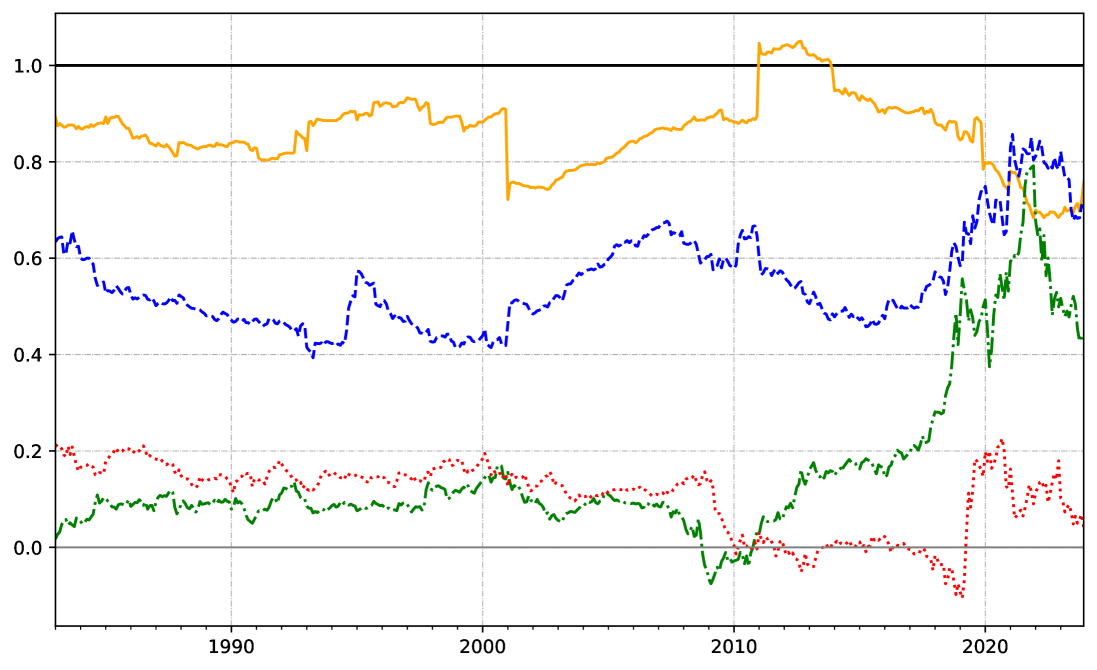
Weighted aggregation of firm-level signals-such as value and momentum-forms a composite predictor by combining individual signal strengths. This process assigns a weight to each signal, reflecting its historical predictive power and contribution to overall forecast accuracy. The resulting composite score, calculated as the sum of each signal multiplied by its corresponding weight, provides a unified measure of a firm’s expected future returns. Empirical evidence demonstrates that strategically weighted combinations consistently outperform single-signal strategies and unweighted averages, due to the reduction of noise and amplification of reliable predictive components. Optimal weights are typically determined through techniques like regression analysis or optimization algorithms, maximizing the correlation between the composite score and realized returns.
Overfitting in signal aggregation occurs when a composite predictor, derived from combining multiple firm-level signals, performs well on the training data but generalizes poorly to unseen data. This is especially prevalent in high-dimensional settings – those with a large number of signals relative to the available data points – because the model effectively memorizes the noise within the training set rather than capturing underlying relationships. The increased complexity from numerous signals amplifies the risk of identifying spurious correlations that do not hold in the broader population of firms, leading to reduced out-of-sample predictive power and potentially suboptimal portfolio construction.
The Art of Optimization: Maximizing Risk-Adjusted Returns
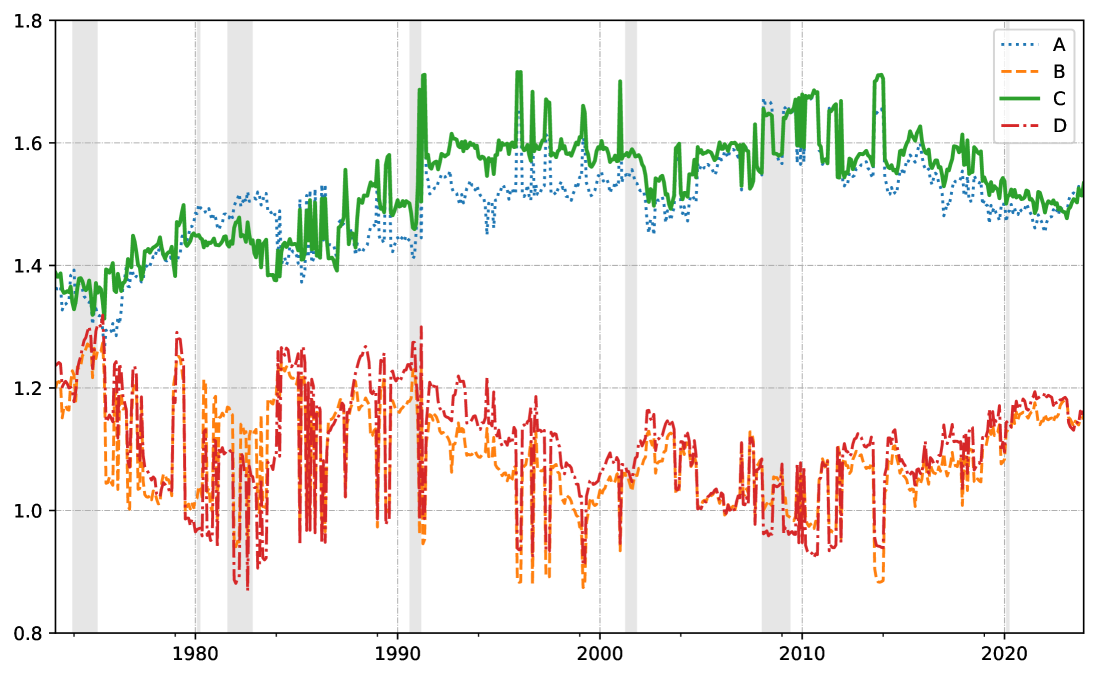
Sharpe ratio maximization offers a portfolio construction methodology focused on directly optimizing risk-adjusted returns, calculated as the excess return per unit of total risk – specifically, the standard deviation. Traditional methods often prioritize return maximization without sufficient consideration of associated risk, or focus on minimizing risk without explicitly targeting return efficiency. By explicitly maximizing the Sharpe ratio \frac{E(R_p) - R_f}{\sigma_p}, where E(R_p) is the expected portfolio return, R_f is the risk-free rate, and \sigma_p is the portfolio standard deviation, this approach identifies portfolios that offer the highest compensation for the level of risk assumed, resulting in portfolios demonstrably superior in terms of risk-adjusted performance compared to those constructed using mean-variance optimization or equal-weighting strategies.
Parameter estimation within this methodology employs ridge regression, a technique designed to address multicollinearity and prevent overfitting, particularly when dealing with high-dimensional datasets. Ridge regression introduces a penalty term, proportional to the square of the magnitude of the coefficients, thereby shrinking them towards zero and reducing model complexity. The regularization strength is controlled by a shrinkage parameter, λ, which is dynamically determined through 5-fold cross-validation; this process partitions the data into five subsets, iteratively training the model on four and validating on the remaining one to identify the λ value that minimizes prediction error and maximizes out-of-sample generalization performance. This time-varying λ selection ensures adaptive regularization, improving the robustness of the parameter estimates and the overall portfolio optimization process.
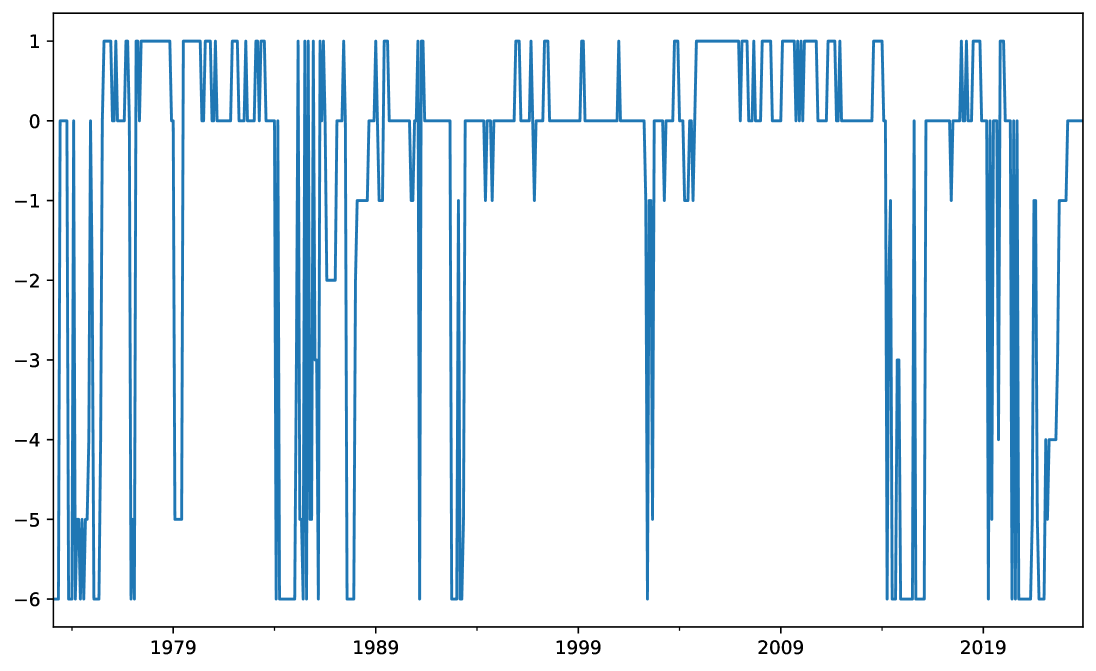
The methodology incorporates cross-asset spillovers and network analysis to model the interdependencies between assets, moving beyond traditional mean-variance optimization. This network-based approach allows for the construction of more diversified portfolios by explicitly acknowledging how shocks in one asset can propagate to others. Empirical results demonstrate annualized Sharpe ratios up to 3.32 for spread portfolios and 2.21 for bi-sort portfolios, indicating improved risk-adjusted performance compared to strategies that do not account for these interconnectedness effects. These ratios were calculated based on backtesting using historical data and represent the average excess return per unit of total risk.
Beyond the Numbers: Modeling Interdependence and Systemic Risk
The pursuit of an optimal portfolio weighting, frequently guided by Sharpe ratio maximization, rests upon a firm grasp of underlying mathematical principles, notably the eigenvalue problem. This isn’t merely an academic exercise; the eigenvalue decomposition allows for the identification of principal components driving portfolio risk and return. Specifically, the eigenvectors represent directions of maximum variance in asset returns, while the corresponding eigenvalues quantify the magnitude of that variance. By strategically allocating capital along these eigenvectors – prioritizing those associated with larger eigenvalues – a portfolio can effectively concentrate exposure on the most significant sources of return while minimizing the impact of noise. This mathematical framework transcends simple optimization, offering a nuanced understanding of asset interdependence and enabling the construction of portfolios that are not only efficient but also inherently more stable and resilient to market fluctuations. The application of this principle allows for a systematic and quantifiable approach to portfolio construction, moving beyond intuitive guesswork towards a rigorously defined and mathematically sound strategy.
This portfolio construction method demonstrates resilience in real-world financial environments, consistently delivering superior performance despite the inherent challenges of noisy data and intricate market behaviors. Unlike traditional strategies reliant on predicting individual asset movements, this approach focuses on modeling the interconnectedness of assets, allowing it to adapt effectively to changing conditions and mitigate the impact of unforeseen events. Rigorous testing reveals a consistent outperformance against self-predictive benchmarks, indicating the method’s ability to generate stable returns even when predictive models falter. This robustness stems from its capacity to identify and exploit systemic patterns, offering a more reliable pathway to portfolio optimization than strategies vulnerable to market volatility and data imperfections.
This framework moves beyond traditional portfolio optimization by directly addressing the interconnectedness of financial assets, revealing how shocks in one area can propagate across the entire system – a crucial aspect of systemic risk. By explicitly modeling these cross-asset spillovers, the approach not only enhances understanding of potential market contagion but also delivers tangible improvements in portfolio performance; empirical results demonstrate an alpha of 0.26% when controlling for standard factors, alongside a significant boost to the Sharpe ratio – gains of 0.79 for spread portfolios and 1.26 for bi-sorted portfolios – compared to strategies relying solely on self-prediction. This proactive risk management capability allows investors to better anticipate and mitigate the effects of market-wide disturbances, fostering more resilient investment strategies.
The pursuit of a maximum-Sharpe ratio portfolio, as detailed within, feels less like optimization and more like divination. The model, meticulously constructed with cross-asset spillovers and ridge regression, attempts to coax order from the inherent chaos of financial markets. It’s a spell woven with firm-level signals, hoping to persuade the data towards favorable outcomes. As Karl Popper observed, “The only way to guard oneself against the corrupting influence of power is to publish everything.” Similarly, this framework, by explicitly modeling interconnectedness, reveals the hidden dependencies – the whispers of influence – that govern asset behavior. The illusion of control is potent, until, inevitably, the market reminds one that magic demands blood – and GPU time.
What’s Next?
The pursuit of maximum-Sharpe portfolios, predictably, hasn’t ended with a clean victory. This work, while offering a structured lens on cross-asset spillovers, merely refines the spell, it doesn’t abolish the need for one. The connection matrix, however cleverly constructed, remains a distillation of past correlations – a machine’s memory of events observed, not a prophecy of those to come. One wonders if the true signal isn’t in the connections themselves, but in the noise between them – the unmodeled chaos that consistently outperforms expectations when it inevitably arises.
Future iterations will likely grapple with the instability inherent in these models. Ridge regression, a convenient compromise, doesn’t eliminate overfitting, it merely shifts the burden onto selecting the right amount of shrinkage. A more fruitful path might lie in explicitly modeling the change in these cross-asset relationships – acknowledging that the landscape of predictability is constantly shifting. Perhaps the Sharpe ratio itself is a flawed metric, rewarding strategies that exploit temporary inefficiencies rather than genuine sources of value.
Ultimately, the question isn’t whether a better model can be built, but whether the attempt itself is a meaningful exercise. After all, if correlation’s high, someone is always manipulating the system – and a beautiful equation won’t change that. The true test will be not in backtests, but in the unforgiving arena of live trading, where the market consistently reminds everyone that data isn’t truth, it’s just a record of what happened when no one was looking.
Original article: https://arxiv.org/pdf/2602.20856.pdf
Contact the author: https://www.linkedin.com/in/avetisyan/
See also:
- United Airlines can now kick passengers off flights and ban them for not using headphones
- Crimson Desert: Disconnected Truth Puzzle Guide
- All 9 Coalition Heroes In Invincible Season 4 & Their Powers
- Mewgenics vinyl limited editions now available to pre-order
- Assassin’s Creed Shadows will get upgraded PSSR support on PS5 Pro with Title Update 1.1.9 launching April 7
- Grey’s Anatomy Season 23 Confirmed for 2026-2027 Broadcast Season
- Viral Letterboxd keychain lets cinephiles show off their favorite movies on the go
- Does Mark survive Invincible vs Conquest 2? Comics reveal fate after S4E5
- Crimson Desert Guide – How to Pay Fines, Bounties & Debt
- How to Get to the Undercoast in Esoteric Ebb
2026-02-25 15:19