In a bold move that would make a Victorian novelist blush, the Aptos Foundation has declared its intention to impose a cap on the supply of APT tokens, a notion so radical it might cause a collective gasp among crypto enthusiasts who still believe innovation is synonymous with infinite inflation. This “structural shift,” as the foundation calls it, aims to tether APT’s supply to the whims of network activity-a concept as revolutionary as suggesting tea should be drunk at room temperature.
The proposed overhaul, currently languishing in the governance approval queue like an overstuffed buffet at a charity gala, promises to slow the issuance of new tokens while ramping up mechanisms to remove them from circulation. Burn protocols and “permanent staking” (a term that sounds suspiciously like a euphemism) are to be expanded, though one wonders if the tokens will be buried in a landfill or simply left on a forgotten Excel sheet.
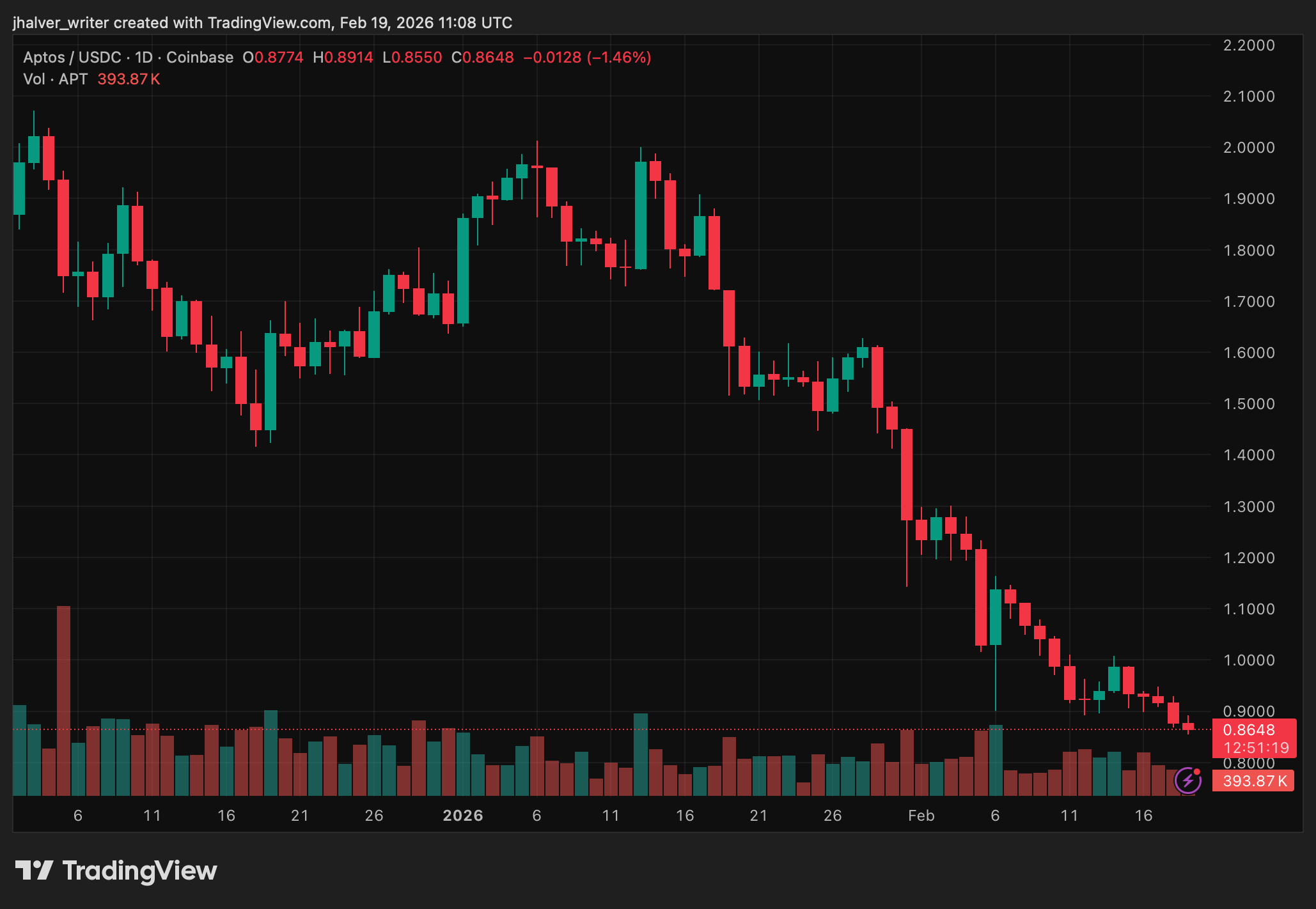
At the time of this announcement, APT was trading near $0.88, a figure so modest it could be mistaken for a tip at a Michelin-starred restaurant. The 4.5% dip, no doubt, reflects investor caution-or perhaps a general sense of existential dread as they ponder the long-term effects of tokenomics changes, which are as easy to predict as the weather in a war zone.
Hard Supply Cap and Lower Emissions: A Tale of Restraint
The centerpiece of this grand experiment is a hard supply cap of 2.1 billion APT tokens, a number chosen presumably because it sounds impressive and slightly less than the population of China. With 1.196 billion already in circulation, the remaining tokens will be issued at a glacial pace, akin to waiting for a blockchain to confirm a transaction during peak hour.
Annual staking rewards, once a lavish 5.19%, are to be slashed to 2.6%, a reduction that would make a monk weep. The redesigned staking model, which may offer higher yields for longer lock-up periods, seems less about rewarding patience and more about ensuring investors forget they ever owned the tokens.
In a gesture of faux generosity, 210 million APT tokens are to be “permanently locked and staked,” a phrase that conjures images of tokens being handcuffed and stored in a vault. Whether this bolsters network security or merely adds a layer of bureaucratic theater remains to be seen.
Burn Mechanisms: The Art of Letting Go
Transaction fees, already burned with the zeal of a pyromaniac, are set to become even more costly, though the foundation assures us stablecoin transfers will remain “extremely low-cost”-a promise as reliable as a snowstorm in the Sahara.
Higher on-chain activity, driven by “fully on-chain trading platforms” (a concept as clear as a moonbeam through a fog), is expected to accelerate burns. One imagines tokens vanishing like confetti at a blockchain funeral, though the exact cause of death remains undisclosed.
The foundation is also toying with performance-based grants and a potential buyback program, initiatives that sound suspiciously like desperate attempts to appear proactive without actually doing anything meaningful.
What the Shift Means for Investors
For investors, this overhaul introduces a new economic narrative: lower short-term yields, but potentially higher long-term scarcity-if the network’s adoption can be coaxed from the doldrums. The timing, coinciding with the conclusion of a major token unlock cycle in October 2026, is either a masterstroke of strategic planning or a coincidence as elegant as a poorly executed Ponzi scheme.
Whether this strategy succeeds hinges on governance approval and the ecosystem’s ability to grow without collapsing under its own weight. But the proposal does highlight a worrying trend: blockchain networks now prioritize tokenomics design over actual technology, much like a chef who obsesses over the menu while the kitchen burns down.
Cover image from ChatGPT, APTUSD chart on Tradingview
Read More
- United Airlines can now kick passengers off flights and ban them for not using headphones
- All Itzaland Animal Locations in Infinity Nikki
- Katanire’s Yae Miko Cosplay: Genshin Impact Masterpiece
- Crimson Desert: Disconnected Truth Puzzle Guide
- How to Get to the Undercoast in Esoteric Ebb
- All Golden Ball Locations in Yakuza Kiwami 3 & Dark Ties
- BloxStrike codes (March 2026)
- How to Complete Bloom of Tranquility Challenge in Infinity Nikki
- 6 Ways Invincible Season 4’s Hell Episode Rewrites The Comics
- Superman/Spider-Man #1 Review: Bigger DC-Marvel Crossovers Teased
2026-02-20 00:14