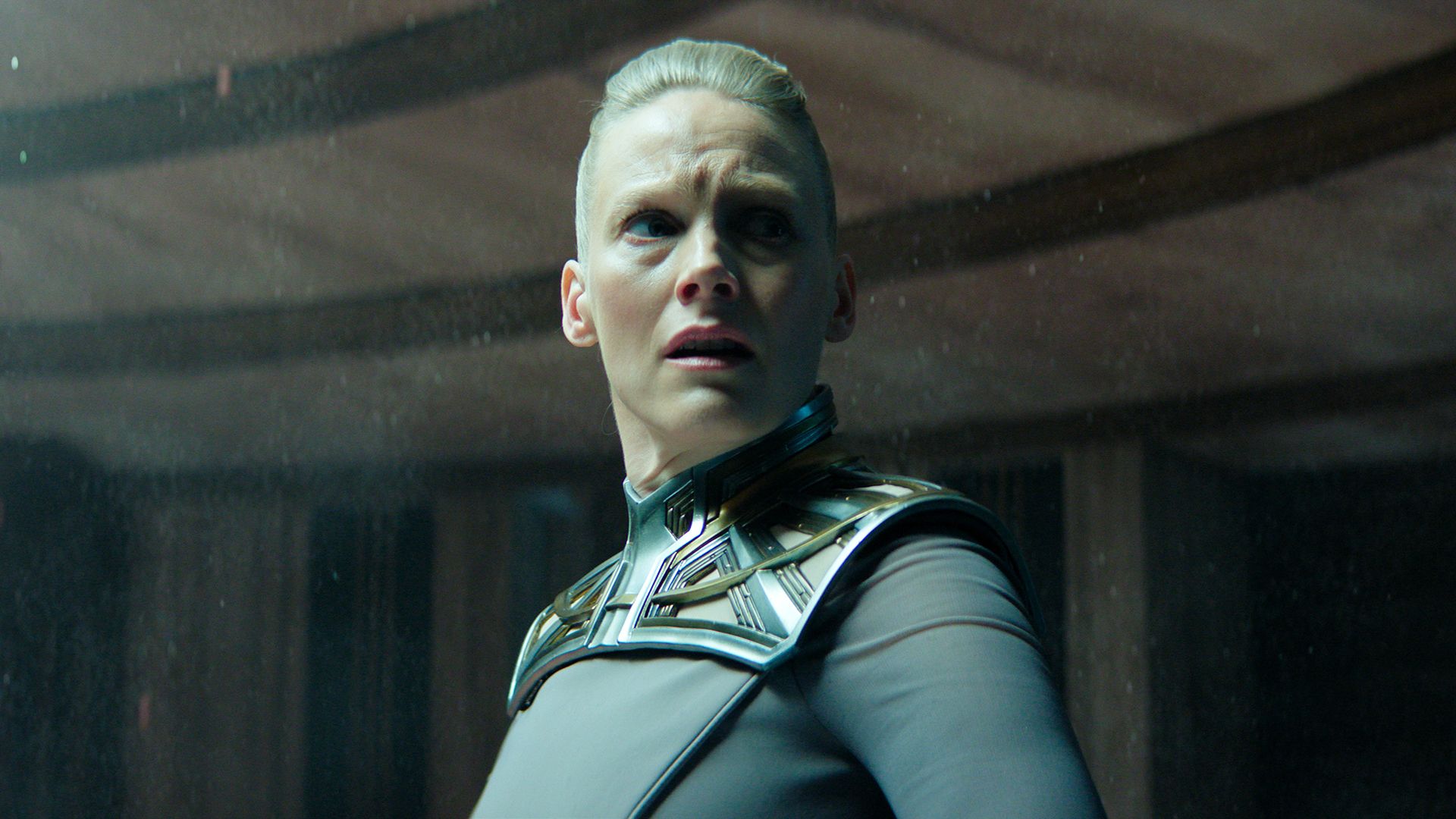
Isaac Asimov’s science fiction novels are incredibly influential, and his Foundation series is considered a classic. For years, filmmakers tried and failed to bring the complex, multi-character story—spanning centuries and numerous plotlines—to the screen. Many believed it was impossible, even as recently as 2009. Finally, Apple TV+ took on the challenge, creating a ten-episode series. However, production faced delays due to cast and crew changes, as well as the COVID-19 pandemic, before the first season premiered in late 2021.
Apple’s adaptation of Isaac Asimov’s Foundation has exceeded expectations, particularly with Seasons 2 and 3 earning widespread acclaim. Even the first season was important, as it cleverly shifted the focus from Asimov’s emphasis on ideas to a more character-driven story. The show’s continued success over the past four years suggests a solution to a major challenge in science fiction television: how to make complex, abstract concepts into stories people can connect with.
Asimov’s Concept-Driven Foundation Resisted Early Adaptation
Isaac Asimov’s Foundation series grew far beyond the initial three novels published between 1951 and 1953. Due to their success, Asimov added both prequel and sequel books to the story. The series has consistently been recognized as one of the best science fiction series ever written, even winning awards as recently as 2012 when the trilogy and the first book each received prizes for being the best 20th-century SF novel and novelette.
The story has a particular appeal, but that same quality also made it difficult to adapt into a movie for years. Science fiction in the 1940s and 50s was primarily found in popular, but often considered lowbrow, magazines. While stories like Flash Gordon and Amazing Stories were widely read, they didn’t heavily focus on scientific concepts beyond simply using futuristic settings.
Isaac Asimov followed, bringing incredibly complex ideas that helped establish science fiction as a major literary force. Surprisingly, what became his famous Foundation series initially appeared as shorter stories and novellas in the inexpensive pulp magazine, Astounding Science-Fiction. Publishers recognized the potential, and Asimov’s vision evolved into the full-length novels we know today—not including the later additions published many years afterward.
The story was first adapted for radio by the BBC in 1973, as an eight-part drama. This version needed some changes to the original story, especially to the order of events. In 1998, New Line Cinema tried to make a film, but spent over a million dollars on a project that was ultimately abandoned when the studio focused on The Lord of the Rings. The rights to adapt Foundation for the screen changed ownership several times before landing with Skydance Television in 2017.
Adapting Isaac Asimov’s Foundation had been difficult for years, but the early 2020s felt like the right moment for a TV series. The rise of high-quality, in-depth television allowed the complex story to unfold naturally, at a pace that respected its original ideas. Audiences, having enjoyed scientifically accurate and thought-provoking shows like The Expanse, Minority Report, The Martian, Arrival, and the initial seasons of Westworld, were ready for a series with real scientific depth.
It wasn’t simply the complex science – or, more accurately, the incredibly complicated math – behind Asimov’s concept of psychohistory. He later felt ‘psychosociology’ would have been a more precise name, though the core idea stays the same. Psychohistory can predict the overall direction of humanity using math, but it doesn’t work when trying to forecast the actions of an individual. This creates a challenge for stories told through visuals, which often focus on characters and their decisions.
One of the biggest challenges in portraying the history of Asimov’s Foundation series is the way the story jumps forward in time, often skipping over generations of characters. Entire groups of people influence history during their lives, but are then replaced by new characters centuries later. The story doesn’t follow a single main character, and most of the characters aren’t particularly emotionally engaging. While the later books explore Hari Seldon’s story more fully, these additions seem intended to represent Asimov’s own thoughts and ideas through a fictional persona.
Asimov’s characters primarily exist to explore his big ideas – things like science, war, and society – all of which connect to the unfolding of Seldon’s Plan. While good storytelling requires characters with depth and interesting histories, and conversations that go beyond just facts and theories, the original Foundation lacked these dramatic elements. This, combined with a relative lack of action, made adapting the story for the screen a significant hurdle.
The growing popularity of complex, ongoing TV shows, combined with viewers being open to new takes on familiar stories, created the perfect opportunity for Apple TV to release a program that has consistently impressed both reviewers and audiences.
Apple TV Reframed Foundation’s Abstraction into Character-Driven Drama
Apple TV+’s adaptation skillfully translates Asimov’s complex ideas into a compelling drama. Because the concept of psychohistory works best with large populations, the show cleverly connects it to powerful families and organizations that endure through time. This approach maintains the author’s grand scope of history while grounding the story in relatable characters and institutions for viewers.
The Cleonic Dynasty, featured in the story, perfectly illustrates this approach. Unlike Asimov’s Galactic Empire, which fell due to faceless bureaucracy and largely unimportant emperors, Foundation presents a powerful, unified empire. This is achieved through the clones of Emperor Cleon I – Brother Day, Brother Dusk, and Brother Dawn – who rule as a single entity and significantly influence the predicted course of history.
Audiences generally need characters to root for, and this series realized it needed a few key figures to connect with. While Hari Seldon and Gaal Dornick weren’t originally intended to be the emotional center of the story, the show’s creators understood the importance of having those connections, and developed their characters in surprising ways. Like the books, many other characters appear and disappear, but the series also expands on the cast.
The series delved deeply into the complexities of human feelings and also became much more scientifically sound than Asimov initially envisioned. Because the author was more interested in how societies and politics developed, the books didn’t focus heavily on technology. The primary energy source throughout the galaxy relied on controlling atoms, a concept inspired by the fascination with atomic power in the 1950s.
While staying true to the spirit of Isaac Asimov’s original Foundation series and honoring his vision, the new adaptation had to modernize its technology for a contemporary audience. Cloning, a concept widely discussed today, is a key example – the series explores the frightening implications of a powerful, unethical leader having access to such technology. The show uses cloning narratively to represent the societal stagnation that Hari Seldon predicted.
Recently, there’s been a lot of talk about uploading our minds to computers, with many tech leaders speculating about its possibilities. Similarly, cryonics – preserving bodies at extremely low temperatures – has gained attention, and some well-known people are already using these services. However, it’s still uncertain whether either of these methods can actually extend life, or what it would even be like to exist as a digital consciousness.
In Foundation, complex ideas stand in contrast to the ruling family. As long as a Cleon remains in power, Hari Seldon and Gaal Dornick will continue to exist. The true nature of Hari Seldon is a mystery—he began as a digital mind that somehow developed a physical body. However, both characters have used cryosleep to extend their lives. The story also features many other advanced technologies, such as faster-than-light travel, personal force fields, and the ability to reshape entire planets.
Asimov Would Have Likely Praised the Foundation TV Series
Today’s dedicated fan communities often get extremely enthusiastic, but Isaac Asimov didn’t see his Foundation series as a perfect, untouchable work. He actually changed and updated the story in his later novels, even correcting earlier mistakes – and he was quick to point those mistakes out himself. He believed storytelling should constantly evolve, not be set in stone, and the new show embraces that same idea.
As a longtime Asimov fan, I was thrilled to see how Foundation really brought everything together, especially when it connected to the Galactic Empire storyline. It felt like Apple TV+ wasn’t just adapting one book, but drawing from all of Asimov’s work. Little details, like Demerzel being revealed as R. Daneel Olivaw and the presence of robots, showed a real respect for the author’s overall vision. It’s clear they’re aiming to build a complete Asimov universe, and I’m here for it!
Instead of trying to perfectly copy the original stories, the show proves that complex ideas can be adapted in a compelling way without sacrificing depth. Apple’s Foundation has set a new standard for science fiction adaptations, proving they can be both thought-provoking and emotionally resonant. And science fiction as a whole continues to improve.
Read More
- United Airlines can now kick passengers off flights and ban them for not using headphones
- 15 Lost Disney Movies That Will Never Be Released
- All Golden Ball Locations in Yakuza Kiwami 3 & Dark Ties
- Best Zombie Movies (October 2025)
- Every Major Assassin’s Creed DLC, Ranked
- These are the 25 best PlayStation 5 games
- All Final Fantasy games in order, including remakes and Online
- How To Find The Uxantis Buried Treasure In GreedFall: The Dying World
- What are the Minecraft Far Lands & how to get there
- Adolescence’s Co-Creator Is Making A Lord Of The Flies Show. Everything We Know About The Book-To-Screen Adaptation
2026-01-15 05:38