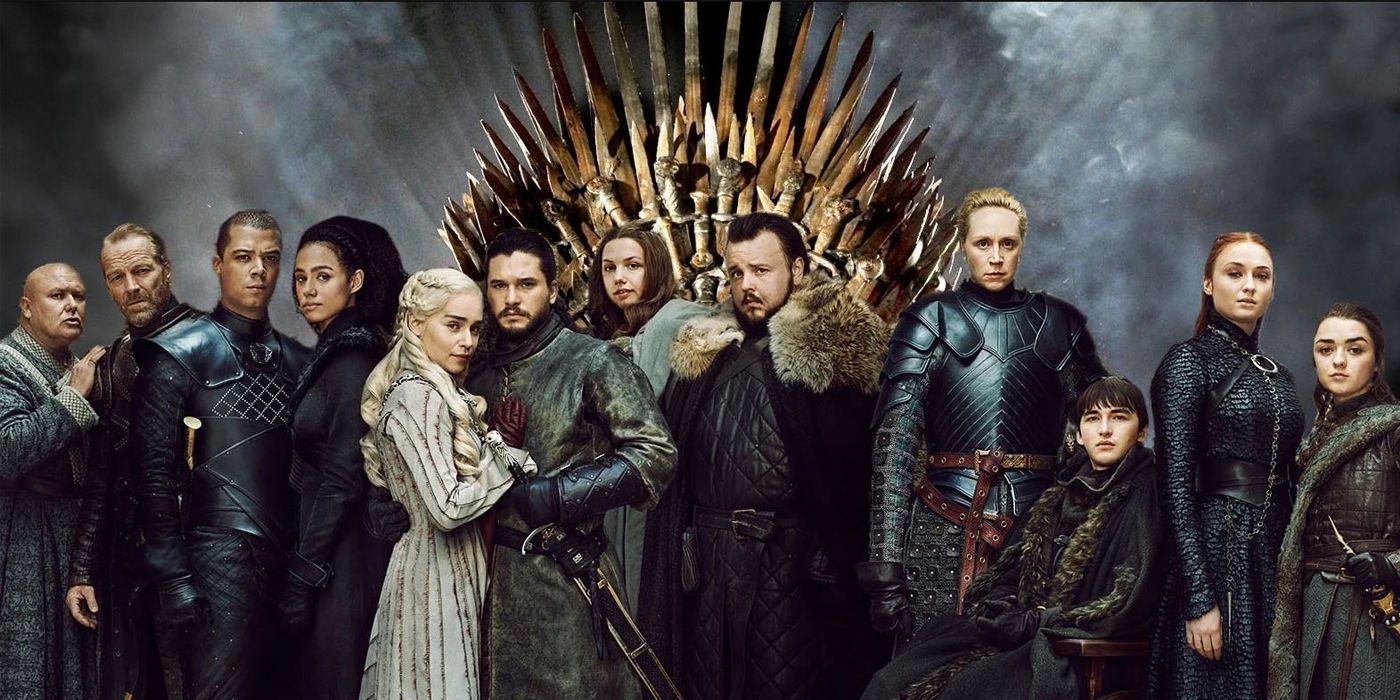
The show was full of fantastic characters who kept viewers engaged for nine seasons, with a memorable cast of both heroes and villains. Many fans will always remember characters like the clever Tyrion Lannister, the brutally cruel Ramsay Bolton, and the delightfully sharp Olenna Tyrell.
Although the acting in Game of Thrones was consistently excellent, a few characters didn’t add much to the story and were even frustrating to watch. Some storylines and key scenes centered around these characters, leaving many fans confused and questioning their purpose.
Harry Strickland Is a Glorified Extra With an Unspectacular Ending
Throughout seasons 7 and 8, the Golden Company was frequently mentioned, building anticipation for their arrival. Cersei ultimately hired them to bolster her forces against Daenerys. After a deceptive maneuver where Euron pretended to return to the Iron Islands, he unexpectedly reappeared in King’s Landing with the famed Golden Company, led by Captain Harry Strickland as portrayed by Marc Rissmann.
The leader speaks briefly with Cersei upon his arrival, and later addresses his troops before the city gates. Shortly after, Daenerys and Drogon break through the walls, quickly destroying the army, though Strickland manages to survive for a short time.
Surrounded by enemies – the northern army, the Dothraki, and the Unsullied – Strickland tried to escape, but Grey Worm fatally stabbed him. Ultimately, Strickland was a minor character with little impact on the story.
Kinvara’s Mysterious Character Arc Goes Nowhere
Ania Bukstein plays Kinvara, a powerful priestess from the city of Ashai. She arrived in Mereen at Tyrion’s request, as he was serving as Daenerys’s advisor while she was away. Daenerys had flown off on her dragon, Drogon, to escape attacks by the Sons of the Harpy. Tyrion hoped Kinvara, as a Red Priestess, could help convince the people of Mereen to support Daenerys. Mereen is located on the continent of Essos, where many people worship the Lord of Light.
Kinvara’s arrival suggested a dramatic new direction for the story, as she declared Daenerys to be the person destined by the Lord of Light. Varys, who was there, questioned this, reminding everyone that Melisandre had previously made a false prediction about Stannis. Kinvara didn’t directly answer, instead implying she knew a secret about a painful event from Varys’s childhood. This revelation clearly disturbed Varys, making him uncomfortable.
Kinvara admits she understands the message from the flames, but refuses to share it. While many expected this to be important later in the story, it turned out to be a dead end. Ultimately, neither Varys nor the viewers ever learned what the voice actually said, making the entire scene pointless.
Rickon Was The Adorable Stark Boy Who Became a Plot Device
Art Parkinson played Rickon Stark, the youngest of the Stark kids, and was very cute when we first met him on the show. While he was a part of the series, the writers never really found a good way to give him a meaningful story.
Rickon Stark disappeared after being left with Osha and his brother, Bran. He didn’t reappear until Smalljon Umber captured him and delivered him to Ramsay Snow. This long absence led many viewers to forget about his character.
In the episode, Rickon serves only to provoke Jon Snow. Ramsey sends him into battle as bait, then kills him with an arrow, eliminating another Stark from the power struggle.
Tommen Baratheon Died as a Sweet but Utterly Useless King
Tommen Baratheon, played by Dean-Charles Chapman, was a kind person, but he wasn’t a strong ruler. He unexpectedly became king after his brother Joffrey’s death and wasn’t ready for the responsibility. After his grandfather Tywin died, Tommen was left vulnerable and easily manipulated by his mother, Cersei, and his wife, Margaery, who both exploited his trusting nature.
When both women are imprisoned by the Faith Militant, Tommen is paralyzed and doesn’t intervene. Even with the Kingsguard, soldiers, and royal authority at his disposal, he lets the High Sparrow control the situation. After Cersei’s public shaming, Tommen apologizes, but quickly falls back under the High Sparrow’s influence.
Margaery acts as if she has superior understanding and convinces Tommen to rely on the High Sparrow. Tommen consistently struggles to make his own decisions as king, and this ultimately leads him to take his own life.
Doran Martell Proved to Be a Smart Ruler But Had a Lack of Foresight
Alexander Siddig plays Doran Martell, the ruler of Dorne. Viewers first encounter him when Jaime and Bronn attempt to secretly enter Dorne to retrieve Myrcella. This happens after Cersei receives a threatening message – her daughter’s necklace – suggesting danger for Myrcella.
As a big fan of intricate political dramas, I find Doran really interesting. He seems smart and genuinely wants to avoid conflict, which is a surprise considering the usual Dornish temperament. But honestly, I’m frustrated by his lack of vision. Ellaria Sand, his brother’s former lover, is obviously making moves to grab power, and Doran just… lets it happen. It’s like he can’t see what’s right in front of him, and it’s driving me crazy as a viewer!
Rather than punishing her by exiling her and removing her power, he lets the problem continue, which ultimately leads to his own death. Tragically, his son, Tristane, also dies as a result.
Bronn Was a One-Dimensional Hustler With Unjustified Rewards
In the fourth episode of the first season, he’s introduced as a mercenary hoping to climb the social ladder. He quickly won over viewers with his clever conversations with Tyrion and Jaime, but over time, the character became predictable. Most of his scenes focused solely on asking for more payment or lamenting the rewards he hadn’t received.
Though he traveled extensively with Tyrion and Jaime, Bronn doesn’t seem to form any real bonds with them. In the final season, episode four, he shows up at Winterfell with a crossbow, initially tasked with killing Jaime and Tyrion. However, he uses the crossbow as leverage to negotiate for Highgarden, a valuable castle, and Tyrion surprisingly agrees to the deal, even though he doesn’t have the power to make that decision.
He then goes into hiding, likely waiting for the war over Westeros to end. In the series finale, Bronn unexpectedly becomes both Lord of the Reach and Master of Coin, a development that felt like a reward for fans rather than a logical plot point.
The Waif Was a Spiteful Combat-Robot For No Reason at All
Faye Marsay plays The Waif, a skilled assassin and Jaqen H’ghar’s assistant, who crosses paths with Arya Stark while Arya is training with the Faceless Men in Braavos. Throughout the Braavos scenes, it becomes clear that Arya isn’t cut out to become ‘No One’ – a member of the Faceless Men who has abandoned their identity.
The Waif’s intense dislike of Arya is never fully explained, which makes it seem extreme. Throughout Game of Thrones, she appears to enjoy hurting Arya simply for the sake of it.
The Waif relentlessly pursues Arya through the city, moving like a robotic assassin similar to the Terminator. She’s a frustratingly simple character, seemingly designed to be irritating without a clear purpose.
Bran Stark Suffered the Most From Game of Thrones’ Later Seasons
Bran Stark, played by Isaac Hempstead Wright, starts as a compelling character, but his story becomes odd as the series progresses. After becoming the Three-Eyed Raven, he feels distant and unengaging. Surprisingly, the previous Three-Eyed Raven seemed to have more personality and feeling than Bran does.
During the fight with the Night King, Bran doesn’t actively participate in a meaningful way. Although he can control animals from afar, he doesn’t try to influence the Night King himself, or even take control of Viseryon, the ice dragon. He simply uses ravens to keep track of the Night King’s movements, offering no further assistance.
When Tyrion offers him the throne, the character famously responds with a question – “Why did I come all this way?” This surprised viewers because he had earlier stated he was incapable of ruling anything.
The Sand Snakes Are a Bratty Trio Nobody Missed After Their Demise
The Dorne plotline was a major letdown overall, and the Sand Snakes – Tyene, Obara, and Nymeria, Oberyn’s daughters – were the worst part of it.
Despite being skilled fighters, these three characters aren’t very intimidating because their personalities are so irritating. They constantly argue and compete with each other like children, which is difficult to watch. Because the show Game of Thrones doesn’t give them any background stories, it’s hard for viewers to feel any sympathy for them.
Euron’s attack on Yara’s ship results in the deaths of Obara and Nymeria, which were intended to be impactful, but because these characters weren’t well-developed, their deaths don’t resonate emotionally with viewers.
Euron Greyjoy Was Transformed Into a Cartoonish Pirate With an Insufferable Personality
Pilou Asbaek portrays Euron Greyjoy as a truly frightening and arguably the most dangerous man in Westeros. The Euron Greyjoy from the books is a menacing pirate fascinated by dark magic. He’s known for drinking a potion called Shade of the Evening, which turns his lips blue. Combined with his pale skin and dark beard, and completed by his distinctive leather eyepatch, he’s a striking figure. He’s nicknamed ‘Crow’s Eye’ – partly because of a damaged, dark eye he conceals, and partly for his bright blue, smiling eye that mirrors the color of his lips.
Though his brothers hate him, Euron possesses a strange charisma that attracts a diverse and unusual group of followers. He’s skilled at manipulating people by preying on their vulnerabilities and can break anyone’s spirit. Book readers were eager to see Euron brought to life on screen, but were disappointed to find the show’s portrayal differed significantly from the character they knew.
Euron Greyjoy often felt more like a silly Disney villain – arrogant and with overly dramatic lines – than a genuine threat. Despite causing problems for Daenerys, he wasn’t frightening or enigmatic, just irritating. The showrunners, Benioff and Weiss, seemed to aim for a “medieval rockstar” vibe, which missed the mark and disappointed many viewers.
Found an error? Send it so it can be corrected.
Read More
- United Airlines can now kick passengers off flights and ban them for not using headphones
- Crimson Desert: Disconnected Truth Puzzle Guide
- All 9 Coalition Heroes In Invincible Season 4 & Their Powers
- Mewgenics vinyl limited editions now available to pre-order
- How to Get to the Undercoast in Esoteric Ebb
- Grey’s Anatomy Season 23 Confirmed for 2026-2027 Broadcast Season
- NASA astronaut reveals horrifying tentacled alien is actually just a potato
- All of the confirmed AAA stars in WWE 2K26
- Businessman debunks AI art claims after backlash over Scottish mural
- The Original Resident Evil is Finally Available on Steam
2026-03-15 07:11