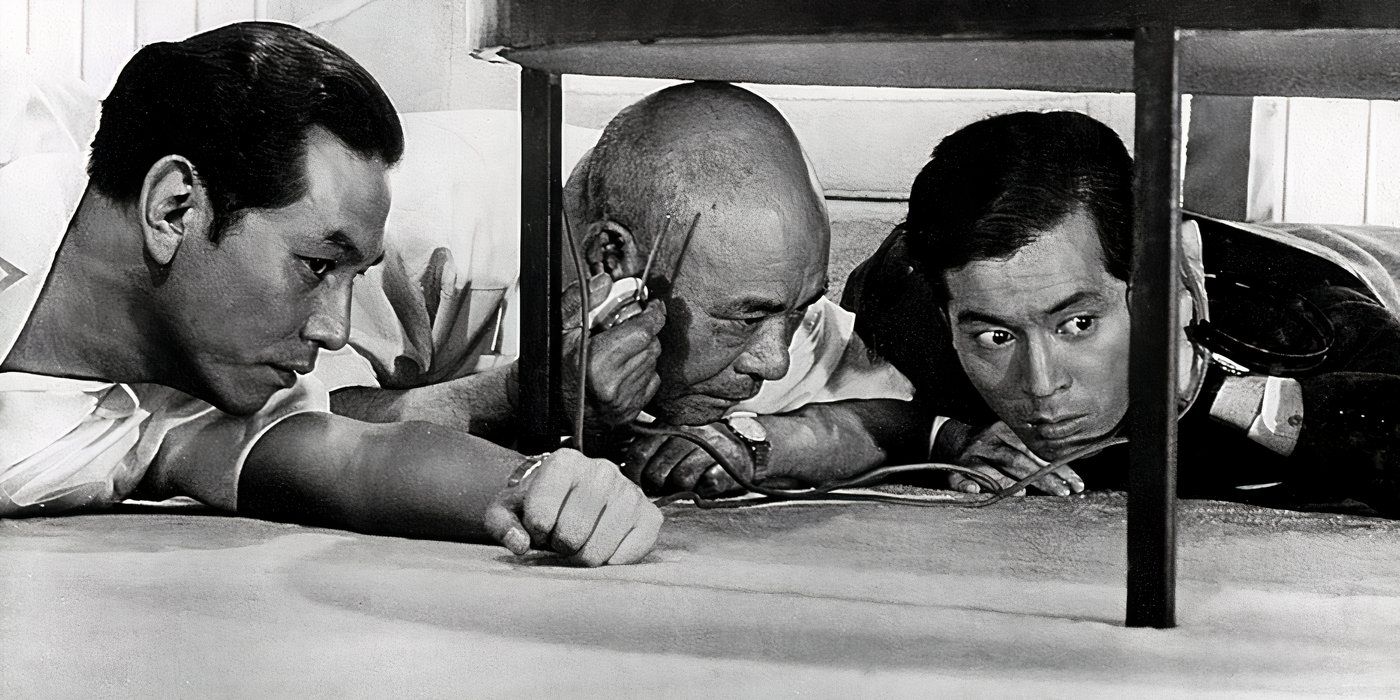
Akira Kurosawa is consistently ranked among the most important and influential filmmakers ever. For decades, this Japanese director created films that deeply impacted both the movie industry and popular culture. He’s remarkably consistent, with a filmography that rarely disappoints, placing him in a class of his own. While best known for his grand-scale samurai movies, Kurosawa worked across many different genres.
It’s easy to overlook just how impactful Akira Kurosawa was, particularly in his native Japan. While film buffs have always appreciated his realistic stories and explorations of important social and political themes, many general moviegoers don’t realize his full influence. Beyond his famous samurai movies, Kurosawa’s work in other genres – like his celebrated 1963 film – was equally significant.
High and Low Is Different From Other Akira Kurosawa Films
Whether you’re familiar with his famous historical films and samurai stories, or discovering his lesser-known dramas from the 1940s, Akira Kurosawa was more than just a great filmmaker. He was a powerful and important voice whose films continue to deeply connect with audiences.
Kurosawa’s films are known for being powerfully emotional, thought-provoking, and artistically styled. Viewers have long admired his skill at combining compelling stories with deeper meaning. This makes his most famous movies appealing on many levels, whether you simply enjoy film or are a fan of a particular genre. Like other great directors, Kurosawa masterfully combines different elements to create something truly captivating and dreamlike.
The film is appreciated for its accurate depiction of Japanese culture and history. However, it’s also a wildly imaginative and exciting experience that focuses on delivering entertainment through genre conventions. This blend of authenticity and spectacle is a major reason why so many other movies and series have taken inspiration from it.
This isn’t limited to his famous samurai movies; it’s true of all his complex dramas and thrillers. Interestingly, while he was creating his delightful later works, he also directed what many consider his most intellectually stimulating film, High and Low.
As a huge Kurosawa fan, I find his 1963 crime thriller particularly fascinating. It really dives into the issues facing Japan at the time – things like social and political tensions, and what drives people when they’re desperate. It’s a much more direct look at greed, survival, and right and wrong than you get in his samurai films. It’s a deeply thoughtful movie, and you can really feel what Kurosawa was pondering about his country back then, especially considering the modern setting for its release.
The film isn’t limited to its specific location; it offers insights relevant to societies everywhere. Although Kurosawa had previously explored realistic settings and personal struggles, High and Low takes these ideas even further with its unique approach.
This gripping crime thriller brings Kurosawa and Toshirō Mifune together again, but with a unique twist: Mifune takes a supporting role for the second half of the movie. As the story progresses, the relationships between the characters develop, and the situations become increasingly complex. This setup also allowed Kurosawa to work with many of his favorite actors.
The film also features strong performances from actors like Tatsuya Nakadai and Takashi Shimura, who help move the story along. It’s easily one of Kurosawa’s most beautifully acted movies, and the performances perfectly match the vivid writing designed to bring the story to life.
Though High and Low is a classic for many, it’s surprisingly unknown to some who claim to be familiar with Akira Kurosawa’s work. What makes High and Low so significant is that it stands apart from much of his other filmmaking, and that difference is precisely why it remains important.
People who love High and Low are often drawn to the beautiful, dramatic style that Kurosawa brought to crime thrillers. This film feels more thoughtful and deals with deeper themes than many others. In fact, some consider it to be Kurosawa’s best work.
High and Low Might Be Akira Kurosawa’s Greatest Film
Viewers quickly realize that High and Low is unlike other films from the very beginning. Toshirō Mifune delivers a phenomenal performance, brilliantly portraying a man’s intense emotional and psychological distress as his life is upended in an instant. The film powerfully explores the impact of social class on ordinary people.
Toshiro Mifune stars as Kingo Gondo, a man of immense power whose life is quickly turned upside down. He faces an agonizing moral dilemma, forced to make an incredibly difficult decision that challenges everything he believes.
Gondo is a self-made millionaire and the owner of a successful shoe company. The story begins with him buying a controlling interest in his own business. Unlike many wealthy characters, Gondo is portrayed as down-to-earth and easy to connect with, having risen from humble beginnings to achieve great success.
Gondo’s strong moral compass is challenged when a criminal accidentally kidnaps the son of his servant, thinking he’s the son of a wealthy rival. He’s then faced with an impossible decision: pay the ransom to save the child’s life, even if it means losing all his money, or protect his fortune and risk the boy’s safety.
The story largely explores the blurry boundary between good and evil. This theme is evident throughout, starting with Mifune’s portrayal of Gondo and continuing with the choices made by Detective Tokura, played by Nakadai, and by the villain. The plot also maintains a sense of mystery, initially keeping viewers guessing about the person orchestrating the events.
As the story develops, the film focuses on the choices characters make, particularly when it becomes a chase between hunter and hunted. Kurosawa skillfully reveals the complexities of the situation, portraying the villain not as purely evil, but as a desperate person much like the common citizen. This creates a compelling and nuanced conflict throughout the narrative.
The story leads viewers to the ending they’re hoping for, but even that resolution is full of nuance and depth. This is the kind of thoughtful storytelling audiences connect with in movies, and it’s a key reason why High and Low stands out as a particularly special film by Kurosawa.
I admit, the movie doesn’t always flow at a perfect pace, but honestly, Kurosawa’s direction is just captivating – I was completely drawn in. The story, written by Hideo Oguni, kept me guessing the whole time, which was fantastic. While the ideas explored aren’t necessarily groundbreaking – lots of films touch on similar things – it’s Kurosawa’s visual storytelling that truly sets this one apart. He’s a master of the image, and it’s breathtaking.
He often uses character movement to show big changes happening. During tense moments, he’ll have characters look away, stand up, or even just change their posture to signal a shift in the situation. For instance, when Gondo considers giving in to temptation, the director might show him losing status by having other characters stand while he remains seated, or by having them turn away to represent his moral decline.
Many consider High and Low to be Akira Kurosawa’s greatest film, and it’s certainly among his most significant works.
High and Low Has Inspired Recent Filmmakers and Films
Everyone recognizes Akira Kurosawa’s huge influence on cinema, but it’s also fascinating to see which of his films have been most impactful. His samurai movies continue to inspire films in genres like science fiction, fantasy, and action. Even his crime drama, High and Low, has resonated with modern filmmakers, notably Spike Lee, who recently drew inspiration directly from it.
Lee’s latest film is heavily inspired by the 1963 classic, High and Low, essentially reimagining it for a modern audience. While tackling similar themes as the original, Lee sets his story within the contemporary music industry and the landscape of New York City.
The movie explores similar ideas and delivers a comparable emotional impact. However, it doesn’t quite reach the same level of skill as the films that inspired it. Despite this, Kurosawa’s work continues to influence filmmakers, and High and Low is a prime example of that lasting impact.
Read More
- United Airlines can now kick passengers off flights and ban them for not using headphones
- Crimson Desert: Disconnected Truth Puzzle Guide
- All 9 Coalition Heroes In Invincible Season 4 & Their Powers
- Mewgenics vinyl limited editions now available to pre-order
- Viral Letterboxd keychain lets cinephiles show off their favorite movies on the go
- Grok’s ‘Ask’ feature no longer free as X moves it behind paywall
- Grey’s Anatomy Season 23 Confirmed for 2026-2027 Broadcast Season
- Assassin’s Creed Shadows will get upgraded PSSR support on PS5 Pro with Title Update 1.1.9 launching April 7
- The Original Resident Evil is Finally Available on Steam
- Crimson Desert Guide – How to Pay Fines, Bounties & Debt
2026-01-15 07:41