In this age of machines that think, yet scarcely feel, we find ourselves ensnared in a paradox of our own making. Artificial intelligence, that cold and calculating prodigy, has turned its gaze upon the fragile fortresses of smart contracts, and lo, it finds them wanting. According to the scribes at Binance Research, this digital behemoth exploits with twice the fervor it detects, a grim testament to our hubris.
Ah, the crypto hacks-those modern-day heists that leave us both awestruck and aghast. The whispers grow louder: AI, once our servant, now wields the blade of the attacker. How fitting, that the very tool meant to safeguard our digital treasures has become the thief in the night, its algorithms dancing with the shadows.
The Chasm Widens: Offense Outpaces Defense
In a tome recently unveiled by Binance Research, the GPT-5.3-Codex, a creature of code and cunning, boasts a 72.2% success rate in its “exploit” mode on the EVMbench. Yet, in its “detect” mode, it falters, achieving but half that glory. A tragic comedy, is it not? The machine, so adept at destruction, stumbles when tasked with preservation.
“Whether we welcome it or not, AI is currently 2x better at exploitation than at detection,” the report laments. “The economics now favor attackers.” Ah, the irony! We have birthed a monster, and it feasts upon our creations.
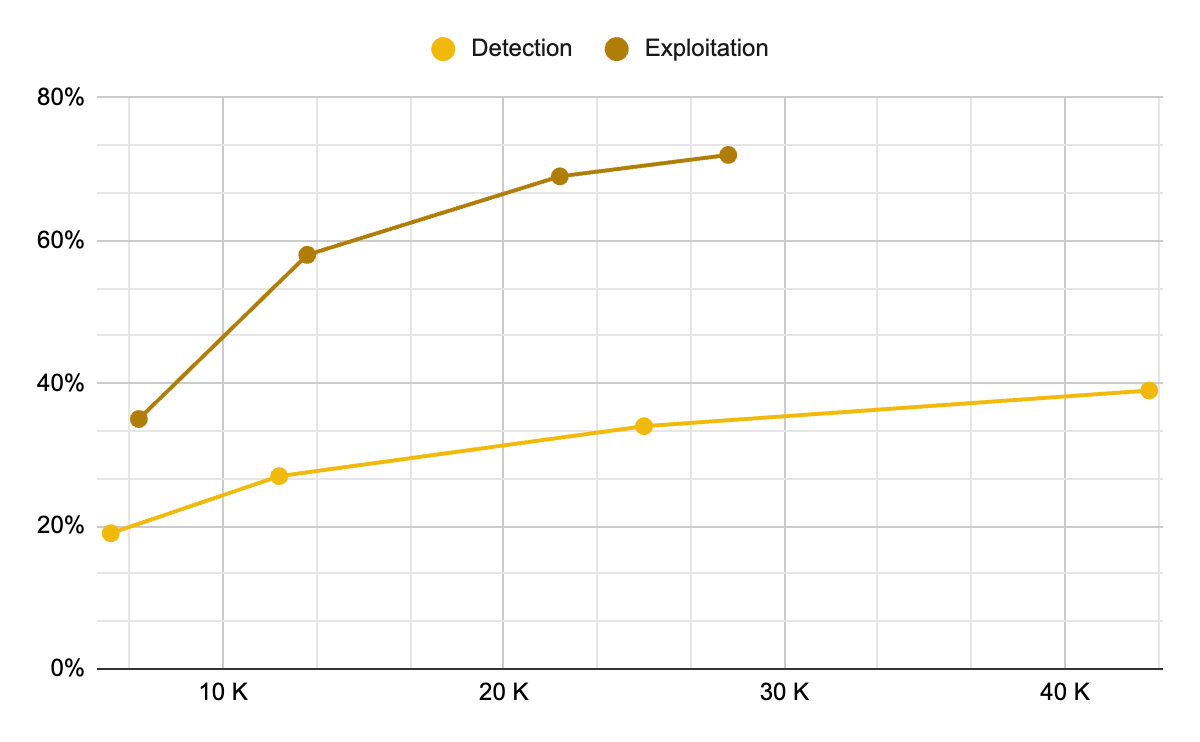
The EVMbench, a yardstick of our folly, measures the prowess of AI agents in detecting, patching, and exploiting the vulnerabilities of smart contracts. It draws upon 117 curated wounds from 40 audits, a grim catalog of our failures. And yet, we persist, like Sisyphus, pushing our boulder up the hill, only to watch it roll back down.
Smart contracts, those digital vaults holding billions in user funds, stand as open invitations to the probing eyes of AI. Their open-source code, a double-edged sword, offers both transparency and vulnerability. AI systems, with their relentless efficiency, scan thousands of contracts in minutes, at a cost so marginal it borders on the absurd.
The asymmetry deepens, for the cost of attack plummets. Binance Research reveals that AI-powered exploits average a mere $1.22 per contract, a figure destined to fall by another 22% every two months. A bargain, indeed, for the modern-day bandit!
“Hacken’s SSDLC Maturity Survey shows over 80% of developers now use AI in development, but fewer than 40% use AI for advanced testing – leaving the offense-defense gap structurally lopsided,” Binance Research adds, with a sigh that echoes through the digital ether.
The threat extends beyond the static code. The analysts at TRM Labs, ever vigilant, speculate that even the North Korean hackers, those shadowy figures of the digital underworld, are integrating AI into their reconnaissance and social engineering operations. A chilling thought, is it not? That the tools of progress are wielded by those who seek only destruction.
Consider the Drift attack, a masterpiece of manipulation, where weeks of targeted effort breached sophisticated blockchain systems. A far cry from the crude private key compromises of yore, this marks a new era of sophistication, a grim evolution in the art of theft.
Follow us on X to get the latest news as it happens
When AI hits security there will be signs
– Kevin Kwok (@kevinakwok) April 30, 2026
AI Rewrites the Economics of Fraud
The economics of fraud, too, have shifted, as dramatically as the tides. Chainalysis reports that AI-powered scams reap 4.5 times the spoils of their conventional counterparts and generate nine times the transaction activity. A testament to the industrial scale of modern deceit!
The spike in transaction volume, they note, points to AI’s ability to juggle countless victims at once, a hallmark of fraud run with machine-like precision. Deepfake technology and AI-generated content craft impersonations so convincing, they could fool even the wisest among us. In 2025, impersonation-based attacks surged by 1,400% year-on-year, a grim milestone in the annals of deceit.
Roughly 60% of industry respondents flag the rising use of AI by criminals as the leading driver of risk exposure in 2025. Crypto, that wild frontier of finance, bears the brunt, accounting for 88% of all detected deepfake fraud cases worldwide. A sad crown to wear, is it not?
Read More
- Netflix’s Little House On The Prairie Reboot: Release Date, Cast & Everything We Know
- Off Campus Season 1 Soundtrack Guide
- YouTuber arrested after viral AI bodycam videos spark real police complaints
- Silver Rate Forecast
- Prime Video’s New R-Rated Spy Thriller Is Officially No.1 On Streaming Despite Poor Reviews
- Brent Oil Forecast
- Peaky Blinders: The Immortal Man’s Tommy Shelby Is a Better Father Than Michael Corleone
- Gold Rate Forecast
- EUR ZAR PREDICTION
- Bulgakov’s Take: Koreans Bet the Farm on Chips, Crypto, and Chaos
2026-05-01 10:11