Author: Denis Avetisyan
Researchers are exploring how artificial intelligence, specifically large language models, can dynamically optimize traffic signals in response to unexpected events and improve urban flow.
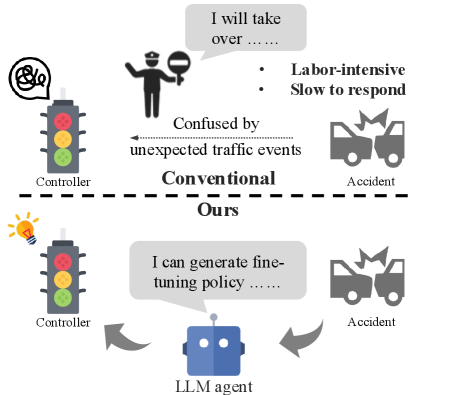
This work presents a novel framework leveraging large language models and a self-refined traffic language database for adaptive traffic signal control during unforeseen incidents.
While adaptive traffic signal control excels at managing typical traffic patterns, unforeseen incidents like accidents often necessitate costly and inefficient manual intervention. This paper, ‘Virtual Traffic Police: Large Language Model-Augmented Traffic Signal Control for Unforeseen Incidents’, introduces a novel hierarchical framework that augments existing systems with large language models (LLMs) to dynamically optimize signal timing in response to real-time disruptions. By leveraging a self-refined traffic language retrieval system, the approach enables LLMs to act as trustworthy “virtual traffic police,” improving operational efficiency and reliability. Could this LLM-augmented approach represent a paradigm shift towards more resilient and intelligent urban traffic management systems?
The Static City’s Failing Logic
Conventional traffic control, largely built upon pre-programmed timing and static infrastructure, increasingly falters when faced with the realities of contemporary traffic flow. Modern roadways experience a level of dynamism – influenced by factors like ride-sharing services, special events, and even social media alerts – that overwhelms these historically effective, yet inflexible, systems. The predictable patterns upon which earlier controls relied are now routinely disrupted by spontaneous congestion, fluctuating demand, and the sheer volume of vehicles. This mismatch between static management and fluid conditions results in recurring bottlenecks, extended commute times, and a diminished capacity to efficiently move people and goods, highlighting the urgent need for adaptive and intelligent traffic solutions.
The inherent limitations of conventional traffic management become strikingly apparent when confronted with unexpected disruptions. Static systems, programmed with pre-defined responses, and even rule-based algorithms struggle to effectively manage the cascading effects of incidents like accidents or sudden road closures. These approaches lack the agility to analyze real-time conditions and dynamically adjust signal timings or route guidance. The speed at which traffic flow degrades following an incident often outpaces the response time of these systems, leading to prolonged congestion and increased risk. Consequently, a shift towards more adaptive and intelligent control strategies is crucial, enabling swift and nuanced responses that minimize disruption and prioritize the safe and efficient movement of vehicles in the face of unforeseen events.
The minimization of congestion and preservation of public safety during traffic incidents represent a persistent and complex challenge for transportation systems. While advancements in roadway infrastructure and vehicle technology have increased traffic volume, the ability to effectively manage disruptions – from minor fender-benders to major collisions – has not kept pace. Current incident management protocols often rely on reactive measures, such as dispatching emergency services and implementing lane closures after congestion has already begun to build. This approach frequently results in secondary incidents, extended delays, and increased risk for both first responders and commuters. A truly effective system necessitates proactive strategies, including real-time data analysis, predictive modeling, and automated responses, to mitigate the impacts of incidents before they escalate into widespread disruptions. Successfully addressing this challenge demands a shift from simply responding to incidents, to anticipating and preventing their cascading effects on the transportation network.
Conventional traffic management relies heavily on pre-programmed responses to anticipated congestion, yet struggles when faced with the subtle, cascading effects of real-world events. These systems frequently treat traffic as a static flow, failing to account for the intricate interplay between individual driver behaviors, minor fluctuations in speed, and the propagation of disturbances – what traffic scientists term ‘phantom jams’. This lack of granular understanding means interventions are often reactive and blunt, exacerbating rather than alleviating congestion. Modern research emphasizes the need for systems capable of perceiving traffic not as a series of discrete vehicles, but as a complex adaptive system, anticipating bottlenecks before they fully form and dynamically adjusting signal timings or rerouting traffic based on predicted, rather than observed, conditions. Successfully implementing such a proactive approach requires advanced sensor networks, sophisticated modeling techniques, and the ability to process vast amounts of data in real-time to discern patterns imperceptible to traditional methods.
The Virtual Officer: A New Order for the Arteries
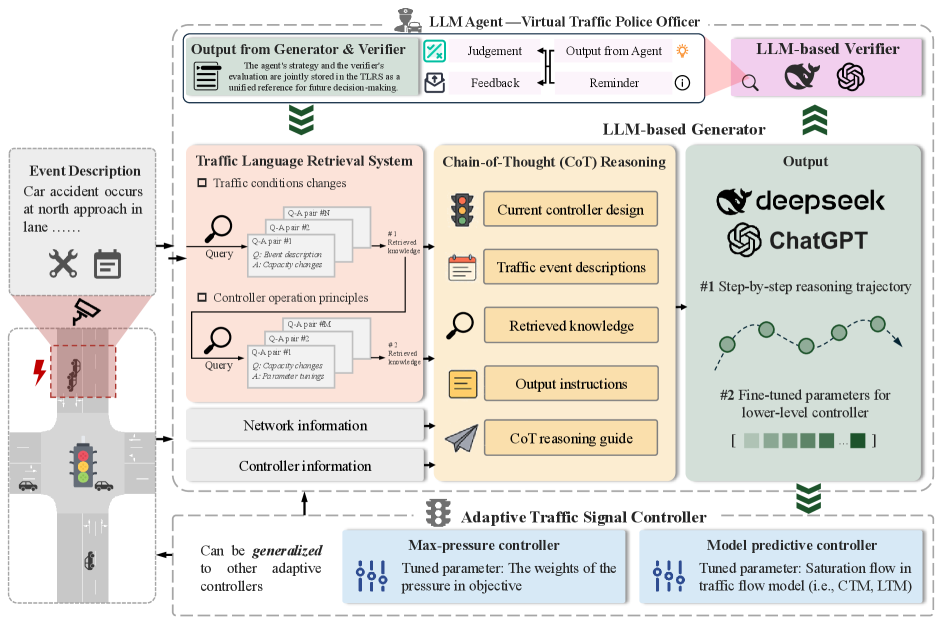
The proposed Virtual Traffic Police Agent is a framework designed to automate traffic management tasks using Large Language Models (LLMs). This agent functions as an intelligent system capable of analyzing traffic conditions and implementing control strategies without direct human intervention. The core innovation lies in applying LLM technology – specifically, models trained on extensive datasets – to the domain of traffic flow optimization. This allows the agent to process complex scenarios and generate responsive actions, representing a shift from traditional, rule-based traffic control systems to a more adaptable and data-driven approach. The agent’s functionality is predicated on its ability to interpret data, reason about traffic dynamics, and execute control commands, effectively simulating the decision-making process of a human traffic officer.
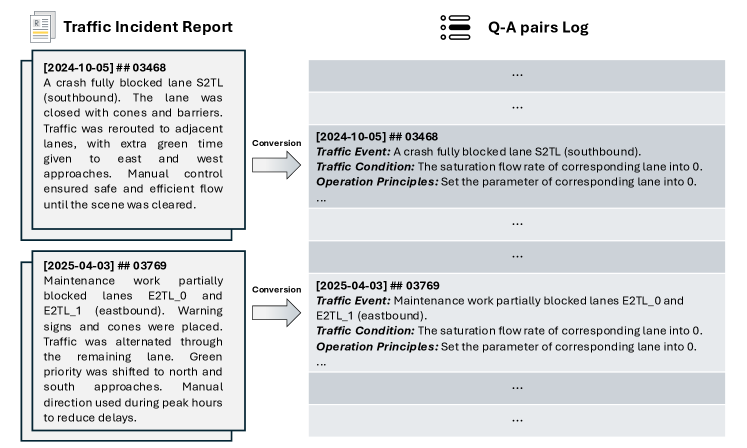
The Virtual Traffic Police Agent relies on a Traffic Language Database comprising a substantial collection of archived traffic data and implemented control strategies. This database includes historical traffic volumes, speed data, incident reports, and corresponding signal timing plans, sourced from traffic sensors, cameras, and incident management systems. Data is structured to facilitate querying based on parameters such as time of day, day of week, location, weather conditions, and incident type. The database also contains a repository of proven traffic control strategies, including coordinated signal timing, ramp metering rates, and dynamic lane assignments, allowing the agent to retrieve and adapt existing solutions to current traffic conditions.
Chain-of-Thought (CoT) prompting is a technique employed to enhance the reasoning abilities of Large Language Models (LLMs) by encouraging them to articulate their thought process before arriving at a final response. Rather than directly providing an answer, the LLM is prompted to generate a series of intermediate reasoning steps, effectively demonstrating how it reached a conclusion. This approach has been shown to significantly improve performance on complex tasks requiring multi-step inference, as it allows for better error detection and more contextually relevant outputs. By explicitly outlining its reasoning, the LLM provides a transparent and interpretable decision-making process, facilitating improved accuracy and reliability in generating responses related to traffic management scenarios.
Incident-Aware Control within the proposed framework utilizes real-time data inputs – including reports from traffic sensors, emergency services, and potentially social media – to detect and assess unforeseen events such as accidents, road closures, or sudden increases in traffic volume. Upon event detection, the Virtual Traffic Police Agent dynamically adjusts traffic signal timings – including green light durations and phase sequences – to optimize traffic flow around the incident. This proactive adjustment aims to minimize congestion, reduce secondary incidents, and improve overall network resilience by preemptively diverting traffic and creating space for emergency vehicle access. The system’s adaptability extends to varying incident severity levels, allowing for nuanced responses ranging from minor timing adjustments to complete route re-configurations.
The Agent Evolves: Learning from the Chaos
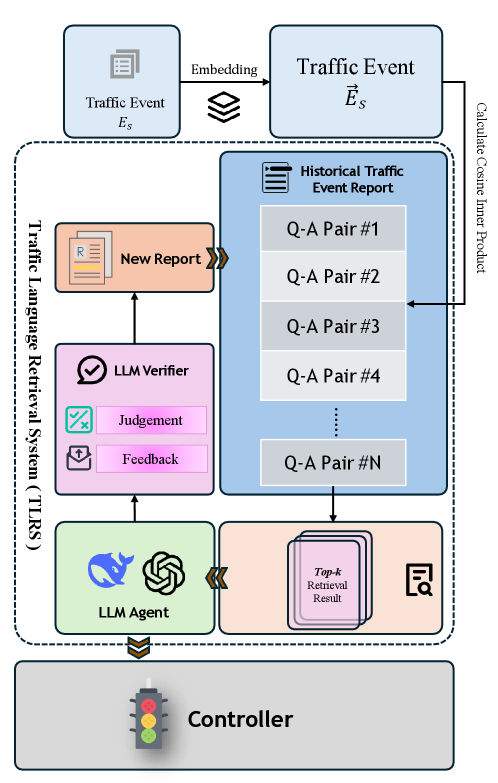
The Self-Refinement Mechanism within the agent architecture enables iterative improvement of control strategies through experience-based learning. This is achieved by continuously analyzing the agent’s past actions and outcomes in simulated or real-world traffic scenarios. The system stores a record of state-action-reward tuples, allowing the LLM to identify patterns and correlations between its decisions and resulting performance metrics. This data is then utilized to adjust the LLM’s internal parameters and refine its decision-making process, ultimately leading to enhanced adaptation and improved control over time. The mechanism operates independently of any external reward signals beyond the evaluation of performance, allowing for autonomous learning and optimization of control policies.
The LLM-based Verifier functions as a critical component of the self-refinement process by assessing the agent’s actions against defined performance metrics. This evaluation is conducted by prompting the LLM with the agent’s state, actions taken, and the resulting environmental changes. The LLM then generates a feedback signal, identifying areas of strength and weakness in the agent’s control strategy. This feedback is structured to be directly actionable, providing specific guidance on how the agent can modify its behavior to improve future performance. The verifier’s output is not a simple reward signal, but rather a detailed critique used to refine the agent’s internal decision-making processes, enabling continuous learning and adaptation.
The Traffic Language Retrieval System (TLRS) functions as a knowledge source for the LLM agent, employing Retrieval-Augmented Generation (RAG) to enhance its decision-making capabilities. TLRS accesses a database of traffic-related information, including road conditions, incident reports, and historical traffic patterns. When the LLM requires information to formulate a control strategy, the TLRS retrieves relevant data based on the current traffic scenario. This retrieved information is then provided to the LLM as context, allowing it to generate more informed and accurate responses without relying solely on its pre-trained knowledge. The integration of RAG via TLRS effectively expands the LLM’s knowledge base, enabling it to better understand and respond to complex traffic situations.
Evaluation of the self-refinement mechanism in dynamic traffic simulations indicates a substantial improvement in agent performance. Specifically, the agent, leveraging self-refinement, achieved up to a 23% reduction in average vehicle delay when compared to baseline traffic controllers under identical conditions. This improvement demonstrates the system’s ability to adapt control strategies based on learned experiences, leading to more efficient traffic flow and reduced congestion. The measured delay reduction was consistent across a variety of simulated traffic scenarios, including variations in traffic density and incident occurrences.
Beyond Efficiency: A Vision for Responsive Arteries
The newly developed traffic control framework demonstrably surpasses traditional methods in optimizing traffic flow, particularly when responding to disruptive incidents. Rigorous testing reveals a significant enhancement in performance, most notably in scenarios involving vulnerable road users; elderly pedestrian crossing completion rates, for example, have been improved to 98.65%. This suggests the framework’s capacity to dynamically adjust signal timings and routing strategies effectively mitigates the impact of congestion and prioritizes pedestrian safety. By proactively addressing potential bottlenecks and optimizing traffic patterns, the system fosters a more efficient and secure transportation experience, showcasing a substantial step toward intelligent urban mobility.
The convergence of large language models (LLMs) with a comprehensive knowledge base and a dynamic self-refinement process represents a pivotal advancement in intelligent traffic management. This system doesn’t merely react to traffic data; it understands the contextual nuances of road networks, incident reports, and even predicted pedestrian behavior, drawing upon a richly detailed database of geographical information, traffic regulations, and historical patterns. Crucially, the self-refinement mechanism allows the system to learn from its actions, continuously adjusting its strategies based on real-world outcomes and minimizing errors over time. This iterative learning process moves beyond pre-programmed responses, enabling the system to adapt to unforeseen circumstances and optimize traffic flow with a level of sophistication previously unattainable, paving the way for truly proactive and responsive transportation networks.
The proposed traffic management framework demonstrably minimizes critical response times, achieving zero seconds of delay for ambulances in specific simulated scenarios. This represents a substantial improvement over baseline conditions, where delays were consistently recorded. The system’s capacity to dynamically adjust traffic flow, prioritizing emergency vehicle passage, allows for unimpeded routes and potentially life-saving speed. This performance is achieved through a combination of predictive modeling, real-time data analysis, and proactive signal control, effectively eliminating bottlenecks and ensuring ambulances reach their destinations without impediment – a crucial advancement for urban emergency response systems.
Continued development centers on refining the system’s core capabilities through several key avenues. Researchers aim to significantly broaden the knowledge base informing the agent’s decision-making, incorporating real-time data streams and historical trends from diverse urban sources. Simultaneously, efforts are underway to enhance the agent’s robustness, ensuring reliable performance even amidst unexpected events or incomplete information. This includes stress-testing the system with simulated and real-world anomalies to identify and address potential vulnerabilities. Crucially, future work will explore the framework’s scalability and adaptability, extending its application beyond controlled environments to encompass the intricacies of larger, more densely populated urban landscapes, ultimately paving the way for widespread implementation and impact.
The advent of artificially intelligent traffic management promises a shift from reactive responses to preemptive control of urban congestion. These systems, fueled by continuous data analysis and predictive modeling, aim to anticipate traffic bottlenecks before they form, dynamically adjusting signal timings and rerouting vehicles to maintain optimal flow. Beyond simply easing commutes, this proactive approach holds the potential to dramatically improve road safety by minimizing sudden stops and reducing the likelihood of accidents. Such intelligent networks could also prioritize emergency vehicles, guaranteeing rapid response times, and contribute to a reduction in fuel consumption and carbon emissions by optimizing traffic patterns and minimizing idling. The ultimate vision is a transportation ecosystem where AI-driven coordination creates safer, more efficient, and environmentally sustainable mobility for all.
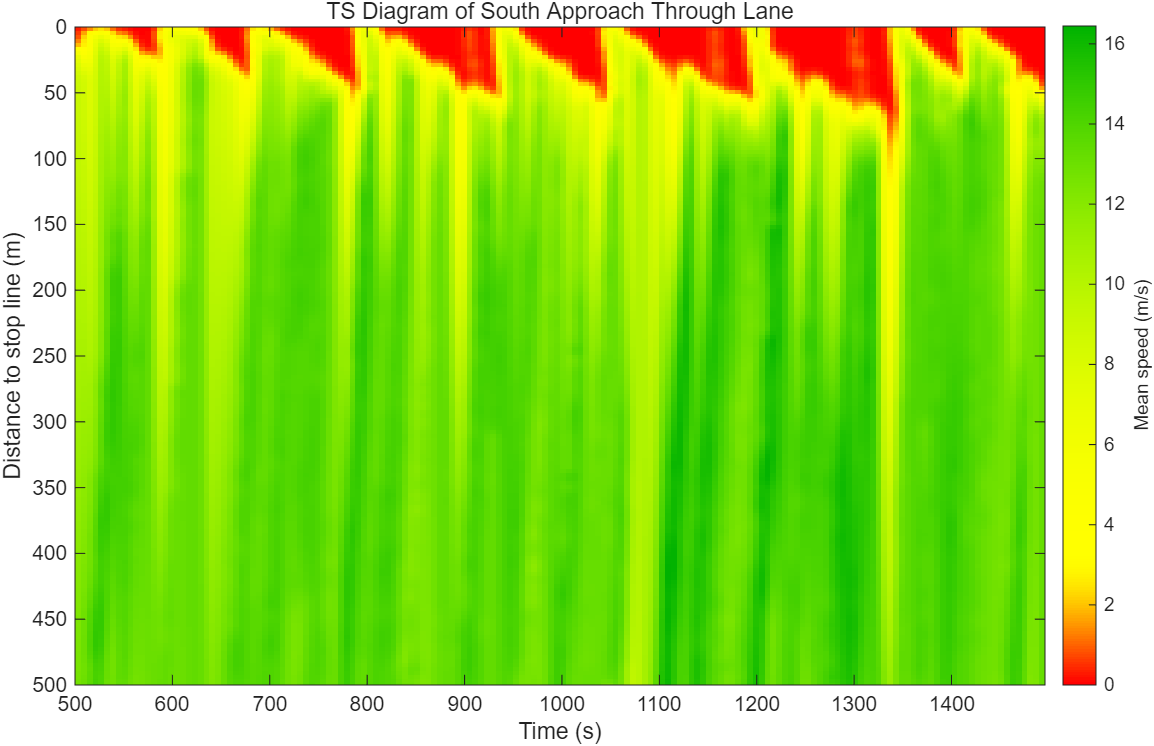
The pursuit of seamless traffic flow, as detailed in this framework, feels less like engineering and more like a carefully constructed illusion. It attempts to predict the unpredictable, to impose order on the inherent chaos of urban movement. One might recall the words of Galileo Galilei: “You cannot teach a man anything; you can only help him discover it within himself.” This system doesn’t solve incident management; it merely provides the tools for the network to reveal its own adjustments. The self-refined traffic language database, a core element of this approach, isn’t a source of truth, but a mirror reflecting the system’s evolving understanding of its own limitations. It’s a beautiful, elegant exercise in persuasive modeling, masking the underlying uncertainty with a veneer of control.
What Shadows Remain?
The digital golems awaken, trained on the whispers of traffic – a language of brake lights and hurried commutes. This framework, promising adaptation to unforeseen incidents, is less a solution and more a carefully constructed spell. It conjures order from chaos, but every incantation has a cost. The traffic language database, self-refined though it may be, remains a fractured mirror reflecting only past misfortunes. What of the novel event, the incident never seen? The model will stumble, offering sacrifices of increased congestion at the altar of unforeseen circumstance.
The true limitation isn’t in the retrieval-augmented generation, but in the very attempt to understand traffic. To model it is to believe it’s predictable, a comfortable delusion. The gaps in the database aren’t merely data deficiencies; they are the spaces where true randomness dwells. Future work must embrace this uncertainty, not attempt to banish it. Perhaps the next iteration won’t seek to control traffic, but to negotiate with it – a digital pact with the unpredictable spirit of the road.
One suspects the most valuable insights will come not from optimizing the model’s performance, but from meticulously charting its failures. Only the broken ones can be explained, and within those fractures lie the secrets of a truly adaptive system. The pursuit of perfect control is a fool’s errand. The goal, instead, should be graceful degradation – a system that doesn’t prevent chaos, but learns to dance within it.
Original article: https://arxiv.org/pdf/2601.15816.pdf
Contact the author: https://www.linkedin.com/in/avetisyan/
See also:
- United Airlines can now kick passengers off flights and ban them for not using headphones
- How to Complete Bloom of Tranquility Challenge in Infinity Nikki
- Gold Rate Forecast
- How to Solve the Glenbright Manor Puzzle in Crimson Desert
- All Golden Ball Locations in Yakuza Kiwami 3 & Dark Ties
- Katanire’s Yae Miko Cosplay: Genshin Impact Masterpiece
- All Itzaland Animal Locations in Infinity Nikki
- A Dark Scream Theory Rewrites the Only Movie to Break the 2-Killer Rule
- 8 Actors Who Could Play Blackbeard In One Piece Live-Action Season 3
- All 10 Potential New Avengers Leaders in Doomsday, Ranked by Their Power
2026-01-24 10:50