Switching between fast-paced games like Warzone and the strategic action of Apex Legends can be tough – it feels like you’re starting all over. The guns and abilities are different, and what used to work automatically suddenly doesn’t. But surprisingly, your most valuable skills actually carry over! Things like aiming accuracy, smart positioning, and understanding your opponents are useful in almost any competitive game. This guide will help you build those core skills, so you can stop feeling lost when trying new games and start playing confidently right away.
Key Takeaways
- Master the Fundamentals Before Anything Else: Your ability to win fights comes down to core skills. Prioritize consistent aim, deliberate movement, and solid game sense before you even think about complex team strategies or the latest meta.
- Practice with Purpose, Not Just Hours: Mindless grinding reinforces bad habits. Create a structured training routine with specific, measurable goals, use focused drills to target your weaknesses, and track your data to see real, tangible improvement.
- Become a Student of Your Own Gameplay: The fastest way to break through a plateau is to analyze your own mistakes. Record your matches, watch how better players handle similar situations, and actively seek out tougher opponents to expose the bad habits that are holding you back.
What Core Skills Win Fights?
Before you focus on complicated strategies or finding the best weapons in Warzone, you need to build a strong base of skills. Consistent wins aren’t about getting lucky or using a single trick – they come from mastering fundamental skills that are useful in almost any competitive game. These are the core elements you need. Without them, even the best plan will fail when you encounter an opponent.
Let’s be real, what makes a good player great isn’t just knowing the game, it’s having those core skills down. It’s about reacting without even thinking, staying cool when things get intense, and actually pulling out a win even when you’re behind. I’m going to walk you through the four things I think are most important: aim, how you move, mastering the game’s mechanics, and just… understanding the game itself – what I call ‘game sense’. If you focus on these areas, you’ll start to feel way more confident, you’ll actually get better, and you’ll be able to take on anyone. You’ll see the improvement, trust me.
Master Your Aim
Let’s face it: if you miss your shots, everything else you do is irrelevant. Accurate aiming is the most important skill for any shooter. However, improving your aim isn’t just about practicing aim trainers on their own. As a professional player explained, reaching a top level of accuracy is very difficult unless you consistently play against other skilled players.
Facing skilled opponents forces you to improve your gameplay. You quickly learn to be more careful, use cover strategically, and make each shot precise. Better players expose weaknesses in your technique and push you to develop better habits, ultimately making you a more accurate and effective shooter, especially when the pressure is on. This challenging experience is what truly builds consistent, dependable aim.
Perfect Your Movement
Effective movement is your most important defense and helps you dictate how fights play out. It’s not simply about getting from one place to another; it’s about being hard to hit while also creating opportunities for accurate shots. Good movement lets you constantly change position, avoid enemy fire, and control the range of the fight, all without losing control of your actions.
If you often find yourself exposed or losing sight of enemies, your movement is probably the issue. The best way to get better is to play against skilled opponents who will punish your mistakes. Watching how they use movement to gain an advantage will quickly teach you to be more unpredictable and think ahead. Effective movement not only keeps you safe but also opens up possibilities that good aim alone can’t create.
Know Your Game’s Mechanics
Each game has its own special way of working, whether it’s building structures in Fortnite, using character powers in Apex Legends, or carefully managing your energy in challenging games. When you truly learn these mechanics, they become automatic. You don’t have to consciously think about how to perform an action – it just happens. This allows you to focus your attention on more important things, like planning your strategy and finding the best position.
Becoming truly skilled isn’t just about learning the rules; it comes from practicing over and over against tough opponents. During intense matches, you develop a natural feel for what strategies work best. Your hands become accustomed to the game’s flow, letting you perform difficult moves smoothly even when the pressure is on. This level of practiced skill is what transforms your plans into winning plays.
Develop Your Game Sense
Game sense is that crucial, often unseen skill that connects all aspects of gameplay. It’s about being aware of what’s happening around you, anticipating what your opponents will do, and understanding how the game is unfolding. As one coach put it, the player who stays most aware of their surroundings will usually win. Ultimately, it’s what informs every choice you make during a game.
Having strong game sense means you can predict what your opponent will do next, know when to back out of a fight you can’t win, and understand their habits. This helps you avoid traps and plan your own attacks. While good aim and quick reflexes can help you win individual fights, it’s game sense that ultimately wins matches. It’s the key skill that distinguishes top players from everyone else.
Why Fighting Skills Must Come First
Imagine improving at a game like building a house. You wouldn’t start decorating until the foundation is strong, would you? In competitive gaming, your basic skill – how well you can fight individually – is that foundation. It’s tempting to focus on complicated team plays or what’s currently popular, but if you can’t reliably win fights on your own, those things don’t matter. Prioritizing and perfecting your individual fighting skills is the quickest way to become a better player.
When shooting becomes automatic – your aim, movement, and technique feel natural – you have much more mental space to focus on strategy. Instead of concentrating on how to shoot, you can think about who to target and when. This is the foundation of good game sense. You’ll stay calm during fights, better track your opponents, and make more intelligent choices. This skill improves all aspects of your gameplay, leading to fewer mistakes, better positioning, and a greater ability to work effectively with your team.
Each fight is a crucial test of how well you understand the game. The player who can think and react quickest usually wins. By actively seeking out fights and practicing your skills, you’re essentially training your overall game sense. This helps you predict what your opponents will do, use your abilities effectively, and stay aware of everything happening around you. Once you’re comfortable in a fight, you can focus more on complex strategies and perfecting your equipment. Becoming a strong fighter should be your first goal, because it will make everything else in the game much easier to learn.
How to Transform Your Gameplay with Aim Training
It’s incredibly frustrating when you have a great plan and catch your opponent off guard, only to lose because you can’t hit your shots. Every gamer knows this feeling! But don’t worry, amazing aim isn’t something you’re born with—it’s a skill you can develop through dedicated practice. Improving your aim isn’t just about playing a lot and hoping for luck; it requires a deliberate and focused approach to really make it a strength.
Improving your aim takes a three-step approach. First, customize your settings to make sure your equipment feels comfortable and responsive. Then, practice consistently with daily drills to develop the muscle memory needed for quick, accurate movements. Finally, create a regular routine that focuses on your problem areas and helps you monitor your progress. By working on these things, you can move beyond just hoping for the best and start winning fights based on skill. This will give you the confidence to face any challenge, knowing you can reliably hit your target.
Find Your Perfect Sensitivity
As a gamer, I’ve learned that getting your mouse or controller sensitivity right is crucial. It’s the base for everything when it comes to aiming, honestly. Think of it like tuning a guitar – if it’s off, everything else will sound bad, no matter how good you are. There isn’t one perfect sensitivity for everyone, though. It really comes down to what feels best for you, your setup, and how you like to play. Once you find something comfortable, the biggest tip I can give is to just stick with it! Changing it all the time is a recipe for disaster, because it messes with your muscle memory. It’s like trying to learn to write with a different pen every single day – you just won’t improve!
Begin by establishing a starting point for your game settings. A good approach is to copy the settings used by a professional player, then fine-tune them to your preference. Ideally, your sensitivity should let you quickly turn around (about 180 degrees) with a comfortable mouse movement, but also be slow enough to make small, accurate adjustments. Practice in a training area by quickly aiming at different targets and following their movements. Once you find settings that feel right, stick with them – consistency is key to improving your skills and competing well against experienced players.
Build Muscle Memory with Daily Drills
That feeling when your hand automatically aims at a target, even before you consciously think about it? That’s muscle memory. It doesn’t come from long, infrequent gaming sessions. Instead, it’s built through short, regular practice – like 30 minutes of aim training each day, followed by playing the game itself. Consistent daily effort is much more effective than trying to improve with a single, long gaming session each week.
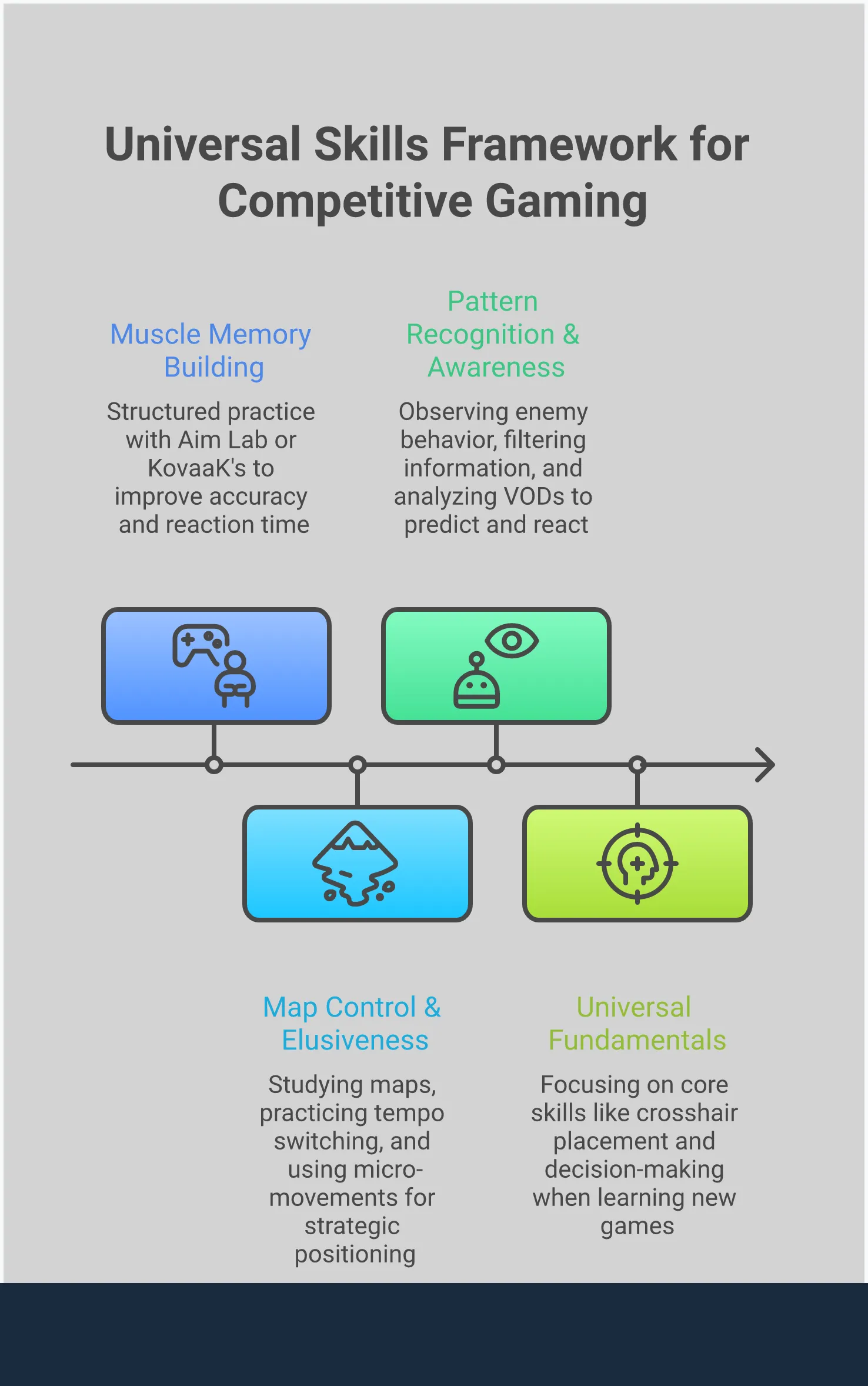
Okay, so seriously, I’ve made aim training a must-do before I jump into any game. I use stuff like Aim Lab or KovaaK’s, but even just the practice range in the game itself works. I don’t just randomly shoot though; I focus on drills for specific things – like quickly snapping to targets (flicking), smoothly following moving enemies (tracking), and getting those precise one-tap headshots (click timing). It sounds boring, but doing these drills over and over really builds muscle memory. That way, when I’m in a real match and the pressure is on, my aim just happens without me even thinking about it.
Create a Training Routine That Works
While practicing randomly can help, a consistent training plan will improve your skills much faster. A good plan is straightforward: define what you want to achieve, work on your problem areas, and keep track of how you’re doing. Don’t just practice aimlessly—have a goal for each session. If your aim is unsteady, spend 15 minutes doing specific tracking exercises. If you struggle in close combat, practice quickly aiming and shooting at nearby targets.
A short, effective practice session could include a 5-minute warm-up, 10 minutes working on your biggest weakness, and another 10 minutes doing a general drill to combine everything. Track your progress with scores or accuracy rates—watching those numbers improve is really encouraging and shows you’re getting better! This organized method makes practice feel less like work and more like a clear plan for getting better.
Why Movement is Your Secret Weapon
Everyone focuses on aiming skills, but skillful movement is actually what separates good players from great ones. Perfect aim doesn’t matter if you’re an easy target. Effective movement keeps you alive, lets you create openings, and makes you incredibly difficult to defeat. It’s what turns you from a predictable opponent into someone who controls every fight. When you watch professionals play, it’s not just their quick shots that stand out—it’s how smoothly they move around the map, always appearing in the best position. That isn’t chance—it’s the result of mastering movement.
Becoming a skilled player isn’t just about learning advanced techniques; it’s about mastering the basics of how you move. This means understanding where you are, when you act, and how quickly you can react. When you move intentionally, you make it difficult for opponents to predict your actions and force them to change their plans. You can then control the battlefield, choose when to fight, and increase your chances of survival – ensuring your shooting skills can actually make a difference. Good movement is the foundation for all other skills, transforming you from a decent shooter into a truly formidable fighter. It’s about being a difficult target to hit while consistently creating opportunities for easy shots.
Control the Map with Smart Positioning
Success in any dynamic situation relies more on strategy than on quick reflexes. It begins with learning to use your surroundings to your benefit. Don’t just rush into things – carefully consider where you’re going and why. Are you gaining a better vantage point? Are you blocking off an opponent’s path? The key is to improve your position to dominate the area. By controlling the most advantageous locations, you’ll put your opponents at a disadvantage, forcing them to engage you on your terms. This forward-thinking approach gives you the upper hand in every interaction.
Time Your Engagements for the Win
As a gamer, I’ve learned that just how you move is super important, but when you move is even bigger. Knowing when to push forward, when to retreat, and when to just hold your ground is what really separates good players from the best. We call it ‘tempo switching’ – basically, changing up your speed and aggression to throw your opponent off. Sometimes you gotta be super aggressive and force them to mess up, and other times you need to chill, let them overextend, and then punish them. Your movement lets you actually do those things – whether it’s closing in for a surprise attack or quickly getting to safety to reset and try again.
Stay Agile Under Fire
As a player, I’ve learned that staying mobile during a firefight is absolutely key to surviving. It’s all about those little movements – strafing side to side, dodging attacks, and quickly using cover. If you can be a hard target to hit, you’ll win more gunfights because it gives you the time you need to aim and shoot while your opponent is struggling to keep up. That’s why, especially in games like Warzone, a lot of players build their character around being super mobile. You want to be constantly moving, putting pressure on the enemy, and avoiding damage. Honestly, the harder you are to hit, the better your chances of winning!
How to Sharpen Your Game Sense
Game sense is what sets exceptional players apart – it’s almost like having a sixth sense for what will happen next. It’s not about quick reactions, but about understanding the game well enough to predict enemy movements, know when to use abilities, and choose the best routes. While good aim and movement are important, game sense is what truly allows players to dominate, turning them from simply reacting to situations into strategically controlling them. It’s often the key to winning crucial fights – the difference between simply surviving and completely eliminating the opposition.
For me, leveling up in any game isn’t just about getting better at the game, it’s about getting better at reading other players. It’s a skill that really translates – whether I’m in a fast-paced shooter or a huge RPG, understanding what my opponents are thinking is key. I’ve realized it’s not something that just happens with time, though. You actually have to work at it. I’ve been trying to break it down into smaller things, like really focusing on how other players behave, tuning out everything else going on, and getting a feel for how a match flows. That way, what feels like a gut feeling actually becomes something I can rely on. So, let’s dive into the specific things I’m working on to improve this skill and make smarter decisions in-game.
Predict Your Opponent’s Next Move
Understanding what your opponent is likely to do is key to winning. Skilled players excel at spotting patterns – they can predict if someone will attack or retreat based on how they move, build structures, or respond to damage. You can develop this ability by carefully watching your opponents during gameplay. Instead of just seeing them as targets, study their habits. Do they have a favorite spot to peek around? Do they get flustered when hurt? Combining this knowledge with understanding common weapon setups allows you to anticipate their moves, set up effective traps, and gain an edge. Essentially, it’s about using their predictable behavior to your benefit.
Filter the Noise and Focus
During intense moments in a game, it’s easy to get distracted by everything happening around you. The player who stays focused on what really matters is usually the one who comes out on top. You need to tune out the distractions and concentrate on key things like where your opponent is, the sounds they make, when they’re reloading, and how long until their special abilities are ready. Everything else is less important. Start practicing by consciously identifying the most crucial signals in the games you play – like a specific sound that means an enemy is using a powerful attack in Apex Legends, or a change in music that signals a new phase in a boss fight in Diablo 4. Training yourself to focus on these important details will help you stay calm and make better decisions, even when things get chaotic.
Recognize Patterns When It Counts
Having good game sense means understanding not just what your opponent is doing, but when things happen in the game – what players call “tempo.” It’s about knowing when to attack to make them mess up, and when to hold back and let them take risks. Players who are good at this are hard to predict because they constantly change how quickly they play. To improve, start reviewing your matches. Look for moments where you could have attacked while they were vulnerable, or times when you were too aggressive and fell into a trap. Identifying these patterns – in both your own play and your opponent’s – is how you control the flow of any fight.
Are These Common Mistakes Holding You Back?
Stuck in a rut and not improving, even though you’re trying hard? It’s a common problem, and usually it’s not about effort – it’s about subtle habits that are secretly hindering your progress. The best players aren’t necessarily those who practice the most, but those who pinpoint and correct small errors that others overlook. Consider this a quick check-up for your gameplay. Let’s explore some frequent mistakes players make and how to avoid them permanently.
Focusing on Fancy Strats Too Soon
We’ve all watched amazing gameplay clips online – incredible shots, clever strategies, and impressive builds. It’s easy to want to try those moves right away, but it’s important to remember that fancy plays don’t matter if you don’t have a strong base of skills. Many players focus on flashy techniques before they’ve mastered the fundamentals, like where to position yourself, how to aim, and basic movement. Before attempting complex moves, make sure you’re solid on the basics. A simple plan, executed well with strong fundamentals, will always be more effective than a complicated, sloppy strategy.
Only Playing Against Weaker Opponents
Okay, so crushing everyone in a match feels amazing, especially when I’m racking up a ton of kills. But honestly, if I’m not getting pushed, I’m not actually getting any better. It’s super easy to fall into the trap of only playing against people who aren’t as good as me. It makes me think I’m awesome, but it just lets me keep doing the same mistakes. I might win fights with messy gameplay or obvious moves, but that doesn’t teach me anything about how to handle tough situations or deal with smart players. If I really want to level up, I need to be okay with losing. I have to actively look for harder matches, like jumping into ranked or joining scrims. Every time I lose to someone better, I try to see it as a learning opportunity – a way to figure out what I did wrong and how to improve.
Forgetting to Rest and Recover
How well you play a game is closely linked to your overall health. While many gamers think playing for longer and longer hours will help them improve, it often leads to exhaustion and actually makes them play worse. A common mistake is not getting enough sleep or taking breaks. Your brain needs rest to process information, and your body needs it to stay focused and react quickly. Poor sleep can really hurt your ability to make good decisions and perform well in the game. Don’t underestimate the benefits of getting a good night’s sleep and taking short breaks during long gaming sessions – your gameplay will improve as a result.
Letting Bad Habits Stick
One of the biggest obstacles to improvement is consistently winning against weaker opponents. While it feels good to win, your brain can start believing your strategies are good, even if they’re actually flawed. You might get away with risky plays or predictable patterns against less skilled players, but these actions create bad habits that become automatic. When you finally face a challenging opponent who can exploit those habits, you’ll struggle. To truly improve, you need to critically evaluate your own gameplay. Recording your matches – especially your wins – and reviewing them for recurring mistakes is crucial. Breaking these bad habits is difficult, but it’s essential for reaching a higher level of play.
Training Methods That Actually Work
Spending hours just playing ranked matches can feel like progress, but it often just repeats mistakes. To truly improve and see lasting results, you need to think of your playtime as training instead. Effective training means having a goal, working on specific skills, and finding ways to learn from your performance. Instead of just hoping to get better, this gives you a clear plan for improvement. By being more organized with your practice, you can make every session count and move closer to your goals. It’s time to stop wasting effort and start training with a purpose.
Structure Your Practice Sessions
Simply trying to “get better” at a game usually leads to frustration. A more effective approach is to plan your practice sessions carefully. Begin by setting a clear, achievable goal for each session – for example, improving your headshot accuracy by 10% or mastering a new strategy on a particular map. While you practice, keep track of how you’re doing to see if you’re reaching your goal. This information is incredibly valuable because it shows you what’s working and what isn’t. At the end of the week, review your progress. Are you improving? Where are you still facing challenges? This process – setting goals, tracking data, and analyzing results – transforms practice from a random effort into a focused and effective method for improvement.
Learn from Better Players
There’s no need to start from scratch. Many top players stream their games daily for free, and watching them is a great way to quickly learn advanced strategies and skills. But don’t just watch passively – really focus on what they’re doing. Ask yourself why they make certain moves, where they choose to position themselves, and what information led to their decisions. You can pick up valuable techniques simply by observing how they handle different situations. Pay close attention to details like where they aim, how they use items, and how they communicate with their teammates. Then, try to add one or two of those things to your own game.
Seek Out a Challenge
It’s easy to stay within your comfort zone, but real improvement comes from pushing yourself. To get better, consistently challenge yourself with opponents who are a little bit better than you are. These tough matches will reveal your weaknesses, showing you exactly what needs work. Don’t be afraid to try new things – a different character, weapon, or approach – even if it feels uncomfortable at first. Spending practice time on your weaknesses is much more helpful than simply winning against weaker players. Accept challenges, learn from your failures, and you’ll become stronger as a result.
Stay Consistent with Your Training
Short, regular practice sessions are much better than long, infrequent ones. Practicing for 30 minutes each day is more effective than a five-hour session once a week. The most important thing is to be consistent – this helps build muscle memory and makes skills feel automatic. Create a training plan you can realistically maintain without getting overwhelmed, and prioritize getting enough rest. Sleep is essential for improving performance and solidifying what you’ve learned. Trying to push through exhaustion is actually harmful and can create bad habits. Think of training like learning anything else: consistent effort, focused practice, and adequate recovery are key to progress.
How to Track Progress and Stay Motivated
As a gamer, I’ve definitely learned that just playing endlessly without seeing any improvement is a surefire way to get frustrated and quit. To stay motivated, it’s so important to actually see that you’re getting better! For me, tracking my progress isn’t just about boosting my ego with a good score; it’s about really understanding how I play. Seeing concrete evidence of improvement is a huge motivator. If I set specific goals and pay attention to how I’m doing, it creates this awesome cycle where I stay engaged and focused on becoming a better player. It’s all about that feeling of actually getting better!
Set Clear, Measurable Goals
Simply wanting to “get good” isn’t enough. To truly improve, you need specific, measurable goals to guide you. Instead of just hoping to be better, try setting targets like increasing your headshot percentage in Valorant from 15% to 20% this month, or landing a certain combo in Street Fighter successfully 8 times out of 10. These clear objectives make improvement feel less overwhelming by breaking it down into smaller, achievable steps. Reaching each small goal gives you a real sense of progress and motivates you to keep going.
Track Your Performance Data
Simply practicing isn’t enough; you need to monitor how well you’re actually improving. Most competitive games automatically record important stats like your kill/death ratio, win rate, and accuracy. Don’t just look at these numbers quickly—analyze them to see if you’re getting better or worse. Keeping a basic record in a notebook or spreadsheet can reveal trends over time. The goal isn’t to get discouraged, but to understand what you’re good at and where you need to improve, so you can focus your practice and optimize your Warzone setup and strategy.
Use Analytics to Find Weaknesses
Okay, so you really want to up your game? I’ve been using these third-party analytics tools, and they’re a game-changer. Basically, they give you the raw data on exactly how you’re playing, stuff you just don’t notice while you’re in the heat of the moment. I’m talking about websites and apps for games like League, Apex, or Call of Duty that break down every single match. They’ve shown me things I’d never realized – like how much my win rate drops when I play a certain character, or that I consistently mess up in firefights in a specific area of the map. Honestly, this data is amazing. It cuts through all the guessing and tells you exactly what you need to work on, giving you a clear path to improving. It’s way more effective than just trying to ‘feel’ your way to getting better.
Analyze Your Gameplay for Patterns
Stats are helpful, but they don’t give you the full picture. To truly improve, you need to watch recordings of your own gameplay – often called VOD review. This is a really effective way to understand why things happened in your matches. When you review, ask yourself questions like: Why did I engage in that fight? Could I have been better positioned? Did I miss any important sounds? You can also learn a lot by watching professional players and streamers and seeing how they handle similar situations. By studying their strategies, you can find new ways to improve your own game, break bad habits, and make good decisions automatically.
How Long Does It Really Take to Get Good?
Everyone wants to know how long it takes to get good, right? If there was a simple answer, we’d all be experts already. The truth is, it varies. How quickly you improve depends on the game, your experience level, and what ‘good’ means to you. Are you aiming to consistently win fights, reach a certain rank, or simply feel more confident while playing? Instead of worrying about a specific goal, it’s better to concentrate on how you practice. Ten hours of focused, intentional practice will always be more effective than one hundred hours of just playing without thinking.
How quickly you improve depends on how you spend your time. Just playing isn’t enough – you need to practice regularly and focus on what you struggle with most. Setting specific goals is key. Instead of saying “I want to improve my aim,” try something like “I’ll increase my headshot accuracy by 5% this week.” This helps you measure your progress, celebrate small wins, and stay motivated over time.
Keep in mind that progress isn’t always steady. You’ll likely experience periods where you feel stuck, and that’s perfectly normal. These plateaus often mean it’s time to try a different approach. Make sure you’re getting enough rest – pushing yourself too hard and not sleeping can quickly halt your improvement. Many players also focus too much on one skill, like aiming, and forget about others, such as movement or understanding the game. Developing all your skills equally will help you overcome those frustrating setbacks. Remember that becoming truly skilled takes time and effort, so be patient and enjoy the learning process.
How to Take Your Skills to Any Game
It’s normal to feel like a beginner when you start playing a new game. But the good news is, the skills you learn in one game aren’t wasted! They’re actually transferable. For example, the quick reflexes you develop in games like Warzone will help you in Apex Legends, and the strategic thinking you gain from Diablo 4 can improve your ability to predict opponents’ moves in almost any competitive game. Instead of trying to learn everything from scratch, focus on how your existing skills can be used in the new game’s environment.
Instead of immediately trying to master the latest strategies in a new game, focus on the essential skills that apply to almost any game: accurate aiming, smooth movement, and smart choices. Building a strong foundation in these areas will make it much easier to pick up the specifics, like how long it takes to recharge abilities or how a weapon behaves. Think of it like this: games often change how they look, but the core gameplay usually stays the same. You already possess the basic skills – you just need to adapt them to the new game.
Focus on the Fundamentals, Not the Frills
When starting a new game, don’t try to copy advanced techniques right away. Focus on the fundamentals first. Can you easily follow a moving enemy? Is your aim consistently on target? Are you moving strategically and using cover? These basic skills are important in almost all shooting games. Practice them regularly until they become second nature, so you can concentrate on learning the specific details of the game itself.
Adapt Your Mindset, Not Just Your Loadout
Honestly, when I start a new game, the buttons aren’t usually the hard part. It’s unlearning everything I already know! What worked perfectly in one game can totally get me wrecked in another. So, I’ve learned that being open-minded is key. I try to focus on learning the game, not just winning right away. I constantly ask myself why I messed up – like, why did I lose that fight? What could I have done better? Really breaking down what happened is what makes the difference between being okay and being good. I find it helps to set small goals for myself too, like winning my first one-on-one fight or finally figuring out how to use a new character’s special ability.
Recognize and Master Progression Systems
All games guide you toward certain actions, and figuring out what those are can give you a big boost. Some games prioritize skillful gameplay, while others focus on collecting items and developing your character. Knowing how a game lets you improve helps you spend your time effectively. For example, in a game like Diablo, you’ll make the most progress by repeatedly playing to find better equipment. But in a game like Valorant, practicing your aim is a much better use of your time. Understanding how a game rewards you lets you play smarter and improve more quickly.
Don’t Forget to Rest and Reset
You learn best when you’re relaxed, not constantly pushing yourself. While learning something new, like a game, can be tiring, overdoing it actually hinders your improvement. Taking breaks allows your brain to process information and truly learn. Getting enough sleep and rest is crucial, as that’s when your brain strengthens new connections and solidifies skills. If you’re stuck or frustrated, stepping away and returning later with a fresh mind is often the most effective solution.
Related Articles
- Deus Ex LFG: Connect with Other Augs in LFG Feature on Z League App
Frequently Asked Questions
You’re just starting out with competitive games, and that’s great! Instead of trying to improve everything at once, focus on movement and positioning first. Before you can make accurate shots, you need to be able to survive and get into a good spot to shoot from. Learn the maps, use cover well, and practice moving in ways that make it harder for opponents to hit you. Once you’re comfortable getting around, your aim will improve much faster because you’ll be practicing from better positions.
It’s great advice to play against stronger opponents, but it’s understandable to worry about getting discouraged. The key is to redefine what ‘winning’ means. When facing tougher players, don’t focus on simply winning the game. Instead, aim to learn something new with each match. Set a small, specific goal for yourself, like improving your awareness or landing the first hit in fights. Most importantly, really watch how better players defeat you – they’re showing you exactly what strategies work at a higher level, and it’s a free learning opportunity.
Should you use aim trainers or just play the game more to get better aim? The best way to improve is to do both. Aim trainers are like going to the gym – they help you practice the basic mechanics of aiming with lots of repetition in a short time. Spend 15-20 minutes using one as a warm-up to build muscle memory, then practice in real game situations. Playing matches teaches you to use your aiming skills under pressure, alongside movement and understanding the game. Focusing on just one will only get you so far.
Okay, so I’m trying to get better at reviewing my own gameplay, and I record everything, but honestly, I’m kinda lost on what to look for. I’ve realized it’s not about watching the awesome plays – it’s about the times I mess up! I’ve started picking a few of my deaths from each match and really breaking them down. I ask myself three things: First, why did I die? What did I miss that led to it? And most importantly, what could I have done differently? It’s tough being honest with myself, but it’s making a difference. At first, it’s hard to spot the better move, but after a while, you start seeing patterns in your mistakes. And that’s how you actually improve!
It’s frustrating when you feel stuck and stop seeing improvement. If you’ve hit a plateau, it usually means your current training isn’t challenging you enough. A good first step, though it can be tough, is to take a short break – a day or two can help your brain process what you’ve already learned. When you return, try intentionally shifting your focus. For example, if you’ve been practicing your aim, switch to focusing on positioning. Or, if you always use the same weapons and gear, experiment with something different to push yourself beyond what you’re used to. Changing things up is the best way to get back on track and start improving again.
Read More
- United Airlines can now kick passengers off flights and ban them for not using headphones
- Crimson Desert: Disconnected Truth Puzzle Guide
- Katanire’s Yae Miko Cosplay: Genshin Impact Masterpiece
- How to Get to the Undercoast in Esoteric Ebb
- All Golden Ball Locations in Yakuza Kiwami 3 & Dark Ties
- All Itzaland Animal Locations in Infinity Nikki
- Gold Rate Forecast
- ‘Stop! That! Train!’ Trailer Reveals New RuPaul Action Comedy
- Fox McCloud Actor Announced as Glen Powell Joins The Super Mario Galaxy Movie
- HBO’s Harry Potter Is Already Breaking My Heart
2026-02-19 17:53