In the vast and tumultuous sea of decentralized finance, where fortunes rise and fall with the capricious winds of code, the once-vaunted Polygon has found itself adrift. Its reputation, like a ship’s hull breached by a hidden reef, now takes on water. The latest tempest? An exploit of the Polymarket UMA CTF Adapter contract, a mechanism so crucial it resolves the very outcomes of prediction markets. Ah, the irony! A system designed to foretell the future could not predict its own demise.
The token, POL, has plummeted nearly -1% in the past hour, trading at a paltry $0.091. A tragedy, you say? Nay, a farce. For in this world of digital alchemy, where numbers masquerade as value, a mere percentage drop is but a ripple in the ocean of human greed. Yet, the question lingers: will POL sink further into the abyss? Only the gods of blockchain know for certain.
This debacle raises a deeper, more existential question: can Polygon maintain its throne as the default settlement chain for high-profile prediction and derivatives platforms? Or is its development roadmap but a cart pulled by a lame horse, too slow to keep pace with the voracious appetites of hackers and the merciless scrutiny of the market?
Warning: #Polymarket’s contract appears to be exploited, and the attacker is stealing funds. So far, more than $660K has already been pilfered. A sum that, in the grand scheme of things, is but a drop in the ocean of human avarice. Source: @zachxbt
– Lookonchain (@lookonchain) May 22, 2026
ZachXBT, the Modern-Day Cassandra, Sounds the Alarm
The attacker, with the address 0x8F98075db5d6C620e8D420A8c516E2F2059d9B91, has scattered the spoils across 15 wallets, a tactic as old as theft itself. Laundering, they call it. A game of digital hide-and-seek, where the only certainty is uncertainty. What will the final tally be? And can POL withstand the stain on its reputation? These are the questions that keep traders awake at night, their fingers hovering over the sell button like a nervous gambler’s over a dice cup.
According to ZachXBT, the harbinger of doom, the attacker was siphoning off 5,000 POL every 30 seconds, amassing losses of at least $520,000 and climbing toward $600,000. The exploit, we are told, targets the UMA CTF Adapter specifically, not Polymarket’s core Polygon-based contracts. A distinction that, one imagines, offers little solace to those whose funds have vanished into the ether.
This is not an isolated incident, mind you. Polymarket has also confirmed account breaches tied to a third-party authentication provider, likely Magic Labs. The result? A trail of drained USDC wallets, a digital breadcrumb trail leading to despair. May has already seen 19 DeFi hacks, with cumulative losses of roughly $38.2M. A sector-wide stress test, they call it. Or, as I see it, a testament to the boundless ingenuity of those who would rather steal than build.
ZachXBT: Suspected Attack on Polymarket, the World’s Largest Prediction Market. Losses exceed $520k. A sum that, in the grand scheme of things, is but a drop in the ocean of human avarice. The…
– Wu Blockchain (@WuBlockchain) May 22, 2026
Can POL Weather the Storm, or Is It Doomed to the Depths?
History tells us that news of such exploits often brings short-term sell pressure on the host chain’s native token, followed by a recovery contingent on the protocol’s response. Polygon, for its part, is not idle. The Giugliano hard fork aimed to improve finality, a crucial upgrade for prediction markets. Yet, one wonders if this is enough to stem the tide of doubt.
Three scenarios present themselves. The bull case: Polymarket’s $5M Cantina bug bounty program identifies and fixes the flaw, restoring confidence and allowing POL to recover within days. The base case: Polygon trades sideways as the investigation unfolds, with institutional players waiting for reimbursement commitments. The bear case: if losses exceed disclosed figures, or if more vulnerabilities are found, selling pressure becomes inevitable.
Polymarket’s UMA CTF Adapter is being exploited on Polygon – attacker draining 5,000 $POL every 30 seconds, $520K+ stolen so far. A sum that, in the grand scheme of things, is but a drop in the ocean of human avarice. $UMA price reaction: $0.477 (07:00 UTC) → $0.462 (09:00 UTC), -3.3% as the exploit unfolded.
– Santiment Intelligence (@SantimentData) May 22, 2026
And then there is the question of credibility. Can a platform that leaves users with balances as low as $0.01 after unauthorized access truly claim its non-custodial design is intact? Polymarket has faced regulatory and legal scrutiny before, but this adds a fresh layer of operational pressure. A house divided against itself cannot stand, as the saying goes.
Bitcoin Hyper: A Beacon in the Storm?
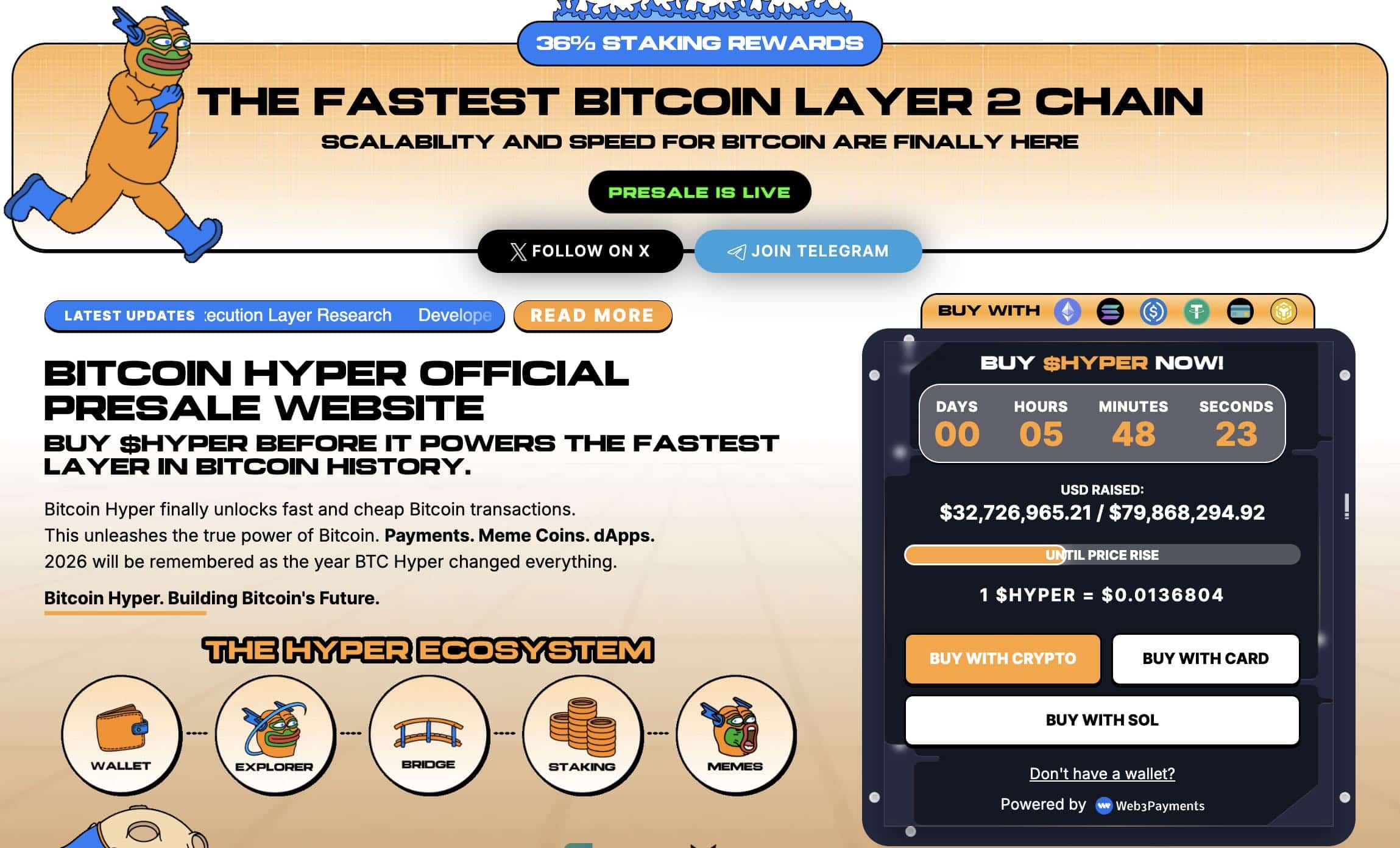
(SOURCE: Bitcoin Hyper)
Exploit fatigue is real. When a leading DeFi chain’s flagship application suffers back-to-back security incidents, some capital inevitably seeks safer harbors. Enter Bitcoin Hyper ($HYPER), a Bitcoin Layer 2 integrating the Solana Virtual Machine. It promises fast smart-contract execution atop Bitcoin’s security base, without the custodial trade-offs that plague Polymarket. A bold claim, indeed.
The presale has raised $32,726,397.59 at a token price of $0.0136804, with staking rewards for early participants. The SVM integration is the headline; sub-second finality atop Bitcoin’s trust model is the pitch. For those seeking infrastructure-layer exposure, it warrants examination. But in this world of digital promises, one must always ask: is it too good to be true?
Visit the Bitcoin Hyper Presale Website Here.
Read More
- Off Campus Season 1 Soundtrack Guide
- DoorDash responds after customer uses AI to make food look bad and get a refund
- Jon Bernthal Explains Why Marvel Let Him Make The Darkest Punisher Story Ever
- Ethereum Eyes Break Above $2,420 as Rally Hangs in the Balance
- All Golden Ball Locations in Yakuza Kiwami 3 & Dark Ties
- 10 Most Universally Beloved Sci-Fi Movie Villains, Ranked
- Gold Rate Forecast
- Umamusume has been transformed into a D&D game with new race
- The Strongest Battlegrounds codes (May 2026)
- Shocking AI Crypto Heist: $175K Vanish and Reappear-You Won’t Believe Why!
2026-05-22 18:13