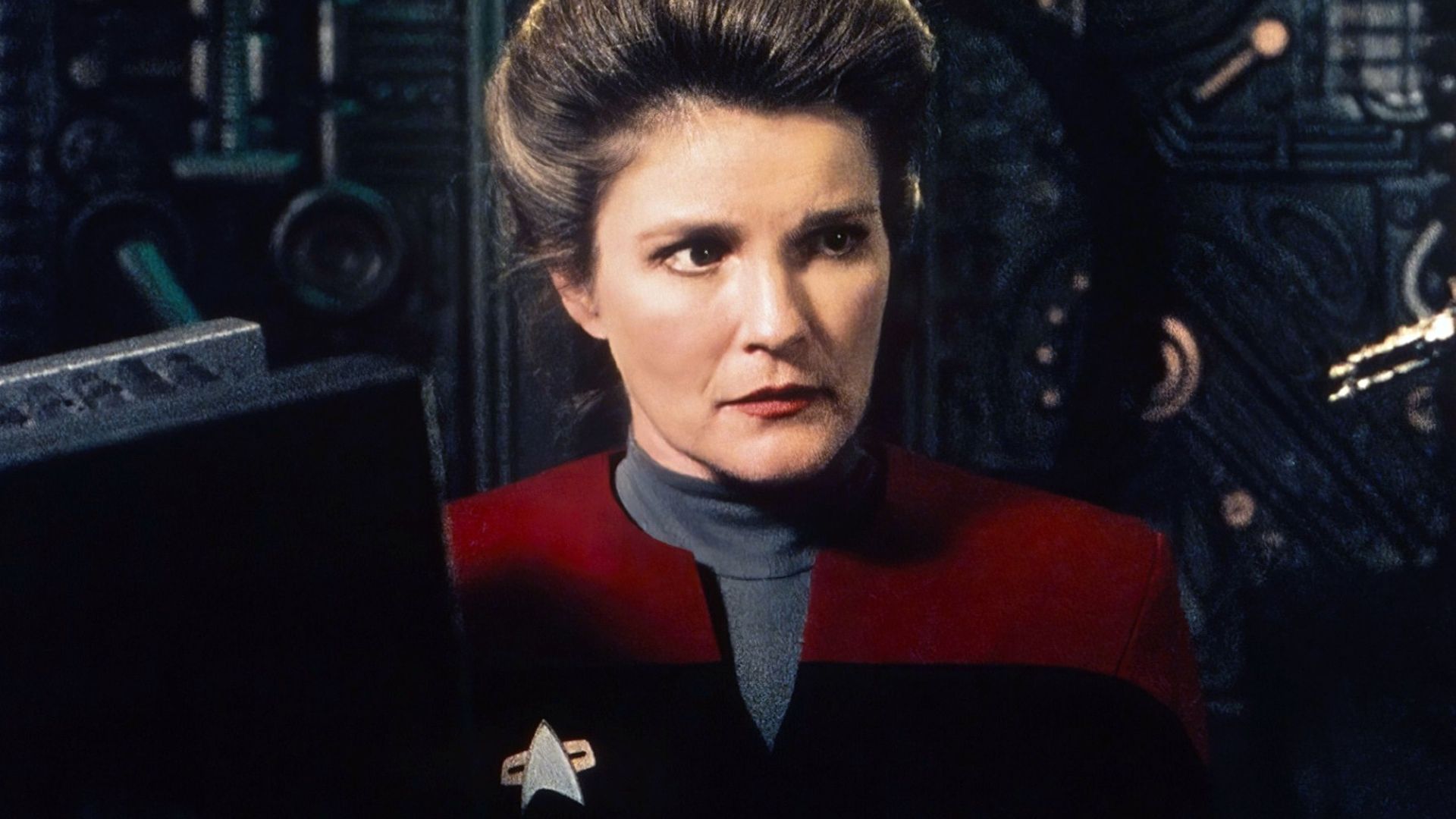
Within the entire world of Star Trek, Voyager stands out for its consistent focus on the challenges of being completely cut off from help. Being stranded so far from Starfleet deeply affected the crew and how Captain Janeway led them. In the Season 4 finale, ‘Hope and Fear,’ Janeway says something to Seven of Nine that really sums up her leadership philosophy.
Captain Janeway’s famous line, ‘I’m your captain. That means I can’t always be your friend,’ reveals a lot about her leadership style. It highlights her need to maintain professional distance, which is crucial for keeping her crew safe and focused while stranded far from home. Because Voyager is so far from Starfleet support, Janeway has to handle everything – making tough decisions, acting as a leader, and ensuring order – all on her own.
Captain Janeway’s Safety Net Was Removed in Star Trek: Voyager
Captain Janeway’s command in Star Trek: Voyager was unique because she lacked the support network previous captains had. Kirk, Picard, and Sisko could rely on the Federation for help or to manage any fallout from their choices. Janeway didn’t have that safety net; every decision she made on Voyager felt much more significant due to the ship’s complete isolation.
Janeway’s crew was an unusual mix of Starfleet officers and members of the Maquis, groups that had often been enemies. Because they weren’t under any traditional orders, Janeway had to earn the trust and respect of both sides. This required her to lead with a strong but cooperative style, which is clearly demonstrated in what she told Seven of Nine about her approach to command.
Captain Janeway made a bold move by choosing Commander Chakotay as her first officer in the premiere episode of Star Trek: Voyager. Because Chakotay had been part of the Maquis, promoting him could have caused division among the crew. Instead, it had a unifying effect, demonstrating to the Maquis members that they would be considered equal partners during the ship’s long journey through the distant Quadrant.
Bringing together Starfleet officers and members of the Maquis Resistance created challenges for Captain Janeway. As shown in the episode “Learning Curve,” she frequently had to mediate conflicts, because the former Maquis members didn’t automatically respect Starfleet rules. Unlike a typical Starfleet crew where loyalty was assumed, Janeway constantly had to work to maintain order among her officers, especially in the beginning of their journey.
Throughout Star Trek: Voyager, the absence of direct orders from Starfleet Command frequently put Janeway in difficult positions, forcing her to make tough choices. In the episode “The Caretaker,” she faced a particularly challenging dilemma: destroy an array that could have sent her crew home, or protect the Ocampa people. Ultimately, she chose to destroy the array, violating the Prime Directive because she lacked communication with Starfleet and believed it was the morally correct course of action.
During the run of Star Trek: Voyager, Captain Janeway often encountered difficult situations that challenged Starfleet’s principles. One particularly controversial episode, titled “Tuvix,” involved her decision to end the life of a newly created, conscious being. This being was the result of a transporter accident that merged the DNA of two crew members. Janeway chose to revert them to their original forms, which sparked debate about what defines a person and their right to exist.
Cut off from Starfleet and facing a 75-year trip back to Earth, the Voyager became a self-contained community. Captain Janeway had to rely on regulations not just for guidance, but as essential tools for survival. These rules were vital to maintaining order and preventing chaos in the unfamiliar Delta Quadrant, and strict discipline was necessary to keep the crew safe.
These situations show how Captain Janeway’s leadership style—where she prioritized her duties as captain over being a friend—played out throughout the series. Maintaining order on the ship required a delicate balance between being authoritative and showing compassion. Because of the challenges in the Delta Quadrant, Janeway often had to put the needs of the crew and the mission first, even if it meant making difficult decisions.
Captain Janeway Cements Her Stance in the Star Trek: Voyager Season 4 Finale
The fourth season finale of Star Trek: Voyager, titled “Hope and Fear,” perfectly showcases Captain Janeway’s leadership style. Not only does the episode highlight her approach to command, it’s also a strong example of a character beginning to gain trust and act more independently. This growing understanding and respect for Janeway is key to their development.
Okay, so “Hope and Fear” really puts Janeway in a tough spot. It’s not just about a new threat, but about how her choices way back in the Delta Quadrant are coming back to haunt her. And while she’s dealing with that, she’s also trying to figure out who’s playing her! The whole thing revolves around this character, Arturis – Ray Wise is fantastic in the role – who just happens to end up on Voyager. We first see things unfolding with Neelix and Paris down on the surface of a trading colony, and from there, things get really interesting.
Neelix and Paris couldn’t understand the planet’s inhabitants until Arturis arrived and translated for them. They offered Arturis a ride to the next star system as thanks. Arturis, who belongs to Species 116, has the amazing ability to quickly learn any language. A key problem in the episode is a coded message from Starfleet that Janeway is unable to decode.
Captain Janeway asks Arturis to use his language expertise to decipher a Starfleet message. Arturis manages to decode part of it, but says the rest is too damaged to recover. Although he seems willing to help at first, Arturis quickly becomes a suspect. Janeway finds his sudden appearance suspicious and doesn’t fully trust him.
The crew was thrilled to learn the message contained a path home, but Captain Janeway secretly worked to decipher the remaining parts. Her analysis revealed that Arturis had manipulated the message, and the original version offered little hope of rescue. Arturis had cleverly disguised his alien ship to look like a Starfleet vessel, making it appear ready to bring the Voyager crew back to Earth.
Captain Janeway’s past choice comes back to cause problems for her. In the Star Trek: Voyager episode “Scorpion,” she made a deal with the Borg, which unfortunately resulted in the destruction of Arturis’s planet. Ever since then, Arturis has been pursuing Janeway, determined to get revenge. He manages to capture Janeway and Seven of Nine, and reveals his plan to hand them over to the Borg.
As a huge fan, I’ve always known there was a real dynamic between Kate Mulgrew and Jeri Ryan, and it totally came across in their characters, Janeway and Seven of Nine! It’s so clear in the episode “Hope and Fear” – their complicated relationship is really at the heart of everything that happens. That’s why Janeway’s line about hope and fear hits so hard. The episode beautifully uses their push and pull to show Seven’s struggle with becoming more human, and how Janeway tried to guide her while still being her captain.
During a stressful escape from Arturis’ ship, Janeway acknowledges to Seven of Nine that she’s been hard on her. She explains this is because, as captain, she has a duty to maintain order, and sometimes that means she can’t prioritize being friendly. She essentially tells Seven of Nine that their roles require a professional distance.
Isolation Defined Janeway as a Captain in Star Trek: Voyager
Season 4’s “Hope and Fear” really highlights what defined Captain Janeway’s time commanding the USS Voyager: loneliness and bravery. Unlike most Starfleet captains, she spent years largely cut off from support, carrying the responsibility for her crew and the ship’s survival entirely on her own.
That’s why Janeway often had to state, “I’m your captain, not your friend.” It was essential for her to be a strong leader during Voyager’s difficult journey. Sometimes, this meant she had to be firm, because the safety of her crew always came first. She couldn’t risk being seen as a friend instead of a captain, as that would compromise her authority.
This ensured the crew respected and followed Janeway’s orders, even when they disagreed. Kate Mulgrew reportedly pushed for Janeway to be portrayed as a somewhat distant and stoic leader. She intentionally played the character with a degree of coolness, believing that Janeway needed to appear strong and in control – not overly nurturing – to maintain discipline during the long and challenging journey.
Janeway led with a firm but not overly harsh hand. The powerful moment in the Season 4 finale perfectly captured her connection with the crew and was key to their eventual return home. While she often seemed emotionally reserved, this wasn’t intentional – it was something she needed to do to keep everyone focused and safe.
Read More
- Off Campus Season 1 Soundtrack Guide
- DoorDash responds after customer uses AI to make food look bad and get a refund
- Gold Rate Forecast
- All Golden Ball Locations in Yakuza Kiwami 3 & Dark Ties
- 8 Movie Trilogies That Are More Rewatchable Than The Lord of the Rings
- 10 Most Universally Beloved Sci-Fi Movie Villains, Ranked
- Euphoria Season 3’s New R-Rated Sydney Sweeney Scene Proves The Show Is Trolling Us
- Jon Bernthal Explains Why Marvel Let Him Make The Darkest Punisher Story Ever
- YouTuber arrested after viral AI bodycam videos spark real police complaints
- Shocking AI Crypto Heist: $175K Vanish and Reappear-You Won’t Believe Why!
2026-05-21 06:38