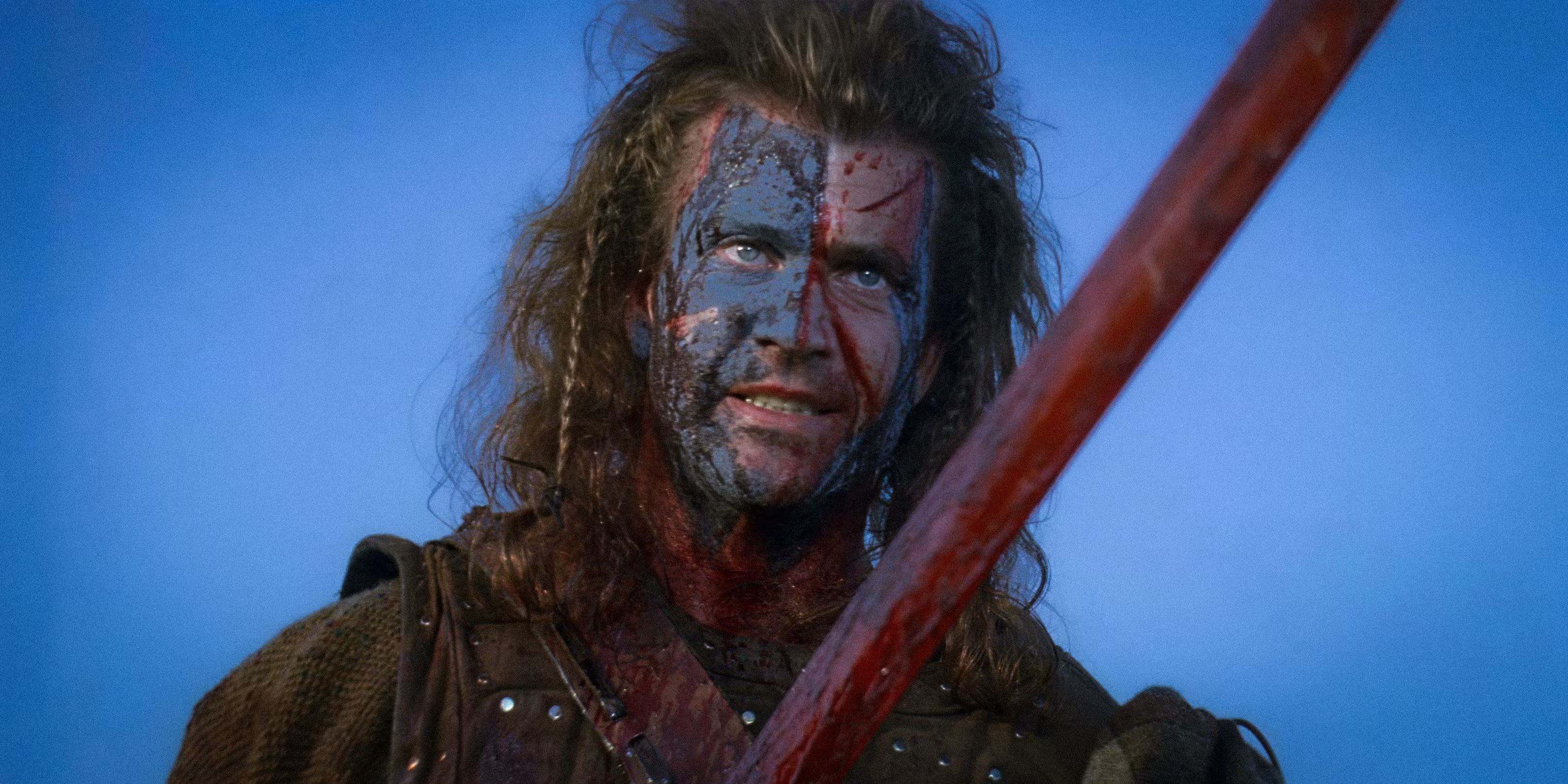
As a movie fan, I’ve always thought Mel Gibson really nailed the feeling of fighting for freedom with Braveheart. It’s become such a powerful symbol of standing up for what you believe in, and the sacrifices people make to live life their own way. While the battles were epic and the story really pulled at your heartstrings, there’s one line from the movie that always sticks with me – it just resonates more than all the action and noise.
William Wallace’s famous speech, delivered during a time of great conflict, speaks to a deeply human desire for freedom and a meaningful life. It’s less about fighting a war and more about answering a basic question: what makes life worth living? In just eleven words, the line captures the central idea of Braveheart: that a life without freedom is not a life at all.
William Wallace’s Speech in Braveheart Turned Freedom into Cinematic Myth
For centuries, Scotland was ruled by England, but the Scottish people have always strongly valued their independence, just as they did when King Edward I tried to take over in 1280. This led to the First War of Scottish Independence, with William Wallace as a key leader, and fighting continued even after Wallace was killed. Eventually, Scotland regained its freedom.
I’ve always loved Braveheart, and what really struck me wasn’t just Mel Gibson’s portrayal of William Wallace, but how the film showed he wasn’t alone. He was a strong leader, sure, and he knew how to fight, but his army wasn’t made up of soldiers. They were just regular people, and Wallace understood that. He didn’t need to drill them or give them fancy training – he tapped into their anger and their deep loyalty, especially in that incredible speech. It proved that even ordinary people, when united by a cause, can be an unstoppable force.
The Scottish army’s spirits plummeted when they saw the opposing force arrive on the battlefield. Unlike the organized, well-equipped enemy – with hundreds of cavalry and neatly formed units – the Scottish troops were mostly farmers, laborers, and tradesmen with little military experience. Some soldiers even thought about retreating, and this fear spread until Wallace arrived and rallied them.
The impact of his words wouldn’t have been greater, especially considering the speech started with humor. Wallace playfully poked fun at the legends surrounding himself, using a distinctly Scottish style of comedy that made the audience laugh and see him as just one of them. By making them laugh, he quickly earned their respect.
Wallace understood the soldiers lacked a clear, unifying force, but he believed their shared identity as Scots would ultimately bind them. He passionately declared he saw an army standing up against oppression, and challenged them: what would they do with their freedom? Would they fight for it? However, the soldiers responded that they preferred to survive and avoid fighting in a conflict that wasn’t their own.
Wallace speaks with the spirit of Scotland, urging his men to remember that abandoning their homeland and people would bring lifelong shame. He points out that the courage and loyalty seen in the elderly – those with dreams left unfulfilled and deep regrets – should be ignited in the young, especially when it’s most needed.
William Wallace refocuses the speech on what truly matters to the Scots: their longing for freedom, which is stronger than their fear of dying. The famous line, “They may take our lives, but they will never take our freedom,” is actually phrased as a question, a complex one that builds to a powerful statement, particularly as Wallace shouts the final word, amplified by the responding cries of his soldiers. This moment solidifies…
Wallace provoked a fight by bluntly refusing a peace offering, and the Scots leveled the playing field with clever strategies as they advanced on the invading army. Their courage was almost reckless, proving their loyalty to Wallace and leading them to charge into a brutal counter-attack, disregarding their own well-being. When the battle ended, Wallace didn’t need to speak – he simply raised his sword and roared, inspiring the victorious, bloodied crowd to cheer his name.
The story grew increasingly grim, culminating in Wallace’s brutal death, but he remained steadfast in his beliefs. Even facing unimaginable agony, he refused to beg for his life and died proclaiming “freedom,” a powerful moment that captures the film’s passionate and rebellious heart.
Braveheart’s Best Quote Became Memeable Before the Internet
The movie Braveheart was released during the early days of the internet. While it was a big hit at the time, it took years for its themes of freedom and its main character, William Wallace, to become popular online through memes. Before that, the film’s famous lines lived on in popular culture, sometimes in unexpected and even unheroic ways, as seen in episodes of South Park (“Starvin’ Marvin”) and The Simpsons (“Beyond Blunderdome”).
The popularity of internet memes really took off with a famous line from the movie Braveheart, along with several other scenes that people quickly began to imitate, edit, and share online in creative ways. Richard Dawkins, who first came up with the term “meme,” describes them as pieces of cultural information that get passed along. The longer a meme remains popular, the more it proves its enduring appeal, and few are as well-remembered as this iconic quote from Braveheart.
The continued popularity of the film Braveheart is clear when you see how often scenes from it are used in memes – everything from the 2026 FIFA World Cup to current political issues. Someone who first saw the movie in 1995 and isn’t familiar with internet culture might think these memes are disrespectful, but that’s not the case. Our memories are complicated, and memes are a way for an entire generation to show their appreciation for things they love.
Even with the controversies surrounding Mel Gibson, the film Braveheart still feels surprisingly relevant today. The movie’s message about valuing freedom, even above life itself, continues to powerfully resonate in a world that’s constantly changing.
Found an error? Send it so it can be corrected.
Read More
- Solo Leveling’s New Manhwa Chapter Revives a Forgotten LGBTQ Story After 2 Years
- The Boys Season 5 Spoilers: Every Major Character Death If the Show Follows the Comics
- Gold Rate Forecast
- All Itzaland Animal Locations in Infinity Nikki
- How to Get to the Undercoast in Esoteric Ebb
- Mewgenics vinyl limited editions now available to pre-order
- Smarter, Faster Networks: Optimizing Early-Exit Architectures for Edge AI
- YouTuber Karl Jobst sues Billy Mitchell for defamation
- CBR’s Official Spring 2026 Anime Series Power Ranking (Week 1)
- Shiba Inu reappointed as “inspector” dog by Japanese police
2026-04-15 13:11