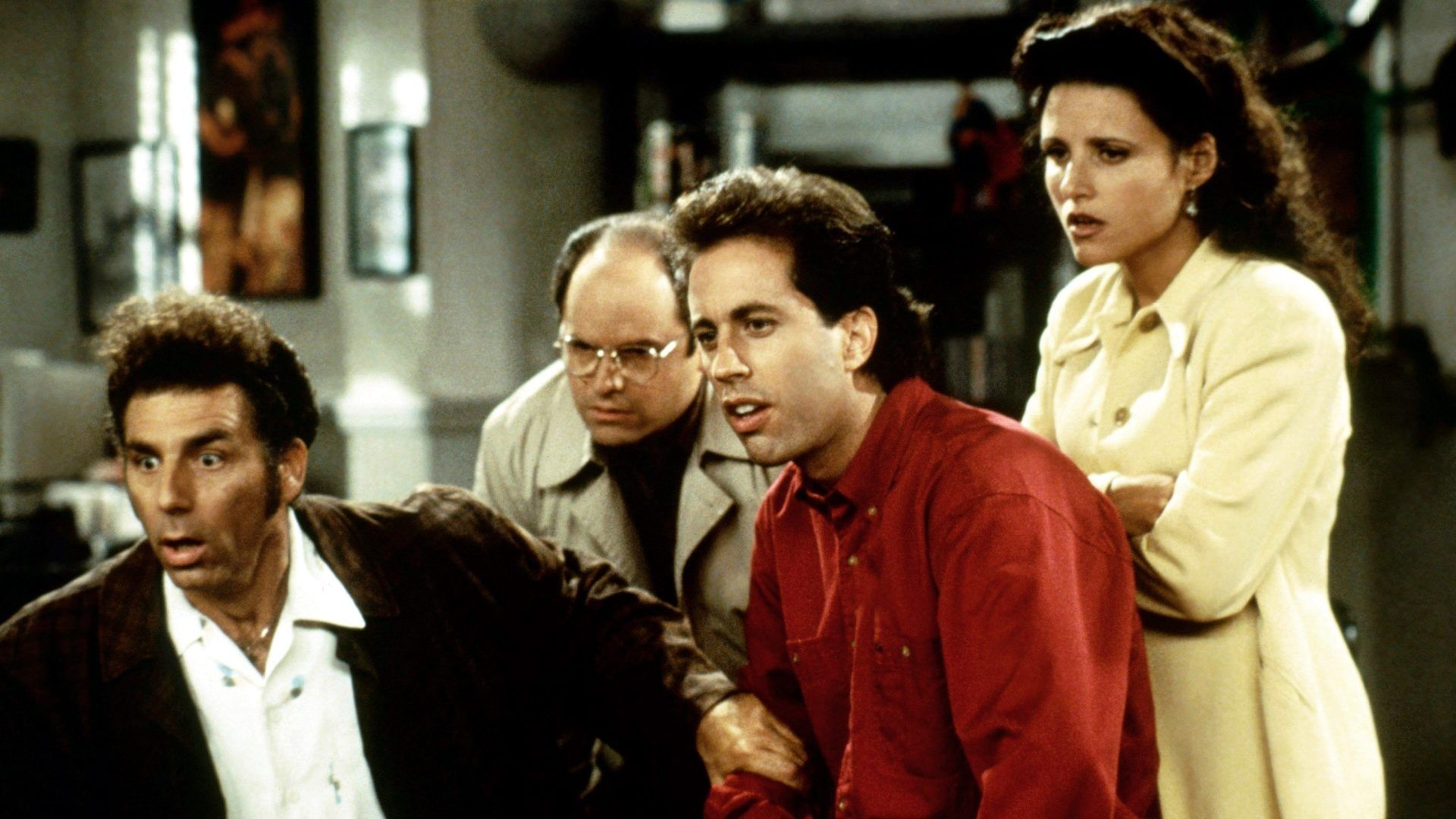
Larry David, while working on Seinfeld, enforced a single rule that helped keep the show hilarious, but also made it unusually dark compared to other sitcoms of the 1990s. If you think about popular shows from that era—like Friends, Full House, Will & Grace, and The Fresh Prince of Bel-Air—they were generally warm, sentimental, and focused on emotional connections. Seinfeld, however, stood out for being harsh, pessimistic, and rather gloomy.
Seinfeld revolutionized the sitcom format. Before shows like The Sopranos popularized complex, flawed characters, Seinfeld made audiences adore a group of hilariously awful New Yorkers. The show followed these four selfish characters as they constantly misled, sabotaged, and mistreated others, and their humor made us strangely fond of them.
Look, I’m all for feel-good comedies – shows like Ted Lasso, Bob’s Burgers, and Schitt’s Creek really hit the spot. But let’s be real, Seinfeld changed the game. It opened the door for shows that weren’t afraid to be a little cynical, a little…darker. Think Peep Show or It’s Always Sunny in Philadelphia. And you can definitely see that Seinfeld influence in Larry David’s later work, Curb Your Enthusiasm – it’s basically Seinfeld updated for today’s audiences.
Seinfeld’s “No Hugging, No Learning” Policy Ensured The Show Never Got Too Serious

As reported by The Guardian, Larry David, a writer on Seinfeld, had a strict rule for his colleagues: “No hugging, no learning.” Many sitcoms of that era were overly sentimental and dramatic, with Friends being a prime example. For every joke on Friends, there seemed to be a drawn-out, overly emotional scene where characters like Ross and Rachel shared their feelings.
This usually doesn’t work well as a dramatic moment, and it interrupts the comedy – intentionally stopping the laughs – which is why David wouldn’t allow it in the Seinfeld writers’ room. He didn’t want episodes where George deceives people to end with a contrived apology and a feel-good moment like Jerry offering him a hug after he’s clearly been dishonest.
But instead, the plan backfires hilariously on him – it’s much more satisfying to watch that happen. For example, remember when George and Susan’s parents finally met? Most sitcoms would have ended that episode with the parents finding something they agree on, forgiving each other for their awkward dinner, and putting the whole thing behind them.
In Seinfeld, episodes often end with a silly, unexpected event – like George using a fishing rod to get a marble rye into his girlfriend’s apartment just to avoid talking. Larry David intentionally avoided neat, emotional resolutions. This freed his writers to focus on creating funny visual gags, like that memorable freeze-frame, instead of tying up loose ends in the plot. David believed that if the characters didn’t have strong feelings for each other, it didn’t matter if the audience felt invested in their problems.
Why Hasn’t Seinfeld Been More Influential?

Despite being a massive hit in the 1990s, comparable to Friends in popularity, Seinfeld hasn’t had the same lasting impact on television. Many shows have clearly tried to emulate Friends – like New Girl, How I Met Your Mother, and even later seasons of The Big Bang Theory – but very few have attempted to follow in Seinfeld’s footsteps.
When It’s Always Sunny first came out, people often compared it to Seinfeld, but much more extreme. The witty back-and-forth dialogue in Father Ted and The I.T. Crowd clearly took cues from Seinfeld. Peep Show‘s Mark Corrigan shares some similarities with George Costanza, and Seinfeld‘s Elaine Benes paved the way for strong female characters like Liz Lemon, Fleabag, and Abbi and Ilana. In fact, Julia Louis-Dreyfus’s portrayal of Selina Meyer echoes the iconic energy she brought to Seinfeld.
David’s show, Curb Your Enthusiasm, is often compared to a second version of Seinfeld, and for good reason. While Curb owes a lot to Seinfeld, it also made a significant impact on television. It helped popularize the single-camera style of shooting, comedic stories based on the creator’s own life, and the use of improvisation and self-awareness in comedy. In many ways, Curb Your Enthusiasm has actually been more influential than Seinfeld itself.
Read More
- Netflix’s Little House On The Prairie Reboot: Release Date, Cast & Everything We Know
- Off Campus Season 1 Soundtrack Guide
- Silver Rate Forecast
- Prime Video’s New R-Rated Spy Thriller Is Officially No.1 On Streaming Despite Poor Reviews
- Gold Rate Forecast
- Brent Oil Forecast
- EUR ZAR PREDICTION
- YouTuber arrested after viral AI bodycam videos spark real police complaints
- EUR USD PREDICTION
- Inkford Hermitage Chest Locations In HSR (Honkai: Star Rail)
2026-04-05 00:38