Recently, I expressed a desire for more nuanced and complex Black female characters in movies and television – characters who defy simple labels. It seems my wish was granted, but with unforeseen consequences.
This week sees the release of The Drama, a darkly funny and awkward romantic comedy that feels a bit cold and detached (is this becoming a trademark of A24 films?). Director and writer Kristoffer Borgli, along with producer Ari Aster, have clearly done their job with the marketing – my mother, who is in her sixties, even asked me about it before it came out! She’d already heard about the film’s central plot point, which is revealed fairly early on. The promotion has built up a lot of anticipation, leaving audiences to speculate and debate what will happen. However, the premise, which sounds shocking when described, isn’t quite as impactful when you’re actually watching the movie.
Emma and Charlie are a couple living in Boston, getting ready to tie the knot. He works as a curator at a university, and she works at a bookstore, often wearing T-shirts from Harper’s Magazine. The movie begins with a charming first encounter at a coffee shop. Charlie is immediately struck by Emma, who is reading a book called The Damage (which isn’t a real title). When she goes to get more coffee, he quickly takes a picture of the book and pretends he’s familiar with it, even looking up information on Goodreads to impress her. He tries to start a conversation, but stumbles over his words. Emma is deaf in one ear and is listening to music, so she doesn’t hear his clumsy attempts. Eventually, noticing he’s hesitant, she kindly asks, “Do you want to start over?”
The movie mainly takes place two years after Charlie and Emma first meet. Charlie is now writing his wedding vows with his friend Mike, and as he does, he revisits his memories of Emma, trying to remember what initially attracted him to her. The film jumps between the present, flashbacks, and Charlie’s thoughts, exploring themes of love, trust, and the challenges of truly knowing someone. We learn that on their first date, Charlie confessed he hadn’t read a book she mentioned, but Emma wasn’t bothered – she found his honesty charming, even playfully calling him a “weird little British freak.” He’s captivated by her unique qualities, like the sound of her laugh. While writing his vows, he considers mentioning how good their sex life is, but Mike convinces him that’s a bad idea.
The film immediately showcases its strengths through quick, clever editing that jumps between awkward present-day scenes, intense flashbacks, and unsettling visions. The story sets up plenty of opportunities for uncomfortable and hilariously cringeworthy moments, and Zendaya and Pattinson have great on-screen chemistry, supported by strong performances from the rest of the cast. However, the movie struggles to fully develop the connection between the two main characters – what attracts them to each other and how they function as a couple – and the director seems to share that difficulty.
The movie gains momentum when Emma and Charlie are doing a wedding menu tasting with their friends, Mike and Rachel, who are also the best man and maid of honor. The conversation shifts to how even ordinary people are capable of terrible things, and Rachel suggests everyone share the worst thing they’ve ever done – something she and Mike did before their own wedding. Mike and Rachel reveal some shocking confessions. Charlie offers a hesitant response, but it’s Emma’s story, shared between sips of wine, that really throws everything – her wedding and her relationships – into chaos. (It’s important to note that the central ‘surprise’ in the movie isn’t a twist at all, but a key idea. If you don’t want to know what it is, you should stop reading this review now.)
Fifteen-year-old Emma, recently relocated to Louisiana, confessed to planning a school shooting using her father’s rifle. Though she never acted on it, she came very close. Ironically, her extensive preparation – practicing shooting in the woods – resulted in her becoming deaf. Initially, those present dismissed her confession as a cruel joke, creating immediate tension. Rachel confronts Emma with intense anger, revealing that her cousin, Sam, was disabled in a mass shooting. A later scene between Charlie and Sam provides both humor and discomfort. The film then unfolds as a series of misunderstandings and escalating conflicts. Charlie is deeply disturbed by the realization that the woman he loves may not be who he thought she was, and that her past stories aren’t entirely truthful. Emma wants to move past the revelation, but Charlie relentlessly seeks to understand her motivations. She briefly hints at underlying mental health issues, loneliness, and experiences with bullying as potential factors, but the film, much like observing an online troll, focuses more on the reactions to her confession than on exploring any deeper truths.
I went into the movie knowing the basic idea, so I expected a strong emotional response. I was particularly curious about how the film would address issues of race, since it asks us to believe a Black girl dreamed of becoming a school shooter. I wondered if it would suggest that American culture is so broken that even victims of the system can become violent themselves. However, the director avoids these difficult questions entirely. The main character, Emma (played with a quiet intensity by Jordyn Curet), is presented with the visual style of white male shooters, and her race isn’t addressed at all. There are only weak attempts to explore the idea of a woman being a shooter, and even that feels insufficient. The director doesn’t seem willing or interested in delving into the character’s identity as a Black woman, even though that identity is what makes the premise feel shocking in the first place.
The film The Drama directly confronts the sadness surrounding America’s frequent mass shootings, highlighting a frustrating lack of action from both the government and the public. I went in expecting to be challenged, but despite plenty of shocking and uncomfortable moments, I lost interest about halfway through. While the film initially creates a successfully awkward and disturbing atmosphere, it quickly becomes clear the director is more interested in creating a series of embarrassing situations than in genuinely exploring the characters. The movie only remains watchable thanks to the strong performances of the actors involved.
Alana Haim really stood out to me with her performance. Rachel is portrayed as intensely anxious and bitter. Robert Pattinson plays Charlie with a strangely awkward and flexible energy, subtly hinting at the character’s underlying sleaziness – whether he’s seeking comfort from a colleague after a dark thought, or calmly dealing with an injury. The connection between him and Zendaya feels very real, particularly in moments focused on physical interaction: like a dance lesson where the instructor points out the performative nature of weddings, a moment of vulnerability, or a sudden outburst after a period of calm.
Zendaya delivers her most assured performance yet, playing a character close to her own age, though the role itself doesn’t offer much depth. While she shines in funny scenes – like threatening Charlie with a knife or arguing with a wedding DJ – the more serious moments reveal her limitations. The character feels underdeveloped, and Zendaya struggles to bring her to life. The film essentially stops exploring the character’s internal world when Emma reveals her feelings for Charlie. Zendaya, like Pattinson, is a capable actor, but their efforts are ultimately undermined by a story that lacks a strong emotional core and a script that avoids deeper character development. Their performances aren’t weak, but the film itself doesn’t give them enough to work with, leaving the impact feeling flat.
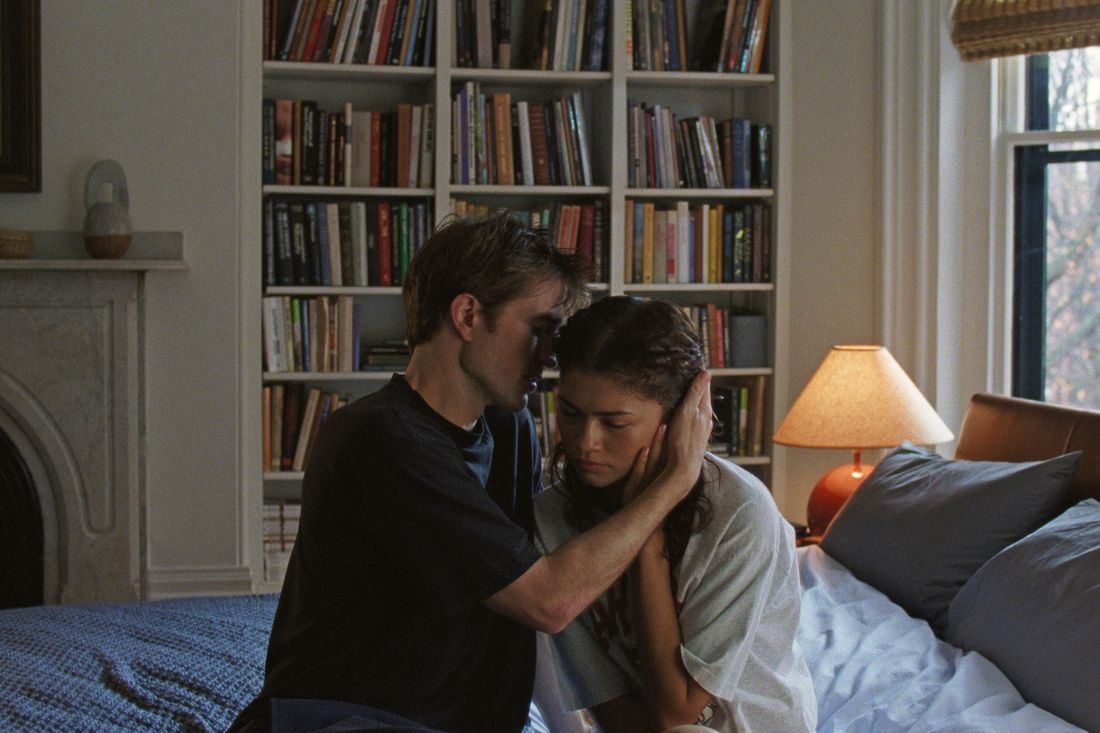
It’s striking that Zendaya, an actress who has openly talked about taking roles originally meant for white actresses, plays a biracial Black character in a film that seems determined to avoid dealing with race. The filmmaker appears to want the attention and strong reaction that would come from portraying a Black woman as a potential school shooter. Like many recent Hollywood films aiming for maturity, The Drama mistakes simply presenting an idea for truly exploring it. This lack of depth ultimately harms the love story. There’s a touching scene where Charlie whispers his marriage hopes and fears to Emma while testing her deafness – it’s sweet and intimate. However, it’s difficult to care whether their relationship lasts beyond that moment. Beyond physical attraction, what truly connects Charlie and Emma? What does marriage represent for them? By avoiding a deeper look at the social, racial, and personal issues surrounding these characters, the film misses the chance to create a genuine romance. This cautious approach makes the film ultimately frustrating.
This film feels fragile and emotionally distant, almost sterile despite its warm colors. The way the actors move and are positioned feels calculated rather than natural. Is this becoming A24’s signature style – a polished, safe approach that gained popularity in the 2010s when originality was rare? While A24 still supports respected directors like Jonathan Glazer, Ari Aster, and Celine Song, and takes risks mainstream studios avoid, this film didn’t deliver. I expected to be challenged or deeply moved, either angered by its boldness or invested in a love story. Instead, I felt surprisingly detached.
When Emma feels stressed, she tends to act like she’s never met Charlie before, imagining they’re meeting for the first time. Rather than working through their relationship’s problems, she retreats into a fantasy of a perfect, fresh start. Like the film The Drama, she longs for a clean slate – a relationship without baggage, love without real depth. However, the most rewarding parts of love happen when you truly know someone. It’s unfortunate that the film only focuses on the beginning stages of relationships, when love feels safe and isn’t yet tested or genuine.
Read More
- Netflix’s Little House On The Prairie Reboot: Release Date, Cast & Everything We Know
- Off Campus Season 1 Soundtrack Guide
- Silver Rate Forecast
- Prime Video’s New R-Rated Spy Thriller Is Officially No.1 On Streaming Despite Poor Reviews
- Gold Rate Forecast
- Brent Oil Forecast
- Infinity Nikki Candlelight Reverie Challenge and Rewards Guide
- EUR ZAR PREDICTION
- Bulgakov’s Take: Koreans Bet the Farm on Chips, Crypto, and Chaos
- Inkford Hermitage Chest Locations In HSR (Honkai: Star Rail)
2026-04-03 23:56