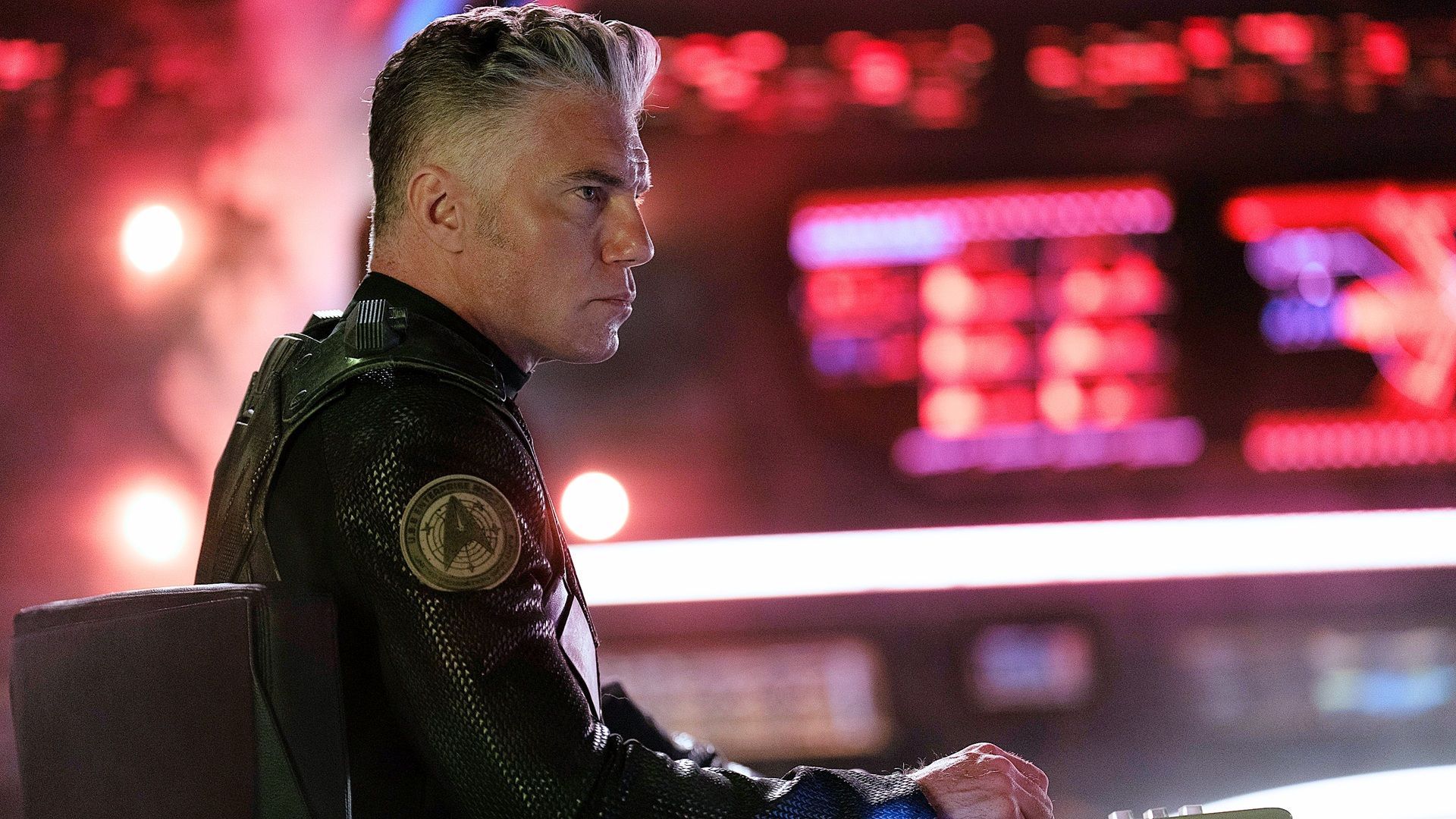
Season three of Strange New Worlds has sparked a lot of debate among fans. While the show – which follows Captain Christopher Pike and the crew of the USS Enterprise before the original Star Trek series – was initially very well-received as part of the latest wave of Star Trek shows, some storytelling decisions, like its use of different genres and comedy, have drawn criticism. However, a single moment in the season three premiere stands out: Captain Pike is shown praying, which goes against one of the core principles established by Star Trek creator Gene Roddenberry.
Okay, so here’s the interesting thing about the Strange New Worlds premiere. A lot of fans were worried about how the show would handle established Star Trek lore, and honestly, it tackled a big one right away – the Gorn. They didn’t just address it, they really dealt with it in a surprisingly dramatic way. But the real emotional gut punch came with Captain Batel. Seeing Pike desperately try to save the woman he loves, culminating in that incredibly moving scene where he recites The Lord’s Prayer… it’s powerful stuff. And it’s a little complicated for Star Trek. You see, creator Gene Roddenberry envisioned a future where religion had faded away, a core tenet of his humanist worldview. However, the universe he built, the stories that followed, haven’t always stuck to that strictly. It’s a fascinating tension, and this episode really brought it to the forefront.
Captain Pike’s Re-Introduction In Star Trek: Discovery Set the Stage for the Prayer
I’ve noticed a lot of people seem to overlook the fact that Strange New Worlds actually started as a spin-off from Star Trek: Discovery – the show that really kicked off the newest era of Star Trek on TV. And like Deep Space Nine did back in the nineties, the first season of Strange New Worlds intentionally did things differently from what fans were used to, which I really appreciated!
In the second season, Captain Pike temporarily takes command of the ship. The crew travels to a planet inhabited by humans who were originally taken from Earth during a devastating World War III in 2053 by a being known as the “Red Angel.” Over the following century, these people built a religion based on this event. The crew of the USS Discovery then undertakes a traditional mission: they explore the planet while concealing their origins as space travelers from its inhabitants.
Earlier in the episode, Captain Pike and Michael Burnham discuss the disappearance of Spock, Burnham’s foster brother. Pike shares that he can relate to complicated family relationships, explaining his own father was a science and religion professor with whom he often disagreed.
This adds depth to Pike’s character. During the Season 2 crossover with Lower Decks, he shares with Boimler and Mariner that he intended to spend his birthday alone, reflecting on the fact he was about to surpass his father’s age. He planned to use the time to remember his difficult relationship with his father, which likely included disagreements about religion.
Later in Season 2 of Discovery, the character briefly saw his future. This vision showed the accident that left him needing a full-body wheelchair and able to communicate only by blinking – a condition established in the classic Original Series episode, “The Menagerie.”
Everything Pike has gone through – including time travel and facing the unavoidable future he’s destined for – has shaken his core beliefs. When the woman he loves dies, he does what people have always done in moments of utter despair: he abandons logic and pleads with a higher power, hoping for a miracle. For a while, it seems his plea is answered when Batel unexpectedly recovers.
Gene Roddenberry Was Strongly Against Religion, but Star Trek References Existed
When Roddenberry created Star Trek in the 1960s, he envisioned a future where humanity had overcome its flaws. He imagined a world free from nationalism, poverty, prejudice, and rigid religious beliefs – things he saw as outdated and embarrassing. A memorable example of this optimistic vision appears in the episode “Who Mourns for Adonais?”, where Captain Kirk and the crew of the Enterprise meet an alien who identifies himself as Apollo.
This episode begins a recurring theme in the series: the idea that ‘gods’ are simply incredibly advanced aliens who appear to have magical powers. Interestingly, Kirk tells Apollo in this episode that humanity doesn’t need gods, but that they’ve found ‘the one’ to be sufficient. (The emphasis is on ‘the one’.) The ship also features a ‘chapel’ used for both wedding ceremonies and funerals.
However, he ultimately suggested that even the major religions actually worshipped a powerful alien entity. This idea was a recurring theme in many of his stories and proposals, including pitches for films. When creating The Next Generation, he strongly emphasized that humanity had moved past religion, and Captain Picard frequently demonstrates his disapproval of it.
Following the death of a key character, Deep Space Nine explored the religion of the Bajorans, ultimately revealing that their gods, known as “the Prophets,” were actually aliens without physical bodies who perceived time differently than humans. On Enterprise, the ship’s Denobulan doctor, Phlox, mentions he studied Earth’s religions, implying they still existed in the 22nd century.
The show Discovery expanded on this concept by featuring a human colony established before first contact with the Vulcans. These colonists, survivors of a World War III attack, found shelter in a church and remarkably transported the entire structure to their new planet.
The people created a religion centered around the encounter, and interestingly, a stained glass window in their building depicted symbols from various Earth religions. Their beliefs were a mix of many different faiths combined with a new mythology inspired by the Red Angel. Despite any concerns Roddenberry might have had, Pike’s prayer doesn’t contradict established storylines.
Religion is Cultural and not Dogmatic in Star Trek: Strange New Worlds
In Deep Space Nine, Captain Sisko’s main job was to establish relations with the beings who lived within the wormhole. He encountered these beings, known as the Prophets, in the show’s first episode and became their chosen representative. Despite understanding they weren’t deities but highly evolved lifeforms, the Prophets remained steadfast in their beliefs. The subtle religious themes present throughout Star Trek: The Original Series and continuing in later series suggest that humanity never fully abandoned spirituality.
The religions seen in Star Trek, whether practiced by Vulcans, Klingons, Bajorans, or humans, weren’t necessarily about strict beliefs. These rituals were more about cultural identity and expression. Earlier in the episode, Pike’s line about shining like the sun—used to attract the Gorn—may have been inspired by the Christian hymn “On Eagle’s Wings,” a song he likely learned from his father.
In The Final Frontier, the seemingly god-like being isn’t a deity at all, but a powerful alien held captive by another advanced species on the planet Sha Ka Ree. From Kukulkán in The Animated Series to the various members of the Q Continuum, Star Trek consistently portrays ‘gods’ as simply very powerful aliens who are worshipped by those who don’t understand their true nature.
The Prime Directive, first seen in the original Star Trek series, builds on this idea. Contacting civilizations less developed than the Federation could disrupt their natural progress, and might even cause Starfleet captains and ships to be worshipped as gods.
A core idea in Star Trek is that even with all its advanced technology and knowledge, the Federation doesn’t have all the answers. The disagreements between Pike and his father, as seen by fans, aren’t likely about the truth or falsehood of the Bible. Instead, the conflict probably comes from the simple fact that humans can’t fully grasp everything, a concept explored through the study of different religions.
The idea of “God” can be seen as a way to describe things we don’t understand, or even as a way of expressing our own desires – something people today call “manifesting.” When Pike prays for Batel, he’s not undergoing a religious conversion. It’s a way for him to connect with his late father and express a natural human reaction to feeling powerless.
Found an error? Send it so it can be corrected.
Read More
- Netflix’s Little House On The Prairie Reboot: Release Date, Cast & Everything We Know
- Off Campus Season 1 Soundtrack Guide
- Silver Rate Forecast
- Prime Video’s New R-Rated Spy Thriller Is Officially No.1 On Streaming Despite Poor Reviews
- Gold Rate Forecast
- Brent Oil Forecast
- EUR ZAR PREDICTION
- Amazon Primes new GenAI cartoon looks like K-Pop Demon Hunters with aliens
- Inkford Hermitage Chest Locations In HSR (Honkai: Star Rail)
- KPop Demon Hunters Meets Avatar: The Last Airbender In Netflix’s 3-Part Fantasy Series
2026-04-02 06:12