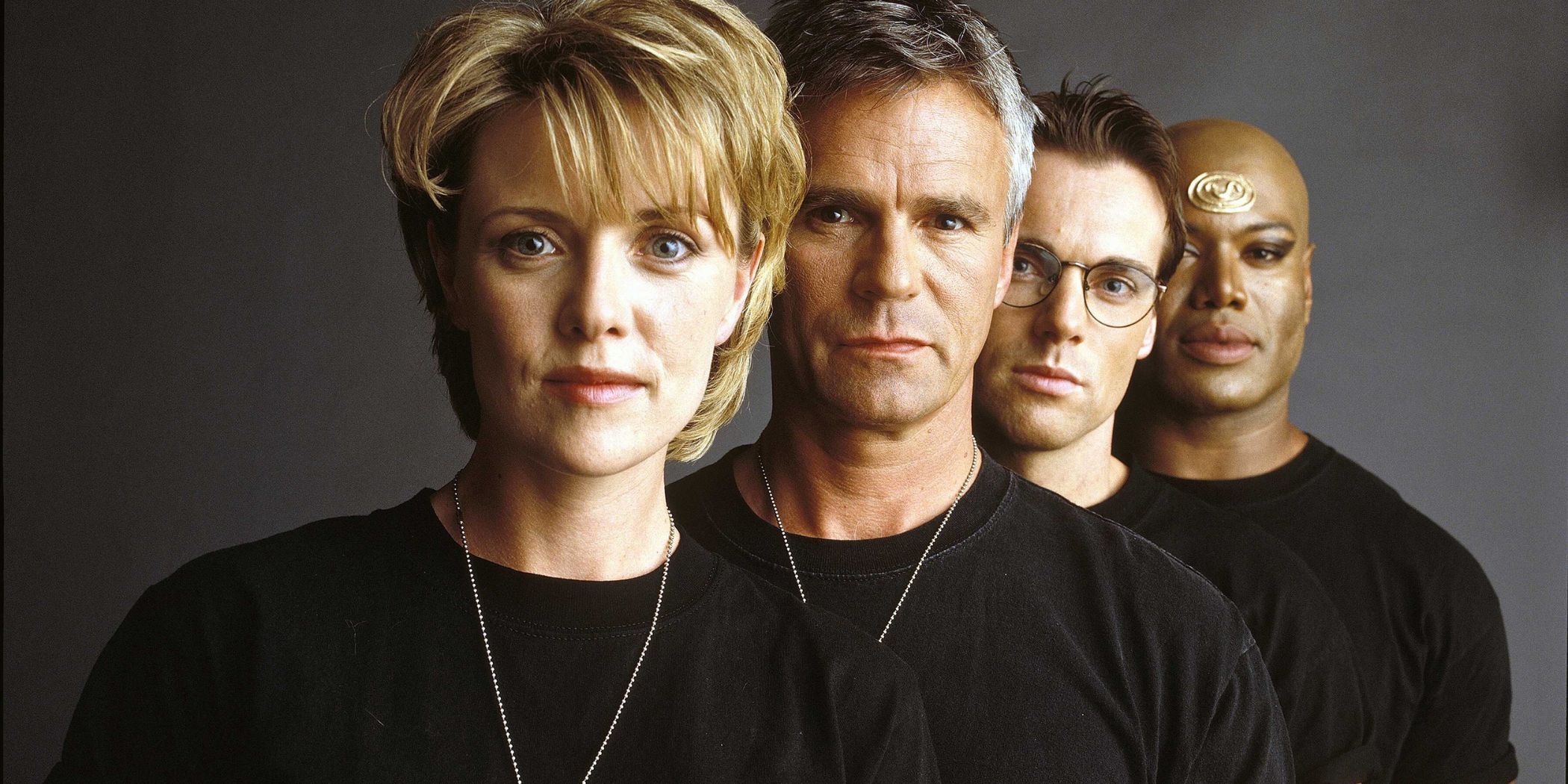
The show centers around SG-1, the main team at Stargate Command, led by Colonel Jack O’Neill (played by Richard Dean Anderson). SG-1 travels to different planets, searching for allies and advanced technology to help them combat the dangerous Goa’uld aliens. Though it explores serious topics like war and loss, the series also features plenty of humor and highlights the strength and determination of its characters.
In the Stargate SG-1 episode “The Other Side,” the team meets a potential ally who offers advanced technology. While O’Neill is eager to trade for it, Daniel Jackson worries about the ethics of getting involved in a conflict they don’t fully understand. His concerns prove valid when they discover the Eurondans have dangerous, Nazi-like ideologies, prompting O’Neill to disable their defenses and leave them open to attack from their enemies.
The Stargate Program Was Created to Procure Advanced Technology
Dr. Daniel Jackson and Col. Jack O’Neill journeyed to the planet Abydos, where they found a culture resembling the ancient Egyptians, ruled by a powerful foe. This enemy, a Goa’uld named Ra, didn’t just threaten Abydos – he was a danger to Earth as well.
Okay, so the climax of this film sees O’Neill and his team making a seriously tough call – they have to blow up Ra’s mothership with a nuke to save the people of Abydos. It’s a visually stunning, if terrifying, sequence. But the real emotional weight comes from Dr. Jackson’s decision to stay behind. He chooses to remain on Abydos with Sha’re, determined to bury the Stargate and essentially cut off access to this dangerous part of the galaxy. It’s a bittersweet ending, watching him stay as the others head back to Earth, knowing he’s making a huge sacrifice for the sake of both worlds.
The series Stargate SG-1 begins with a two-part episode, “The Children of the Gods,” where the Goa’uld arrive on Earth, kidnap a female officer, and kill the soldiers guarding the Stargate. Investigating how the Goa’uld reached Earth, the team discovers a network of thousands of Stargates and a vast number of these parasitic aliens. The Air Force then establishes the Stargate Program with the goals of finding allies and obtaining technology to help combat the Goa’uld.
As a huge fan of the show, one of the coolest things about Stargate SG-1 is meeting all these different alien races. Colonel O’Neill and his team run into some incredibly advanced civilizations, like the Nox and the Tollan, who are both really cautious about sharing technology. They’ve seen what can happen when a less developed world gets its hands on powerful weapons, so they wouldn’t just hand over their futuristic tech to Earth. The Tollan, though, were a real help – they acted as allies, assisting with things like rescue missions or safely removing a Goa’uld parasite from a human host. It was great to see them offer that kind of support!
During the second season, the team gains two new allies. The Asgard offer protection to Earth and include them in an existing treaty between the Goa’uld and a mysterious race known as the little grey men, though they don’t provide weapons. The Tok’ra are like the Goa’uld, but they form a willing partnership with their human hosts, creating a truly symbiotic relationship. In the show’s early seasons, most of Earth’s advanced technology actually came from weapons and technology stolen from the Goa’uld.
Stargate SG-1’s ‘The Other Side’ Saw the First People Willing to Share Technology
During the fourth season, the Stargate Command receives a distress signal from the planet Euronda. When SG-1 arrives, they discover the Eurondans are fighting a long and desperate war. Their underground city is protected by a shield that requires deuterium, a component of heavy water, to function. The planet’s surface is toxic, and the war has lasted for decades. Their enemies have poisoned their supply of heavy water, and without it, the shield will fail, leading to the deaths of thousands of people in suspended animation.
During a visit to the planet Euronda, SG-1 encounters several advanced technologies. They find the Eurondan leader injured by falling rubble, but he quickly recovers after receiving an injection of a drug called beta-cantin. The Eurondans also possess remotely controlled ships that are operated through a direct neural link. Colonel O’Neill and Teal’c test this interface by piloting a ship to destroy an enemy drone.
Alar and his people will trade advanced medical and weapon technology to Earth if Earth provides them with a certain amount of heavy water, which they need to help them win their current war. While Colonel O’Neill is ready to make the trade, Daniel Jackson suggests a different solution: waking the people in suspended animation and finding the Eurondans a new planet to live on. However, Alar is determined to stay on his home world, Euronda. Ultimately, O’Neill sends Major Carter and Daniel Jackson back to Earth to gather the initial shipment of heavy water.
O’Neill was thrilled by the possibility of a new ally who genuinely wanted to help Earth and its people. He was hesitant to ask too many questions, fearing it could jeopardize their potentially powerful alliance. He preferred not to delve into the details of their conflict or who the Eurondans were fighting, content to focus on the benefits they could offer.
SG-1’s Dr. Daniel Jackson Had Ethical Questions About Their New Allies
O’Neill wanted to team up with the Eurondans, but Daniel was uneasy about helping a conflict they didn’t understand, and the potential consequences. O’Neill cut him off when he tried to learn more about the situation. Later, while getting heavy water with Carter, Daniel explained his concerns to General Hammond, reminding him, “We can’t afford to get involved in a war we can’t win, and you agreed.”
I was really struck by the conversation between Daniel and General Hammond. Hammond was focused on the practical side – how helping an ally with their war would strain our military resources and personnel. But Daniel brilliantly pointed out it wasn’t just about that; there was a serious moral question too. He challenged Hammond and O’Neill’s quickness to jump in and aid Euronda, asking if simply providing resources – even something huge like water – would magically make the ethical concerns disappear. He made a powerful point: if we’re going to get involved, we need to understand the conflict and the reasons behind it, and we absolutely can’t ignore the moral implications of supporting a war.
Daniel respects Hammond and O’Neill, but feels responsible for challenging them and ensuring they consider the ethical implications of their actions. Although O’Neill is generally a good person, his military background often takes priority. Unlike O’Neill, Daniel isn’t in the military; as an anthropologist, he’s able to approach situations with an open mind, understand different cultures, and consider all perspectives.
While Daniel and Carter are back on Earth, the Eurondan base comes under attack. O’Neill and Teal’c assist by remotely piloting fighters and destroying the attacking bombers. O’Neill is disturbed to discover these bombers were piloted by people, a stark contrast to the unmanned drones they previously destroyed.
When Daniel and Carter come back, O’Neill allows Daniel to ask a couple of questions before cutting him off. He then sends them back to Earth to gather more heavy water and supplies for the Eurondans. As they prepare to leave, Alar implies that Teal’c shouldn’t go with them, stating he’s different from the rest of them.
The Eurondans Reveal Themselves to Be Akin to Nazis
After Alar hinted that Teal’c was unusual, O’Neill decided to stay and investigate. He realized Alar’s problem wasn’t Teal’c being a Jaffa warrior, but his race. O’Neill apologized to Daniel and encouraged him to ask Alar’s people many questions. While Daniel spoke with Alar’s second-in-command, Farrell, he asked about the identity of their enemy. Farrell only referred to them as “breeders,” explaining they reproduce without any concern for maintaining a pure genetic line.
O’Neill observes that all the people in stasis have light skin. Meanwhile, Carter investigates their power generator and discovers pipes that run to the surface, leading her to believe the Eurondans deliberately poisoned the planet’s surface. Although the Eurondans initiated the conflict, it appears they were trying to stop SG-1 from unleashing the poison themselves. O’Neill and Teal’c then re-enter the remote control system, intending to intervene again.
Instead of stopping the enemy bombers, the team attacked the Eurondans, surprisingly helping the bombers reach and severely damage the facility. Daniel and Carter subdued Alar and Farrell when they tried to intervene. O’Neill then intentionally crashed his ship onto the facility, disabling its protective shield. They returned to Earth without achieving their primary objective. Anticipating Alar’s attempt to escape through the Stargate, O’Neill ordered Hammond to close the iris, effectively trapping and killing Alar as he collided with it before the gate could be sealed.
When O’Neill discovered who they truly were, he didn’t simply cut off contact. He actively worked against them, crippling their defenses and helping their rivals. He essentially abandoned the Eurondans, leaving them vulnerable to attack. The coldness in his expression as he ordered them to seal the iris – knowing it would kill Alar – revealed just how determined he was in his actions.
Having been involved in the atrocities committed by the Nazis, O’Neill experienced a dramatic shift in his behavior – moving from a deliberate avoidance of the truth to actively causing harm. He realized he’d compromised his own moral compass and felt compelled to make amends, ultimately impacting the entire storyline.
Found an error? Send it so it can be corrected.
Read More
- Netflix’s Little House On The Prairie Reboot: Release Date, Cast & Everything We Know
- Off Campus Season 1 Soundtrack Guide
- YouTuber arrested after viral AI bodycam videos spark real police complaints
- Silver Rate Forecast
- Prime Video’s New R-Rated Spy Thriller Is Officially No.1 On Streaming Despite Poor Reviews
- Brent Oil Forecast
- Gold Rate Forecast
- Bulgakov’s Take: Koreans Bet the Farm on Chips, Crypto, and Chaos
- Peaky Blinders: The Immortal Man’s Tommy Shelby Is a Better Father Than Michael Corleone
- EUR ZAR PREDICTION
2026-04-01 03:12